
Drink Alcohol and Still Lose Fat with Smart Tracking
Learn how to enjoy alcohol while losing fat. Track drinks smartly, manage calories, and hit your goals without giving up social life.
You've probably turned down drinks with friends because you're trying to lose weight, thinking alcohol automatically ruins your progress. The truth is, you can drink alcohol and still lose fat as long as you understand how those drinks fit into your daily calorie budget. With smart tracking tools like MyFoodBuddy that let you quickly log "two beers and a vodka soda" using just your voice, you can enjoy social drinking without the guilt or guesswork that usually comes with it.
Table of Contents
Why Alcohol Gets a Bad Rap for Fat Loss
Most people think they need to give up alcohol completely to lose weight, but that's not exactly true. The real issue isn't the drink itself, it's that most folks have no idea how many calories they're actually consuming when they have a few beers or glasses of wine. A single night out can easily add 500 to 1,000 calories to your daily intake without you even realizing it. That's like eating an extra meal that your body doesn't need. The good news is that you can drink alcohol and still lose fat, but you need to understand what's actually happening in your body when you do.
How Your Body Handles Alcohol
When you drink alcohol, your body treats it like a toxin that needs to be removed as quickly as possible. This means everything else gets put on hold while your liver works overtime to process the booze. Alcohol contains 7 calories per gram, which is almost as much as pure fat at 9 calories per gram. That's way more than protein or carbs, which only have 4 calories per gram each.
Here's what happens when alcohol enters your system:
- Your body stops burning fat and carbs for energy
- All available energy goes toward breaking down the alcohol first
- Any food you eat while drinking gets stored as fat more easily
- Your metabolism slows down until the alcohol is completely processed
The Hidden Calorie Problem
The biggest issue with alcohol and fat loss isn't just the drinks themselves. It's all the stuff that comes with drinking that people don't track. When you're a few drinks in, that pizza or late-night burger sounds amazing, and your willpower goes out the window.
Most calorie tracking apps like MyFitnessPal or Cronometer require you to manually search and log every drink, which takes time and kills the vibe when you're out with friends. With MyFoodBuddy, you can just say "two IPAs and a vodka soda" and it logs everything instantly. But even with easy tracking, you need to know what you're actually drinking.
What You're Really Drinking
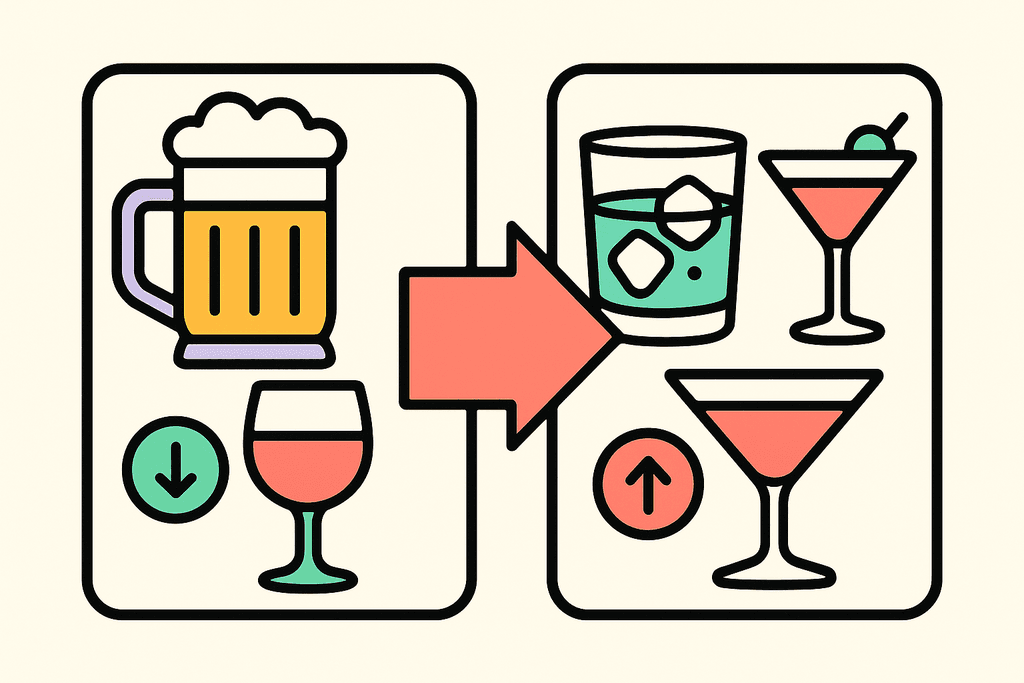
Different drinks have wildly different calorie counts. A light beer might only set you back 100 calories, but a frozen margarita can pack in 400 calories or more. Here's what popular drinks actually contain:
Light Beers and Seltzers
- Hard seltzer (12 oz): 100 calories
- Light beer (12 oz): 100-110 calories
- Ultra-light beer (12 oz): 60-95 calories
Regular Beers and Ciders
- Regular beer (12 oz): 150-180 calories
- IPA (12 oz): 180-250 calories
- Hard cider (12 oz): 190-200 calories
Wine Options
- White wine (5 oz): 120-130 calories
- Red wine (5 oz): 125-130 calories
- Champagne (5 oz): 95-100 calories
Spirits and Mixed Drinks
- Vodka soda (8 oz): 100-110 calories
- Gin and tonic (8 oz): 170-200 calories
- Rum and Coke (8 oz): 180-220 calories
- Margarita (8 oz): 280-400 calories
- Piña colada (8 oz): 300-500 calories
The difference between choosing a vodka soda and a margarita is the same as eating an entire meal. Three margaritas in one night could be 1,200 calories, which is more than half of what many people should eat in an entire day to lose weight.
How to Budget Calories for Drinking
Most people don't realize that a single night out can pack in 1,000 calories just from drinks alone. That's half your daily budget gone before you even think about food. But here's the thing: you don't have to choose between enjoying drinks with friends and hitting your fat loss goals. You just need to treat alcohol like any other food in your calorie budget.
The first step is knowing exactly how many calories you're working with each day. Calculate your daily calorie target based on your weight loss goals, then decide how much you're willing to allocate for drinks. If you know you're going out Friday night, you can plan ahead by eating lighter meals earlier in the day. This doesn't mean starving yourself, it just means being strategic about where your calories come from.
- Start your day with a high-protein, lower-calorie breakfast like eggs and vegetables
- Choose lean proteins and lots of veggies for lunch to stay full without using too many calories
- Save 300-500 calories from your daily budget specifically for drinks
- Drink water between alcoholic beverages to slow down and stay hydrated
The key is making room for what matters to you without going over your total daily calories. Some people prefer to have a couple drinks most nights, while others save up for bigger nights out. Neither approach is wrong as long as you're tracking everything accurately.
Don't forget about the sneaky calories that come with drinking. Mixers, garnishes, and even the lime in your beer can add up. A vodka soda might be 100 calories, but a margarita with sweet and sour mix can hit 300 calories easily. Track everything that goes into your glass, not just the alcohol itself. This is where most people mess up their tracking and wonder why they're not losing weight.
The Best and Worst Drinks for Fat Loss
Not all drinks are created equal when it comes to your calorie budget. A light beer might set you back 100 calories, while a frozen margarita can cost you 500 calories or more. Understanding these differences helps you make smarter choices without feeling like you're missing out. The good news is that some of the simplest drinks are actually the best options for fat loss.
Spirits mixed with zero-calorie mixers are your best friend. Vodka, gin, rum, or whiskey with soda water, diet tonic, or diet soda will run you about 100 calories per drink. Add a squeeze of lime or lemon for flavor without adding calories. Light beers typically range from 90-110 calories per bottle, making them another solid choice if you prefer beer over liquor.
Wine sits somewhere in the middle of the calorie spectrum. A standard 5-ounce glass of wine contains around 120-150 calories depending on the type. Red and white wines are pretty similar calorie-wise, so pick whichever you enjoy more. Just remember that restaurant pours are often larger than 5 ounces, sometimes closer to 7 or 8 ounces, which means more calories than you might think.
Lower-Calorie Options (100-150 calories):- Vodka soda with lime
- Gin and diet tonic
- Light beer
- Dry wine (5 oz pour)
- Whiskey on the rocks
- Margaritas with sweet and sour mix
- Piña coladas and frozen drinks
- Long Island iced teas
- Craft beers and IPAs
- Sweet cocktails with juice or syrup
The real problem with high-calorie cocktails isn't just the alcohol. It's all the sugar, cream, and juice that gets mixed in. A single piña colada can have as many calories as a full meal. If you're serious about fat loss, save these drinks for special occasions and stick with simpler options most of the time.
Serving sizes matter more than most people realize. That craft IPA might be 16 ounces instead of 12, which means 200+ calories instead of 150. Wine glasses at restaurants are often filled generously, giving you 8 ounces instead of the standard 5. When you're tracking, be honest about how much you're actually drinking, not just what the menu says.
Making Tracking Easy When You Drink
The biggest reason people stop tracking calories when they drink is because it's annoying. Traditional apps make you search through databases, measure serving sizes, and tap through multiple screens just to log a simple drink. When you're out with friends, the last thing you want to do is spend five minutes on your phone trying to find the right entry for your vodka soda. This is exactly why so many people give up on tracking altogether.
Voice logging changes everything. Instead of typing and searching, you just say what you're drinking and move on with your night. Apps like MyFoodBuddy let you speak naturally, like "two gin and tonics" or "glass of red wine," and the AI handles all the calculations for you. It takes about five seconds, which means you're not that person ignoring their friends to fiddle with their phone.
- Log drinks as you order them, not the next morning when you can't remember
- Use voice commands so tracking doesn't interrupt conversations
- Be specific about mixers and serving sizes for accurate tracking
- Check your daily totals before ordering another round
The real advantage of tracking in the moment is that you can make adjustments on the fly. If you see you've already used 400 calories on drinks and you're getting close to your limit, you can switch to lower-calorie options or call it a night. You can't make smart decisions without accurate information. Trying to remember everything the next day just doesn't work, especially after a few drinks.
Most calorie tracking apps weren't built with drinking in mind. They're designed for logging meals at home where you have time to weigh portions and search databases. But real life happens at bars, restaurants, and parties where you need something faster. MyFoodBuddy was built specifically for these situations, making it easy to track whether you're eating breakfast at home or ordering drinks at a bar.
The bottom line is simple: you can drink alcohol and still lose fat, but only if you're tracking accurately. Smart tracking means knowing what you're drinking, planning ahead, and choosing lower-calorie options when it makes sense. It's not about being perfect every single time. It's about having the information you need to make choices that align with your goals. If you want to learn more about tracking your nutrition without the hassle, check out MyFoodBuddy or explore other helpful tips on tracking calories in alcoholic beverages.
Why Most People Fail at Drinking and Dieting
Studies show that up to 80% of people who try to lose weight while completely cutting out alcohol end up quitting their diet within three months. The problem isn't the alcohol itself, but how people approach the balance between drinking and fat loss. Most dieters fall into predictable traps that sabotage their progress before they even realize what's happening. Understanding these common mistakes is the first step toward actually making progress while still enjoying social drinks.
The All or Nothing Trap
When people decide to lose fat, they often put alcohol on a complete ban list. This works for a few weeks until a birthday party or work event comes up. Then the "cheat day" mentality kicks in, and what was supposed to be one drink turns into five, plus appetizers, plus late-night pizza.
- Restriction creates psychological pressure that builds over time
- One slip feels like total failure, leading to binge behavior
- The Monday restart cycle keeps people stuck in the same pattern
- Social isolation from avoiding events damages long-term adherence
The Invisible Calorie Problem
Here's where things get tricky. Most people who do drink while dieting simply don't track it. They log their meals carefully in apps like MyFitnessPal or Cronometer, but those three beers at happy hour somehow don't make it into the food diary. This creates a false sense of staying on track while consuming an extra 400-600 calories that completely wipe out their deficit.
- A single night of untracked drinking can erase three days of calorie deficit
- Alcohol lowers inhibitions, making it easier to overeat without noticing
- Mixed drinks and cocktails hide massive amounts of sugar and calories
Flexible Tracking vs Complete Restriction
The data shows a clear winner when comparing these two approaches. With MyFoodBuddy, you can quickly log "two gin and tonics" using voice input and see exactly how it fits your daily goals, making the flexible approach actually sustainable.
Flexible Tracking Approach
- Allows social participation without guilt or anxiety
- Teaches portion control and planning skills
- Sustainable for months and years, not just weeks
- Maintains psychological wellbeing and social connections
- Requires accurate tracking to work effectively
Complete Alcohol Restriction
- Creates faster initial results in the short term
- Eliminates decision fatigue around drinking
- High failure rate after 4-8 weeks
- Often leads to binge cycles and guilt
- Difficult to maintain in social situations
The real issue isn't whether you can drink alcohol and still lose fat. You absolutely can. The issue is whether you have a system that makes tracking it easy enough to actually do consistently, without spending five minutes searching through databases every time you order a drink.
Your Fat Loss Journey Doesn't Require Sobriety
The whole point of this comes down to one simple truth: you don't need to give up alcohol to lose fat. You just need to know what you're drinking and how it fits into your daily calorie budget. Most people fail at diets because they try to cut out everything they enjoy, which works for maybe two weeks before they give up completely. The smarter approach is tracking what you consume and making informed choices about when and what to drink.
Modern tracking tools have made this easier than before. Instead of spending five minutes searching through databases trying to find "vodka soda with lime" or manually calculating the calories in your craft beer, you can just say what you drank. MyFoodBuddy lets you log drinks using voice or text in seconds, so you're not stuck fumbling with your phone at the bar.
The key things to remember are pretty straightforward. Stay within your calorie budget most days. Choose lower-calorie drink options when you can. Track everything honestly, even the drinks you wish didn't count. And maybe most importantly, don't try to be perfect because that's when people quit.
Balance beats elimination every single time. If you want to track calories in alcoholic beverages without making it a second job, the tools exist now to make it simple. The question isn't whether you can drink alcohol and still lose fat. The question is whether you're willing to track it properly.
Still have questions about fitting drinks into your fat loss plan? Let's tackle some of the most common ones.
Common Questions About Drinking and Fat Loss
Most people have the same worries when it comes to mixing alcohol with their weight loss goals. These questions come up all the time, and the answers might surprise you. Understanding how alcohol actually affects your body makes it way easier to make smart choices without giving up your social life completely. Here are the most common concerns people have about drinking while trying to lose fat.
How much alcohol can I drink and still lose fat?
You can drink and still lose fat as long as you stay in a calorie deficit overall. Most people can fit in 2-4 drinks per week without any issues, but it depends on your total calorie budget and how well you track everything else. The key is making sure those alcohol calories are accounted for in your daily or weekly totals, not just ignored because they're liquid.
Does the type of alcohol matter for weight loss?
The type matters mainly because of calorie differences. A shot of vodka has about 97 calories, while a margarita can have 300-500 calories depending on the mix. Beer ranges from 100-200 calories per bottle, and wine sits around 120-130 per glass. Choosing lower calorie options means you can drink more while staying in your calorie budget, which is why spirits with zero-calorie mixers are popular choices.
Should I save calories from food to drink more?
This is a bad idea for a few reasons. Skipping meals to save calories for alcohol means you miss out on protein, vitamins, and nutrients your body needs. You'll also get drunk faster on an empty stomach and make worse food choices later. A better approach is to eat normally and just fit your drinks into your remaining calorie budget, or adjust your intake slightly across the whole week.
Will alcohol slow down my metabolism?
Alcohol temporarily pauses fat burning because your body prioritizes processing the alcohol first, but it doesn't permanently slow your metabolism. This pause lasts a few hours after drinking, which is why having alcohol with a big meal can be problematic. Your body will get back to normal fat burning once the alcohol is processed, so the real issue is just the extra calories, not permanent metabolic damage.
How do I track mixed drinks accurately?
Mixed drinks are tricky because bartenders don't measure consistently. The easiest way is to estimate high and log each component separately. For example, log "2 oz vodka" and "6 oz orange juice" instead of trying to find a generic "screwdriver" entry. With MyFoodBuddy, you can just say what's in your drink using voice or text logging, like "vodka soda with lime," and the app calculates it for you without the hassle of searching through databases.
Can I drink every day and still lose weight?
Technically yes, if you stay in a calorie deficit, but daily drinking makes fat loss harder for most people. Alcohol affects sleep quality, recovery, and hunger hormones, which can lead to overeating even if you track the drinks themselves. Most people see better results limiting alcohol to a few times per week rather than having a drink or two every single day, even if the total weekly calories are the same.
Ready to start tracking smarter?
Download MyFoodBuddy and start tracking your calories by just saying what you ate. No more searching databases or guessing portions.
Get started