
Caesar Salad vs White Rice Calories at Lunch
Caesar salad calories vs white rice: which lunch choice fits your goals? Compare nutrition facts and make smarter meal decisions.
The Lunch Dilemma You Face Every Day
You grab a Caesar salad thinking you're making the healthy choice, while your coworker orders white rice with their meal and you silently judge their carb-heavy decision. The truth is, that innocent-looking salad might pack more calories than a full cup of white rice, and understanding these numbers can completely change how you approach lunch. Whether you're tracking with MyFoodBuddy or just trying to make smarter choices, knowing the real calorie counts behind these common lunch staples helps you stop guessing and start reaching your goals.
Table of Contents
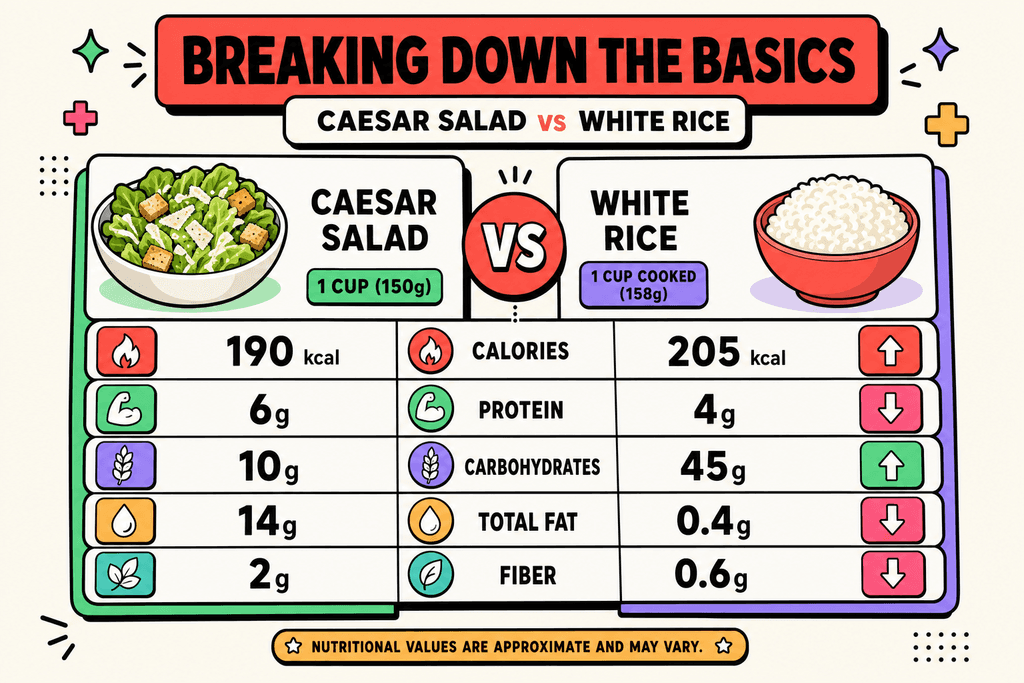
Breaking Down the Basics
Most people think a caesar salad is always the healthier lunch choice compared to white rice, but the numbers tell a different story. The truth is that both options can fit into your daily calorie goals, but understanding what you're actually eating makes all the difference. When you're trying to track your meals, knowing the real calorie counts helps you make better choices without guessing. Apps like MyFoodBuddy let you simply say what you ate and get instant nutritional breakdowns, which beats spending ten minutes searching through databases on apps like MyFitnessPal or Cronometer.
Standard Serving Sizes Explained
Before we compare anything, we need to know what counts as a normal serving. A typical restaurant caesar salad weighs about 3 cups or roughly 300 grams with dressing included. White rice portions are usually measured as 1 cup cooked, which equals about 158 grams.
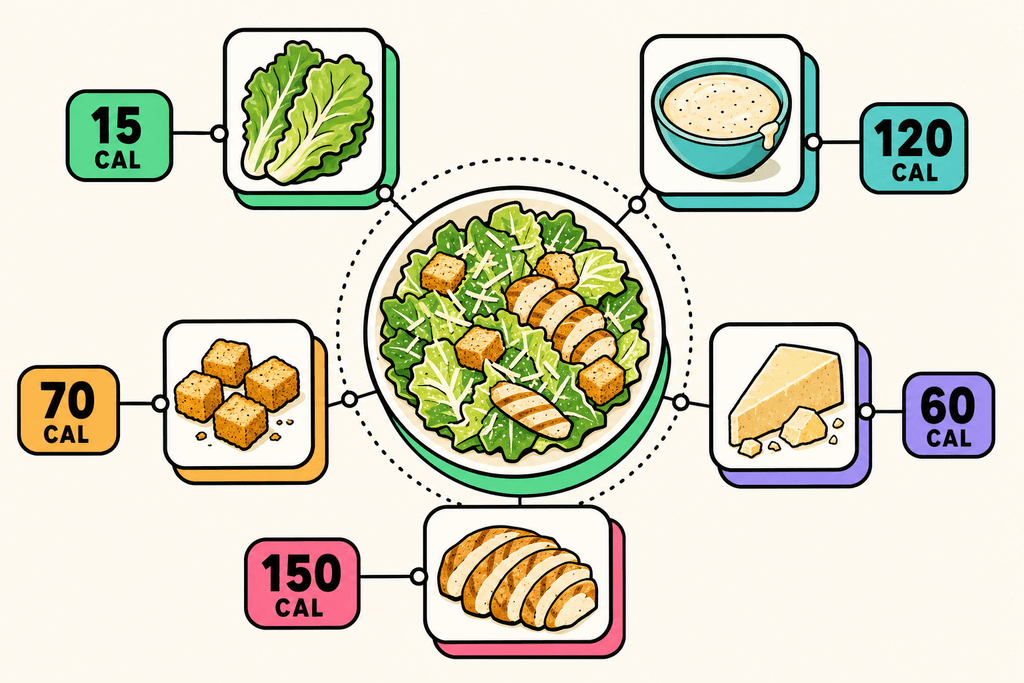
Here's where things get tricky with salad caesar calories. The base ingredients matter less than what gets added on top:
- Romaine lettuce alone has barely any calories
- Caesar dressing adds 150-200 calories per serving
- Parmesan cheese contributes another 50-100 calories
- Croutons can pack in 100+ calories easily
- Grilled chicken adds 140-200 calories if included
White rice stays pretty consistent no matter where you get it. The cooking method and any added butter or oil are the main variables that change how many calories is white rice actually giving you.
The Nutritional Breakdown
The side-by-side comparison shows some surprising differences between these two lunch staples. Check out how they stack up nutritionally:
| Nutrient | Caesar Salad (3 cups) | White Rice (1 cup) |
|---|---|---|
| Calories | 350-470 | 205 |
| Protein | 8-10g | 4g |
| Carbs | 12-18g | 45g |
| Fat | 28-38g | 0.4g |
| Fiber | 3-4g | 0.6g |
Notice how the caesar salad actually has more calories in most cases. That's because fat contains more than twice the calories per gram compared to carbs or protein, and caesar dressing is loaded with oil.
What Changes the Calorie Count
Both foods can swing wildly in their final calorie totals depending on preparation. Your homemade version will look completely different from what you get at a restaurant.
For caesar salads, these factors make the biggest impact:
- Light dressing vs regular dressing (100+ calorie difference)
- Amount of parmesan cheese sprinkled on top
- Crouton quantity and whether they're fried or baked
- Added proteins like chicken, shrimp, or salmon
White rice variations are simpler but still important:
- Cooking with butter or oil adds 50-100 calories
- Portion size doubles or triples at some restaurants
- Fried rice jumps to 300+ calories per cup
When you're logging meals quickly with voice input, these details get captured automatically instead of you having to remember every ingredient. That's the whole point of making calorie tracking actually work in real life.
White Rice Calories: Simple But Substantial
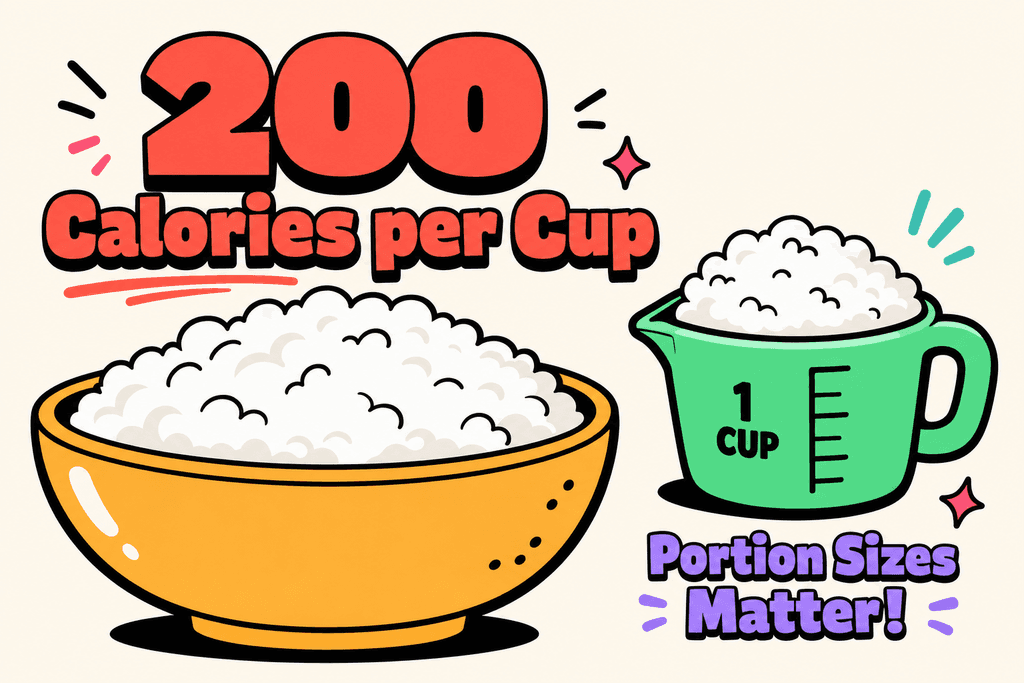
White rice seems straightforward when you're tracking calories, and in many ways it is. One cup of cooked white rice contains approximately 200 calories, which makes the math pretty easy. But here's where things get tricky: most people don't eat just one cup, and restaurants definitely don't serve just one cup. The portion sizes can turn this simple side into a much bigger calorie commitment than you expected.
White Rice Calories: Simple But Substantial
Cooking method matters more than you'd think. The way rice absorbs water during cooking affects its final calorie density. Some types of rice end up fluffier and less dense, while others pack more tightly into that measuring cup.
| Portion Size | Calories |
|---|---|
| 1/2 cup cooked | 100 calories |
| 1 cup cooked | 200 calories |
| 2 cups cooked | 400 calories |
| 3 cups cooked | 600 calories |
Restaurant portions are where the calorie count really adds up. That takeout container or side dish at a restaurant usually contains 2 to 3 cups of rice. You might think you're eating a moderate lunch, but you're actually consuming 400 to 600 calories just from the rice. Add in whatever protein or sauce comes with it, and you're looking at a much bigger meal.
The difference between short-grain and long-grain varieties is minimal from a calorie perspective. Both hover around the same 200 calories per cup mark. What makes white rice easier for tracking is its consistency. Unlike salad caesar calories that vary wildly based on preparation, how many calories is white rice stays pretty predictable once you know your portion size.
Making the Right Choice for Your Goals
Choosing between a Caesar salad and white rice for lunch depends on what you're trying to accomplish with your meal. Neither option is inherently better or worse, but they serve different purposes in your diet. A Caesar salad with chicken gives you protein and some vegetables, which helps you feel full longer. White rice provides quick energy and pairs well with lean proteins, making it useful before a workout or when you need sustained energy for the afternoon.
Caesar salad wins for protein and satiety when you add grilled chicken. The combination of protein and fat from the dressing keeps you satisfied for hours. But you need to be honest about the calorie content, especially if you're eating out.
Caesar Salad Advantages: High protein with chicken, contains vegetables, keeps you full longer, provides healthy fats
Caesar Salad Disadvantages: Unpredictable calories at restaurants, high in sodium, dressing is calorie-dense, can exceed 800 calories
White Rice Advantages: Predictable calorie count, easy to measure, good pre-workout energy, pairs well with lean proteins
White Rice Disadvantages: Low in protein and fiber, doesn't keep you full long, restaurant portions are oversized, blood sugar spike
White rice works better when you need clean energy without too much fat. Athletes often choose rice before training because it digests easily and provides steady fuel. The key is controlling your portion size, which is easier to do at home than at a restaurant.
Modifying either option to fit your calorie budget is totally doable. For Caesar salad, ask for dressing on the side and use half of what they give you. Skip the croutons or ask for a smaller portion. With white rice, measure your serving or ask for a half portion at restaurants. These small changes can save you 200 to 300 calories without sacrificing the meal you want.
This is where tracking apps become incredibly useful. Instead of guessing or doing mental math, you can quickly log your meal and see exactly where you stand. MyFoodBuddy lets you say "Caesar salad with grilled chicken" or "one cup of white rice with teriyaki chicken" and handles the calculation for you. No need to search through databases or create custom meals like you would with older apps.
Creating balanced meals with either option means thinking about what else goes on your plate. If you choose the Caesar salad, you're probably set for protein and fat but might want to add some complex carbs later. If you go with white rice, pair it with a lean protein and vegetables to round out your nutrients. The goal isn't to avoid either option, but to understand how they fit into your overall daily intake.
Whether you're comparing burger options or trying to find the lowest calorie fast food meals, the same principle applies. Know your numbers, control your portions, and use tools that make tracking simple. The easier it is to log your food, the more likely you are to stick with it. That's why AI-powered tracking has become so popular for people who want results without the hassle of traditional calorie counting.
Why Tracking Makes All the Difference
Most people guess wrong when estimating calories in restaurant meals, and the margin of error is bigger than you'd think. Studies show that diners underestimate the salad caesar calories in their lunch by an average of 600 calories, which is enough to completely derail a weight loss goal. The problem gets worse when you're choosing between seemingly simple options like a caesar salad versus white rice. One seems healthy, the other seems like a carb bomb, but the reality often surprises people who actually track their intake.
The Hidden Ingredient Problem
Caesar salads are notorious for hiding calories in places you wouldn't expect. The dressing alone can pack 300-400 calories, and that's before you add croutons, parmesan, and sometimes bacon or chicken. Restaurant portions make this worse because they're not measuring anything with precision.
Calorie Estimation Accuracy: Restaurant diners underestimate meal calories by 600+ on average, with salads being among the most commonly misjudged items.
White rice seems straightforward, but portion sizes vary wildly. A cup of cooked white rice has about 200 calories, but restaurants often serve 2-3 cups as a side dish. Without tracking, you're just guessing at how many calories is white rice actually contributing to your meal.
Portion Control Beats Food Choice
Here's what matters more than picking the "right" food. The actual portion size you eat determines whether you stay within your calorie goals or blow past them. A small caesar salad might have fewer calories than a large serving of white rice, but a large caesar salad with all the toppings will beat out a modest rice portion every time.
- Restaurant caesar salads range from 400 to 1,200 calories depending on size and ingredients
- A standard cup of white rice contains 200 calories, but serving sizes vary by 200-300%
- Dressing and toppings can triple the base calorie count of a salad
- Without measuring, most people serve themselves 40% more than they think
Quick Logging Changes Everything
Traditional calorie tracking apps require you to search through databases, measure portions, and input each ingredient separately. This takes several minutes per meal and becomes a chore that most people quit within a few weeks. The friction between wanting to track and actually doing it kills consistency.
MyFoodBuddy lets you log meals in seconds using voice or text input. Just say "caesar salad with grilled chicken and extra dressing" or "one cup of white rice with my lunch," and the app calculates everything automatically using AI and USDA data. No searching, no measuring, no math.
- Voice logging takes 5-10 seconds versus 3-5 minutes with manual entry
- Natural language processing understands how people actually describe food
- Automatic calculations eliminate the guesswork from portion estimation
Tracking Consistency: Users who can log meals in under 10 seconds are 3x more likely to maintain tracking habits beyond 30 days.
The difference between success and failure in calorie tracking isn't willpower. It's whether the tracking method fits into your actual life without adding stress or time pressure to every meal.
Your Lunch, Your Choice, Your Goals
So here's the thing about salad caesar calories and how many calories is white rice. Neither one is the villain or the hero of your lunch break. A typical caesar salad can pack anywhere from 300 to 800 calories depending on the dressing and toppings, while a cup of white rice sits around 200 calories but offers less protein and fiber. What matters is what you're trying to do with your diet and how these foods fit into your day.
The real problem isn't choosing between these two options. It's the guesswork that comes with tracking what you actually ate. When you're standing in line at lunch, you need to know the numbers fast so you can make a choice that fits your goals. That's where AI-powered tracking comes in handy, letting you log "caesar salad with grilled chicken" or "white rice with teriyaki chicken" in seconds instead of hunting through databases.
Both foods can work in a healthy eating plan when you understand portion sizes and what else you're eating that day. The caesar salad gives you more volume and keeps you full longer if you go easy on the dressing. The white rice pairs well with protein and vegetables to round out your macros. If you're curious about other lunch options that are easy to track, there are plenty of choices that won't derail your progress. If you're curious about other lunch options that are easy to track, you can find detailed calorie information in our article on Cafe Rio calories for burritos, bowls, tacos and salads.
MyFoodBuddy makes this whole process easier by letting you speak or type what you ate and handling the calorie math for you. No more spending five minutes trying to figure out if your salad had two tablespoons or three tablespoons of dressing. You might also want to check out how custom tracking compares to old-school methods if you're tired of the usual apps.
The bottom line is this: knowing your numbers removes the stress from lunch decisions. When tracking takes seconds instead of minutes, you're way more likely to stick with it.
Common Questions About Lunch Calories
Choosing between a Caesar salad and white rice at lunch seems simple until you start thinking about calories, nutrition, and what actually keeps you full. These questions come up all the time when people try to make smarter lunch choices. Here are the answers that actually matter when you're standing in line trying to decide what to eat.
Is Caesar salad actually healthy for weight loss?
A Caesar salad can work for weight loss, but it depends entirely on the dressing and toppings. The lettuce itself is super low in calories, but a typical restaurant Caesar salad with creamy dressing, croutons, and parmesan can pack 400-800 calories. If you're making one at home or ordering a lighter version with dressing on the side, you can keep it under 300 calories and still feel satisfied.
How many calories is white rice at a restaurant?
Restaurant portions of white rice usually contain about 200-300 calories per cup, but most places serve you closer to 1.5 or 2 cups as a side. That means you're looking at 300-600 calories just from the rice before you add anything else to your plate. The tricky part is that restaurant servings are almost always bigger than what you'd measure at home, which is why tracking can get confusing when eating out.
Is white rice bad for losing weight?
White rice isn't bad for weight loss, but it's easy to overeat because it doesn't have much fiber or protein to keep you full. A half-cup serving has about 100 calories and fits into most weight loss plans just fine. The problem happens when you eat two or three cups without realizing it, which can add 400-600 calories to your meal pretty quickly.
What is a good portion size for white rice at lunch?
A good portion is about half a cup to one cup of cooked white rice, which gives you 100-200 calories and leaves room for protein and vegetables on your plate. Most people do better with smaller rice portions paired with foods that have more protein and fiber. This keeps your energy steady and helps you avoid that afternoon crash.
Can I eat Caesar salad every day?
You can eat Caesar salad daily if you watch the portions and mix up your other meals to get different nutrients. The main issue is that salad caesar calories can sneak up on you if you're not careful with the dressing, and eating the same thing every day might mean you're missing out on other important vitamins and minerals your body needs.
How do I track calories when eating out?
Tracking restaurant meals used to mean guessing or spending ten minutes searching through databases on apps like MyFitnessPal. With MyFoodBuddy, you just say or type what you ate like "Caesar salad with grilled chicken and a side of white rice" and the app figures out the calories for you using AI. It saves a ton of time and makes tracking actually doable when you're eating lunch out multiple times a week.
Ready to start tracking smarter?
Download MyFoodBuddy and start tracking your calories by just saying what you ate. No more searching databases or guessing portions.
Get started