Hamburger vs McChicken Calories: Which Is Healthier?
Hamburger calories vs McChicken calories breakdown. Compare nutrition facts, macros, and hidden ingredients to make smarter fast food choices.
The Fast Food Calorie Dilemma
Most Americans grab fast food three to four times every week, but few realize that choosing between a hamburger and a McChicken could mean a difference of hundreds of calories over time. When you're trying to stick to your nutrition goals, knowing the exact hamburger calories versus mcchicken calories can make or break your progress. With MyFoodBuddy, you can simply say what you ate and instantly see how these choices fit into your daily targets, turning confusing nutrition labels into clear, actionable data.
Table of Contents
Understanding Fast Food Nutrition Labels
McDonald's serves over 69 million customers every single day, which means millions of people are making quick food choices without really knowing what they're eating. When you're standing at the counter trying to decide between a hamburger and a McChicken, the calorie difference might seem small, but those numbers add up fast. Most people guess their fast food calories wrong by about 200-300 calories per meal, which can completely throw off your daily goals. Understanding what's actually in your food is the first step to making better choices that fit your lifestyle.
The Basic Nutrition Breakdown
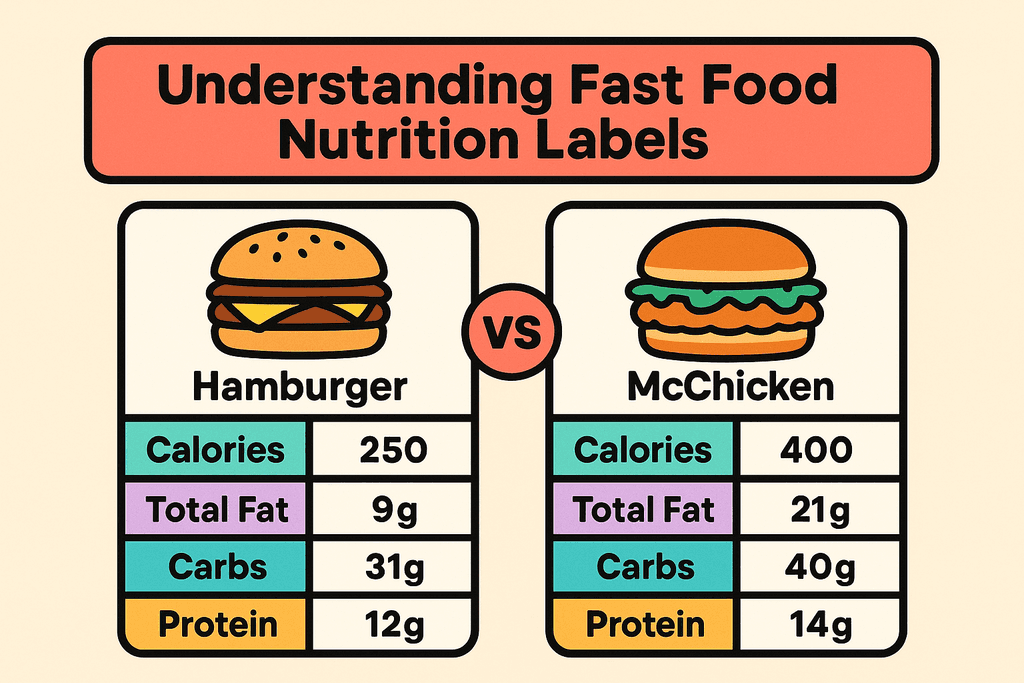
Let's look at what you're actually getting when you order these two popular menu items. The numbers might surprise you because they're closer than most people think.
| Nutrition Facts | Hamburger | McChicken |
|---|---|---|
| Calories | 250 | 400 |
| Total Fat | 9g | 21g |
| Protein | 12g | 14g |
| Carbohydrates | 31g | 39g |
| Sodium | 480mg | 560mg |
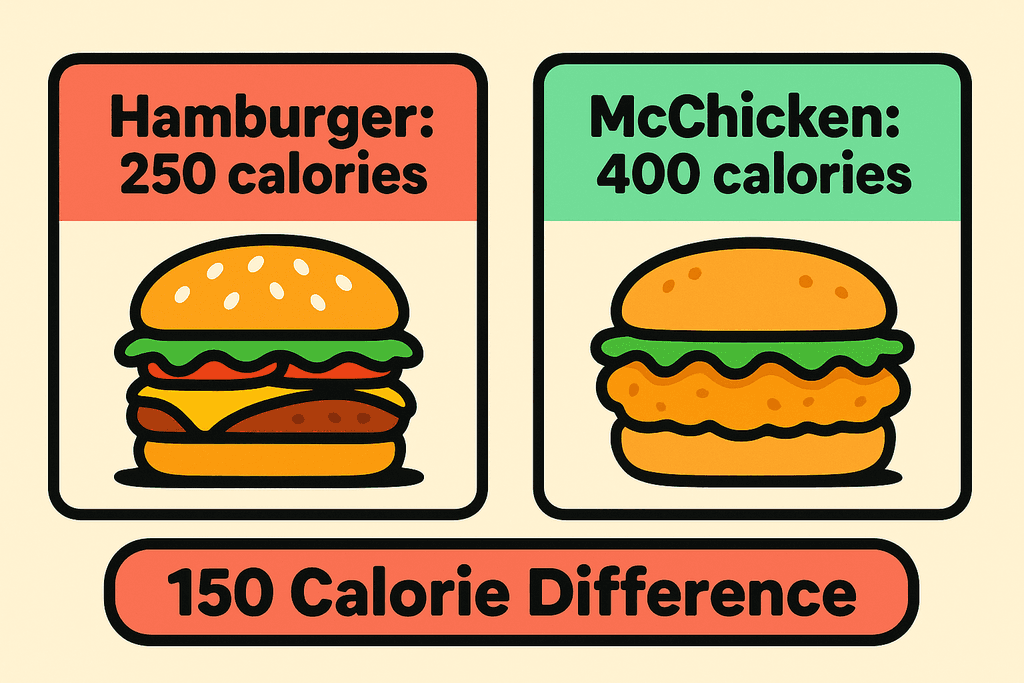
The hamburger calories come in at 250, while mcchicken calories clock in at 400. That's a 150-calorie difference, which is about the same as a small apple or a handful of almonds.
Why Tracking Matters More Than You Think
Here's the thing about fast food nutrition: the official numbers only tell part of the story. What you actually consume depends on a bunch of factors that most calorie tracking apps don't make easy to account for.
- Adding extra ketchup or mayo can add 50-100 calories you didn't plan for
- Asking for no pickles doesn't change the calories, but extra cheese definitely does
- The size of the patty can vary slightly between locations
- Combo meals with fries and drinks can triple your calorie intake
Traditional apps like MyFitnessPal require you to manually search through hundreds of McDonald's menu variations and custom entries. With MyFoodBuddy, you just say "I had a McChicken with no mayo" and the app figures out the rest using AI.
Serving Sizes and Modifications
McDonald's keeps their serving sizes pretty consistent, but customizations are where things get tricky. A plain hamburger is straightforward, but most people don't eat their burgers completely plain.
- Extra sauce packets add 25-45 calories each
- Removing mayo from a McChicken saves about 40 calories
- Adding cheese to a hamburger adds 50 calories and 4g of fat
The problem with most calorie counters is they make you do math homework just to log a simple meal. You have to find the base item, then add each modification separately, then double-check that everything added up correctly.
Hamburger Calories: The Complete Breakdown
A McDonald's hamburger contains 250 calories, which might surprise you since it's one of the smallest items on the menu. The classic burger has been around since the chain opened, and its simple recipe means you can actually understand where every calorie comes from. The patty itself contributes about 90 calories, while the bun adds roughly 120 calories to your total. The remaining 40 calories come from the pickles, onions, ketchup, and mustard that give the burger its signature taste.
Breaking down the macros gives you a clearer picture of what you're eating. The hamburger contains 12 grams of protein, 31 grams of carbohydrates, and 9 grams of fat. Most of the carbs come from the bun, which is why some people skip it when they're watching their carb intake.
| Nutrient | Amount | Daily Value |
|---|---|---|
| Calories | 250 | 12% |
| Protein | 12g | 24% |
| Carbs | 31g | 11% |
| Fat | 9g | 12% |
| Sodium | 510mg | 22% |
| Sugar | 6g | 12% |
The sodium content sits at 510 milligrams, which represents about 22% of your recommended daily intake. That's actually pretty high for such a small burger. The condiments and pickles are the main culprits here, not the beef patty itself.
Hidden calories often come from ingredients you don't think about. The ketchup adds about 15 calories and most of the sugar content. The bun is enriched with added sugars too, contributing to the total 6 grams of sugar in the burger. If you're tracking your meals, these details matter more than you'd think.
McChicken Calories: What You're Really Eating
The McChicken packs 400 calories, making it 60% more caloric than the hamburger despite being roughly the same size. This difference catches a lot of people off guard when they're trying to make healthier choices at McDonald's. The breaded chicken patty is the main reason for the calorie jump, as breading soaks up oil during the frying process. Add the mayonnaise-based sauce, and you've got a calorie bomb that's hard to ignore when you're watching your intake. If you're curious about how baked chicken legs compare in calories, be sure to read our article on baked chicken leg calories with skin vs skinless.
Looking at the macros reveals why the McChicken calories add up so quickly. You're getting 14 grams of protein, 39 grams of carbs, and 21 grams of fat. That fat content is more than double what's in the hamburger.
| Nutrient | McChicken | Hamburger | Difference |
|---|---|---|---|
| Calories | 400 | 250 | +150 |
| Protein | 14g | 12g | +2g |
| Fat | 21g | 9g | +12g |
| Carbs | 39g | 31g | +8g |
| Sodium | 560mg | 510mg | +50mg |
The breading alone adds about 80 extra calories compared to a plain chicken patty. The mayo contributes another 40 to 50 calories, which is why some people order it without sauce. Sodium levels reach 560 milligrams, slightly higher than the hamburger but still within a similar range.
You can cut the McChicken calories by making simple modifications. Ordering without mayo saves you about 50 calories and 5 grams of fat. Some people also remove half the breading, though that's harder to do consistently. The protein difference between the two sandwiches is only 2 grams, so if you're choosing the McChicken for protein, you're not getting much extra benefit.
Making Smarter Fast Food Choices
When you're focused on weight loss, the hamburger wins by a significant margin with its 250 calories versus the McChicken's 400. That 150-calorie difference might not seem huge, but it adds up quickly if you're eating fast food a few times a week. The hamburger also has less than half the fat content, which matters when you're trying to create a calorie deficit. For anyone tracking macros seriously, these numbers can make or break your daily goals.
High-protein diets present an interesting choice between these two options. The McChicken only offers 2 extra grams of protein while adding 150 calories. That's a terrible protein-to-calorie ratio. You'd be better off getting the hamburger and adding a side of apple slices or a small yogurt parfait if you need more protein.
- For weight loss: Choose the hamburger and save 150 calories
- For protein goals: The hamburger offers better protein per calorie
- For lower sodium: Both are similar, but hamburger edges ahead slightly
- For satisfaction: McChicken's mayo and breading make it more filling
Fitting either option into your daily calorie goals requires some planning. If you're on a 1,500-calorie diet, the hamburger takes up about 17% of your daily intake, while the McChicken consumes nearly 27%. That's a big chunk for a single item that won't keep you full for very long.
Simple modifications can reduce calories without making your meal taste bland. Skip the mayo on the McChicken to save 50 calories. Order the hamburger without ketchup to cut 15 calories and reduce sugar. Some people even swap the regular bun for a lettuce wrap, though McDonald's doesn't officially offer this option at all locations.
Tracking these meals used to mean pulling out your phone, searching through databases, and manually entering every ingredient. Apps like MyFitnessPal made this easier, but you still spent time clicking through options and adjusting serving sizes. With MyFoodBuddy, you just say "I had a McChicken from McDonald's" and the app logs everything automatically using AI and USDA data. No searching, no clicking through menus, no math. If you're someone who grabs fast food on busy days, voice-powered tracking makes it way easier to stay consistent with your goals.
The reality is that both options can fit into a healthy diet if you're tracking properly. The hamburger gives you more flexibility with your remaining calories for the day. The McChicken might satisfy you more if you're really hungry, but you'll need to account for those extra calories somewhere else. Neither choice is perfect, but knowing the exact numbers helps you make decisions that actually support your goals instead of derailing them.
The Real Impact on Your Daily Nutrition Goals
That 150-calorie difference between a hamburger and McChicken might not seem like much when you're standing at the counter. But here's what most people miss: those extra calories from choosing the McChicken add up faster than you'd think. If you grab fast food three times a week and consistently pick the higher-calorie option, you're looking at an extra 450 calories weekly, which translates to roughly 23,400 calories per year. That's enough to add about 6.7 pounds to your weight if everything else stays the same.
Quick Math: 150 extra calories × 3 meals per week × 52 weeks = 23,400 calories annually
Weight Impact: That's approximately 6.7 pounds of potential weight gain per year
The Sodium Overload Problem
Both options pack a serious sodium punch, but the McChicken's 560mg gets you about a quarter of your daily limit in one sandwich. The hamburger isn't much better at 480mg. Most people don't realize they're hitting their sodium ceiling by lunchtime when they eat fast food regularly.
- Daily sodium limit: 2,300mg for most adults
- McChicken provides 24% of daily sodium in one meal
- Hamburger provides 21% of daily sodium in one meal
- Add fries and a drink, and you're easily over 50% of your daily limit
Meeting Your Protein Needs
The hamburger wins here with 12g of protein compared to the McChicken's 14g. If you're trying to hit 100-150g of protein daily for muscle maintenance or weight loss, every gram counts.
- Average adult needs 0.8g protein per kg of body weight
- Active individuals need 1.2-2.0g per kg
- Neither sandwich provides enough protein as a standalone meal
Why Fast Food Tracking Falls Apart
Here's where things get tricky. Traditional calorie tracking apps make logging fast food a pain because you're searching through databases, adjusting portion sizes, and second-guessing whether the entry matches what you actually ate. This friction is exactly why people stop tracking after a few weeks. When logging takes three minutes per meal, you're spending 15 minutes daily just entering food data.
Voice-based tracking changes this completely. With MyFoodBuddy, you just say "McChicken from McDonald's" and you're done in seconds. The AI handles the nutritional breakdown automatically, which means you're way more likely to actually track that fast food meal instead of conveniently "forgetting" it. Consistency beats perfection when it comes to reaching your goals.
Your Fast Food, Your Choice, Tracked Easily
So here's what we learned about hamburger calories versus mcchicken calories. The McDonald's hamburger sits at around 250 calories with 9 grams of fat, while the McChicken packs about 400 calories and 21 grams of fat. The hamburger has more protein per calorie, but the McChicken gives you that crispy satisfaction some people crave. Neither one is going to wreck your diet if you're keeping track of what you eat.
The real problem isn't choosing between these two options. It's whether you're actually tracking what you eat in the first place. Most people quit tracking because traditional apps make you search through endless databases and measure every ingredient.
That's where something like MyFoodBuddy comes in handy. You just say "I had a McChicken and small fries" and it logs everything for you. No searching, no measuring, no spending five minutes trying to find the right menu item in a database.
The bottom line: Both the hamburger and McChicken can fit into your daily calories. The one that's "healthier" depends on your specific goals and what else you're eating that day. If you're trying to maintain a calorie deficit, the hamburger gives you more room for other meals.
What matters most is consistency. When tracking takes seconds instead of minutes, you're way more likely to stick with it. And that's when you start seeing real results, whether you're team hamburger or team McChicken.
Common Questions About Fast Food Calories
Fast food nutrition can be confusing, especially when you're trying to make better choices or track your calories. These questions come up all the time when people are comparing menu items or trying to fit McDonald's into their diet. Here's what you need to know about hamburger calories, mcchicken calories, and tracking your fast food meals without the hassle.
Which has fewer calories: hamburger or McChicken?
The McDonald's hamburger has fewer calories at 250, while the McChicken comes in at 400 calories. That's a 150-calorie difference, which is pretty significant if you're watching your intake. The hamburger is also lower in fat and sodium, making it the lighter choice between the two.
Can I eat McDonald's and still lose weight?
Yes, you can eat McDonald's and lose weight as long as you stay within your calorie goals for the day. Weight loss comes down to eating fewer calories than you burn, not avoiding specific restaurants. The key is choosing lower-calorie options like the hamburger, tracking what you eat, and making sure it fits your daily targets.
How accurate are McDonald's calorie counts?
McDonald's calorie counts are generally accurate because chain restaurants are required to provide nutritional information based on standardized recipes. However, actual calories can vary slightly depending on preparation and portion sizes. The listed numbers are reliable enough for tracking purposes, especially when you're logging meals consistently over time.
What's the healthiest way to order a hamburger or McChicken?
For the hamburger, order it as-is since it's already a lighter option. For the McChicken, ask for no mayo to save about 40 calories and 4.5 grams of fat. Skip the fries and sugary drinks, and opt for water or unsweetened tea instead. You can also add a side salad to increase your vegetable intake without adding many calories.
How do I track fast food meals quickly?
The fastest way is to use voice logging instead of searching through databases manually. With MyFoodBuddy, you can just say "McChicken with no mayo and a small fries" and the app calculates everything for you automatically. This beats spending several minutes in apps like MyFitnessPal trying to find the right menu items and entering each component separately.
Does removing mayo from McChicken make a big difference?
Removing mayo saves about 40 calories and 4.5 grams of fat, which might not seem huge but adds up over time. If you eat a McChicken twice a week, that's over 4,000 calories saved per year just from skipping the mayo. It's one of those small changes that makes tracking easier and helps you stay within your goals without feeling deprived.
Ready to start tracking smarter?
Download MyFoodBuddy and start tracking your calories by just saying what you ate. No more searching databases or guessing portions.
Get started