
Onion Calories in Raw, Grilled and Sauteed Servings
Discover calorie counts for raw, grilled, and sauteed onions. Learn how cooking methods change onion nutrition and track them easily.
You toss a handful of onions into your pan without thinking twice, but here's something that might surprise you: those same onions can jump from 44 calories when raw to over 150 calories once sauteed. The cooking method you choose changes everything about tracking onion calories accurately, and most people using apps like MyFitnessPal or Cronometer don't realize they're logging the wrong numbers. Whether you're grilling, sauteing, or eating them raw, understanding these calorie differences helps you stay on track with your goals without the guesswork.
Table of Contents
Understanding Onion Nutrition Basics
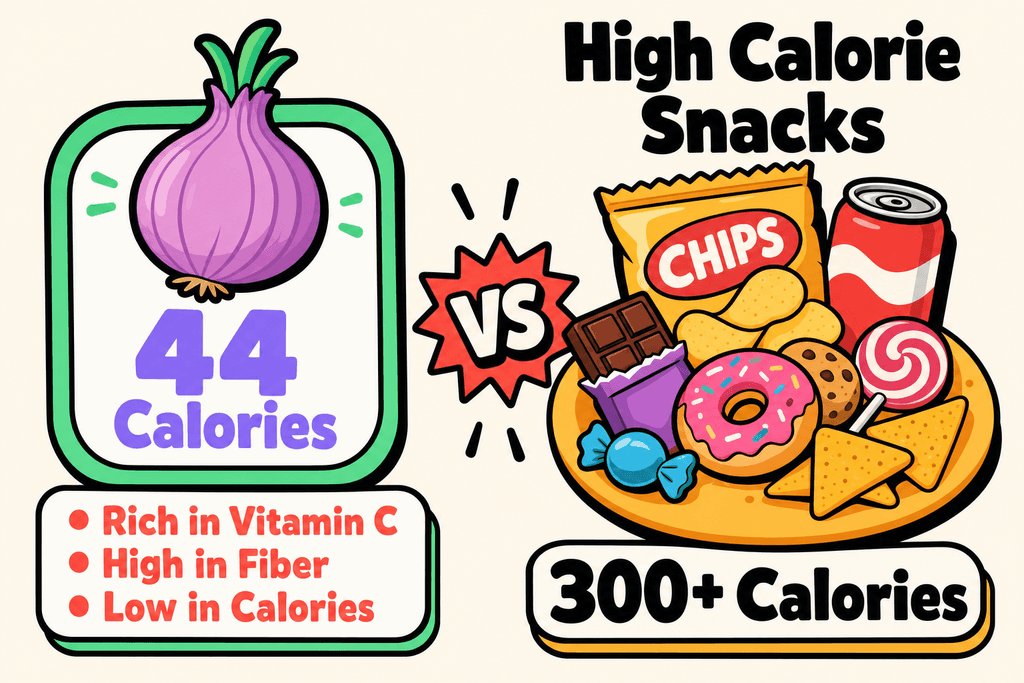
A single medium onion contains just 44 calories, making it one of the most diet-friendly vegetables you can add to any meal. Whether you're tracking your food intake with apps like MyFoodBuddy or just trying to eat healthier, onions give you tons of flavor without packing on the pounds. They're loaded with vitamin C, fiber, and other good stuff your body needs. Plus, they make almost everything taste better, which is why they show up in so many recipes around the world.
Why Onions Work for Any Diet
The calorie onion count stays pretty low no matter which type you pick. Yellow onions, red onions, white onions, and even sweet onions all have similar nutrition numbers. This makes tracking your meals super easy since you don't need to worry too much about which variety you're using.
Here's what you get in a medium raw onion (about 110 grams):
| Nutrient | Amount | Daily Value |
|---|---|---|
| Calories | 44 | 2% |
| Carbohydrates | 10g | 3% |
| Fiber | 1.9g | 7% |
| Vitamin C | 8.1mg | 9% |
| Folate | 19mcg | 5% |
Serving Sizes Matter More Than You Think
Most people don't eat a whole onion in one sitting. The amount you actually use changes a lot based on what you're cooking. A few thin slices on a burger is way different from a cup of diced onions in a stir-fry.
Common onion serving sizes include:
- One thin slice (about 10g) for burgers or sandwiches
- One quarter cup chopped (about 40g) for salads
- Half cup diced (about 80g) for cooked dishes
- One whole medium onion (110g) for soups or roasts
When you're logging food, getting the serving size right makes a big difference in your daily totals. Apps that use voice logging, like MyFoodBuddy, let you just say what you ate instead of measuring everything with a scale. But knowing these basic amounts helps you estimate better when you're cooking at home or eating out.
Raw Onion Calories and Serving Sizes
Most people don't think twice about tossing onions into their meals, but these humble vegetables actually pack different calorie counts depending on how you measure them. A medium raw onion weighing about 110 grams contains approximately 44 calories, which makes it one of the lowest-calorie vegetables you can add to your plate. The thing is, most of us don't eat a whole onion in one sitting, so understanding different serving sizes becomes pretty important when you're tracking what you eat. Whether you're dicing them for a salad or slicing them for a burger, the way you measure matters more than you'd think.
When you chop up a raw onion and measure it by the cup, you're looking at about 64 calories per cup. That's because chopped onions pack differently than whole ones, and you end up with more onion per volume.
| Serving Size | Weight | Calories |
|---|---|---|
| Small onion | 70g | 28 calories |
| Medium onion | 110g | 44 calories |
| Large onion | 150g | 60 calories |
| 1 cup chopped | 160g | 64 calories |
| 1 cup sliced | 115g | 46 calories |
Raw onions are mostly water, which explains why they're so low in calories. They contain minimal fat content and are made up of about 89% water, with the rest being carbohydrates and a tiny bit of protein. This makes them a great choice when you want to add flavor and crunch without adding much to your daily calorie onion count.
If you're using MyFoodBuddy to track your meals, you can just say "half a medium onion, chopped" and the app figures out the nutritional info for you. No need to pull out a food scale or do mental math while you're cooking.
Grilled Onion Calories and What Changes
Here's where things get interesting with calorie onion counts. When you throw onions on the grill without any oil or butter, they actually have about the same calories as raw onions. The heat doesn't magically add calories, it just reduces the water content and concentrates the flavors. But most people don't grill onions dry, and that's where the calorie count starts climbing fast. The difference between plain grilled onions and ones cooked with fat can be pretty dramatic.
Adding oil or butter to your grilled onions increases the calories by 40 to 120 per serving, depending on how generous you are with the fat. A typical grilled onion serving with oil lands somewhere between 80 and 120 calories.
- Grilled onions without oil: 44 calories (medium onion)
- Grilled onions with 1 teaspoon oil: 84 calories
- Grilled onions with 1 tablespoon oil: 164 calories
- Grilled onions with butter: 146 calories (1 tablespoon butter)
The amount of oil your onions absorb during grilling varies based on how you cook them. Onions on a grill pan tend to absorb less oil than ones sitting in a pool of butter on a flat griddle. The cooking time matters too, because the longer you grill, the more oil gets absorbed as the water content decreases.
When you're logging grilled onions in a calorie tracking app, you need to account for whatever fat you used. With MyFoodBuddy, you can simply say "grilled onions with olive oil" and it calculates everything based on typical cooking methods, saving you from having to measure every drop of oil that went into the pan.
Making Smart Choices When Cooking Onions
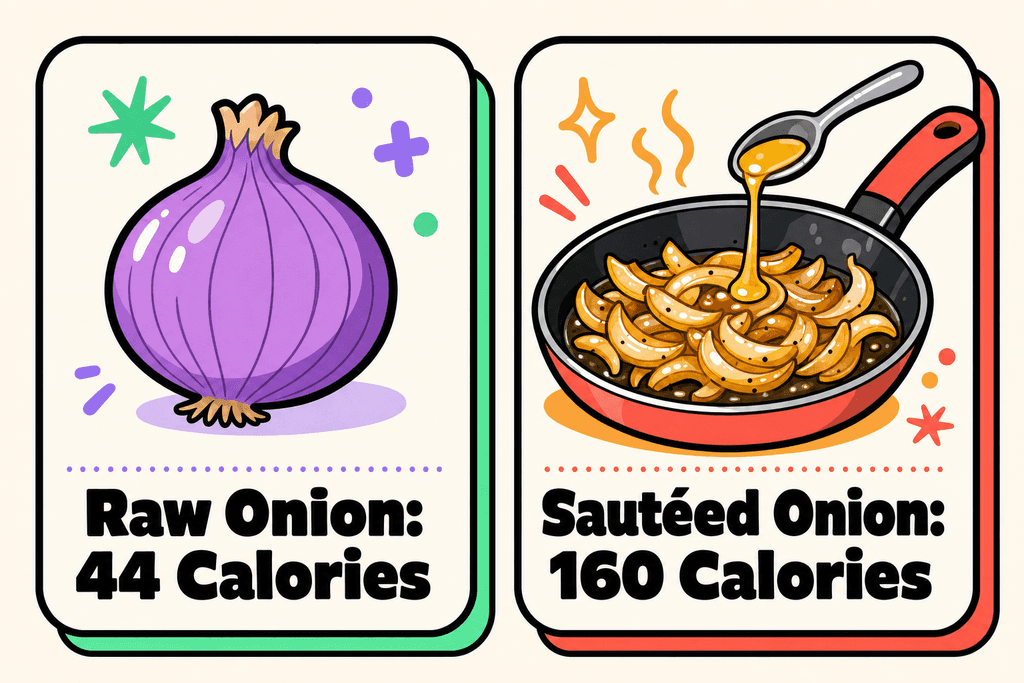
The difference between a raw onion and a sautéed one isn't just about taste. When you look at the calorie onion counts across cooking methods, you're seeing a range that can make or break your daily calorie budget. A medium raw onion sits at around 44 calories, while that same onion sautéed in just one tablespoon of oil jumps to over 160 calories. That's nearly four times the calories for what seems like a small cooking choice. The oil you add during cooking is where most people lose track of their actual intake, and it happens more often than you'd think.
Best and Worst Methods for Calorie Control
Not all cooking methods treat your calorie goals equally. Some keep onions light and diet-friendly, while others can turn a healthy vegetable into a calorie bomb without you realizing it.
- Raw onions are your safest bet at just 44 calories per medium onion with zero added fats
- Grilled onions stay lean at around 50-60 calories when you skip the oil or use cooking spray
- Sautéed onions can range from 120-200 calories depending on how heavy-handed you are with the oil
- Caramelized onions pack the most calories because they cook down and absorb more fat over time
Why Tracking Method Matters More Than You Think
Here's where most calorie tracking falls apart. You might log "onions" in traditional apps like MyFitnessPal or Cronometer, but that generic entry doesn't capture whether you ate them raw, grilled, or swimming in butter. The calorie difference is massive, and guessing wrong can throw off your entire day's count.
| Cooking Method | Calories per Medium Onion | Added Fat |
|---|---|---|
| Raw | 44 | 0g |
| Grilled (no oil) | 50-60 | 0-1g |
| Sautéed (1 tbsp oil) | 160-180 | 14g |
MyFoodBuddy handles this differently by letting you describe exactly how you cooked your food using voice or text. When you say "grilled onions with a little olive oil," the app understands the preparation method and calculates accordingly. No more scrolling through dozens of generic onion entries trying to find the right match.
Practical Swaps That Save Calories
Small changes in how you prepare onions add up fast over a week or month of eating. These swaps keep the flavor while cutting unnecessary calories.
- Use cooking spray instead of pouring oil directly into the pan (saves about 100 calories per serving)
- Grill onions on high heat to get caramelization without extended cooking time in fat
- Add raw onions to salads and sandwiches instead of always cooking them
- Measure your oil with a tablespoon rather than eyeballing it from the bottle
The cooking method you choose should match your daily calorie goals, not just your taste preferences. If you're trying to lose weight, raw and grilled onions give you the most food volume for the fewest calories. When you're maintaining or have more flexibility in your budget, sautéed onions become a reasonable option as long as you track the oil accurately.
Track Your Onions the Easy Way
The calorie onion count changes a lot based on how you cook it. A raw medium onion sits at just 44 calories, which makes it one of the lowest calorie vegetables you can add to your meals. But once you start grilling or sauteing, those numbers jump up fast because of the oils and butter we add during cooking. A half cup of sauteed onions can pack nearly three times the calories of the same amount raw, which catches a lot of people off guard when they're trying to track their food accurately.
The tricky part is remembering to log both the portion size and the cooking method every single time. Most traditional tracking apps make you search through databases, pick the right entry, and manually adjust serving sizes. It's the kind of thing that takes forever when you're just trying to log a simple dinner.
With MyFoodBuddy, you can just say "half cup sauteed onions" and the app figures out the rest using AI and USDA data. No searching, no guessing, no math. The same goes for tracking fried chicken calories or figuring out how hamburger and fries stack up against other fast food.
Getting your calorie onion tracking right matters more than most people think. Those small differences between raw and cooked add up over time, especially if onions are a regular part of your cooking. The questions below cover some of the most common things people wonder about when tracking onions in their diet.
Common Questions About Onion Calories
Tracking onions can get confusing when you're trying to count every calorie. The way they're cooked changes everything, and most people don't realize how much the numbers can shift. Here are the most common questions people ask when trying to log onions accurately.
How many calories are in a whole raw onion?
A medium raw onion (about 110 grams) contains roughly 44 calories. Larger onions can have 60-70 calories, while smaller ones might only have 30-35 calories. The size matters more than you'd think when you're tracking your intake.
Do caramelized onions have more calories than sauteed?
Yes, caramelized onions typically have more calories because they cook longer and absorb more oil or butter. A half-cup of caramelized onions can have 100-150 calories depending on how much fat was used, while the same amount sauteed quickly might only have 60-80 calories. The cooking time and added fats make a big difference in the final calorie onion count.
Does the type of onion change the calories?
Not really. Red, white, and yellow onions all have nearly identical calorie counts when raw. The difference is usually just 2-3 calories per serving, which won't affect your daily totals. Sweet onions like Vidalia might have slightly more natural sugars, but we're still talking about minimal differences.
How do I track onions if I don't know how they were cooked?
When you're eating out or didn't cook the meal yourself, it gets tricky. Most traditional tracking apps make you guess between dozens of entries, which wastes time and kills accuracy. MyFoodBuddy lets you just say "chicken with grilled onions" and the AI figures out a reasonable estimate based on typical restaurant preparations, so you don't have to stress over every detail.
Can I reduce calories when cooking onions?
Absolutely. Use cooking spray instead of oil, or try dry-sauteing with a bit of water or broth. Grilling onions without added fat keeps them close to their raw calorie count while still giving you that cooked flavor. Small swaps like these can save you 50-100 calories per meal without sacrificing taste.
How does MyFoodBuddy handle different onion preparations?
You can log onions however you actually ate them using voice or text. Say "salad with raw red onions" or "burger with grilled onions" and the app calculates the nutritional values automatically using AI and USDA data. No need to search through endless database entries or create custom foods like you would with apps like MyFitnessPal or Cronometer.
Ready to start tracking smarter?
Download MyFoodBuddy and start tracking your calories by just saying what you ate. No more searching databases or guessing portions.
Get started