How Many Ounces in a Chicken Breast and Why It Matters
Learn chicken breast sizes, ounces per serving, and how to track protein accurately. Simple math for better meal planning and nutrition goals.
You eyeball a piece of grilled chicken at dinner and guess it's about four ounces, but it's actually closer to seven. That three-ounce difference just added an extra 140 calories and 26 grams of protein you didn't account for, which can completely derail your daily nutrition targets. Most people misjudge chicken breast sizes by two to three ounces every single time they eat it, and those small errors add up fast when you're trying to lose weight or build muscle.
Table of Contents
- What Counts as a Standard Chicken Breast
- Breaking Down Chicken Breast Sizes by the Numbers
- Why Accurate Portions Matter for Your Goals
- Simple Ways to Measure Without a Scale
- Making Chicken Breast Tracking Effortless
- The Real Cost of Guessing Your Portions
- Getting Chicken Portions Right
- Common Questions About Chicken Breast Portions
What Counts as a Standard Chicken Breast
Walk into any grocery store and you'll notice something weird about chicken breasts. Some look like they came from a normal bird, while others are so huge they could feed a small family. The truth is, there's no single "standard" size for a chicken breast, and this makes tracking your food intake way harder than it should be. Whether you're trying to hit your protein goals or just want to know how many ounces chicken breast you're actually eating, understanding these size differences matters a lot.
Typical Size Ranges You Will Find
Most raw chicken breasts at the store fall somewhere between 5 and 10 ounces. That's a pretty big range when you think about it. The smaller ones around 5-6 ounces are closer to what chickens naturally produce, while the massive 10-ounce pieces come from chickens bred specifically to grow larger breasts.
Here's what you'll typically see in different places:
- Regular grocery stores usually stock breasts between 6-8 ounces raw
- Organic or free-range options tend to be smaller, around 5-6 ounces
- Bulk warehouse stores often have the biggest ones at 9-10 ounces
- Pre-packaged frozen breasts are usually closer to 6-7 ounces each
The Cooking Weight Loss Factor
Here's where things get tricky for anyone tracking their nutrition. Chicken loses about 25% of its weight when you cook it, which means that 8-ounce raw breast becomes roughly 6 ounces cooked. This happens because water evaporates during cooking, and the exact amount depends on your cooking method.
Apps like MyFitnessPal and Cronometer require you to specify whether you're logging raw or cooked chicken, which adds an extra step most people forget about. With MyFoodBuddy, you can just say "I ate a grilled chicken breast" and the AI figures out the details for you based on typical serving sizes.
| Raw Weight | Cooked Weight | Protein (approx) |
|---|---|---|
| 4 oz | 3 oz | 26g |
| 6 oz | 4.5 oz | 39g |
| 8 oz | 6 oz | 52g |
| 10 oz | 7.5 oz | 65g |
What Restaurants Actually Serve
Restaurant portions are a whole different story. Most chain restaurants serve chicken breasts that are 6-8 ounces cooked, which means they started at 8-10 ounces raw. Some places even serve double that amount without telling you.
The official serving size according to nutrition guidelines is just 3-4 ounces cooked, which is way smaller than what most people actually eat. This gap between recommended portions and real-world portions is one reason why tracking calories can feel so confusing. When you order chicken at a restaurant, you're probably getting at least two "official" servings, sometimes three.
- Fast casual restaurants typically serve 6-8 oz cooked portions
- Sit-down chain restaurants often serve 8-10 oz cooked portions
- A "standard" nutritional serving is only 3-4 oz cooked
- Meal prep containers usually hold 4-6 oz cooked chicken
Breaking Down Chicken Breast Sizes by the Numbers
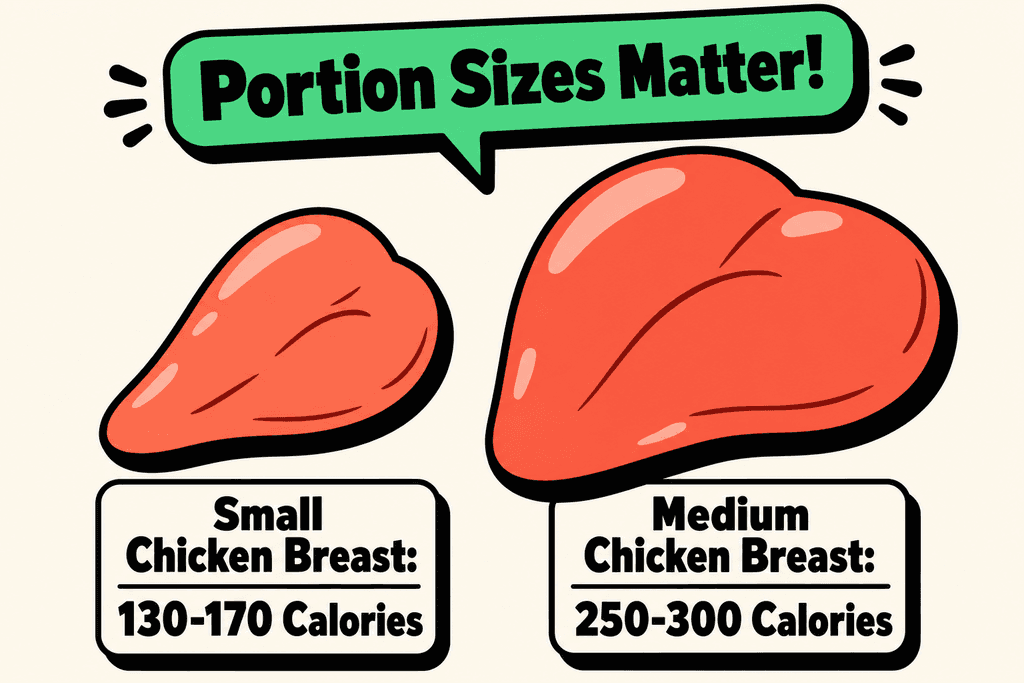
Most people think a chicken breast is just a chicken breast, but the size difference between what you buy at the store can be huge. A small chicken breast weighs about 3-4 ounces when cooked and packs around 130-170 calories. That's a pretty manageable portion, but here's where it gets tricky. The chicken breasts you find at most grocery stores today are often much larger than what people ate twenty years ago, and that means you might be eating way more than you think.
Breaking Down Chicken Breast Sizes by the Numbers
A medium chicken breast comes in at 5-6 ounces cooked and contains roughly 215-260 calories. This is what most recipes assume you're working with when they say "one chicken breast." But walk into any supermarket and you'll see that many packages contain breasts that are even bigger than this standard size.
| Size | Weight (Cooked) | Calories | Protein |
|---|---|---|---|
| Small | 3-4 oz | 130-170 | 23-31g |
| Medium | 5-6 oz | 215-260 | 39-47g |
| Large | 7-10 oz | 300-430 | 54-78g |
Large chicken breasts can weigh anywhere from 7-10 ounces cooked, which translates to about 300-430 calories. That's nearly triple the calories of a small breast. The protein content is impressive though, with roughly 31 grams per 4 ounces cooked. Fat content changes based on how you cook it and whether you remove the skin before eating.
Why Accurate Portions Matter for Your Goals
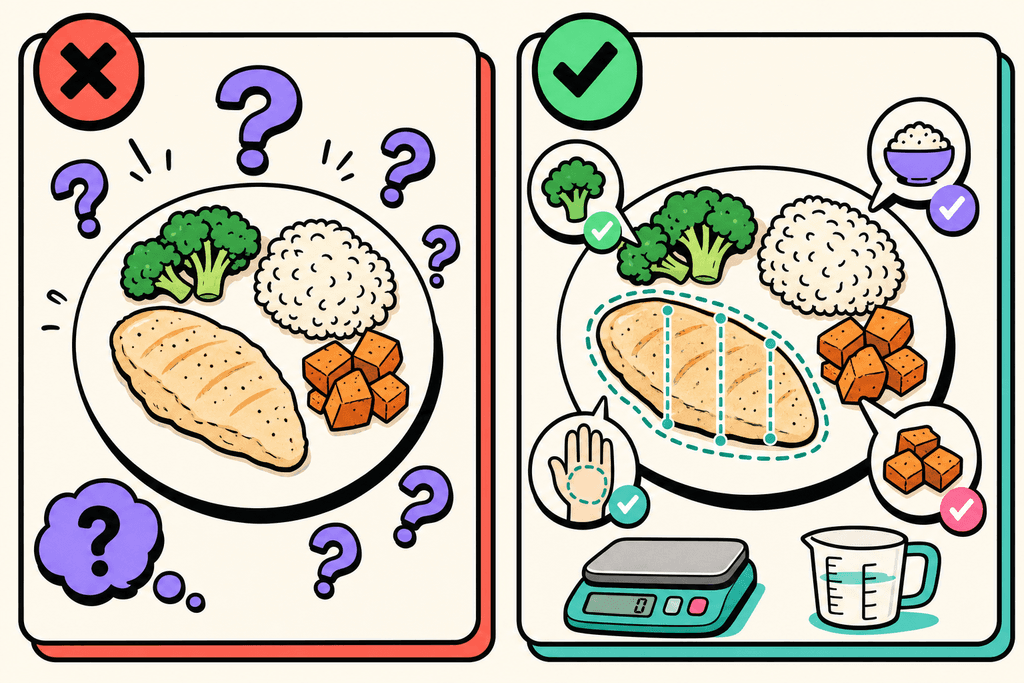
Getting your chicken breast portions wrong might seem like no big deal, but the math tells a different story. If you're underestimating by just 2 ounces per serving and you eat chicken five times a week, you're missing out on over 60 grams of protein weekly. That's a lot of muscle-building fuel left on the table, especially if you're trying to gain strength or recover from workouts. On the flip side, overestimating portion sizes can sneak in 200-300 unexpected calories per day without you even realizing it.
Why Accurate Portions Matter for Your Goals
These small errors don't just disappear. They compound over weeks and months, which is why some people hit frustrating plateaus even when they think they're doing everything right.
- Missing 60+ grams of protein weekly affects muscle recovery
- Extra 200-300 calories daily adds up to 1,400-2,100 calories per week
- Monthly miscalculations can equal 6,000-9,000 hidden calories
- Protein timing impacts satiety and hunger levels throughout the day
Accurate tracking becomes essential when you're working toward specific goals. Whether you're trying to lose weight, build muscle, or just maintain where you are, knowing exactly how many ounces chicken breast you're eating makes the difference between guessing and actually making progress. The body doesn't care about your intentions, it responds to what you actually consume.
Simple Ways to Measure Without a Scale
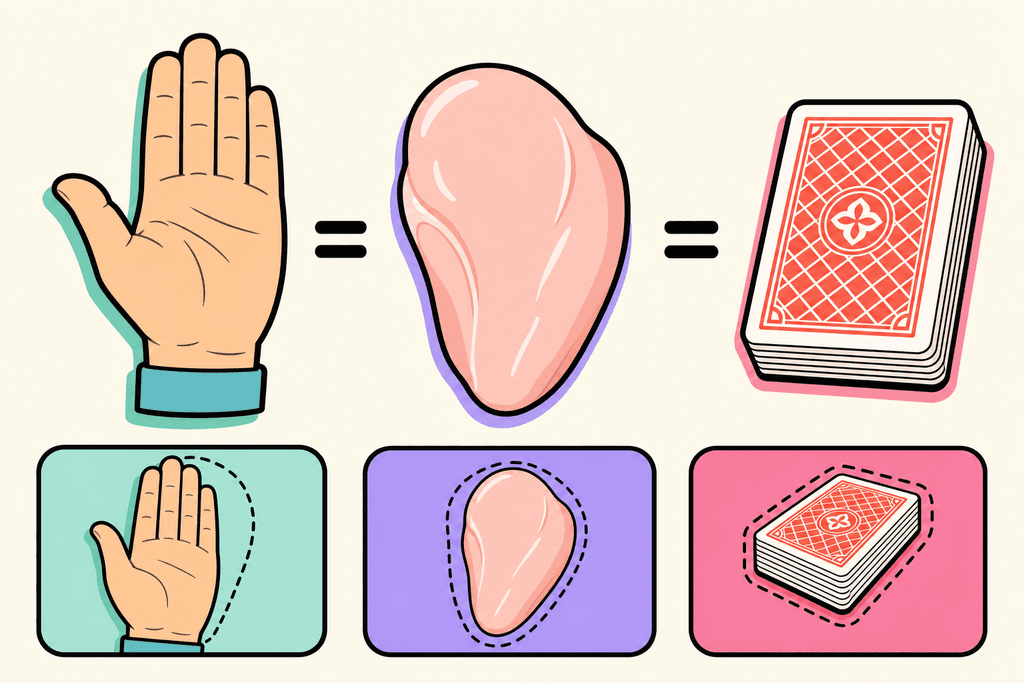
Not everyone wants to carry a food scale everywhere they go, and honestly, you don't always need one. Your palm is actually a pretty reliable measuring tool. A palm-sized portion of chicken breast equals roughly 3-4 ounces cooked, which works for most people as a standard serving. The thickness matters too, so we're talking about a piece that's about as thick as your palm, not paper-thin.
Simple Ways to Measure Without a Scale
The deck of cards comparison is another classic method that works surprisingly well. A standard deck of cards is close to the size and thickness of a 3-4 ounce cooked chicken breast.
- Compare the chicken breast to your palm (fingers together)
- Check if it matches a deck of cards in size and thickness
- Look at the width - should be about 3-4 inches across
- Notice the thickness - roughly half an inch to one inch
These visual cues work whether you're at home or eating out at restaurants. When you're ordering grilled chicken at a restaurant, you can quickly eyeball whether they've given you a 4-ounce portion or an 8-ounce monster. That said, if you're serious about hitting specific nutrition targets, investing in a food scale for home use takes the guesswork out completely. They're cheap, easy to use, and you only need to weigh things at home where precision matters most.
Making Chicken Breast Tracking Effortless
Traditional calorie tracking apps make logging food feel like a part-time job. You open the app, search through endless database entries for "chicken breast grilled," scroll past seventeen different options with slightly different calorie counts, pick one that seems right, then manually adjust the portion size. It takes forever and most people give up after a few weeks because who has time for that every single day.
Voice logging changes the entire game. Instead of typing and searching, you just say what you ate and let technology handle the calculations.
| Method | Time Required | Steps Needed |
|---|---|---|
| Traditional Apps | 2-3 minutes | 5-7 steps |
| Voice Logging | 10-15 seconds | 1 step |
AI can figure out portions from simple descriptions like "grilled chicken breast" without you needing to specify every detail. MyFoodBuddy lets you say what you ate and handles all the math automatically using USDA data. You don't need to remember if that chicken breast was 5 or 6 ounces, just describe it naturally and the app calculates the nutritional breakdown.
The favorites feature makes re-logging your go-to chicken dishes instant. If you meal prep the same grilled chicken recipe every week, you save it once and tap to log it again later. No more searching, no more guessing, no more wasted time. This is especially helpful for chicken lovers who eat it multiple times per week and want to track their intake without the usual hassle.
If you're curious about tracking other chicken dishes beyond plain breasts, check out our guide on voice-powered calorie counting for chicken lovers or learn how many calories fried chicken really contains. For fast food options, we've also covered everything from Chick-fil-A nugget protein facts to McChicken calories and your daily budget.
The Real Cost of Guessing Your Portions
Research shows that most people underestimate their food portions by 20-30% when eyeballing servings. That might not sound like much, but when you're eating chicken breast three or four times a week, those small errors add up fast. A four-ounce chicken breast has about 120 calories and 26 grams of protein, but if you're actually eating six ounces and logging four, you're off by 60 calories and 13 grams of protein per meal. Over a week, that's an extra 420 calories you didn't account for, or a protein deficit of 91 grams if you're underestimating.
This hidden gap between what you think you're eating and reality explains why so many people hit frustrating plateaus. Your body responds to what you actually eat, not what you log in your app. When the numbers don't match up week after week, your results stall out even though you think you're doing everything right.
Why Precision Matters for Your Goals
The impact of portion guessing changes based on what you're trying to achieve. Here's how inaccurate tracking sabotages different fitness goals:
- Weight loss stalls when hidden calories create a smaller deficit than planned
- Muscle gain requires hitting protein targets that guessing makes nearly impossible
- Body recomposition needs precise macros that eyeballing can't deliver
- Performance goals suffer when energy intake doesn't match training demands
The mental toll might be even worse than the physical results. Constantly doing math in your head, searching databases for the right entry, and second-guessing your estimates creates serious tracking burnout. Apps like MyFitnessPal require you to measure, calculate, and manually input every component of your meal.
The Tracking Accuracy Problem
| Estimation Method | Average Error Rate | Weekly Impact |
|---|---|---|
| Eyeballing portions | 20-30% | 400-800 calories |
| Using hand measurements | 15-25% | 300-600 calories |
| Weighing food | 2-5% | 50-150 calories |
The solution isn't just better measuring, it's smarter logging. MyFoodBuddy lets you say "grilled chicken breast, about six ounces" and handles the nutritional breakdown automatically using AI and USDA data. You get accuracy without the mental overhead of traditional calorie counting apps that make you search through endless database entries and do portion math yourself.
Getting Chicken Portions Right
So now you know that most chicken breasts fall somewhere between 3 to 8 ounces when cooked, which is a pretty big range. The difference between a small 3-ounce piece and a large 8-ounce piece is about 140 calories and 30 grams of protein, which can make or break your daily targets. If you're trying to hit specific protein goals or stay within a calorie budget, those numbers actually matter quite a bit. Getting your portions right isn't about being perfect, it's just about being close enough that your tracking reflects what you're actually eating.
The palm-of-your-hand trick works fine when you're eating out or don't have a scale nearby. But let's be honest, most of us aren't great at eyeballing portions consistently, especially when we're hungry or distracted.
This is where modern tracking tools come in handy. With MyFoodBuddy, you can just say "grilled chicken breast" and the app figures out a reasonable portion size based on USDA data. No need to pull out a scale or spend five minutes searching through databases. If you want to be more specific, you can say "6 ounces of grilled chicken breast" and it logs exactly that.
The whole point is making tracking easy enough that you'll actually do it. Whether you're meal prepping chicken for the week or ordering it at a restaurant, knowing roughly how many ounces chicken breast you're eating helps you stay on track without turning every meal into a math problem. For more tips on tracking chicken dishes, check out our guide on voice-powered calorie counting for chicken lovers or see how different preparations stack up in our breakdown of how many calories fried chicken really has.
The questions below cover some of the most common things people wonder about when it comes to chicken breast portions and tracking.
Common Questions About Chicken Breast Portions
Measuring chicken breast seems simple until you actually start doing it. The questions pile up fast, especially when you're trying to track your food accurately. Here are the answers to the most common chicken breast questions that trip people up.
Should I weigh chicken before or after cooking?
Always weigh your chicken raw if you want the most accurate calorie count. Raw chicken loses about 25% of its weight during cooking as water evaporates, which means a 4-ounce raw breast becomes roughly 3 ounces cooked. Most nutrition labels and databases list values for raw chicken, so weighing it raw keeps your tracking consistent.
How much does chicken shrink when cooked?
Chicken typically shrinks by 25-30% when you cook it, depending on your cooking method. Grilling and baking cause more shrinkage than poaching because higher heat pushes out more moisture. This means if you start with 8 ounces raw, you'll end up with about 6 ounces cooked, but the calories stay the same either way.
How many ounces of chicken should I eat per meal?
Most people do well with 4-6 ounces of raw chicken breast per meal, which gives you about 25-40 grams of protein. Your exact needs depend on your weight, activity level, and goals. If you're trying to build muscle, you might aim for the higher end, while someone focused on weight loss might stick to 4 ounces with more vegetables on the side.
Does boneless vs bone-in affect the ounce count?
Yes, and this matters more than you'd think. Bone-in chicken breasts weigh more overall, but you're not eating the bone. A 10-ounce bone-in breast might only have 7 ounces of actual meat. Always weigh boneless chicken for accurate tracking, or remove the bone first before weighing if that's what you bought.
How do I track chicken breast at restaurants?
Restaurant portions are tricky because you can't weigh them yourself. Most restaurant chicken breasts are 6-8 ounces cooked, which is bigger than what most people eat at home. Your best bet is to estimate conservatively and add a buffer for cooking oils or butter they likely used. With MyFoodBuddy, you can just say "grilled chicken breast at a restaurant" and the app figures out a reasonable estimate based on typical portions.
What's the difference between raw and cooked weight for calories?
The calories don't change, but the weight does. Four ounces of raw chicken has the same calories as three ounces of that same chicken after cooking. The confusion happens when people use cooked weight but log it as raw weight in their tracking app, which can throw off your numbers by 25% or more. Pick one method and stick with it, though raw is usually easier since that's how most nutrition info is listed.
Ready to start tracking smarter?
Download MyFoodBuddy and start tracking your calories by just saying what you ate. No more searching databases or guessing portions.
Get started