McChicken Calories and Your Daily Budget
McChicken calories total 400 per sandwich. Learn how fast food fits your diet and track meals effortlessly with smart calorie counting.
That McChicken sandwich you grabbed for lunch packs 400 calories, which might be nearly a third of what you should eat all day. Most people guess fast food has way fewer calories than it actually does, missing the mark by about 20-30% every time. Understanding mcchicken calories and how they fit into your daily budget is the difference between reaching your goals and wondering why the scale won't budge, which is exactly why tools like MyFoodBuddy make tracking these quick meals so much easier than the old-school calorie apps.
Table of Contents
Breaking Down the McChicken Numbers
The McChicken has been on McDonald's menu since 1980, making it one of the longest-running items you can order. At around 400 calories, it sits right in the middle of the fast food sandwich spectrum. But what does that number actually mean for your daily eating plan? Understanding the full nutritional picture helps you make better choices without giving up the foods you enjoy. Whether you're tracking calories for weight loss or just trying to eat better, knowing what's in your food matters.
What You're Actually Eating
A standard McChicken packs more than just calories into that bun. The complete breakdown shows you exactly what you're getting with each bite.
| Nutrient | Amount | % Daily Value |
|---|---|---|
| Calories | 400 | 20% |
| Total Fat | 21g | 27% |
| Saturated Fat | 3.5g | 18% |
| Protein | 14g | 28% |
| Carbohydrates | 39g | 14% |
| Sodium | 560mg | 24% |
The sodium content is something most people don't think about when grabbing fast food. At 560mg, one McChicken gives you nearly a quarter of your recommended daily sodium intake. That's worth keeping in mind if you're watching your salt.
How It Fits Your Daily Goals
The 400 calories in a McChicken means different things depending on your personal goals. For someone eating 2,000 calories a day, it's exactly 20% of your budget. For someone on a 1,500 calorie plan, it jumps to about 27%.
- On a 1,500 calorie diet, a McChicken takes up more than a quarter of your day
- On a 2,000 calorie diet, you've got plenty of room for other meals
- On a 2,500 calorie diet, it's less than a fifth of your total intake
Apps like MyFitnessPal require you to search through databases and manually log each ingredient. With MyFoodBuddy, you just say "I had a McChicken" and the app handles the rest.
Comparing Menu Options
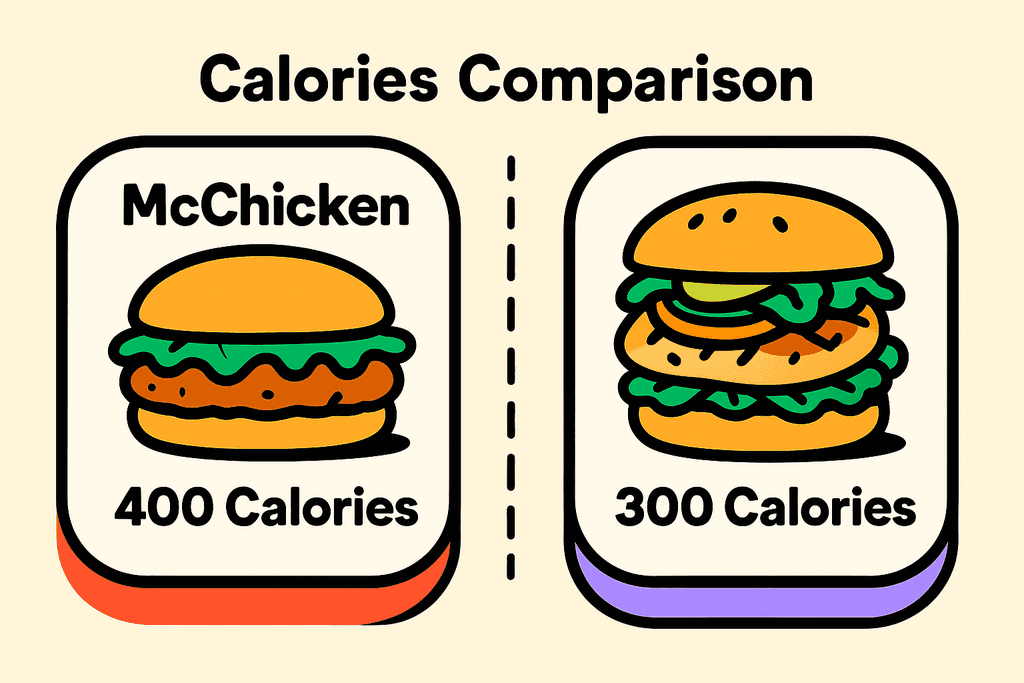
The McChicken actually sits in a sweet spot compared to other McDonald's sandwiches. It has fewer calories than a Big Mac (563 calories) but more than a hamburger (250 calories). The Quarter Pounder with Cheese clocks in at 520 calories, while the Filet-O-Fish comes in at 390.
- Big Mac: 563 calories, 30g fat, 46g carbs
- Quarter Pounder with Cheese: 520 calories, 27g fat, 41g carbs
- McChicken: 400 calories, 21g fat, 39g carbs
- Filet-O-Fish: 390 calories, 19g fat, 39g carbs
The protein content in a McChicken is decent at 14 grams, though it's not as high as beef options. Understanding these differences helps you pick what works best for your specific macro goals without spending forever calculating everything yourself.
How Fast Food Calories Add Up Throughout Your Day
A single McChicken sandwich contains about 400 calories, which seems reasonable enough when you look at it on its own. But here's what most people don't realize until they actually track their food for a few days. That sandwich is rarely eaten alone, and the calories from everything else you eat that day can sneak up on you faster than you'd think. Let's walk through what a typical day might look like when you grab a McChicken for lunch and see where things actually stand.
Say you start your morning with a quick breakfast. Two eggs, toast with butter, and coffee with cream adds up to around 350 calories. Not bad at all. Then lunch rolls around and you hit the drive-thru for that McChicken combo meal with medium fries and a Coke, which brings you to about 950 calories just for that one meal. By dinner, even if you eat something modest like grilled chicken with rice and vegetables for 500 calories, you're already at 1,800 calories for the day.
| Meal | Food Items | Calories |
|---|---|---|
| Breakfast | Eggs, toast, coffee | 350 |
| Lunch | McChicken combo | 950 |
| Dinner | Grilled chicken, rice, veggies | 500 |
| Total | 1,800 |
The real problem isn't the McChicken itself. It's those hidden calories in the combo meal additions that catch people off guard. A medium fries adds 320 calories, and that medium Coke brings another 220 calories to the table. Suddenly your 400-calorie sandwich becomes a 940-calorie meal, and you haven't even had dinner yet.
Compare that same lunch to a home-cooked alternative. A homemade chicken sandwich with a side salad and water would clock in around 450 calories total. That's a 500-calorie difference right there, which is basically an entire extra meal's worth of calories you could use elsewhere in your day.
Making Smarter Choices at the Drive-Thru
You don't have to completely avoid McDonald's to stay within your calorie budget. The trick is knowing which swaps actually make a difference and which ones are just marketing fluff. Some simple changes can save you hundreds of calories without leaving you hungry or unsatisfied. The key is understanding what you're actually ordering and how each piece fits into your daily goals.
Let's start with the obvious one. Skip the combo and order à la carte. Just getting the McChicken by itself and bringing your own water or diet drink saves you 540 calories compared to the full combo. If you really want fries, get a small instead of medium and save 110 calories. These aren't huge sacrifices, but they add up over time.
| Menu Item | Calories | Protein (g) |
|---|---|---|
| McChicken | 400 | 14 |
| Grilled Chicken Sandwich | 350 | 37 |
| 6-Piece Nuggets | 250 | 15 |
| Artisan Grilled Chicken | 380 | 37 |
Here's something most people don't think about. You can customize almost any order to cut calories. Ask for no mayo on your McChicken and save 90 calories. Get a side salad instead of fries and you're looking at 15 calories versus 320. Swap regular Coke for unsweetened iced tea and drop 220 calories instantly.
The portion control strategy that works best is actually pretty simple. If you're going to get a combo, split it with someone or save half for later. A half McChicken combo is around 475 calories, which fits much better into most people's daily budgets. You can learn more about fitting fast food into your goals with voice-powered calorie tracking for fast food lovers.
- Order water or unsweetened tea instead of soda (saves 150-220 calories)
- Choose grilled over crispy chicken options (saves 50-100 calories)
- Skip the cheese on sandwiches (saves 50 calories)
- Get apple slices instead of fries (saves 290 calories)
- Ask for dressing on the side and use half (saves 40-70 calories)
The Real Challenge of Tracking Fast Food
Most people who try to track mcchicken calories and other fast food meals give up within a week or two. It's not because they don't care about their health or lack willpower. The problem is that traditional calorie tracking apps make the whole process feel like a part-time job. You're sitting in your car after going through the drive-thru, trying to remember if you got medium or large fries, searching through databases with fifteen different entries for the same item, and manually adding each component of your meal one by one.
The most common mistake people make is forgetting to log the extras. They'll remember to track the McChicken but completely forget about the handful of fries they ate off their kid's tray or the few sips of their partner's milkshake. Those little bites add up to 100-200 calories that never get recorded, which throws off your entire tracking system.
Then there's the issue of combo meals and customizations. Did you get extra pickles? Less mayo? Added cheese? Most apps require you to build the entire sandwich from scratch if you made any changes, which means searching for and adding six different ingredients just to log one sandwich. No wonder people quit.
| Tracking Method | Time Required | Accuracy |
|---|---|---|
| Manual entry | 3-5 minutes | Medium |
| Barcode scanning | 2-3 minutes | High |
| Voice logging | 10-15 seconds | High |
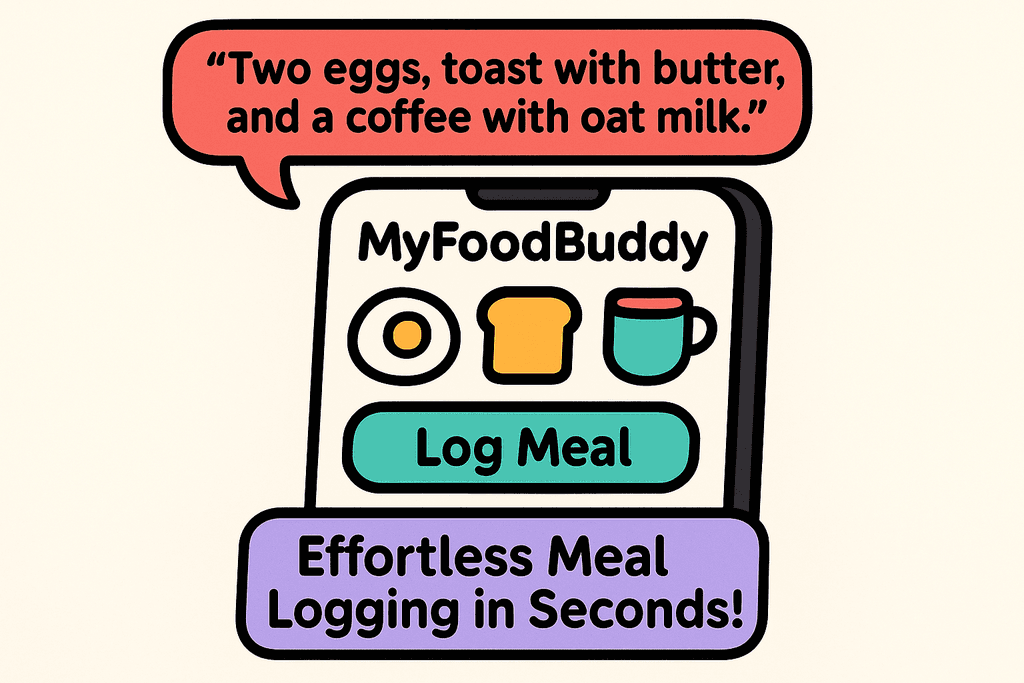
This is where voice logging changes everything. Instead of pulling over to type everything out, you just say "McChicken combo with a Coke" and you're done. MyFoodBuddy uses AI to understand exactly what you ordered and pulls the nutrition data automatically. No searching, no manual entry, no forgetting half your meal because you got busy.
The AI-powered nutrition extraction handles all the complicated stuff in the background. It knows that a combo meal includes fries and a drink. It understands portion sizes and can calculate everything from mcchicken calories to sodium content without you lifting a finger. For people who eat fast food regularly, this makes the difference between actually sticking with tracking and giving up after a few days. You can see how this works for other meals too with how to fit calorie tracking into your hectic day.
The truth is that tracking doesn't have to be complicated. When you can log an entire fast food meal in the time it takes to pull out of the parking lot, you're way more likely to actually do it every day. And consistent tracking, even if it's just fast food meals, gives you way better results than perfect tracking that you quit after three days. If you're curious about maintaining your goals while eating out, check out maintaining a delicious and nutritious 1500 calorie daily diet for more practical strategies.
Why Fast Food Tracking Fails and What Actually Works
Most people who grab a McChicken know they should track it, but only about 30% actually do. The problem isn't laziness or lack of motivation. It's the fact that traditional calorie tracking apps turn a simple meal into a five-minute data entry project. You have to open the app, search through databases, pick the right restaurant, find the exact item, adjust portion sizes, and then repeat the process for your fries and drink. By the time you're done, your food is cold and you're annoyed.
The Friction Problem
Every extra step in the tracking process creates what researchers call "friction." And friction kills habits faster than anything else. When logging mcchicken calories requires multiple taps and searches, your brain starts making excuses.
- Opening the app and waiting for it to load
- Searching through restaurant databases that may or may not be accurate
- Selecting individual items one by one
- Adjusting serving sizes and customizations
- Double-checking that everything saved correctly
Studies show that tracking takes an average of 3-5 minutes per meal with traditional apps. That's 15-25 minutes per day just entering food data. Most people quit within two weeks.
Why Convenience Beats Features
Apps like MyFitnessPal offer tons of features, but they still require manual searching and selection. The more features an app has, the more complicated it becomes. What people actually need is speed, not complexity.
- Voice logging cuts tracking time from minutes to seconds
- Natural language processing means you just say what you ate
- AI handles the database searching and calculation automatically
MyFoodBuddy uses voice and text input so you can just say "McChicken, medium fries, and a Coke" and move on with your day. The AI figures out the mcchicken calories and everything else without you lifting a finger. Real users report spending less than 30 seconds per meal logging their food.
What Actually Keeps People Tracking
Consistency matters more than perfection. An imperfect log that you actually maintain beats a detailed spreadsheet you abandon after three days. The apps that win are the ones that remove barriers instead of adding features.
- Speed creates consistency
- Consistency creates data
- Data creates results
When tracking becomes as easy as sending a text message, people actually stick with it. That's the difference between knowing the mcchicken calories and actually doing something useful with that information.
Your Fast Food Choices Don't Have to Derail Your Goals
The McChicken sits at around 400 calories, which is pretty reasonable for a fast food meal. You can make it work whether you're trying to lose weight, maintain, or even bulk up. The real trick isn't avoiding fast food completely, it's knowing what you're eating and making it fit your daily budget. A regular McChicken versus a deluxe version can mean a difference of 200+ calories, and those small choices add up fast. If you're curious about how chicken enchilada calories compare, our guide to chicken enchilada calories per enchilada and full serving can help you make informed choices.
Most people don't fail at eating healthy because they had a McChicken. They fail because tracking everything becomes such a pain that they just give up. Traditional calorie counting apps make you search through databases, measure portions, and spend five minutes logging a simple meal. That's where voice-powered calorie tracking changes things, since you can just say what you ate and move on with your day.
MyFoodBuddy lets you log your mcchicken calories by simply saying "McChicken and medium fries" instead of hunting through menus and creating custom entries. The app pulls nutrition data automatically, so you spend less time on your phone and more time actually living. Whether you're grabbing Chick-fil-A nuggets or hitting the McDonald's drive-through, fitting tracking into your hectic day becomes way easier.
The bottom line is this: consistency beats perfection every single time. You don't need to eat chicken breast and broccoli for every meal. You just need to know where your calories are going and make adjustments when needed. That's how you actually stick with it long enough to see results.
Common Questions About McChicken Calories
Fast food nutrition can be confusing, especially when you're trying to stay on track with your health goals. These are the questions people ask most often about McChicken calories and how to make fast food work with their diet. The answers might surprise you, because eating out doesn't have to derail your progress.
How many calories in a McChicken sandwich?
A standard McChicken contains about 400 calories, with 21 grams of protein and 39 grams of carbs. The sandwich also has around 21 grams of fat, which makes up about half of its total calories.
Does a McChicken fit into a weight loss diet?
Yes, a McChicken can absolutely fit into a weight loss plan if it works within your daily calorie budget. The key is tracking what you eat and making sure you're still in a calorie deficit overall. One 400-calorie sandwich won't ruin your progress if the rest of your day is balanced.
What's the healthiest way to order at McDonald's?
Skip the fries and sugary drinks to save hundreds of calories without much effort. Order grilled options when available, choose water or unsweetened tea, and consider eating just half the bun if you want to cut carbs. You can also add a side salad instead of fries to get more nutrients and fiber without the extra calories.
How do I track fast food without spending forever on my phone?
Most traditional calorie trackers make you search through databases and manually enter every item, which gets old fast. With MyFoodBuddy, you can just say "I had a McChicken and a small fries" and the app calculates everything for you in seconds. It's way faster than scrolling through endless food lists or creating custom meals like you'd have to do with apps like MyFitnessPal.
Can I eat fast food and still lose weight?
Absolutely, as long as you're eating fewer calories than you burn each day. Weight loss comes down to your total calorie intake, not whether those calories come from home-cooked meals or a drive-thru. The trick is being honest about portions and tracking accurately so you know where you stand.
What's better for calories: McChicken or Big Mac?
The McChicken wins with about 400 calories compared to the Big Mac's 550 calories. That's a 150-calorie difference, which might not seem huge but adds up over time. However, the Big Mac has more protein at 25 grams versus the McChicken's 21 grams, so your choice depends on whether you're prioritizing lower calories or higher protein.
Ready to start tracking smarter?
Download MyFoodBuddy and start tracking your calories by just saying what you ate. No more searching databases or guessing portions.
Get started