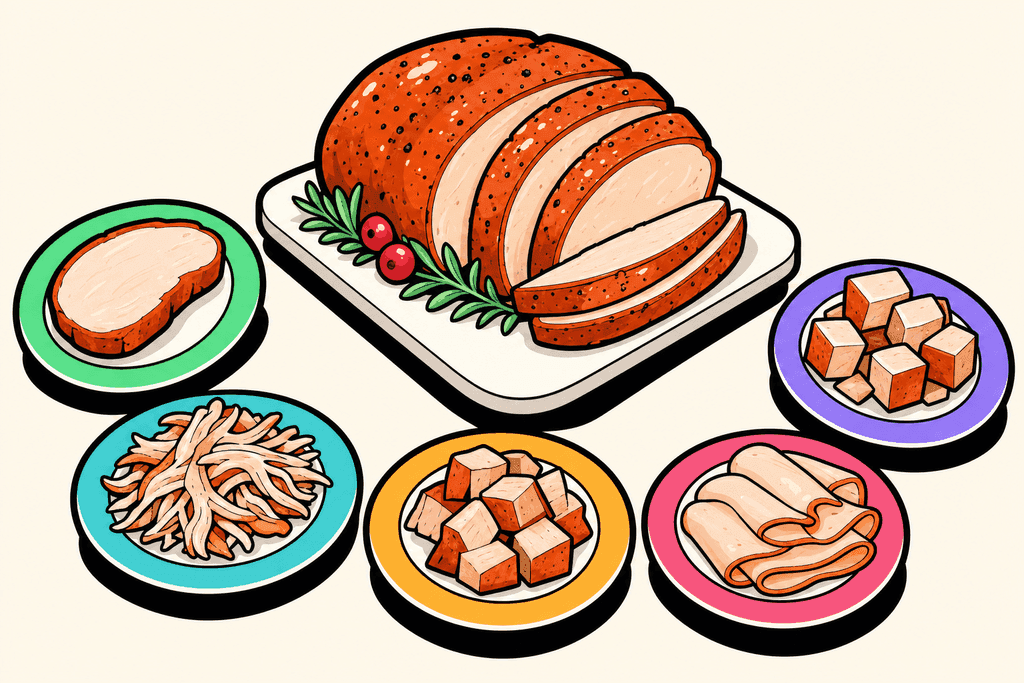
How Many Calories Is Turkey in Common Portions
Turkey calories by portion: breast, thigh, ground turkey & more. Quick calorie counts for meal planning and tracking your nutrition goals.
Turkey shows up on dinner plates year-round, but most people have no idea that a serving of turkey breast has about half the calories of the same amount of dark meat. Whether you're meal prepping for the week or just trying to log your lunch accurately, knowing exactly how many calories is turkey in different cuts can make or break your nutrition goals. With tools like MyFoodBuddy, you can simply say what you ate and get instant calorie counts, but understanding the basics helps you make smarter choices before your meal even hits the plate.
Table of Contents
Why Turkey Calorie Counts Matter
Turkey shows up on more plates than just Thanksgiving dinner these days. People trying to lose weight or build muscle eat turkey almost every day because it packs a lot of protein without tons of calories. But here's the thing that trips people up: not all turkey is created equal when it comes to calories.
Turkey as a Go-To Protein Source
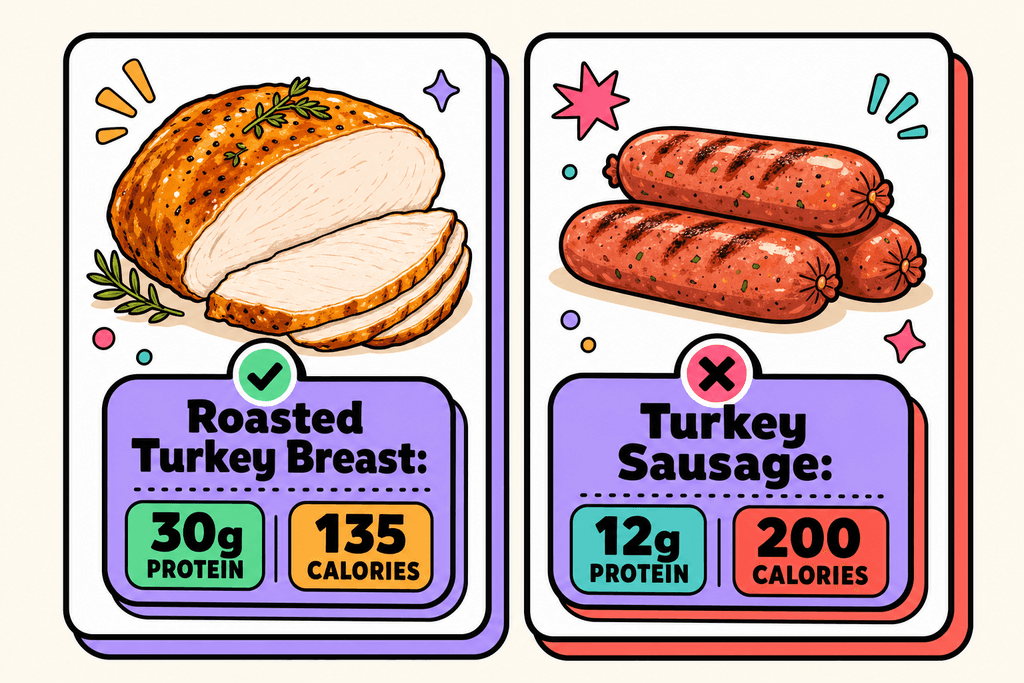
Fitness folks and dieters love turkey for good reasons. A serving of turkey breast gives you about 30 grams of protein, which helps your muscles recover after workouts and keeps you feeling full between meals. The protein in turkey is complete, meaning it has all the amino acids your body needs but can't make on its own.
What makes turkey special compared to other meats is how lean it can be. Chicken gets all the attention, but turkey often beats it in the protein-per-calorie game. The catch is knowing which part of the turkey you're eating.
The Calorie Difference Between Cuts
Here's where things get tricky when you're tracking your food. The white meat from a turkey breast has way fewer calories than the dark meat from the thigh or leg. We're talking about a difference that can mess up your daily calorie goals if you're not paying attention.
- Turkey breast (skinless) is the leanest option with minimal fat
- Turkey thigh has more than double the fat content of breast meat
- Ground turkey can range from super lean to pretty fatty depending on what's mixed in
- Deli turkey often has added sodium and sometimes sugar that affects the nutrition
Apps like MyFoodBuddy make tracking these differences easier since you can just say "four ounces of turkey breast" and it calculates everything for you. No more guessing or spending five minutes searching through databases.
Quick Calorie Reference for Common Portions
Before we get into the details, here's a fast look at how many calories is turkey across the portions most people actually eat. This table gives you the basics so you know what you're working with.
| Turkey Type | Portion Size | Calories | Protein (g) |
|---|---|---|---|
| Breast (skinless) | 3 oz | 125 | 26 |
| Breast (with skin) | 3 oz | 165 | 24 |
| Thigh (skinless) | 3 oz | 145 | 24 |
| Ground turkey (93% lean) | 3 oz | 140 | 22 |
| Deli turkey | 2 oz | 60 | 10 |
Why Accurate Tracking Actually Matters
Getting your portions right isn't just about being perfect with numbers. If you're off by even 100 calories per meal, that adds up to 300 calories a day, which is enough to slow down weight loss or cause unexpected weight gain over time. Most people eyeball their portions and end up eating more than they think.
The difference between three ounces and five ounces of turkey doesn't look huge on your plate. But those two extra ounces can add 80-100 calories depending on the cut. When you're trying to hit specific calorie goals for weight loss or muscle building, these small mistakes stack up fast.
- A food scale costs less than ten dollars and takes the guessing out
- Voice logging with apps saves time compared to manual entry
- Consistent tracking helps you spot patterns in your eating habits
Traditional calorie trackers make you search through endless options and create custom meals, which is why so many people quit after a few weeks. The easier you make tracking, the more likely you'll stick with it long enough to see real results.
Turkey Breast Calories by Portion
Turkey breast is one of the leanest protein sources you can find at the grocery store or on your dinner table. A standard 3-ounce serving of skinless turkey breast contains about 125 calories, making it a go-to choice for anyone watching their calorie intake. The meat is packed with protein while staying low in fat, which is why it shows up in so many meal plans. But the calorie count changes depending on how you prepare it and whether you keep the skin on or off.
When you add the skin back onto that same 3-ounce portion, you're looking at an extra 40 to 50 calories. The skin contains most of the fat, which is why removing it makes such a big difference. Most people don't realize how much those crispy bits add up.
- 3 oz skinless turkey breast: 125 calories
- 3 oz turkey breast with skin: 165-175 calories
- 4 oz skinless turkey breast: 165 calories
- 6 oz skinless turkey breast: 250 calories
Roasted turkey breast and deli-sliced turkey aren't exactly the same either. Deli turkey often has added sodium and sometimes sugar, but the calorie difference is usually minimal. A typical slice of deli turkey breast weighs about 1 ounce and contains around 30 to 35 calories.
Cooking methods matter more than you'd think. Roasting keeps things simple and doesn't add extra calories unless you're basting with butter or oil. Grilling works the same way. But if you're pan-frying turkey cutlets in oil, you could be adding 50 to 100 extra calories per serving depending on how much fat you use.
| Portion Size | Skinless Calories | With Skin Calories |
|---|---|---|
| 3 oz | 125 | 165-175 |
| 4 oz | 165 | 220-235 |
| 6 oz | 250 | 330-350 |
Dark Meat Turkey Calories
Dark meat gets a bad reputation in the calorie-counting world, but it's not as scary as some people think. A 3-ounce serving of turkey thigh contains about 180 calories, which is only 55 more than the same amount of white meat. The difference comes from the higher fat content, but that fat also brings more flavor and keeps the meat juicy. Turkey drumsticks fall into the same category, with similar calorie counts per ounce.
The real question is whether those extra calories are worth it. Dark meat has more iron and zinc than white meat, plus it stays moist even if you overcook it a little. For some people, that makes it the better choice.
- Turkey thigh (3 oz): 180 calories, 8g fat, 24g protein
- Turkey breast (3 oz): 125 calories, 1g fat, 26g protein
- Turkey drumstick (3 oz): 175 calories, 7g fat, 24g protein
When dark meat makes sense depends on your goals. If you're trying to hit a specific calorie target and have room for the extra fat, go for it. The protein content is nearly identical between white and dark meat, so you're not missing out there. Some people find dark meat more satisfying because of the fat content, which can help with feeling full longer.
Portion control becomes more important with higher-calorie cuts. A 6-ounce serving of turkey thigh pushes you up to 360 calories, which is a significant chunk of most people's daily intake. If you're logging your meals with something like MyFoodBuddy, you can just say what you ate and the app calculates everything for you without having to weigh and measure every bite.
| Turkey Cut | Calories (3 oz) | Fat (g) | Protein (g) |
|---|---|---|---|
| Breast (skinless) | 125 | 1 | 26 |
| Thigh | 180 | 8 | 24 |
| Drumstick | 175 | 7 | 24 |
Ground Turkey and Processed Turkey Products
Ground turkey is where things get tricky because the calorie count swings wildly based on the fat percentage. A 3-ounce serving of 93% lean ground turkey contains about 120 calories, while the same amount of 85% lean jumps to around 200 calories. That 80-calorie difference adds up fast if you're making burgers or tacos for the whole family. The leaner versions use mostly white meat, while the fattier options include dark meat and sometimes skin.
Most grocery stores carry at least two or three options, and the label always tells you the lean-to-fat ratio. The 93/7 blend is the most popular for people tracking calories, but the 85/15 version stays juicier when you cook it.
| Ground Turkey Type | Calories (3 oz raw) | Fat (g) | Protein (g) |
|---|---|---|---|
| 99% lean | 100 | 1 | 22 |
| 93% lean | 120 | 3 | 22 |
| 85% lean | 200 | 12 | 20 |
Deli turkey slices are convenient but you need to watch the serving sizes. Most packages list 30 to 40 calories per ounce, and a typical sandwich uses 2 to 3 ounces. That's 60 to 120 calories just from the turkey before you add bread, cheese, or mayo.
Turkey bacon and sausage are different animals entirely. Two slices of turkey bacon contain about 60 calories, which sounds great until you realize that's way less food than two slices of regular bacon. Turkey sausage links run around 100 to 140 calories each depending on the brand and size. These processed options often have added sugars and fillers that bump up the calorie count beyond what you'd expect from plain turkey.
- Deli turkey (1 oz): 30-40 calories
- Turkey bacon (2 slices): 60 calories
- Turkey sausage link: 100-140 calories
- Turkey hot dog: 100-150 calories
Reading labels becomes essential with processed turkey products. Some brands add corn syrup or other sweeteners that increase calories without adding any nutritional value. The ingredient list tells you everything you need to know. If turkey isn't the first ingredient, you're probably getting more filler than meat.
Tracking all these different turkey options used to mean pulling out your phone, searching through databases, and doing mental math. Now you can just tell an app like MyFoodBuddy what you ate and it figures out the calories automatically. Whether you're eating fried chicken or ground turkey tacos, the same simple logging process works for everything. The app even learns your common meals so you can log your usual turkey sandwich in seconds instead of building it from scratch every time.
Making Turkey Work for Your Goals
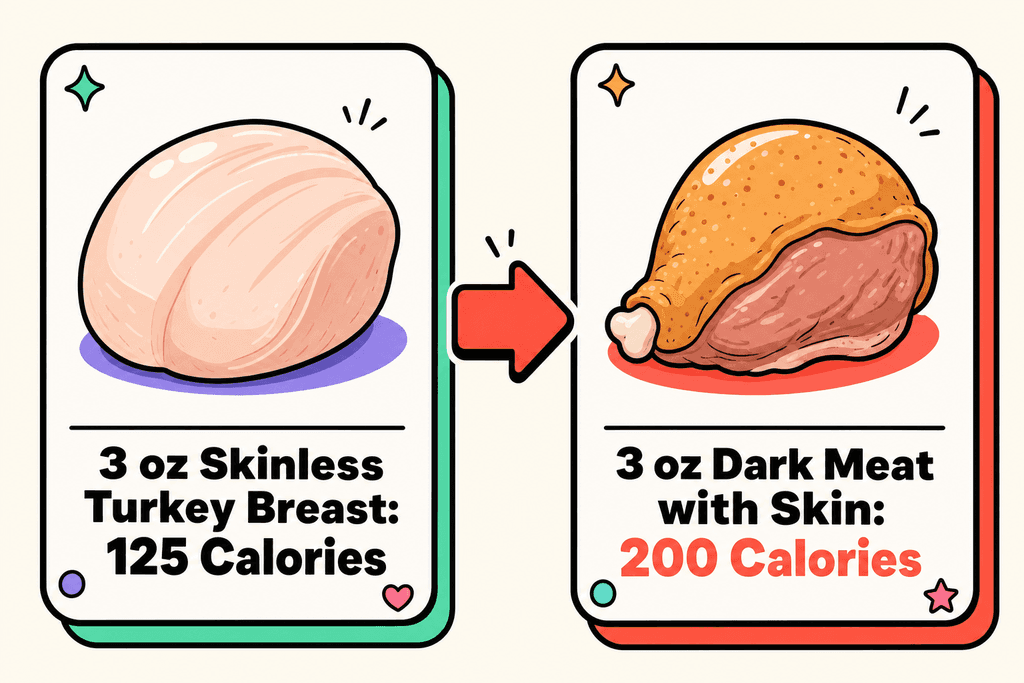
The difference between hitting your nutrition targets and missing them often comes down to choosing the right protein portions. Turkey gives you a lot of flexibility because the calorie range is so wide depending on which cut you pick and how it's prepared. A 3-ounce serving of skinless turkey breast has about 125 calories, while the same amount of dark meat with skin can push past 200 calories. That's a 60% difference in the same portion size, which adds up fast when you're eating turkey multiple times per week.
White Meat vs Dark Meat for Different Goals
| Goal | Best Choice | Why It Works |
|---|---|---|
| Weight Loss | Skinless white meat | Lowest calories, highest protein ratio |
| Muscle Building | Dark meat with skin | More calories, extra nutrients |
| Maintenance | Mix of both | Balance of taste and nutrition |
If you're trying to lose weight, skinless turkey breast is your friend. You get about 26 grams of protein for only 125 calories in a 3-ounce serving. That protein keeps you full longer without blowing your calorie budget for the day.
When Higher Calorie Turkey Makes Sense
Dark meat gets a bad reputation, but it's actually useful if you're trying to build muscle or maintain weight. The extra calories come with more iron, zinc, and B vitamins that your body needs. Plus, it tastes better to most people, which means you're more likely to stick with your meal plan long-term.
- Dark meat has 2-3 times more iron than white meat
- The fat in dark meat helps your body absorb vitamins A, D, E, and K
- Higher calorie options work well for active people who need more energy
- Mixing white and dark meat gives you variety without going overboard
The Tracking Problem Nobody Talks About
Here's where most people mess up their turkey tracking. They eyeball portions or forget to account for skin and preparation methods. A "palm-sized" piece of turkey could be anywhere from 2 to 5 ounces depending on your hand size and how thick you cut it. That estimation error can mean a 100+ calorie difference from what you think you're eating.
Traditional calorie tracking apps make you search through dozens of turkey entries, then manually adjust for cooking method and portion size. MyFoodBuddy lets you just say "4 ounces of roasted turkey breast" and handles the calculation automatically. The difference between spending 30 seconds versus 3 minutes logging each meal might not seem like much, but it's the reason most people quit tracking after a few weeks.
- Voice logging captures details you might forget to enter manually
- AI recognition understands different ways of describing the same food
- Quick logging means you're more likely to track consistently
- Consistent tracking is what actually gets you to your goals
The best turkey choice is the one you'll actually eat and track accurately. Whether that's lean breast meat for cutting or juicy dark meat for bulking, knowing exactly how many calories is turkey in your specific portion is what makes the difference between guessing and succeeding.
Your Turkey Calorie Cheat Sheet
So now you know how many calories is turkey across all the portions you're likely to eat. Skinless turkey breast comes in at about 125 calories per 3 oz serving, making it one of the leanest protein options out there. Dark meat sits around 150-170 calories for the same portion, while ground turkey can range from 150 to 240 calories depending on the fat content. The real trick is knowing exactly what you're eating, because a few extra ounces here and there can add up faster than you think.
Most people eyeball their portions and end up way off on their calorie counts. That slice of turkey you think is 3 oz might actually be closer to 5 or 6 oz, which means you could be eating 200+ calories when you logged 125. This is where accurate tracking becomes the difference between hitting your goals and wondering why the scale won't budge.
Apps like MyFoodBuddy make this whole process easier since you can just say "4 oz of turkey breast" and it calculates everything for you using USDA data. No more guessing or spending five minutes searching through databases like you would with traditional trackers. If you're tracking other proteins too, you might want to check out our guide on how many calories fried chicken really has or our breakdown of hamburger calories at different fast food spots.
The bottom line is that turkey can fit into pretty much any eating plan, but only if you're tracking portions correctly. Whether you're meal prepping for the week or just trying to make smarter choices at dinner, knowing these numbers gives you control over your nutrition instead of just hoping for the best.
Common Questions About Turkey Calories
Tracking turkey calories can get confusing with all the different cuts, cooking methods, and portion sizes out there. These are the questions people ask most when trying to figure out how many calories is turkey in their meals. Whether you're meal prepping or just trying to stay on track, these answers will help you log your food more accurately.
How many calories in a typical turkey sandwich?
A basic turkey sandwich with two slices of whole wheat bread, 3 ounces of deli turkey, lettuce, tomato, and a tablespoon of mayo comes in around 320-380 calories. The bread and mayo are usually where most of the calories hide, not the turkey itself. If you swap mayo for mustard and use thin-sliced bread, you can easily drop that to around 250 calories.
Is turkey breast really better than chicken breast for calories?
Turkey breast and chicken breast are almost identical when it comes to calories, both sitting at about 125-135 calories per 3-ounce serving when skinless and roasted. Turkey might have a slight edge with a bit more protein per serving, but we're talking maybe 1-2 grams difference. The real winner is whichever one you'll actually eat and enjoy consistently.
Does cooking method change turkey calories significantly?
The cooking method itself doesn't add calories to the turkey meat, but what you cook it with definitely does. Roasting turkey without added fats keeps it at baseline calories, while frying or basting with butter can add 50-100+ calories per serving. The turkey stays the same, but oil, butter, and glazes are calorie bombs that sneak into your totals.
How do I measure turkey portions without a food scale?
A 3-ounce serving of turkey is about the size of a deck of cards or the palm of your hand (not including fingers). For sliced deli turkey, that's usually 3-4 thin slices or 2-3 thick-cut slices. With MyFoodBuddy, you can just say "I had three slices of turkey on my sandwich" and the app figures out the calories for you without needing to measure anything.
What's the difference between deli turkey and fresh roasted turkey calories?
Fresh roasted turkey breast has about 125 calories per 3 ounces, while deli turkey ranges from 90-120 calories for the same amount because it's often sliced thinner and may contain added water. Deli turkey also packs way more sodium, sometimes 400-600mg per serving compared to 50-70mg in fresh roasted. The calorie difference is small, but the sodium difference matters if you're watching your blood pressure or water retention.
Can I trust restaurant turkey calorie counts?
Restaurant calorie counts for turkey dishes are estimates and can be off by 20% or more depending on portion sizes and preparation. Chain restaurants are usually more accurate because they have standardized portions, but local spots can vary wildly. When logging restaurant turkey, it's smarter to slightly overestimate than underestimate, especially if the meat looks glazed or extra juicy.
Ready to start tracking smarter?
Download MyFoodBuddy and start tracking your calories by just saying what you ate. No more searching databases or guessing portions.
Get started