
How Many Calories Are in a Lemon? Water, Tea & Cooking
Discover lemon calories in water, tea, and cooking. Learn how this low-calorie citrus fits your diet goals with easy tracking tips.
The Surprising Truth About Lemon Calories
You squeeze lemon into your water every morning, but have you ever stopped to wonder if those few drops are sabotaging your calorie goals? The truth is, lemons contain far fewer calories than most people think, yet tracking them accurately still matters when you're serious about hitting your nutrition targets. Whether you're adding a wedge to your tea or using juice in a recipe, understanding how many calories are in a lemon helps you log meals with confidence instead of guessing.
Table of Contents
Breaking Down Lemon Nutrition
A single lemon contains surprisingly few calories, but the exact number changes depending on how you use it. Most people don't realize that the way you prepare and consume lemons makes a huge difference in what you're actually eating. Whether you're squeezing juice into your water, zesting the peel for a recipe, or eating the whole fruit, each form has its own nutritional profile. Understanding these differences helps you track your intake more accurately, especially if you're using apps like MyFoodBuddy where you can simply say "lemon water" and get precise nutritional data without guessing.
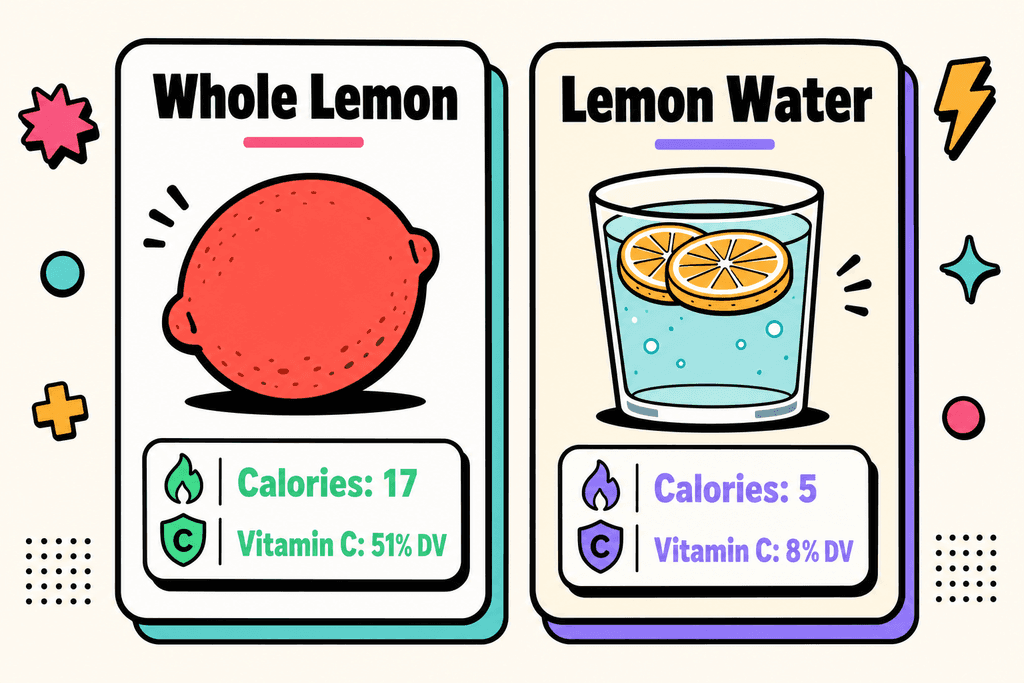
Whole Lemon Versus Lemon Juice
The size of your lemon matters more than you'd think. A small lemon weighs about 58 grams, while a large one can be over 100 grams, which means the calorie count can nearly double based on size alone.
| Lemon Form | Amount | Calories | Carbs | Fiber | Vitamin C |
|---|---|---|---|---|---|
| Whole lemon (small) | 58g | 17 | 5.4g | 1.6g | 30mg |
| Whole lemon (medium) | 84g | 24 | 7.8g | 2.4g | 45mg |
| Lemon juice (1 tbsp) | 15ml | 3 | 1g | 0g | 7mg |
| Lemon juice (1/4 cup) | 60ml | 13 | 4.2g | 0.1g | 28mg |
| Lemon zest (1 tsp) | 2g | 1 | 0.3g | 0.2g | 1mg |
When you juice a lemon, you lose most of the fiber that's in the pulp and peel. This is why whole lemons have more nutritional value than just the juice, even though the calorie difference seems small.
Nutrients Beyond Calories
Lemons pack way more than just vitamin C, though that's what they're famous for. The nutritional benefits include several minerals and compounds that most calorie tracking apps don't always show you clearly.
- Potassium helps regulate blood pressure and supports heart health
- Folate aids in cell growth and DNA formation
- Flavonoids act as antioxidants that protect your cells
- Citric acid may help prevent kidney stones
Tracking Lemon Intake Accurately
Most people don't bother logging lemons because the calories seem too small to matter. But if you're drinking lemon water throughout the day or cooking with lemon regularly, those calories add up faster than you think.
- One lemon squeezed into water adds about 11 calories
- Lemon tea with half a lemon contains roughly 6 calories
- Cooking with lemon juice and zest can add 15-20 calories per serving
The challenge with traditional calorie trackers like MyFitnessPal or Cronometer is that you need to measure exactly how much lemon you used. With MyFoodBuddy, you can just say "I had water with lemon" or "chicken with lemon and herbs" and the AI figures out reasonable portions based on typical usage. This saves you from obsessing over whether you used one tablespoon or two of lemon juice, which honestly nobody measures anyway.
Lemon Calories in Water and Beverages
A whole medium lemon contains about 17 calories, but most people don't eat an entire lemon in one sitting. When you squeeze half a lemon into your morning water, you're adding roughly 6 calories to your drink. That's barely anything, which is why lemon water has become such a popular choice for people watching their weight. The juice from one lemon wedge adds only about 1-2 calories, making it one of the easiest ways to add flavor without worrying about your daily intake.
The calorie count changes slightly depending on how you prepare your lemon beverages. Here's what you need to know about the most common drinks.
| Beverage Type | Lemon Amount | Total Calories |
|---|---|---|
| Plain water with lemon | 1 wedge | 1-2 calories |
| Hot lemon water | Half lemon | 6 calories |
| Iced tea with lemon | 1 wedge | 3-4 calories |
| Green tea with lemon | 2 tablespoons juice | 7 calories |
| Lemon water (full lemon) | 1 whole lemon | 17 calories |
Lemon tea doesn't add much to your calorie count either. A cup of plain tea has zero calories, and adding a lemon wedge brings it up to maybe 2-3 calories total. The real calorie additions come from what else you put in your drinks, like honey, sugar, or milk.
People love lemon water for weight management because it adds taste without the calories you'd get from juice or soda. A can of regular soda has around 140 calories, while lemon water stays under 10 calories even if you use a generous amount of lemon.
- Lemon water with honey adds about 64 calories (from the honey, not the lemon)
- Lemon iced tea with sugar can jump to 80-100 calories per glass
- Fresh lemonade typically contains 100-150 calories per cup due to added sweeteners
- Sparkling water with lemon stays at just 1-2 calories
The bottom line is that lemon itself barely affects your calorie intake when added to beverages. It's everything else you mix with it that matters.
Cooking with Lemons and Calorie Impact
When you start cooking with lemons, the calories can add up differently than you might expect. A typical lemon marinade uses about 2-3 tablespoons of lemon juice, which adds roughly 10-12 calories to your recipe. That might not sound like much, but when you're making a salad dressing or sauce that serves multiple people, knowing the exact amount helps you track accurately. Lemon zest, which is just the outer peel, has almost no calories because you use such a small amount.
Cooking doesn't really change how many calories are in a lemon. Heat might break down some nutrients, but the calorie content stays pretty much the same.
Here's how lemon calories break down in common cooking applications:
- 1 tablespoon lemon juice: 3-4 calories
- 1 teaspoon lemon zest: less than 1 calorie
- Quarter cup lemon juice (for marinades): 12-13 calories
- Lemon pepper seasoning (1 teaspoon): 5-6 calories
Salad dressings are where lemon calories become more noticeable. A homemade lemon vinaigrette might use 3 tablespoons of lemon juice (about 12 calories) plus olive oil (about 360 calories for 3 tablespoons). The lemon is still the smallest contributor, but tracking it matters when you're trying to be precise with your nutrition goals.
| Recipe Type | Lemon Amount | Lemon Calories |
|---|---|---|
| Chicken marinade | 3 tablespoons juice | 12 calories |
| Lemon cake | Half cup juice | 25-30 calories |
| Fish seasoning | 2 tablespoons juice | 7 calories |
| Salad dressing | Quarter cup juice | 13 calories |
Baking with lemon gets interesting because recipes often call for both juice and zest. A lemon pound cake might use the juice and zest from two whole lemons, adding about 34 calories total from the lemon alone. That's spread across the entire cake, so per slice it's minimal.
The tricky part about tracking lemon in complex recipes is figuring out how much actually ends up in your portion. When you make a big batch of lemon chicken for four people, you need to divide the total lemon calories by four. This is where simplifying calorie counting for homemade meals becomes really helpful, especially when you're dealing with multiple ingredients.
Making Lemon Tracking Effortless
Small ingredients like lemon might seem too minor to track, but they add up over time. If you use lemon in your water three times a day, that's still only about 18 calories total, but when you're also adding it to your tea, your salad, and your dinner marinade, you could be looking at an extra 30-40 calories you didn't account for. For someone on a strict calorie budget, those small amounts matter. Plus, getting in the habit of tracking everything helps you stay more aware of what you're actually eating throughout the day.
Most people make the same mistakes when logging lemon. They either skip it entirely because it seems insignificant, or they overestimate and log a whole lemon when they only used a wedge.
- Logging "lemon water" without specifying the amount of lemon used
- Forgetting to track lemon in homemade dressings and marinades
- Estimating lemon juice amounts instead of measuring
- Not accounting for lemon in restaurant meals where it's added as garnish
The old way of tracking meant you'd have to stop, measure your lemon juice, search through a database, and manually enter the amount. That takes time most people don't want to spend. Voice logging changes this completely because you can just say what you ate while you're cooking or eating.
With MyFoodBuddy, you could say something like "grilled chicken with lemon marinade and a glass of lemon water" and the app figures out the nutritional breakdown for you. You don't need to measure every tablespoon or search through endless food databases. The AI handles the calculation based on typical portions, which is accurate enough for most people's tracking needs.
For quick portion estimation without measuring tools, here's what works: a lemon wedge is about one-eighth of a lemon (roughly 2 calories), a squeeze from half a lemon gives you about 1-2 tablespoons of juice (6-8 calories), and a whole lemon's juice is typically 3-4 tablespoons (12-17 calories). These estimates get you close enough that your tracking stays accurate without becoming a hassle.
The reality is that tracking shouldn't take more than a few seconds per meal. When you're dealing with ingredients like lemon that you use frequently, having a system that lets you log quickly makes the difference between sticking with your tracking habit or giving up after a week. Whether you're curious about counting calories when juicing or trying to figure out how many calories are really in fried chicken, the same principle applies.
The goal isn't perfection with every single calorie. It's about building a sustainable tracking habit that gives you enough information to make good decisions without taking over your life. Lemon might be a small part of your daily intake, but learning to track it efficiently helps you handle all the other ingredients that matter more.
Your Lemon Calorie Takeaway
So how many calories are in a lemon? The answer is pretty simple. A whole lemon has about 17 calories, lemon water adds basically nothing to your daily count, and even a cup of lemon tea stays under 5 calories if you skip the sugar. The real calorie bump comes from what you add to your lemon, not the lemon itself.
Here's the thing though. When you're cooking with lemon juice or making that morning lemon water, those tiny amounts still count if you're serious about tracking. Most people don't bother logging a squeeze of lemon, and honestly, it won't make or break your diet. But if you're tracking homemade meals or trying to be precise with your numbers, every ingredient matters.
The good news is that tracking doesn't have to be a pain anymore. Instead of searching through databases and measuring every drop, you can just say what you ate. MyFoodBuddy lets you log "chicken with lemon and herbs" or "green tea with lemon" using your voice, and it figures out the calories for you. No math, no guessing, no spending five minutes trying to find the right entry in a database.
Whether you're trying to lose weight or just want to know what you're eating, lemons are one of those ingredients that add tons of flavor without adding much to your calorie count. And when you have tools that make tracking easy, there's no reason to skip logging the small stuff.
Common Questions About Lemon Calories
Tracking lemon calories might seem like a small detail, but these questions come up all the time when people are trying to be accurate with their food logs. Whether you're squeezing lemon into your morning water or cooking with it at dinner, knowing what counts and what doesn't can help you stay on track. Here are the answers to the most common questions about lemon calories that people ask when they're trying to track their nutrition properly.
Does lemon water have calories?
Yes, but barely any. A glass of water with juice from half a lemon has about 6 calories, which is so small that many people don't bother tracking it. If you're drinking multiple glasses throughout the day, you might hit 20-30 calories total, but that's still pretty minimal in the grand scheme of your daily intake.
How many calories in a whole lemon?
A medium-sized whole lemon contains roughly 24 calories if you were to eat the entire thing, including the flesh and juice. Most people only use the juice though, which is where you get those 11-12 calories per lemon. The zest adds almost nothing calorie-wise, maybe 1-2 calories at most.
Does cooking lemon change its calories?
No, heat doesn't add or remove calories from lemon. Whether you're baking with lemon zest, adding juice to a hot pan, or making lemon chicken, the calorie count stays the same. The only thing that changes is if you're adding other ingredients like oil, butter, or sugar along with the lemon.
Should I track lemon in my food log?
It depends on how much you're using. A squeeze of lemon on your fish or in your tea probably isn't worth the effort since it's under 5 calories. But if you're making lemonade, using multiple lemons in a recipe, or drinking several glasses of lemon water daily, those calories can add up to 50-100 and should be logged. With MyFoodBuddy, you can just say what you ate naturally like "grilled chicken with lemon" and the app figures out the details for you without making you measure every drop.
How many calories in lemon tea?
Plain lemon tea with no added sweeteners has about 5-10 calories per cup, coming entirely from the lemon juice. Once you add honey, sugar, or milk, those numbers jump significantly. Black tea itself has almost zero calories, so the lemon is really the only thing contributing to the count in unsweetened lemon tea.
What's the difference between lemon juice and lemon zest calories?
Lemon juice contains most of the calories because it has natural sugars and citric acid, giving you about 11-12 calories per lemon's worth of juice. Lemon zest is just the outer peel and has almost no calories, usually less than 2 calories per tablespoon. If you're watching your intake closely, the juice is what matters, not the zest.
Ready to start tracking smarter?
Download MyFoodBuddy and start tracking your calories by just saying what you ate. No more searching databases or guessing portions.
Get started