
Calories in Eggplant for Roasted and Fried Meals
Discover calories in eggplant for roasted and fried dishes. Compare cooking methods and track nutrition easily with smart calorie counting.
A cup of roasted eggplant has about 35 calories, but fry that same amount and you're looking at over 200 calories. Eggplant acts like a sponge for oil, which means calories in eggplant can triple or even quadruple depending on how you cook it. Understanding these differences is crucial for accurate meal tracking, and with MyFoodBuddy, you can simply say what you ate and let the app calculate the exact nutritional values based on your cooking method.
Table of Contents
Eggplant Nutrition Basics
A single cup of raw eggplant contains just 20 calories, making it one of the lowest-calorie vegetables you can add to your plate. This purple vegetable is mostly water, which explains why it's so light on calories but still fills you up. People who track their food intake often love eggplant because you can eat a lot of it without using up your daily calorie budget. If you're using MyFoodBuddy to log your meals, you'll notice how eggplant barely makes a dent in your daily totals compared to other ingredients.
Why Eggplant Works for Weight Management
Eggplant has become a go-to vegetable for people following Mediterranean and low-calorie diets for good reasons. The vegetable's mild flavor soaks up whatever seasonings you use, so it fits into almost any meal plan.
- High water content keeps you feeling full longer
- Low calorie density means larger portion sizes
- Fiber content helps with digestion and satiety
- Works well as a meat substitute in many recipes
The macronutrient breakdown shows why eggplant is such a diet-friendly choice. It's almost all carbs with tiny amounts of protein and virtually no fat.
Raw Eggplant Nutritional Data
Here's what you're actually getting when you eat raw eggplant. These numbers change quite a bit once you start cooking, especially if you're frying or roasting with oil.
| Nutrient | Per 100g | Per Cup (82g) |
|---|---|---|
| Calories | 25 | 20 |
| Protein | 1g | 0.8g |
| Carbohydrates | 6g | 4.8g |
| Fiber | 3g | 2.5g |
| Fat | 0.2g | 0.2g |
| Water | 92g | 75g |
What Happens When You Cook It
Raw eggplant is pretty straightforward to track in apps like MyFitnessPal or Cronometer. But the real challenge comes when you start cooking it, because eggplant acts like a sponge for oil and other fats.
- The spongy texture absorbs cooking oils quickly
- Roasting and frying add significant calories
- Cooking method matters more than portion size
Most people underestimate how many calories end up in their cooked eggplant dishes. A cup of raw eggplant at 20 calories can easily become 200+ calories after frying, which is why knowing the difference between cooking methods matters for your tracking.
Roasted Eggplant Calories and Benefits
A cup of roasted eggplant contains only about 35 calories when prepared with minimal oil, making it one of the most diet-friendly vegetables you can eat. The key to keeping those numbers low is in how you prepare it. When you roast eggplant in the oven, the cooking method itself doesn't add calories, but the oil you use definitely does. Most people don't realize that the difference between a light spray and brushing oil on can nearly double the calorie count.
The temperature and time you choose for roasting also matter more than you'd think. Higher temperatures around 425°F help the eggplant cook faster and absorb less oil, while lower temperatures give it more time to soak up whatever fat you've added.
Best practices for low-calorie roasting include:- Using an oil spray instead of brushing, which can save you 50-80 calories per serving
- Roasting at 425°F for 20-25 minutes for optimal texture with minimal oil absorption
- Salting the eggplant slices first to draw out moisture, which reduces oil absorption
- Placing eggplant on parchment paper to prevent sticking without extra oil
When you compare oil spray versus brushed oil methods, the numbers tell an interesting story. A light spray adds roughly 10-15 calories per serving, while brushing oil on each slice can add 80-120 calories depending on how generous you are with the brush.
| Roasting Method | Calories per Cup | Added Fat (grams) |
|---|---|---|
| Oil spray | 45-50 | 1-2g |
| Brushed olive oil | 115-155 | 9-13g |
| No oil added | 35 | 0g |
Fried Eggplant Calories Explained
Eggplant acts like a sponge when it hits hot oil, and that's not just a saying. The vegetable's cellular structure contains tiny air pockets that literally suck up oil during frying, which is why a cup of fried eggplant can pack anywhere from 240 to 350 calories. The spongy texture that makes eggplant so good at absorbing flavors becomes a problem when that flavor is pure fat. This absorption happens fast too, within the first 30 seconds of contact with hot oil.
Pan-fried eggplant typically contains fewer calories than deep-fried because less surface area touches the oil at once. But the difference might surprise you.
Calorie breakdown by frying method:- Pan-fried eggplant: 180-240 calories per cup
- Deep-fried eggplant: 280-350 calories per cup
- Shallow-fried with frequent flipping: 200-260 calories per cup
Popular fried eggplant dishes rack up calories even faster when you add breading or batter. Eggplant parmesan, for instance, contains breaded and fried slices that can hit 400-500 calories per serving before you even add the cheese and sauce. Chinese-style fried eggplant with garlic sauce runs about 320-380 calories per cup, while Japanese tempura eggplant comes in around 290-340 calories per serving.
| Preparation Style | Calories per Serving | Oil Absorbed |
|---|---|---|
| Unbreaded pan-fried | 180-240 | High |
| Breaded deep-fried | 320-380 | Very high |
| Tempura battered | 290-340 | Very high |
| Flour-dusted pan-fried | 220-280 | High |
The breading adds another layer of oil absorption on top of what the eggplant itself soaks up. When you track these meals, getting accurate calorie counts matters because the difference between a light preparation and a heavy one can be your entire snack budget for the day.
Other Cooking Methods and Calorie Counts
Grilled eggplant sits right in the middle of the calorie spectrum at about 60-90 calories per cup when you brush it lightly with oil before grilling. The grill marks add flavor without adding much fat, and the high heat helps caramelize the natural sugars in the eggplant. You can cut those calories even further by using a grill basket with just a spray of oil, which brings you down to around 45-55 calories per cup while still getting that smoky, charred taste.
Steamed eggplant wins the low-calorie contest hands down. At just 35 calories per cup with zero added fat, it's the same as raw eggplant because steaming doesn't require any oil at all.
Complete calorie comparison across cooking methods:| Cooking Method | Calories per Cup | Prep Time | Oil Needed |
|---|---|---|---|
| Steamed | 35 | 8-10 min | None |
| Roasted (spray) | 45-50 | 20-25 min | Minimal |
| Air-fried | 55-75 | 15-18 min | Light spray |
| Grilled | 60-90 | 10-12 min | Light brush |
| Pan-fried | 180-240 | 8-10 min | Moderate |
| Deep-fried | 280-350 | 5-7 min | Heavy |
Air-fried eggplant has become popular as a compromise between taste and calories. It gives you that crispy exterior at around 55-75 calories per cup, using just a light spray of oil. The circulating hot air mimics deep frying without the oil bath, though the texture isn't quite the same as traditional frying.
Baked eggplant dishes like eggplant parmesan vary wildly depending on how the eggplant is prepared before baking. If you bread and fry the slices first, then bake them with cheese and sauce, you're looking at 350-450 calories per serving. But if you roast the eggplant slices with minimal oil before layering, you can bring that down to 180-220 calories per serving.
Tracking these variations matters when you're watching your intake.Apps like MyFoodBuddy make it easier to log these different preparations without having to calculate everything yourself. You can just say "one cup of air-fried eggplant" or "grilled eggplant with olive oil" and the app figures out the calories based on typical preparations. This beats manually searching through databases trying to find the exact match for how you cooked your vegetables, especially when you're making homemade meals where the preparation method changes the numbers so much.
The difference between cooking methods shows why tracking calories in eggplant requires more detail than just "eggplant." Whether you're comparing it to fried chicken or trying to find low-calorie meal options, knowing your preparation method is half the battle.
Making Smart Choices with Eggplant
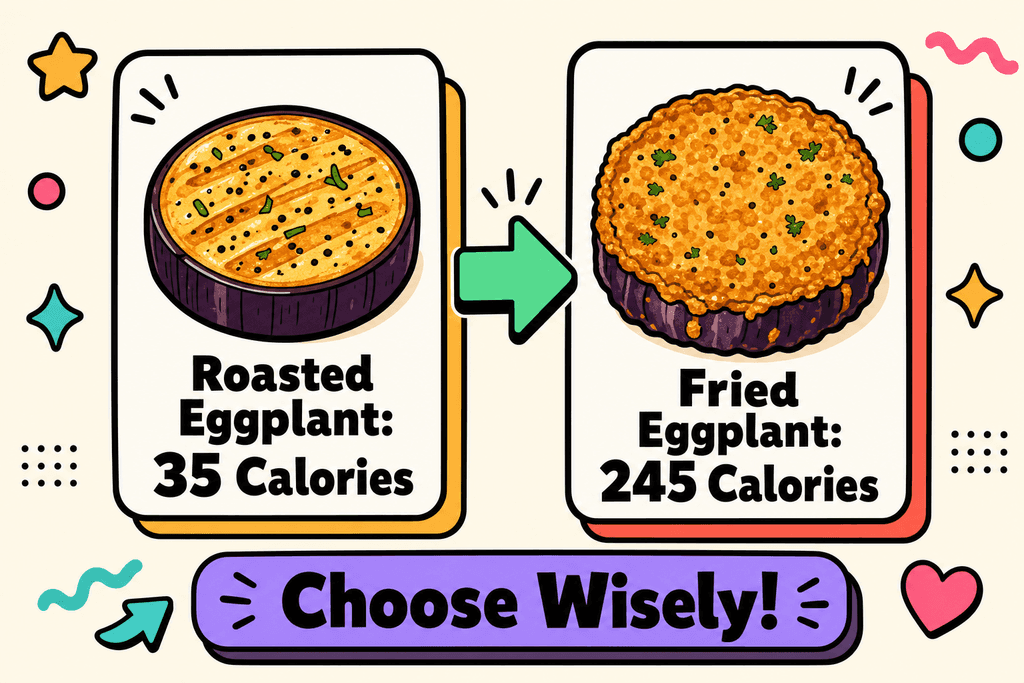
The difference between roasted and fried eggplant isn't just about taste. It's about whether you're eating 35 calories or 245 calories for the same amount of food. When you're trying to hit specific calorie goals, that gap can make or break your daily targets. The cooking method you choose for eggplant matters more than almost any other vegetable because of how much oil it can soak up like a sponge.
Choosing Cooking Methods for Your Goals
Your calorie budget should drive how you prepare eggplant. If you're in a cutting phase or trying to lose weight, roasted eggplant gives you volume and satisfaction without the calorie cost. But if you're bulking or need more energy-dense meals, fried eggplant can help you hit higher calorie targets without forcing yourself to eat massive portions.
- Weight loss goals work better with roasted, grilled, or air-fried eggplant
- Muscle gain or maintenance allows room for pan-fried preparations
- Mixed approaches let you enjoy fried eggplant occasionally while staying on track
- Restaurant meals almost always mean fried, so plan your other meals accordingly
Reducing Oil Without Losing Flavor
You don't have to choose between boring food and blowing your calorie budget. Salting eggplant slices before cooking pulls out moisture and reduces how much oil they absorb during cooking. Let them sit for 20 minutes, rinse off the salt, and pat them dry before you start.
- Brush oil on instead of pouring it in the pan
- Use cooking spray to control portions better
- Try air frying at 400°F for crispy results with minimal oil
- Add flavor with spices, garlic, and herbs instead of extra fat
Why Accurate Tracking Matters
Guessing at calories in eggplant dishes is where most people mess up. A tablespoon of oil here, an extra drizzle there, and suddenly your "healthy" eggplant parmesan has 600 calories instead of 300. The preparation method changes everything, and traditional tracking apps make you hunt through dozens of entries trying to find one that matches how you actually cooked it.
| Preparation Type | Tracking Difficulty | Common Mistakes |
|---|---|---|
| Roasted | Easy | Forgetting oil used |
| Fried | Hard | Underestimating oil absorption |
| Restaurant | Very Hard | Trusting menu estimates |
This is where voice-based tracking makes a real difference. With MyFoodBuddy, you can just say "fried eggplant with two tablespoons of olive oil" and the app calculates everything for you. No searching through databases or doing mental math while you're trying to enjoy your meal.
Pros and Cons of Different Preparations
Both high-calorie and low-calorie eggplant preparations have their place depending on what you need. Understanding the tradeoffs helps you make better choices that fit your actual goals instead of just following generic advice.
| Aspect | Low-Calorie (Roasted) | High-Calorie (Fried) |
|---|---|---|
| Calories per cup | 35-70 | 200-300 |
| Satiety | High volume, filling | Higher fat, satisfying |
| Prep time | Longer cooking | Quick cooking |
| Texture | Soft, tender | Crispy, rich |
| Best for | Weight loss | Weight gain |
The key is matching your preparation to your current goals rather than thinking one method is always better. Some days you need the calorie efficiency of roasted eggplant, and other days the satisfaction of fried eggplant keeps you from going off track later.
Track Eggplant Meals Without the Guesswork
The difference between roasted and fried eggplant is pretty huge when it comes to calories in eggplant. A cup of roasted eggplant sits around 35 calories, while that same amount fried can jump to 200 calories or more depending on how much oil it soaks up. That's not a small difference if you're trying to stay within your daily calorie budget.
Here's the thing most people miss: tracking the ingredient alone doesn't tell the whole story. You need to log how you cooked it too. The preparation method matters just as much as what's on your plate. This is where a lot of traditional calorie tracking apps fall short because you end up spending forever searching through databases trying to find "fried eggplant in olive oil" versus just "eggplant."
With MyFoodBuddy, you can just say "fried eggplant with garlic and olive oil" and the app figures out the rest using AI and USDA data. No more guessing if you should log it as raw, cooked, or somewhere in between. The same goes for other tricky foods where cooking methods change everything, like fried chicken or homemade meals where you're combining multiple ingredients.
Whether you're roasting eggplant for a healthy dinner or frying it for something more indulgent, knowing the actual calorie count helps you make better choices without overthinking it. And when tracking takes seconds instead of minutes, you're way more likely to stick with it long enough to see real results.
Common Questions About Eggplant Calories
Tracking eggplant can get confusing when you're trying to stay on top of your nutrition goals. The calories change so much depending on how you cook it, and most people aren't sure what numbers to use. Here are the most common questions people ask when logging eggplant in their diet tracker.
How many calories in a whole eggplant?
A medium-sized eggplant weighing about 1 pound contains roughly 110 calories. That's for the raw vegetable before you add any oil, breading, or other ingredients. The actual calorie count can vary based on the size, but most eggplants fall between 80-130 calories for the whole thing.
Does salting eggplant reduce calories?
Salting eggplant doesn't reduce the calories at all. What it does is draw out moisture and reduce bitterness, which can actually help you use less oil when cooking since the eggplant won't absorb as much. So while the salting itself doesn't cut calories, it can indirectly help you keep the final dish lighter.
What's the lowest calorie way to cook eggplant?
Grilling or roasting eggplant with minimal oil spray is your best bet for keeping calories low. You can get great flavor with just 1-2 teaspoons of oil for a whole eggplant, which adds only 40-80 calories total. Steaming is even lower if you don't mind a softer texture, keeping you close to those base calories in eggplant without much added fat.
How do I track eggplant parmesan accurately?
Eggplant parmesan is tricky because every recipe is different. The breading, frying oil, cheese, and sauce all add up fast. Your best option is to log each ingredient separately or use voice logging with an app like MyFoodBuddy that can break down complex dishes for you. Just say what's in your meal and let the AI figure out the nutrition instead of spending ten minutes searching through databases.
Can I eat eggplant on a low-carb diet?
Yes, eggplant works well for low-carb diets since it only has about 5-6 grams of carbs per cup. Most of that is fiber too, so the net carbs are even lower. It's a solid vegetable choice if you're watching your carb intake, especially compared to starchy vegetables like potatoes or corn. Eggplant works well for low-carb diets since it only has about 5-6 grams of carbs per cup, but if you're curious about how many carbs are in eggs, check out our guide on egg carb count per egg and serving size. Eggplant works well for low-carb diets since it only has about 5-6 grams of carbs per cup, but if you're also comparing other low-carb staples, our guide to egg carb count per egg breaks down exactly how many carbs eggs contain.
Why do calorie counts vary so much for eggplant dishes?
The calories in eggplant dishes vary wildly because eggplant soaks up oil like a sponge. A cup of grilled eggplant might have 35 calories, while the same amount fried could have 200-300 calories. The cooking method matters more than the eggplant itself, which is why accurate tracking of your preparation method is so important for hitting your nutrition goals.
Ready to start tracking smarter?
Download MyFoodBuddy and start tracking your calories by just saying what you ate. No more searching databases or guessing portions.
Get started