What Lowest Calorie Fast Food Meal Really Means
Discover what lowest calorie fast food meals actually contain and how to track them easily. Learn smart ordering tips for your health goals.
That 300-calorie grilled chicken sandwich sounds like a smart choice until you realize it comes with barely any protein and leaves you starving an hour later. Fast food restaurants are required to display calorie counts, but those numbers only tell part of the story about what you're actually eating. Understanding what makes a lowest calorie fast food meal truly worth ordering means looking beyond the number on the menu board.
Table of Contents
How Fast Food Chains Calculate Calories
Since 2018, the FDA has required all chain restaurants with 20 or more locations to display calorie counts on their menus. This means when you're looking at that menu board trying to find the lowest calorie fast food meal, those numbers are supposed to help you make better choices. But here's the thing most people don't know: those calorie counts are often just educated guesses based on standard recipes and portion sizes. The actual burger or burrito you get might have way more calories than what's listed.
Why Posted Calories Don't Always Match Reality
Fast food chains calculate their calorie counts in test kitchens where everything is measured perfectly. They use standardized portions, exact amounts of sauce, and follow recipes down to the gram. But walk into any actual restaurant during lunch rush, and you'll see why things get messy fast.
Research shows that actual calories can vary by 20% or more from what's posted on the menu. Sometimes you get more food than expected, which sounds great until you realize you just ate an extra 200 calories you weren't planning for.
| Factor | Calorie Variance |
|---|---|
| Portion size differences | Up to 25% |
| Cooking method variations | 10-20% |
| Added condiments | 50-300 calories |
| Customizations | 100-500 calories |
What Affects Your Actual Calorie Count
The way your food gets prepared makes a huge difference in the final calorie count. A chicken breast that sits on the grill a bit longer absorbs more oil. Extra cheese that falls onto your burger adds up. These small changes happen all day long in busy kitchens.
- Cooking oil absorption varies based on temperature and cooking time
- Portion scoops might be overfilled during busy periods
- Different employees use different amounts of toppings
- Cheese and sauce dispensers aren't always perfectly calibrated
The Hidden Calorie Problem
Here's where things get tricky when you're trying to track that lowest calorie fast food meal. Most menu boards show the base item calories, but they don't always account for what you actually order. A "plain" burger might be listed at 250 calories, but add mayo, special sauce, and extra pickles, and you're suddenly at 400 calories.
Apps like MyFitnessPal and Cronometer try to help you track these additions, but you're still guessing at portion sizes. With MyFoodBuddy, you can just say what you actually ate, like "a Big Mac with extra sauce and large fries," and the AI figures out a realistic calorie count based on typical portions and additions.
- Condiment packets add 50-100 calories each
- Cheese slices contribute 70-110 calories
- Dipping sauces range from 45-200 calories
- Drink upgrades can add 150-400 calories
The bottom line is that posted calorie counts give you a starting point, but they're not the whole story. Understanding how these numbers work helps you make smarter choices when you're trying to stick to your nutrition goals.
What Actually Makes a Fast Food Meal Low Calorie
A 300-calorie meal from a fast food restaurant sounds like a win for anyone watching their weight. But here's something most people miss: not all 300-calorie meals are created equal. The number on the menu board only tells part of the story. What really matters is what those calories are made of and how they affect your body after you eat them.
Think about it this way. You could eat a 300-calorie salad loaded with iceberg lettuce and sugary dressing, or a 300-calorie portion of grilled chicken with vegetables. Both have the same calorie count, but your body processes them completely differently.
The protein content in your meal determines whether you'll feel full for hours or hungry again in 30 minutes. Fast food meals that pack in protein from chicken, fish, or beans keep you satisfied longer than meals built around refined carbs like white bread or fried coating. Empty calories from these refined carbs spike your blood sugar and leave you craving more food soon after.
- Fiber content affects how quickly you digest food and how full you feel
- Nutrient density means you're getting vitamins and minerals, not just calories
- Sodium levels can be shockingly high even in "healthy" options
- Sugar content often hides in sauces, dressings, and bread
- Cooking methods change how your body absorbs calories
Grilled foods contain fewer calories than fried versions of the same item because frying adds oil that your body absorbs. A grilled chicken breast and a fried chicken breast might start with the same base calories, but the fried version ends up with significantly more after cooking.
The sodium issue deserves special attention. Many fast food salads contain more sodium than a burger because of the dressing, cheese, and processed toppings. High sodium makes you retain water and can leave you feeling bloated even if the calorie count looks good on paper.
| Food Type | Calories | Protein (g) | Fiber (g) | Sodium (mg) |
|---|---|---|---|---|
| Grilled Chicken Salad | 300 | 28 | 4 | 850 |
| Small Burger | 300 | 15 | 2 | 480 |
| Chicken Wrap | 300 | 18 | 3 | 720 |
Popular Low Calorie Fast Food Options Decoded
Walk into any major fast food chain and you'll see menu items labeled as "light" or "under 400 calories." These options sound perfect when you're trying to eat better. But the marketing doesn't always match the nutrition facts. Some of these supposedly healthy choices pack more calories, sugar, and sodium than their regular menu counterparts once you add the standard toppings and sauces.
Grilled chicken sandwiches are marketed as the healthy alternative to burgers, and they can be a decent choice. The problem starts with what comes on them. The mayo-based sauces add 100-200 calories. The bun adds refined carbs with little nutritional value. By the time you get the full sandwich, you might be better off with a plain burger and a side salad.
Salads deserve their own warning label. A crispy chicken salad with ranch dressing can easily hit 600-800 calories, which is more than a regular cheeseburger. The culprit is usually the fried chicken, cheese, croutons, and dressing. Some fast food salads contain more than half your daily sodium in a single meal.
- Breakfast sandwiches on English muffins save calories compared to biscuits
- Egg white options reduce calories but also reduce protein quality
- Oatmeal seems healthy but often comes pre-sweetened with added sugar
- Yogurt parfaits can contain as much sugar as a candy bar
Side dishes trip up a lot of people trying to order the lowest calorie fast food meal. Apple slices or a side salad seem obvious, but many people don't realize that small fries have fewer calories than a large side salad with dressing. The key is knowing what you're actually getting.
Drinks are where calorie counts explode without you noticing. A large sweet tea or lemonade adds 200-300 calories to your meal. Even "natural" fruit smoothies at fast food places often contain added sugar and can pack 400+ calories in a single cup. Sticking with water or unsweetened tea saves you hundreds of calories that you could spend on actual food that fills you up.
When you're trying to track all this information, it gets overwhelming fast. Apps like MyFoodBuddy let you just say what you ate and the AI figures out the nutritional breakdown for you, which beats standing in line trying to decode a nutrition chart. You can check out more about voice-powered calorie tracking for fast food to see how much easier it makes the whole process.
Smart Ordering Strategies for Any Fast Food Chain
You don't need to avoid fast food completely to eat better. You just need to know how to work the system. Every fast food restaurant will customize your order if you ask, and most of the time these changes don't cost extra. The trick is knowing which modifications actually make a difference and which ones are just marketing.
Start by asking for sauces and dressings on the side. This simple change can save you 100-200 calories per meal. You control how much goes on your food instead of getting whatever amount the kitchen decides to slather on. Most people use about half the sauce when they add it themselves compared to what comes standard.
- Skip the cheese to save 50-100 calories
- Ask for extra vegetables at no extra cost
- Choose grilled over crispy or fried
- Request no mayo or special sauce
- Get a lettuce wrap instead of a bun
- Order kids' portions for better size control
Questions matter when you're ordering. Ask how the chicken is prepared. Ask what's in the sauce. Ask if they can leave off certain toppings. Most fast food workers will tell you exactly what's in your food if you just ask. Some places even have nutrition information available on their app or website that's more detailed than what's on the menu board.
Portion control at fast food restaurants is harder than at home because the sizes are predetermined. But you have options. Order from the kids' menu for smaller portions. Split a meal with someone. Eat half and save the rest for later. Or just accept that you're going to eat the whole thing and plan the rest of your day around it.
Planning ahead makes the biggest difference. If you know you're eating fast food for lunch, eat lighter at breakfast and dinner. If you're going out for dinner, keep your daytime meals simple. This is where tracking your intake becomes important, but it doesn't have to be complicated. With voice logging in apps like MyFoodBuddy, you can just say what you ate and move on with your day instead of spending 10 minutes searching through databases.
The reality is that finding the lowest calorie fast food meal isn't just about picking the item with the smallest number. It's about understanding what you're eating, how it fits into your daily goals, and making smart modifications. For more tips on setting realistic calorie goals or losing weight without the hassle, there are better ways to approach this than stressing over every menu item.
Why Tracking Matters More Than Choosing Low Calorie
Most people who obsess over finding the lowest calorie fast food meal end up in a cycle that doesn't work. They eat the smallest option, feel proud for an hour, then get so hungry they overeat later. The real problem isn't that they chose a 400-calorie meal instead of a 300-calorie one. It's that they're playing a game they can't win because restrictive eating messes with your head and your metabolism.
When you always pick the lowest calorie option, you're ignoring what your body actually needs. A 250-calorie salad might look good on paper, but if it leaves you starving two hours later, you haven't won anything.
The Problem With Restriction
Restrictive eating creates a mental trap that makes food feel like the enemy. You start thinking in extremes - good foods versus bad foods, success versus failure. This black-and-white thinking is why most diets fail within weeks.
- Your brain fights back against severe restriction by increasing hunger hormones
- You become obsessed with food because you're always denying yourself
- One "mistake" feels like total failure, leading to giving up entirely
- The stress of constant restriction can actually slow your metabolism
The alternative is tracking what you actually eat without judgment. When you log your meals consistently, you see patterns you'd never notice otherwise. Maybe that lowest calorie fast food meal works great on Tuesday but leaves you ravenous on gym days.
What Accurate Tracking Reveals
Most people have no idea how much they're really eating. Studies show we underestimate our intake by 30-50% on average. That's not because we're lying - our brains just aren't built to remember every snack and estimate portion sizes.
| Tracking Approach | Time Per Meal | Accuracy Rate |
|---|---|---|
| Guessing | 0 minutes | 50-60% |
| Traditional apps | 3-5 minutes | 75-85% |
| Voice logging | 10-20 seconds | 80-90% |
MyFoodBuddy lets you log meals in seconds using voice or text, so you can track consistently without the hassle. When tracking takes less time than scrolling Instagram, you actually stick with it.
Macros Matter Beyond Calories
Two meals can have identical calories but completely different effects on your body. A 500-calorie meal of protein and vegetables keeps you full for hours. A 500-calorie meal of refined carbs leaves you hungry in 90 minutes.
- Protein keeps you full longer and preserves muscle during weight loss
- Fiber slows digestion and stabilizes blood sugar
- Healthy fats support hormone production and nutrient absorption
- The timing of carbs affects energy levels throughout your day
This is why the lowest calorie option often backfires. Fast food restaurants cut calories by removing protein and healthy fats - the exact nutrients that keep you satisfied.
Balanced Tracking Versus Calorie Chasing
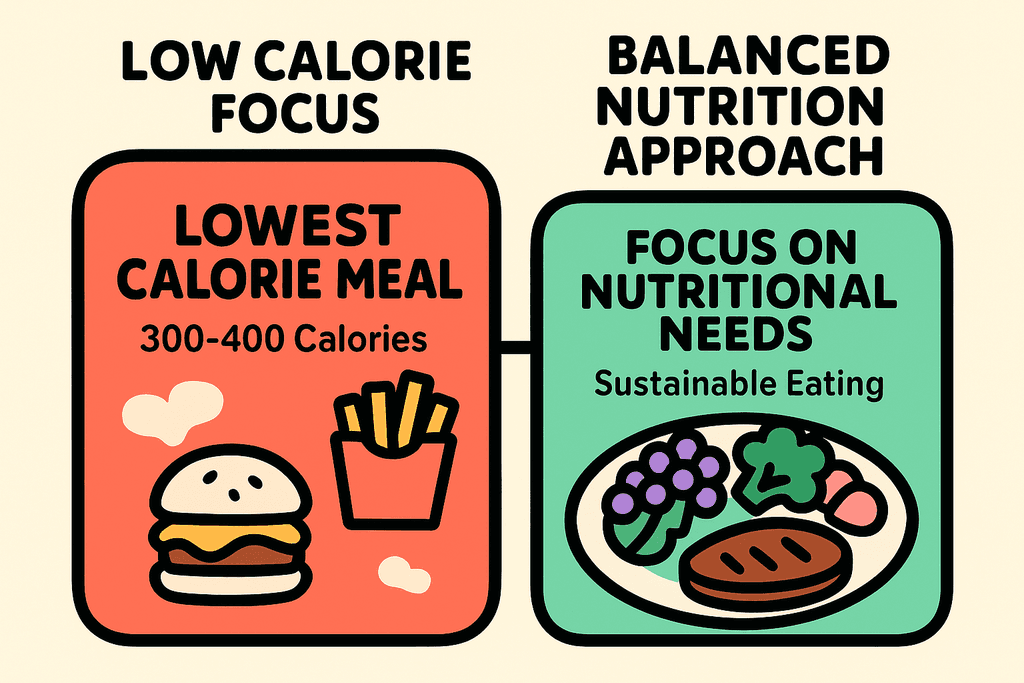
| Always Choosing Lowest Calorie | Balanced Tracking Approach |
|---|---|
| Constant hunger | Sustainable fullness |
| Missing key nutrients | Meeting macro goals |
| Energy crashes | Stable energy |
| Hard to maintain | Easy to stick with |
| Obsessive mindset | Flexible approach |
The balanced approach means choosing meals that fit your daily targets while keeping you satisfied. Some days that's a 600-calorie meal with plenty of protein. Other days it's lighter. The key is knowing where you stand instead of guessing.
Consistency Beats Perfection
You don't need to find the perfect lowest calorie fast food meal every single time. You need a system that works when life gets messy. Modern tracking tools remove the friction that makes people quit after two weeks.
- Log your meals quickly without searching databases
- See your actual patterns over weeks and months
- Adjust based on real data instead of feelings
- Build habits that last beyond your motivation
When tracking takes seconds instead of minutes, you do it consistently. When you track consistently, you learn what actually works for your body. That's worth more than memorizing calorie counts at every restaurant chain.
Making Fast Food Work for Your Goals
Here's the thing about finding the lowest calorie fast food meal: it's not always the smartest move for your actual goals. A 200-calorie side salad might look great on paper, but if you're starving two hours later and end up eating a whole bag of chips, you didn't really win. The real trick is understanding what you're eating and how it fits into your day, not just chasing the smallest number on the menu board.
Tracking what you eat doesn't have to be complicated anymore. With tools like voice-powered calorie tracking, you can log that Chipotle bowl or McDonald's order in seconds without pulling out a calculator or searching through endless food databases. MyFoodBuddy lets you just say what you ate and handles the rest, which means you can actually stick with tracking instead of giving up after three days.
The truth is that balance beats perfection every single time. You don't need to order the sad grilled chicken salad when what you really want is a burger. You just need to know what you're working with and set realistic goals that don't make you miserable. Fast food can absolutely fit into a healthy eating plan when you understand the numbers.
Most people quit tracking because traditional apps make it feel like homework. But when you can track without the hassle, suddenly it becomes something you can actually maintain long-term. That's when the real progress happens.
Common Questions About Low Calorie Fast Food
Tracking calories at fast food restaurants brings up a lot of questions, especially when you're trying to stay on track with your goals. The good news is that eating fast food doesn't have to derail your progress if you know what to look for. Here are the most common questions people ask about finding and tracking the lowest calorie fast food meal options.
Are posted calorie counts accurate?
Fast food calorie counts are usually pretty close, but they're not perfect. The numbers you see on menus are based on standard recipes, but actual portions can vary depending on who's making your food. Toppings, sauces, and cooking methods can add extra calories that aren't always accounted for, so it's smart to treat posted numbers as estimates rather than exact figures.
What's the healthiest low calorie fast food option?
Grilled chicken sandwiches without mayo, salads with dressing on the side, and protein-focused bowls tend to be your best bets. Look for menu items that feature grilled proteins, vegetables, and whole grains while avoiding fried foods and creamy sauces. Most chains now offer nutrition information online, so you can compare options before you order.
How do I track fast food meals accurately?
The easiest way is to use the restaurant's official nutrition information and log it right away. With MyFoodBuddy, you can simply say "I had a grilled chicken sandwich from Chick-fil-A" and the app pulls the nutritional data automatically. This beats manually searching through databases or trying to estimate portions yourself, which is what you'd have to do with apps like MyFitnessPal or Cronometer.
Can I eat fast food and still lose weight?
Yes, as long as you stay within your calorie goals. Weight loss comes down to eating fewer calories than you burn, regardless of where those calories come from. The challenge with fast food is that it's easy to underestimate portions and overlook hidden calories in sauces and sides, but choosing the lowest calorie fast food meal options makes it totally doable.
What should I avoid when ordering low calorie fast food?
Skip the fried items, creamy dressings, and sugary drinks, which pack in calories without keeping you full. Combo meals often include fries and soda that can double or triple your calorie intake. Instead, order items individually and swap fries for a side salad or fruit when possible.
How does MyFoodBuddy help with tracking fast food?
MyFoodBuddy makes tracking fast food super simple because you can log meals using voice or text in seconds. Just tell the app what you ate, and it automatically calculates the nutrition using AI and USDA data. You don't have to spend time searching through databases or creating custom meals like you would with traditional calorie trackers, which means you're more likely to actually stick with tracking even when you're eating on the go.
Ready to start tracking smarter?
Download MyFoodBuddy and start tracking your calories by just saying what you ate. No more searching databases or guessing portions.
Get started