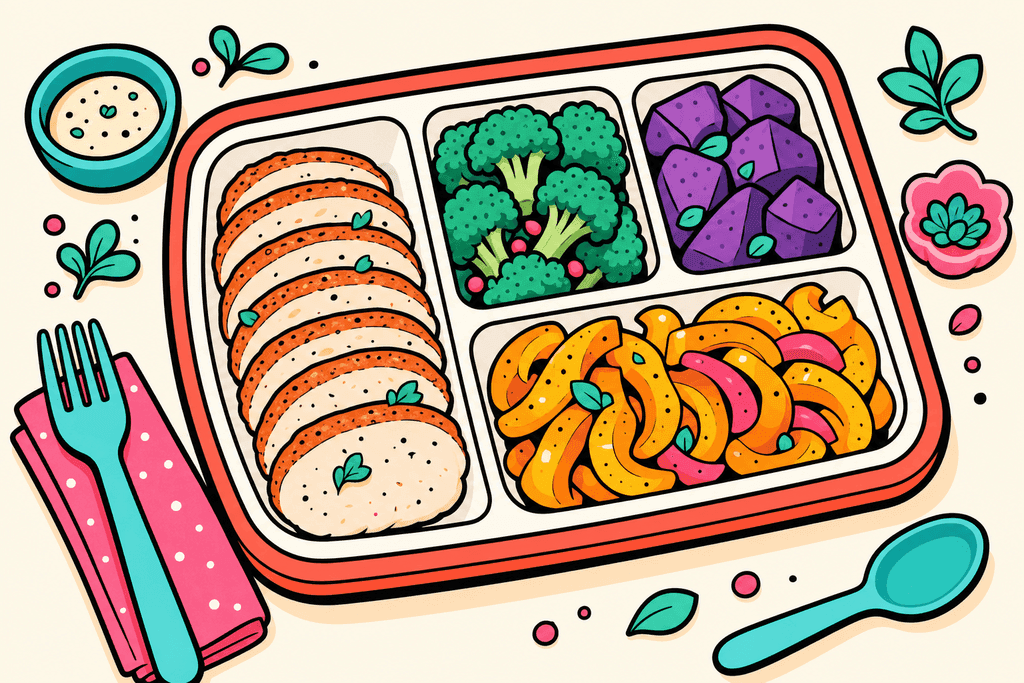
Turkey Breast Nutrition Data for Meal Prep Days
Turkey breast nutrition data breakdown: calories, protein, and macros. Perfect for meal prep tracking with easy logging tips.
Turkey breast packs around 30 grams of protein per 100 grams while keeping calories under 120, making it one of the leanest protein sources you can meal prep. Whether you're trying to lose weight, build muscle, or just eat healthier, knowing the exact nutrition data turkey breast provides helps you hit your goals without guessing. With tools like MyFoodBuddy, you can log your turkey meals in seconds using voice or text instead of manually searching databases, so tracking your meal prep becomes as simple as the cooking itself.
Table of Contents
Turkey Breast Nutrition Breakdown
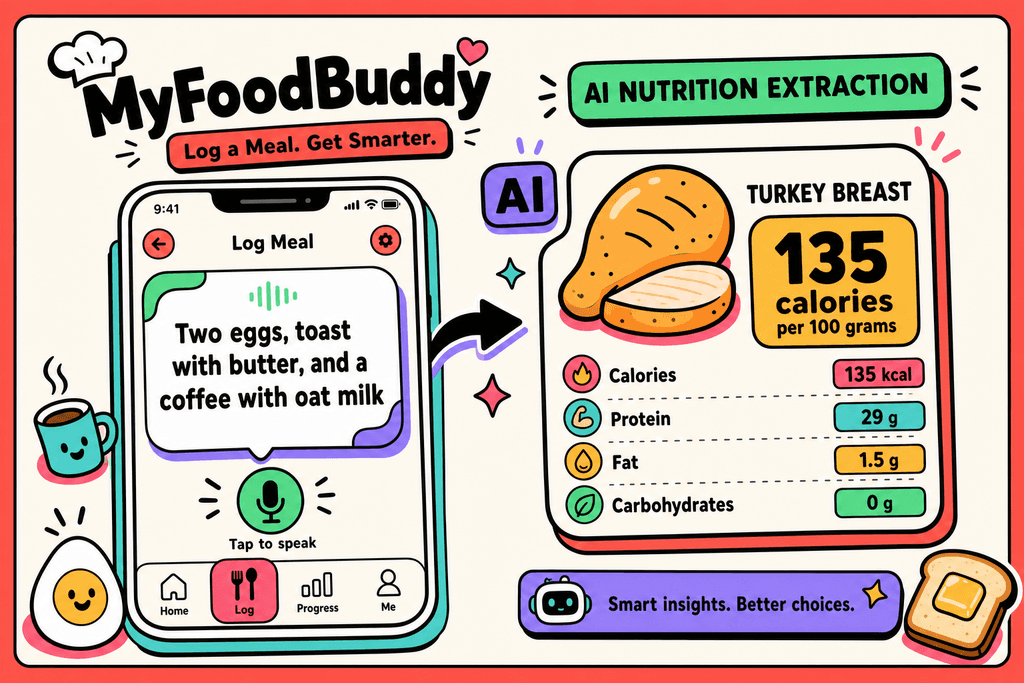
Turkey breast packs about 135 calories per 100 grams when cooked, making it one of the leanest protein sources you can find at the grocery store. If you've ever tried tracking your meals in apps like MyFitnessPal or Cronometer, you know how confusing it gets when the nutrition data turkey breast shows different numbers for raw versus cooked portions. The weight changes during cooking, the moisture content drops, and suddenly your careful meal prep calculations are all over the place. This is exactly why having accurate nutrition data matters, especially when you're trying to hit specific protein or calorie targets throughout the week.
Raw Versus Cooked Numbers
When you cook turkey breast, it loses about 25% of its weight through moisture loss. That means 100 grams of raw turkey becomes roughly 75 grams when cooked, but the nutrients get more concentrated. Here's what changes and what stays the same.
The protein content goes up per gram because water evaporates but the actual protein molecules don't disappear. A 100-gram serving of cooked turkey breast delivers around 30 grams of protein, while the same weight raw gives you about 23 grams. The fat content stays minimal either way, usually under 2 grams per serving.
| Measurement | Raw (100g) | Cooked (100g) |
|---|---|---|
| Calories | 104 | 135 |
| Protein | 23g | 30g |
| Fat | 1.2g | 1.5g |
| Carbs | 0g | 0g |
Vitamins and Minerals That Matter
Beyond the basic macros, turkey breast brings some serious micronutrients to your plate. These often get overlooked when people focus only on calories and protein, but they're part of what makes turkey such a solid choice for meal prep.
- B vitamins, especially niacin and B6, which help your body turn food into energy
- Selenium, an antioxidant that supports your immune system
- Phosphorus for bone health and cell repair
- Zinc, which helps with wound healing and immune function
Apps like MyFoodBuddy track over 20 nutrients automatically when you log "grilled turkey breast" using voice or text. You don't need to manually search through databases or guess which entry matches your cooking method.
How Cooking Changes Things
The way you cook your turkey breast affects more than just the taste. Grilling, baking, and pan-frying all create different moisture loss patterns, which means the final nutrition data turkey breast provides can vary slightly based on your method.
- Baking at 350°F typically retains the most moisture
- Grilling can reduce weight by up to 30% due to higher heat
- Pan-frying with oil adds extra fat calories to consider
Most traditional tracking apps require you to pick the exact cooking method from a dropdown menu and measure everything precisely. That's where quick-logging tools make life easier, letting you just say what you ate without the extra steps.
Protein Power for Your Goals
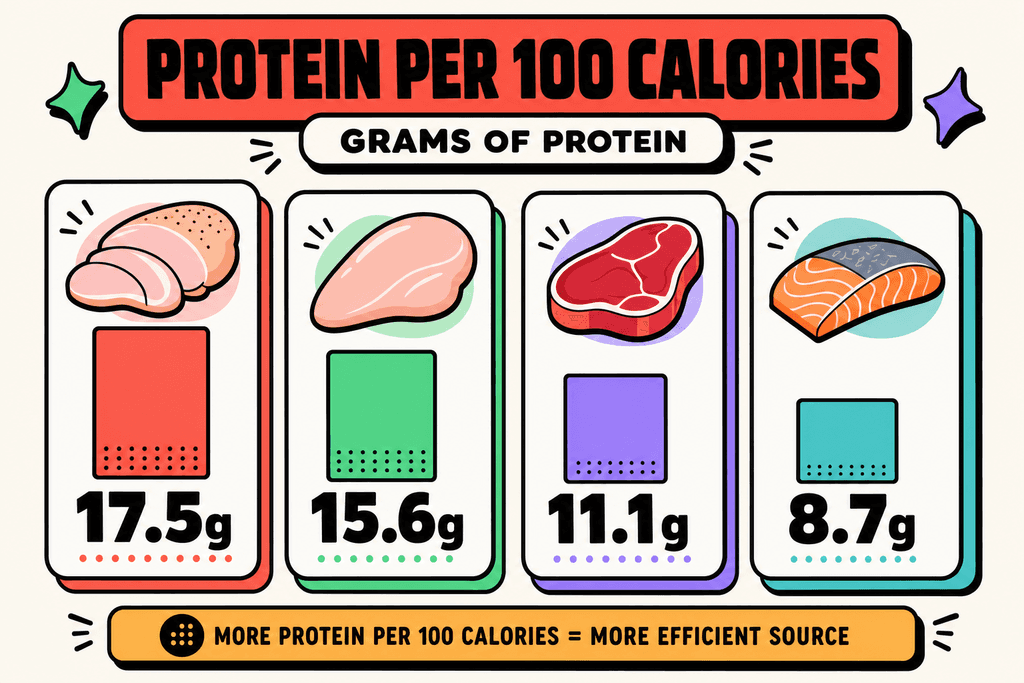
A single four-ounce serving of turkey breast packs about 34 grams of protein with only 153 calories. That's the kind of ratio that makes meal prep planners smile. Whether you're trying to lose weight, build muscle, or just eat healthier, turkey breast delivers protein without loading you up with extra calories or fat. The nutrition data turkey breast offers makes it one of the most efficient protein sources you can buy at the grocery store.
Protein Power for Your Goals
The protein-to-calorie ratio matters more than most people think. When you're prepping meals for the week, you want foods that keep you full without blowing your calorie budget.
Here's how turkey breast stacks up in different serving sizes:- 3 ounces (about the size of a deck of cards): 26 grams protein, 115 calories
- 4 ounces: 34 grams protein, 153 calories
- 6 ounces: 51 grams protein, 230 calories
- 8 ounces: 68 grams protein, 306 calories
Compare that to chicken thighs at 26 grams of protein and 229 calories for four ounces, or ground beef at 28 grams of protein and 287 calories. Turkey breast wins on the lean protein front every time.
Most people need between 0.8 to 1 gram of protein per pound of body weight, depending on their activity level and goals. If you weigh 150 pounds and you're moderately active, that's about 120-150 grams of protein daily. A six-ounce serving of turkey breast gets you about a third of the way there in one meal.Calories and Macros That Work
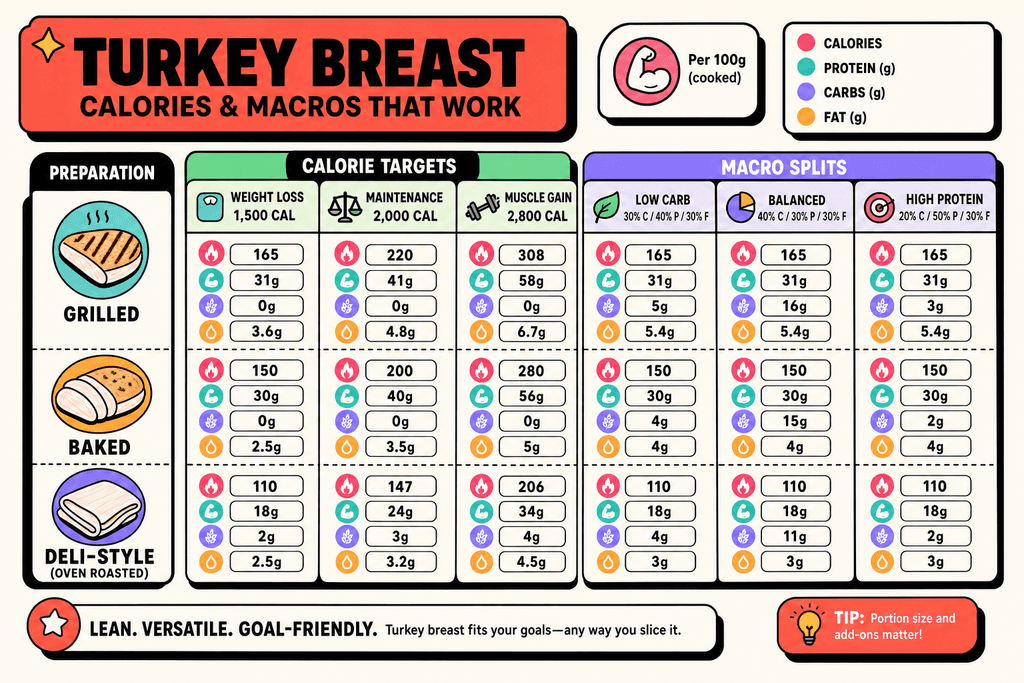
Let's talk real numbers because vague nutrition advice doesn't help anyone. Turkey breast is almost pure protein with minimal fat and zero carbs. A four-ounce serving contains roughly 1 gram of fat and 0 grams of carbohydrates. This makes it perfect for people following low-carb diets, keto plans, or anyone who needs to hit high protein targets without extra macros getting in the way.
Calories and Macros That Work
The calorie count stays consistent across different cooking methods as long as you're not adding oils or butter. Grilled, baked, or air-fried turkey breast all clock in around the same numbers.
| Preparation Method | Calories (4 oz) | Protein (g) | Fat (g) | Carbs (g) |
|---|---|---|---|---|
| Grilled | 153 | 34 | 1 | 0 |
| Baked | 153 | 34 | 1 | 0 |
| Deli-style | 120 | 24 | 2 | 2 |
Notice how deli turkey has slightly different numbers. That's because of added sodium and sometimes sugar in the processing. Fresh cooked turkey breast gives you cleaner macros.
If you're eating 1,800 calories a day, an eight-ounce turkey breast portion takes up only 306 calories while delivering 68 grams of protein. That leaves plenty of room for vegetables, healthy fats, and carbs to round out your meals. For someone on a 2,500 calorie diet trying to build muscle, you could easily fit two six-ounce servings throughout the day.The fat content in turkey breast sits at less than 1 gram per four ounces, which is why it's labeled as extra lean meat. This matters when you're trying to control your total fat intake or save your fat macros for things like olive oil, nuts, or avocado that come with other nutritional benefits.
Tracking Turkey Breast the Easy Way
Weighing every meal gets old fast. Most people quit tracking their food not because they don't care about their goals, but because the process takes too much time. The good news is you don't need a food scale every single time once you learn what portions look like. A four-ounce serving of turkey breast is about the size of your palm, while six ounces is roughly the size of two decks of cards stacked together.
When you meal prep on Sunday, weigh your portions once and divide them into containers. After that, you know each container has exactly six ounces without pulling out the scale again.
Common visual cues for turkey breast portions:- 3 ounces = deck of cards or your palm
- 4 ounces = slightly larger than your palm
- 6 ounces = two decks of cards or checkbook size
- 8 ounces = thin paperback book
MyFoodBuddy makes this even simpler because you can just say "six ounces of grilled turkey breast" and it logs everything for you. No searching through databases or creating custom meals. The app pulls nutrition data turkey breast information automatically, so you're not spending five minutes trying to figure out if you should log it as "turkey breast roasted" or "turkey breast grilled" or which brand matches what you actually ate.
Save your go-to turkey meals as favorites and you can re-log them in seconds. If you eat the same turkey and rice bowl three times a week, log it once with all the details, save it, and tap it whenever you eat it again.Here's something most people forget about when tracking. If you marinate your turkey in teriyaki sauce or cook it in olive oil, those calories count too. A tablespoon of olive oil adds 120 calories. A quarter cup of teriyaki marinade can add another 50-70 calories. When you use voice logging with MyFoodBuddy, you can say "six ounces grilled turkey breast with one tablespoon olive oil" and both get logged correctly.
The difference between manual tracking and voice input isn't just convenience. It's the difference between actually sticking with your nutrition goals or giving up after two weeks because it feels like a part-time job. Traditional apps make you tap through multiple screens, search databases, and adjust serving sizes. That adds up to several minutes per meal, which means 15-20 minutes daily just logging food. With voice input, you're done in seconds while the food is still hot.
If you want to dive deeper into how protein tracking fits into your overall nutrition plan, or learn more about meal planning strategies that don't require cooking every single day, those resources can help you build a system that actually works long-term.
Making Turkey Breast Work for Your Week
Most people who meal prep turkey breast make the same tracking mistake. They cook a big batch on Sunday, portion it out, and then guess at the nutrition data turkey breast provides each time they eat it. The problem is that turkey breast loses about 25% of its weight during cooking, which means your raw weight calculations are way off if you're tracking after cooking. This creates a domino effect throughout your week where you think you're hitting your protein goals but you're actually falling short by 20-30 grams per day.
The smartest approach is to weigh your turkey breast raw, calculate the total nutrition for the entire batch, and then divide by the number of portions you create. This method ensures accuracy across your entire week without having to pull out your food scale every single time you eat. Apps like MyFitnessPal require you to search through dozens of entries to find whether you're logging raw or cooked turkey, then manually adjust serving sizes. With MyFoodBuddy, you can simply say "4 ounces of meal prepped turkey breast from my Sunday batch" and the app handles the calculation.
Batch Cooking Without Losing Track
Here's where most tracking falls apart. You cook three pounds of turkey breast, it shrinks to about 2.25 pounds, and now you're trying to remember if that container has 5 or 6 ounces. The solution is creating a system before you start cooking.
- Weigh the entire raw batch and log it as one entry in your tracking app
- After cooking, divide into equal portions using a food scale
- Label each container with the cooked weight so you know exactly what you're eating
- Save this as a custom meal in your app for quick logging throughout the week
Different cooking methods affect the final nutrition data turkey breast delivers to your plate. Baking at 350°F preserves more moisture than grilling at high heat, which means less weight loss and slightly different macro ratios per ounce of cooked meat.
Storage Strategies That Preserve Accuracy
Turkey breast stays fresh for 4 days in the fridge, but the texture changes after day three. Freezing portions immediately after cooking locks in both quality and nutritional value, giving you flexibility throughout the week without compromising your tracking accuracy.
- Store portions in airtight containers with minimal air exposure
- Freeze half your batch if you're prepping for more than 4 days
- Thaw frozen portions in the fridge overnight, never in the microwave
- Add moisture back with a tablespoon of chicken broth when reheating
Hitting Your Macros with Smart Pairings
Turkey breast is almost pure protein with minimal fat, which means you need to pair it strategically to hit balanced macros. A 4-ounce portion gives you about 35 grams of protein but only 1-2 grams of fat, leaving you short on healthy fats if that's all you eat.
- Pair with avocado or olive oil to add healthy fats without extra protein
- Add sweet potato or rice to meet carb targets while keeping protein high
- Mix with higher-fat proteins like salmon on alternate days for variety
- Track complete meals instead of individual ingredients to see your full macro picture
The biggest tracking error happens when people log "turkey breast" without specifying the preparation method. Deli turkey, rotisserie turkey, and home-cooked turkey breast all have different sodium levels and fat content, which can throw off your daily totals by hundreds of milligrams of sodium.
Weekly Meal Prep Checklist
Following a consistent process each week removes the guesswork from tracking nutrition data turkey breast provides. This checklist ensures you maintain accuracy from shopping to storage.
- Weigh turkey breast raw and log total nutrition before cooking
- Choose one cooking method and stick with it for consistent results
- Portion immediately after cooking while still warm for even distribution
- Label containers with cooked weight and date prepared
- Save the meal in your tracking app with exact portions for quick logging
- Plan complementary foods that balance your macros for each meal
- Set reminders to use refrigerated portions within 4 days
Your Turkey Breast Tracking Takeaway
Turkey breast really is one of those foods that makes meal prep planning easier because the nutrition data turkey breast offers is so consistent and reliable. You get about 26 grams of protein per 3-ounce serving with only around 125 calories, which means you can hit your protein goals without blowing through your calorie budget. Whether you're trying to lose weight, build muscle, or just eat better, knowing these exact numbers helps you plan your week with actual confidence instead of guessing.
The thing is, having great nutrition data turkey breast provides doesn't help much if tracking it feels like a chore. Most apps make you search through endless databases or scan barcodes every single time. MyFoodBuddy handles this differently by letting you just say what you ate, like "4 ounces of turkey breast with rice and broccoli," and it logs everything in seconds.
When you prep turkey breast on Sunday, you want to know exactly what you're getting throughout the week. The protein-to-calorie ratio stays consistent whether you grill it, bake it, or use a slow cooker. This predictability is what makes it perfect for meal planning without spending hours in the kitchen.
The real secret to seeing results isn't just eating turkey breast though. It's tracking it consistently enough that you actually know what's working. When logging takes 30 seconds instead of 5 minutes, you're way more likely to stick with it past the first week. That consistency is what separates people who hit their goals from people who give up because tracking protein felt too complicated.
You probably have some questions about the specifics of turkey breast nutrition or how to make tracking easier in your daily routine.
Turkey Breast Nutrition Questions
Tracking turkey breast can get confusing when you're trying to meal prep or log your food accurately. The numbers change based on how you cook it, what you add to it, and whether you're buying it fresh or pre-sliced from the deli counter. Here are the most common questions people ask when they're trying to get their nutrition data turkey breast numbers right.
How many calories are in 4 oz of turkey breast?
A 4 oz serving of skinless, boneless turkey breast contains about 120-140 calories when cooked. The exact number depends on whether it's roasted, grilled, or baked, but the difference is usually pretty small. Fresh turkey breast is one of the leanest proteins you can eat, with roughly 26-28 grams of protein and less than 2 grams of fat per serving.
Is turkey breast better than chicken breast for protein?
Turkey breast and chicken breast are nearly identical when it comes to protein content, both offering about 26-28 grams per 4 oz serving. Turkey breast is slightly lower in fat and calories in most cases, but the difference is so small that it really comes down to personal preference. Both are excellent choices for hitting your protein goals without adding extra calories.
Does cooking method change turkey breast calories?
The cooking method itself doesn't change the calories in the turkey meat, but what you cook it with definitely does. Roasting or grilling without added fats keeps the calorie count low, while pan-frying in oil or butter can add 50-100+ calories depending on how much fat you use. The turkey stays the same, but your cooking additions make the real difference in your final nutrition data turkey breast numbers.
How do I track turkey breast with seasonings?
Most dry seasonings like garlic powder, paprika, and herbs add negligible calories, usually less than 5 calories per serving. If you're using rubs with sugar or oil-based marinades, those can add 20-100 calories depending on how much you use. With MyFoodBuddy, you can just say "4 oz grilled turkey breast with garlic and herbs" and the app figures out the nutrition data for you without making you search for every single ingredient.
Can I meal prep turkey breast for the whole week?
Cooked turkey breast stays good in the fridge for 3-4 days, so you can safely meal prep for half the week at a time. If you want to prep for the full week, cook it all at once but freeze half of it in individual portions. Just thaw what you need the night before, and your nutrition data turkey breast stays consistent across all your meals.
What's the difference between deli turkey and fresh turkey breast nutrition?
Deli turkey typically has added sodium, preservatives, and sometimes sugar, which can add 200-400mg of sodium per serving compared to fresh turkey. The protein content is similar, but deli turkey often has slightly more calories due to added ingredients and processing. Fresh turkey breast that you cook yourself gives you more control over what goes into your food and keeps the sodium much lower.
Ready to start tracking smarter?
Download MyFoodBuddy and start tracking your calories by just saying what you ate. No more searching databases or guessing portions.
Get started