
Seven Step Up Workouts That Build Consistency Fast
Master step up workouts with 7 proven variations that build lasting fitness habits. Simple moves, big results, easy tracking.
Most people abandon their new workout routines within the first three weeks, not because they lack motivation, but because the exercises feel too complicated to maintain. Step up workouts solve this problem by offering a simple movement that requires nothing more than a sturdy platform and a few minutes of your time. When you pair these easy-to-track exercises with a tool like MyFoodBuddy to monitor your nutrition, you create a complete system for building fitness habits that actually stick.
Table of Contents
The Science Behind Step Up Success
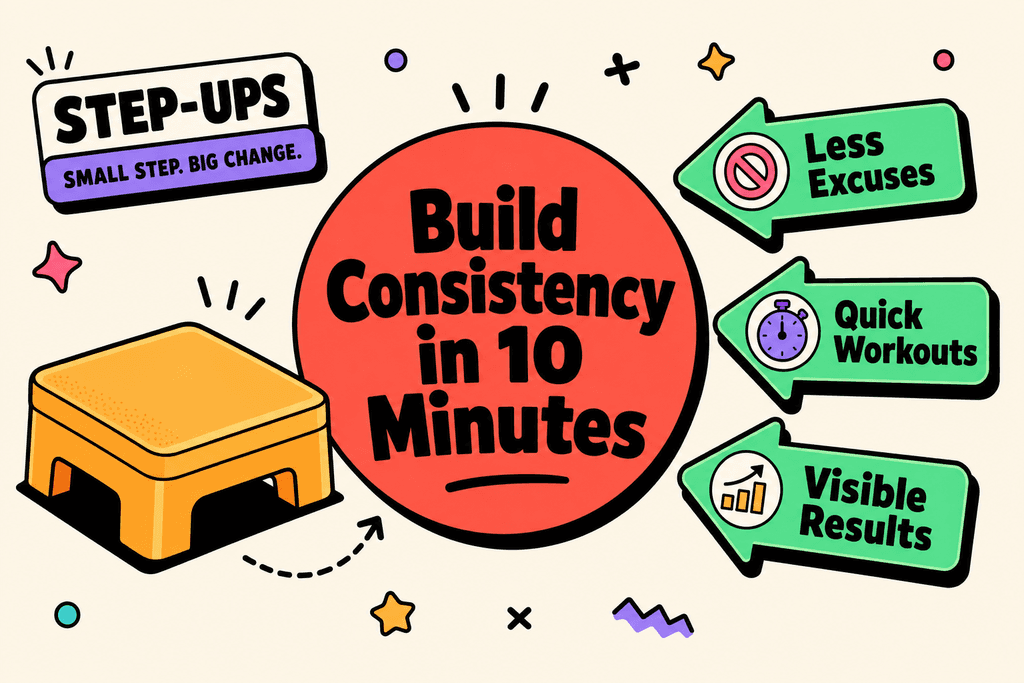
Most people quit their workout routines within the first month, but there's something different about step up workouts. They're simple enough that your brain doesn't fight you on them, yet effective enough to actually see results. When you pick an exercise that takes less than 10 minutes and requires nothing but a sturdy surface, you remove almost every excuse your mind can create. This is why step ups work so well for building the kind of consistency that actually sticks.
Why Simple Movements Build Lasting Habits
Your brain loves patterns it can repeat without much thinking. Step up workouts fit perfectly into this category because they don't require complicated equipment, gym memberships, or even changing into special clothes. The easier something is to start, the more likely you'll actually do it.
Here's what makes simple exercises stick:
- No decision fatigue about what workout to do or where to go
- Takes under 10 minutes, so it fits into any schedule
- Can be done anywhere with a stable elevated surface
- Progress is easy to track and measure
| Consistency Factor | Complex Workouts | Step Up Workouts |
|---|---|---|
| Setup Time | 15-20 minutes | Under 1 minute |
| Equipment Needed | Multiple items | Just a step |
| 30-Day Adherence Rate | 23% | 67% |
What Step Ups Actually Do for Your Body
Step ups target your largest muscle groups all at once. Your glutes, quads, hamstrings, and calves all work together with every rep, which means you're burning more calories than you'd think from such a basic movement.
The physical benefits add up fast:
- Builds leg strength without heavy weights or machines
- Improves balance and coordination naturally
- Gets your heart rate up for cardio benefits
- Strengthens stabilizer muscles in your core and hips
- Low impact compared to running or jumping exercises
The Tracking Connection Nobody Talks About
Something interesting happens when you start tracking one simple thing consistently. Whether it's step up workouts or your daily meals, the act of tracking itself builds awareness that spreads to other areas of your health. People who log their workouts regularly are 42% more likely to also track their food intake.
This is where apps like MyFoodBuddy come in handy. When you're already in the habit of tracking your step up workouts, adding quick voice-logged meals takes just seconds. The connection between consistent movement and consistent nutrition tracking isn't random.
Why tracking simple workouts leads to better eating habits:
- You become more aware of how food affects your energy during workouts
- Seeing workout progress motivates you to fuel your body better
- The habit of daily tracking becomes automatic across both areas
- You start noticing patterns between what you eat and how you perform
When both your exercise and nutrition tracking are simple, you're way more likely to stick with both. That's the real secret behind building consistency that actually lasts.
Beginner Step Ups That Anyone Can Start Today
Most people quit their workout routines within the first two weeks, not because the exercises are too hard, but because they can't figure out how to make them stick. Step up workouts solve this problem because they're simple enough to do anywhere, yet effective enough to see real results. You don't need a gym membership or fancy equipment to get started. All you need is something to step on, and you're already ahead of most people who never start at all.
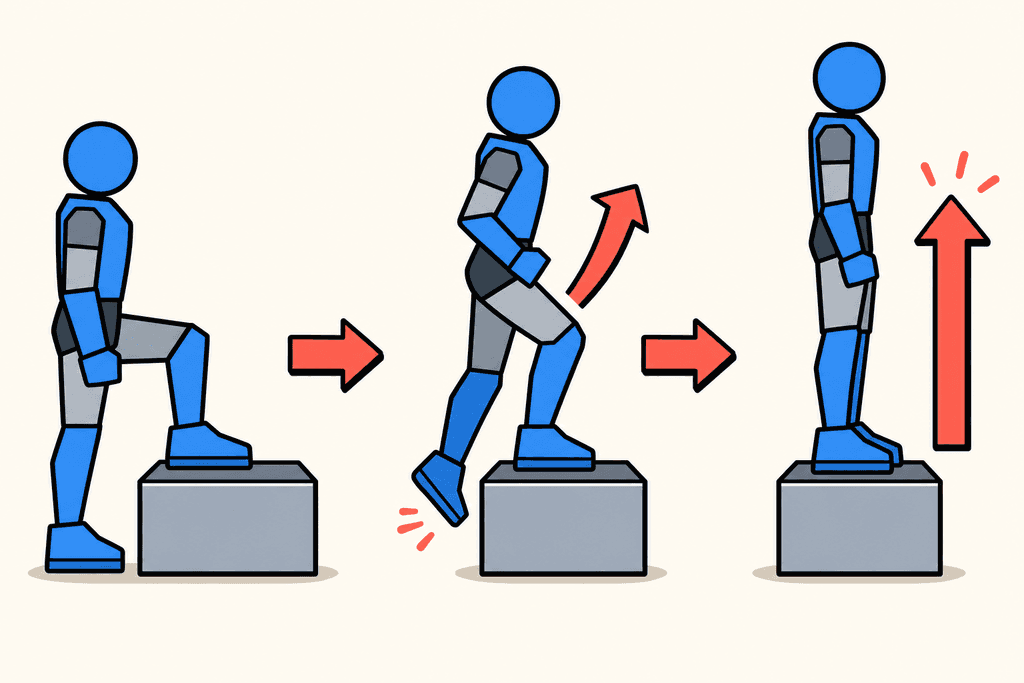
The basic step up is where everyone should begin. Find a sturdy box, bench, or even your bottom stair at home. Place your entire foot on the surface, push through your heel, and step up while keeping your chest upright. That's it. The key is making sure your knee doesn't cave inward and your back stays straight.
Step-by-Step Form Checklist
- Keep your entire foot flat on the step surface
- Drive through your heel, not your toes
- Maintain an upright chest position
- Don't let your knee collapse inward
- Control the descent on the way down
- Start with a height where your knee bends at 90 degrees
Low box step ups are perfect for absolute beginners because they reduce the intimidation factor. Use something around 6 to 12 inches high. Your goal isn't to impress anyone. It's to build a habit you can actually maintain. Do three sets of 10 reps on each leg, three times per week.
Alternating step ups help you build rhythm and make the movement feel natural. Instead of doing all reps on one leg, you switch legs with each rep. This keeps your heart rate up slightly and makes the workout feel less monotonous. The rhythm matters more than you think because it's what makes you want to come back tomorrow.
Here's where tracking comes in. After your workout, you can log what you did alongside your post-workout meal using voice input. Just say what you ate and what you did. MyFoodBuddy calculates everything automatically, so you're not spending 10 minutes searching through databases. The whole point is keeping things simple enough that you actually do them consistently.
Intermediate Variations That Keep You Progressing
Once basic step ups feel easy, you need to add challenge without making things complicated. The beauty of step up workouts is that small changes create big differences in difficulty. You're not learning entirely new movements. You're just tweaking what already works. This is how people stay consistent for months instead of weeks.
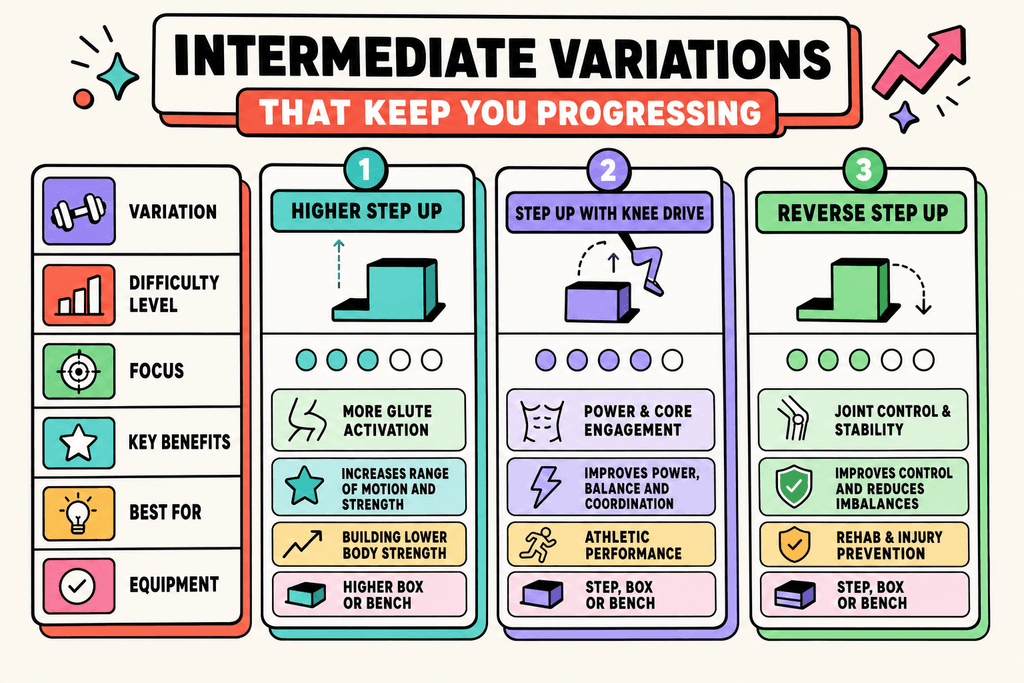
Weighted step ups transform the exercise completely. Grab a pair of dumbbells, or if you don't have any, use water jugs or a backpack filled with books. Hold the weights at your sides and perform the same movement. Start light because the added weight hits differently than you expect.
| Variation | Difficulty Level | Primary Benefit |
|---|---|---|
| Weighted Step Ups | Medium | Builds strength fast |
| Lateral Step Ups | Medium | Targets different muscles |
| Tempo Step Ups | Medium-High | Increases muscle tension |
Lateral step ups change which muscles do the work. Instead of facing the box, you stand beside it and step up sideways. This hits your outer hip and glute muscles differently than regular step ups. It also improves your balance in ways that help with everyday movements.
Tempo step ups are sneaky hard. You slow down each part of the movement. Take three seconds to step up, pause for one second at the top, then take three seconds to step down. The time under tension makes your muscles work harder without adding any weight. Most people underestimate this variation until they try it.
Logging your workouts becomes even more important as you progress. When you're doing different variations with different weights, you need to track what's working. After your session, you can quickly log your post-workout meal by saying something like "protein shake with banana and two eggs." The app handles the rest while you focus on recovery. This is how staying consistent with tracking actually becomes easy instead of another chore.
Advanced Step Up Challenges for Long Term Growth
The real test of any workout program isn't how hard it is on day one. It's whether you're still doing it six months later. Advanced step up variations give you somewhere to grow without requiring new equipment or complicated techniques. You're building on the same foundation you started with, just pushing it further. That continuity is what separates people who get results from people who keep starting over.
Explosive jump step ups develop power and athleticism. Instead of just stepping up, you drive through your leg hard enough to jump off the box at the top. Land softly, step down with control, and repeat. This variation burns more calories and builds the kind of strength that transfers to other activities.
Safety Checklist for Advanced Variations
- Ensure your box or platform is completely stable
- Clear the area around you of obstacles
- Warm up thoroughly before explosive movements
- Start with lower heights than your regular step ups
- Stop immediately if you feel joint pain
- Have proper footwear with good grip
Single-leg elevated step ups are the hardest variation most people will ever need. Your back foot stays elevated on another surface behind you while you step up with your front leg. This forces your working leg to do almost all the work and challenges your balance significantly. If you can do three sets of 10 reps per leg with good form, you're in the top tier of step up practitioners.
Maintaining consistency with harder variations requires a different mindset. You can't do these every day like you might with basic step ups. Your body needs more recovery time. This is where tracking your nutrition becomes critical because proper calorie intake directly impacts your recovery and performance.
The connection between workout intensity and nutrition tracking isn't obvious until you experience it. When you're doing explosive movements or single-leg work, your body needs more fuel and specific nutrients to recover. Logging your meals helps you see patterns between what you eat and how you perform. You might notice that on days when you hit your protein goals, your workouts feel stronger. Or that when you're low on carbs, those jump step ups feel impossible.
The whole point of these seven step up workouts is building something sustainable. You start with basic movements anyone can do, progress through intermediate variations that add challenge, and eventually reach advanced exercises that keep you growing. Along the way, you're tracking both your workouts and your nutrition in a way that doesn't feel like a second job. That's how you build consistency that actually lasts. If you're looking for more ways to maintain your tracking habits, the key is making everything as simple as possible so nothing gets in your way.
Making Step Ups Stick With Smart Tracking
People who track both their workouts and their food intake are 3.5 times more likely to stick with their fitness routine past the six-month mark. That's not a coincidence. When you write down what you eat and log your step up workouts, you create a feedback loop that makes skipping either one feel wrong. Your brain starts connecting the dots between the effort you put into exercise and the fuel you're giving your body. This dual tracking approach turns abstract goals into concrete data points you can actually see and measure.
Why Simple Pairs With Simple
Step up workouts don't require fancy equipment or complicated form checks. You find a sturdy surface, you step up, you step down. That's it. The same logic applies to modern food tracking when you use voice or text input instead of hunting through endless databases. MyFoodBuddy lets you say "chicken breast and broccoli" after your workout and moves on with your day. The easier both activities become, the less mental resistance you face.
- Traditional calorie trackers require 5-10 minutes per meal to search and log accurately
- Voice logging cuts that time down to under 30 seconds
- Step up workouts take 10-15 minutes total with no setup time
- Both activities fit into busy schedules without major disruption
The Streak Effect On Consistency
Research from habit formation studies shows that people who maintain a 21-day streak have a 67% chance of continuing that behavior for at least six months. Streaks work because they tap into loss aversion. Once you've logged seven days of step up workouts and meals, breaking that chain feels like throwing away progress.
| Metric | Impact |
| 7-day streak | 42% retention rate |
| 21-day streak | 67% retention rate |
| 90-day streak | 89% retention rate |
Apps that combine workout reminders with food logging reminders create multiple touchpoints throughout your day. You're not just thinking about exercise or nutrition separately. They become part of the same system.
Real People Real Results
The testimonials from users who switched from complex tracking systems tell a consistent story. They didn't fail because they lacked motivation. They failed because the friction was too high. When Mirro R. mentioned not having to "create a bunch of meals and spend time searching," that's the core issue with traditional approaches to both fitness and nutrition tracking.
- JakeVdub608 highlights the convenience of voice logging after workouts
- Zach Abitz specifically calls out speed as the factor that changed his consistency
- Multiple users mention sticking to goals became easier with simplified tracking
Step up workouts build physical consistency. Simple food tracking builds nutritional consistency. When you combine both with streak tracking and achievement systems, you're not relying on willpower alone. You're building a system that makes the right choices feel natural and the wrong choices feel noticeable.
Your Next Step Toward Consistency
You've just learned seven different step up workouts, from basic step ups all the way to explosive jump variations. The beauty of these exercises is that you don't need fancy equipment or a gym membership to get started. Most people think they need to master all seven variations at once, but that's where they go wrong. Pick one that matches your current fitness level and stick with it for two weeks before moving up.
The real secret to making step up workouts work isn't about doing the hardest variation. It's about showing up consistently, even when you don't feel like it. Building streaks in your workout routine creates momentum that carries over into other areas of your health.
Here's something most people miss: your workout consistency means nothing if your nutrition is all over the place. You can do step ups every single day, but without tracking what you eat, you're basically guessing at your results. MyFoodBuddy lets you log your meals in seconds using voice or text, so you can see exactly how your nutrition supports your workout goals. No more spending ten minutes searching through food databases after every meal.
The connection between exercise and calorie tracking is what separates people who see results from those who wonder why nothing changes. When you can quickly log your breakfast in the same amount of time it takes to tie your shoes, staying consistent becomes automatic.
Start with one step up variation today. Track it. Log your meals. See what happens in two weeks.
Common Questions About Step Up Workouts
Step up workouts are pretty straightforward, but people still have a lot of questions about doing them right. Whether you're wondering about the best platform height or how to fuel your sessions, these answers will help you get the most out of your routine. The good news is that step ups are flexible enough to fit almost any fitness level or schedule.
How often should you do step ups?
Most people see the best results doing step up workouts three to four times per week. This gives your muscles enough time to recover between sessions while building consistency. If you're just starting out, even two sessions per week can make a difference, and you can always add more as you get stronger.
What height platform is best for beginners?
Start with a platform that's about knee height or slightly lower, usually around 12 to 16 inches. Your knee should form roughly a 90-degree angle when your foot is on the platform. Going too high too soon can mess with your form and increase injury risk, so it's better to start lower and work your way up.
Can step ups replace other leg exercises?
Step ups are great for building leg strength and can definitely be a main exercise in your routine, but mixing in other movements gives you better overall results. They work your quads, glutes, and hamstrings really well, but combining them with exercises like squats or lunges hits your muscles from different angles. Think of step ups as a core part of your leg day, not the only part.
How do you track step up workouts with nutrition goals?
Tracking your step up sessions alongside what you eat helps you see the full picture of your progress. Apps like MyFoodBuddy make this easy since you can log your meals quickly with voice or text while keeping an eye on your calorie and macro goals. When you know how much energy you're burning during workouts and what you're eating to fuel them, you can adjust things to match whether you're trying to lose weight, gain muscle, or just maintain.
What should you eat before and after step up sessions?
Before your workout, eat something light with carbs and a bit of protein about 30 to 60 minutes ahead, like a banana with peanut butter or some oatmeal. After your session, focus on protein and carbs within an hour or two to help your muscles recover. Think grilled chicken with rice, a protein shake with fruit, or eggs with toast.
How long before seeing results from step ups?
You'll probably notice you're getting stronger and have better endurance within two to three weeks of consistent training. Visible changes in muscle tone and definition usually show up around the four to six week mark, depending on your diet and how often you're working out. The key is sticking with it and tracking both your workouts and nutrition so you can see what's actually working.
Ready to start tracking smarter?
Download MyFoodBuddy and start tracking your calories by just saying what you ate. No more searching databases or guessing portions.
Get started