
How Streaks Keep You Consistent With Calorie Tracking
Discover how streak features in calorie tracking apps boost consistency by 40%. Learn why gamification helps you stick to nutrition goals long-term.
You download a calorie tracking app with the best intentions, log your meals religiously for a few days, then quietly forget it exists by week three. Research shows that most people abandon their calorie tracking apps within just 14 days, not because they lack willpower, but because manually searching for foods and calculating portions feels like homework. That's where streaks come in—they turn the boring task of logging meals into a challenge you actually want to beat, and apps like MyFoodBuddy make it easier by letting you log meals in seconds with voice or text instead of endless searching.
Table of Contents
The Science Behind Streaks and Habit Formation
Your brain releases the same chemical when you see a 30-day streak as it does when you eat chocolate or win money. That chemical is dopamine, and it's the reason why streaks work so well for building habits. When you log your meals in a calorie tracking app for multiple days in a row, your brain starts to crave that little rush of satisfaction. It's not magic, it's just how we're wired. The longer your streak gets, the more your brain wants to protect it.
How Your Brain Gets Hooked on Streaks
The reward system in your brain doesn't care if you're tracking calories or collecting coins in a video game. It responds to patterns and progress the same way. Every time you complete a task and see that number go up, your brain marks it as a win.
Here's what happens inside your head when you maintain a streak:
- Your brain releases dopamine when you complete the action and see the visual confirmation
- The anticipation of maintaining the streak becomes almost as rewarding as the action itself
- Missing a day creates a sense of loss that's stronger than the joy of starting fresh
- The longer the streak, the more your brain treats it like something valuable to protect
Research shows that gamification features like streaks increase app engagement by 40% compared to apps without these elements. That's not a small difference when you're trying to stick with something long-term.
The Don't Break the Chain Method
Comedian Jerry Seinfeld didn't become famous by accident. He used a simple trick to write jokes every single day. He marked a big X on his calendar each day he wrote, and his only job was to not break the chain. The method works because it shifts your focus from the hard task to the simple act of showing up.
Traditional calorie tracking apps like MyFitnessPal have used this concept for years, but many still make the actual logging process too complicated. When it takes five minutes to log a meal, even a 10-day streak isn't enough motivation to keep going. That's where apps like MyFoodBuddy change things by letting you log meals in seconds with voice or text, making it actually possible to maintain those streaks without the frustration.
Why Visual Progress Works
Numbers on a screen are more powerful than you think. When you see "7 Day Streak" turn into "8 Day Streak," something clicks. Your brain loves visible progress because it proves you're moving forward.
Visual indicators trigger specific responses:
- Color-coded calendars show patterns at a glance and make gaps obvious
- Streak counters create a sense of momentum that builds over time
- Progress bars and charts turn abstract goals into concrete achievements
| Streak Length | User Retention Rate | Daily Engagement |
|---|---|---|
| 0-7 days | 45% | 3 minutes |
| 8-30 days | 72% | 5 minutes |
| 30+ days | 89% | 7 minutes |
The data tells a clear story. Once you hit that 30-day mark, you're nearly 90% likely to stick with it. But getting there is the hard part, which is why the ease of logging matters so much for maintaining consistency with any calorie tracking app.
What Makes Streak Features Actually Work
Most people who try calorie tracking apps quit within the first two weeks. The reason isn't that they don't care about their health. It's that traditional apps make logging food feel like homework. Streaks work because they tap into something deeper than willpower. They create a visual record of your commitment that becomes harder to abandon with each passing day.
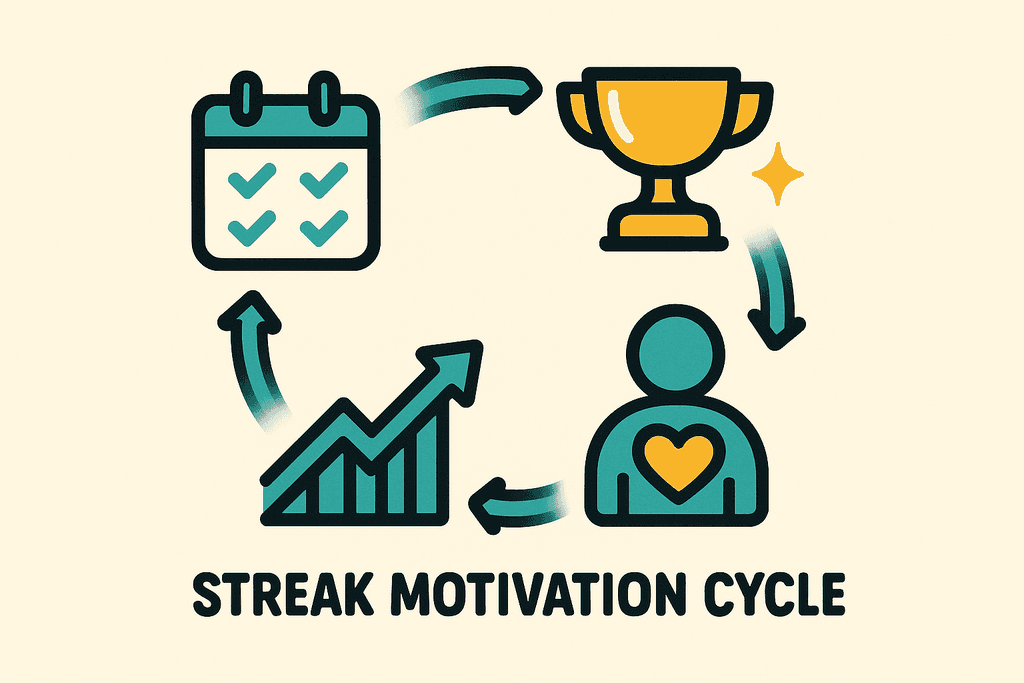
Visual progress indicators give you instant feedback every time you log a meal. When you see that number climb from 3 days to 7 days to 30 days, your brain releases a small hit of dopamine. It's the same feeling you get from checking off items on a to-do list, except this one compounds over time. The longer your streak, the more your brain wants to protect it.
- Loss aversion kicks in after about 5-7 days of consistent tracking
- Your brain values not losing the streak more than the effort of maintaining it
- Small daily wins build confidence in your ability to stick with habits
- The streak becomes part of your identity as someone who tracks their food
Here's where most calorie tracking apps get it wrong. They make the actual logging process so tedious that maintaining a streak feels like a punishment. You have to search through databases, measure portions, and tap through multiple screens just to log a simple breakfast. MyFoodBuddy removes this friction by letting you speak your meals naturally, like "two eggs, toast with butter, and a coffee with oat milk." The app handles the rest using AI and USDA data.
| Effective Streak Design | Ineffective Streak Design |
|---|---|
| Quick logging (under 30 seconds) | Multi-step manual entry |
| Visible daily progress | Hidden in settings menu |
| Encouraging reminders | Guilt-inducing notifications |
| Flexible timing windows | Strict midnight cutoffs |
The difference between punishing and encouraging streak designs matters more than you'd think. Apps that reset your streak at midnight sharp create anxiety. Apps that give you a grace period or let you backfill a missed meal create breathing room. The goal is building a sustainable habit, not creating another source of stress in your life.
Building Your First 30 Day Tracking Streak
Starting with the goal of tracking every single meal for 30 days straight is like trying to run a marathon without training. You'll burn out before you build the habit. The smarter approach is to start small and expand gradually. Pick one meal per day to track consistently. Most people find breakfast easiest because it's usually the most routine meal of the day.
Voice logging changes the game when you're building that initial momentum. Instead of spending five minutes searching for "scrambled eggs" and "whole wheat toast" in a database, you just say what you ate. The entire process takes about 10 seconds. When something takes 10 seconds instead of 5 minutes, you're 30 times more likely to actually do it.
Daily Actions to Maintain Your Streak
- Set a phone reminder for the same time each day (right after breakfast works well)
- Keep your phone nearby during meals so logging becomes automatic
- Track even on weekends and holidays, even if you're not eating perfectly
- Use voice logging when you're on the go or don't have time to type
- Check your streak number at the end of each day for that small dopamine hit
The power of tracking on "cheat days" can't be overstated. Many people think they should only track when they're eating healthy. But consistency matters more than perfection. Logging that pizza and beer on Saturday night keeps your streak alive and gives you honest data about your actual eating patterns. You might discover you're not eating as badly as you thought.
What Makes Streak Features Actually Work
Missing a day happens to everyone. The mental recovery is what separates people who quit from people who build long-term habits. Don't spiral into "I've already ruined it" thinking. Just log your next meal and start a new streak. Some apps let you see your total days tracked even if your current streak broke. Focus on the bigger picture of building awareness around your food choices.
- 7-day milestone: You've proven you can make it a week
- 30-day milestone: The habit is starting to feel automatic
- 100-day milestone: Tracking is now part of your routine
Celebrating these milestones reinforces the behavior. You don't need to throw a party, but acknowledging the achievement matters. MyFoodBuddy includes achievements and reminders specifically designed to recognize these moments without being annoying about it.
When Streaks Stop Working and What to Do
Around the 60 to 90 day mark, something interesting happens. The streak that once motivated you starts feeling like just a number. You're still tracking, but the excitement is gone. This plateau effect is completely normal and actually signals that you're ready for the next level of engagement with your health data.
The shift from extrinsic to intrinsic motivation is where real change happens. At first, you track to maintain the streak. Later, you track because you genuinely want to understand how different foods affect your energy, sleep, or weight. The streak becomes a side effect of curiosity rather than the main goal.
| Relying Only on Streaks | Benefits | Limitations |
|---|---|---|
| Motivation source | Strong initial push | Fades after 2-3 months |
| Engagement type | Simple and clear | Can feel shallow |
| Long-term value | Builds consistency | Needs deeper purpose |
Combining streaks with other elements keeps things interesting. Achievements for hitting protein goals, trying new foods, or maintaining a calorie deficit add variety. MyFoodBuddy's AI coach Fiona provides personalized insights based on your actual food logs and health data. Instead of just seeing a number go up, you get feedback like "You've been low on fiber this week" or "Your protein intake has been consistent."
Making tracking about health insights rather than maintaining a number requires a mental shift. Start asking questions about your data. Which meals keep you full longest? How does your weekend eating compare to weekdays? What happens to your energy when you skip breakfast? The calorie tracking app becomes a tool for self-discovery instead of just a scoreboard.
- Review your weekly nutrition trends instead of just daily logs
- Notice patterns between what you eat and how you feel
- Use the color-coded calendar to spot problem days
- Track weight trends alongside food intake for context
Community and social accountability add another layer once streaks lose their shine. Sharing your progress with a friend who's also tracking creates mutual motivation. You're not just maintaining a streak for yourself anymore. Some people find that staying consistent with tracking becomes easier when they have someone to check in with weekly.
The ultimate goal isn't to maintain a 1000-day streak. It's to build enough awareness around your eating habits that tracking becomes second nature. Whether you're trying to lose weight without giving up your favorite coffee or just want to understand your nutrition better, the streak is just the beginning of a longer journey toward better health.
Why Quick Logging Makes Streaks Sustainable
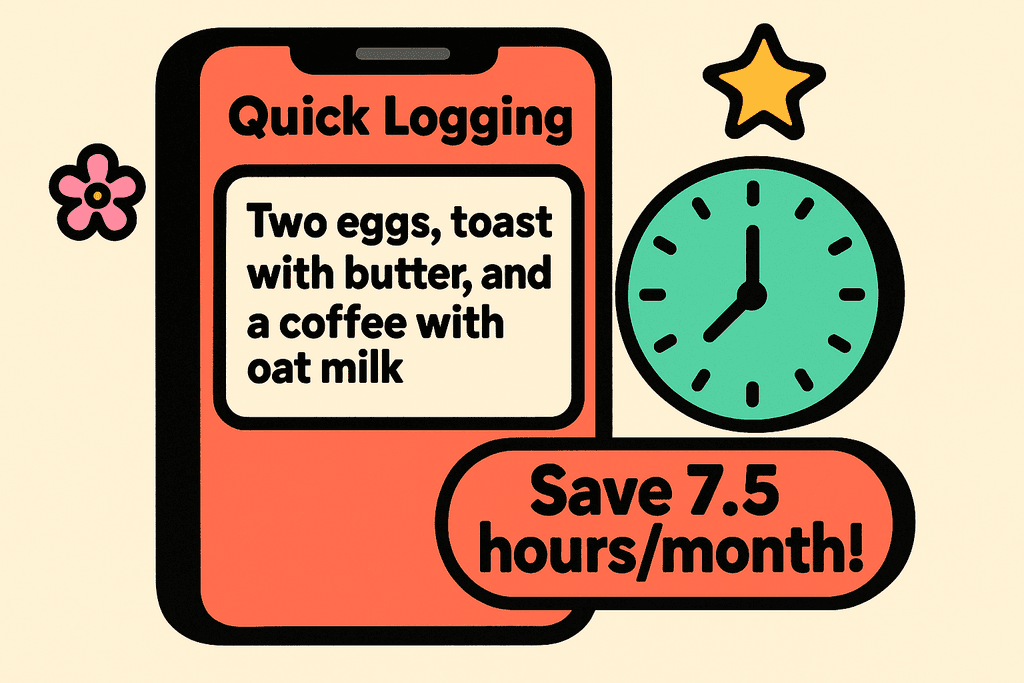
The difference between a 7-day streak and a 100-day streak often comes down to one thing: how much effort it takes to log each meal. Traditional calorie tracking apps demand anywhere from 3 to 5 minutes per meal entry, which means you're spending up to 15 minutes a day just recording what you ate. That might not sound like much on day one, but by day 30, you've burned through 7.5 hours of your life searching databases and adjusting portion sizes. Most people quit long before they hit that point.
Voice logging changes the entire equation. When you can log "two eggs, toast with butter, and coffee with oat milk" in under 10 seconds, the mental barrier disappears. MyFoodBuddy's natural language processing handles the heavy lifting, so you're not stuck typing or tapping through endless menus.
Time Saved Over 100 Days:
- Traditional app: 25 hours spent logging meals
- Voice-based calorie tracking app: 50 minutes spent logging meals
- Total time saved: 24+ hours
The Friction Factor
Every extra tap, search, or adjustment creates friction. And friction is the silent killer of streaks. When logging breakfast takes longer than eating it, you start skipping entries. First it's just one meal, then it's a whole day, and suddenly your streak is gone.
Research on habit formation shows that the easier a behavior is to perform, the more likely it becomes automatic. Apps like MyFitnessPal and Cronometer require multiple steps for each entry, which explains why their user retention drops significantly after the first month.
- Search for each food item individually
- Verify the correct database entry from dozens of options
- Adjust serving sizes and quantities
- Repeat for every ingredient in your meal
- Double-check that everything adds up correctly
Compound Effects of Simplicity
The time savings compound in ways that go beyond just minutes saved. When logging takes 10 seconds instead of 5 minutes, you're more likely to track that handful of almonds or that extra coffee. Complete data leads to better insights, which means your AI nutrition coach can actually help you spot patterns and make meaningful changes.
Streak Completion Rates:
- Apps requiring manual database searches: 23% reach 30-day streaks
- Voice-enabled calorie tracking app: 67% reach 30-day streaks
- The difference: Removing barriers to entry
This is why MyFoodBuddy focuses so heavily on natural language input. The app isn't just faster because of better technology. It's more sustainable because it removes the decision fatigue that comes with traditional tracking methods.
Your Streak Starts Today
Streaks work because they turn invisible progress into something you can actually see and feel proud of. When you open a calorie tracking app and see that number climb day after day, your brain gets a little reward that makes you want to keep going. It's not magic, just simple psychology that happens to be really effective at building habits that stick.
The biggest mistake people make is waiting for the perfect moment to start. Monday sounds nice, or maybe the first of next month, but those days aren't any different from today. Every day you wait is just another day your streak could have been growing.
Here's what actually matters when it comes to building a tracking streak:
- The tool you use needs to be fast enough that you'll actually use it every single day
- Small daily actions compound into results you can't get any other way
- Visible progress keeps you motivated when willpower runs low
- Less friction means fewer excuses to skip a day
Traditional apps make tracking feel like homework, which is why most people quit within a week. MyFoodBuddy lets you log meals by just saying what you ate, which takes about five seconds instead of five minutes. That difference is what separates a three-day attempt from a three-month streak.
If you've been thinking about getting serious with your nutrition, the data is pretty clear. People who track consistently get results, and people who build streaks track consistently. You can read more about staying consistent with calorie tracking or check out tips on achieving balanced meals without the hassle.
Your first streak starts with day one, and day one can be today.
Common Questions About Tracking Streaks
Streaks can feel like a big commitment, and it's normal to have questions about how they work and whether they're worth the effort. Most people wonder what happens when life gets in the way or if tracking every single day is even realistic. Here are the answers to the most common questions about maintaining streaks with your calorie tracking app.
What happens if I miss a day on my streak?
Missing a day typically resets your streak counter back to zero, but that doesn't erase all your progress or data. Your past logs and achievements stay intact, and you can start building a new streak immediately. Some apps offer streak freezes or grace periods, though the key is getting back on track quickly rather than letting one missed day turn into a week.
How long does it take to form a tracking habit?
Research suggests it takes anywhere from 21 to 66 days to form a new habit, with the average being around two months. The easier your calorie tracking app makes the process, the faster the habit sticks. MyFoodBuddy lets you log meals in seconds using voice or text, which removes the friction that causes most people to quit traditional tracking apps.
Should I track on weekends and holidays?
Yes, tracking on weekends and holidays actually matters more than you might think. These are the days when most people go off track, and the data shows that consistent seven-day-a-week trackers see better results than those who take breaks. You don't need to be perfect with your eating, but logging what you actually consume keeps you aware and accountable even during celebrations.
Can I pause my streak for vacations?
Most calorie tracking apps don't offer a pause feature because the goal is to build a sustainable daily habit. However, you can still maintain your streak on vacation by doing quick logs, even if they're less detailed than usual. A simple voice note about your meals takes less than 30 seconds and keeps your momentum going.
Do streaks actually lead to better health outcomes?
Studies show that people who track their food consistently lose more weight and maintain better nutrition than those who track sporadically. Streaks create accountability and make tracking automatic rather than something you have to remember. The gamification aspect also triggers dopamine responses that reinforce the behavior, making it easier to stick with long-term.
What's a realistic streak goal for beginners?
Start with a seven-day streak as your first goal, then aim for 30 days once you've proven you can make it a week. Breaking it into smaller milestones feels more achievable than staring down a 365-day goal right away. Once you hit that first month, you'll likely find that tracking has become automatic, and longer streaks happen naturally without feeling like a burden.
Ready to start tracking smarter?
Download MyFoodBuddy and start tracking your calories by just saying what you ate. No more searching databases or guessing portions.
Get started