Quinoa vs Brown Rice for Meal Preppers Compared
Quinoa vs brown rice for meal prep: Compare nutrition, cost, prep time & storage. Find the best grain for your goals and tracking needs.
Meal preppers waste an average of 15 minutes every week staring at the grain aisle, trying to decide between quinoa and brown rice for their upcoming batch cook. Both grains have earned their spot in healthy kitchens, but they serve surprisingly different purposes depending on your nutrition goals. The quinoa vs brown rice debate isn't just about taste—it's about matching the right grain to your specific fitness targets, and tools like MyFoodBuddy make tracking either choice effortless with simple voice logging.
Table of Contents
What Makes These Grains Different
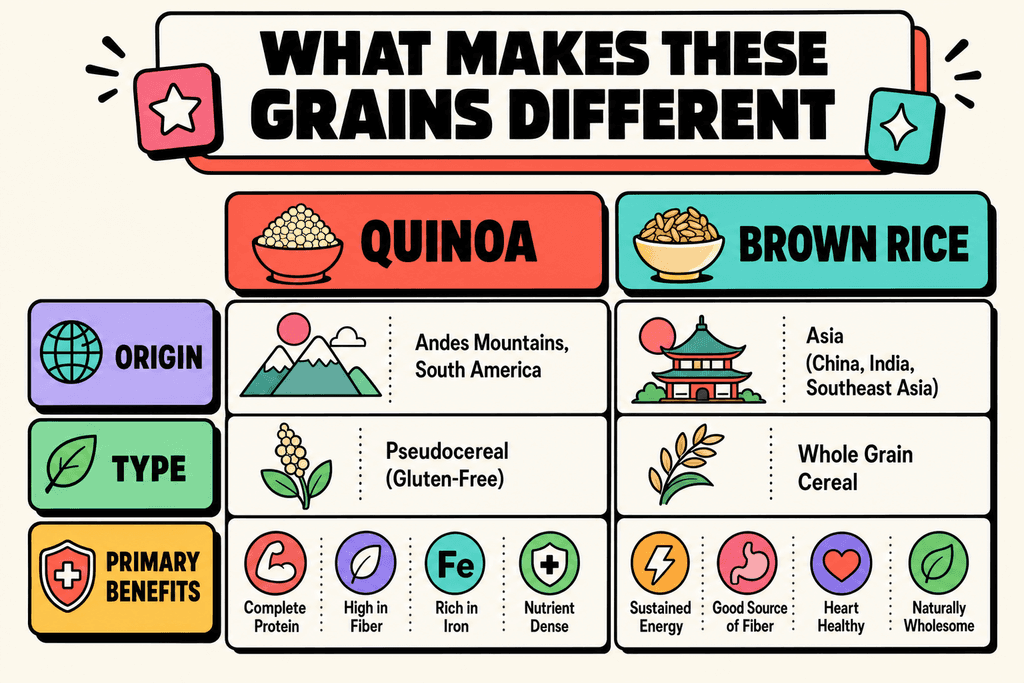
Most people think quinoa and brown rice are basically the same thing, but they're actually pretty different from each other. Quinoa isn't even a grain at all - it's technically a seed that comes from a plant related to spinach and beets. Brown rice, on the other hand, is a true whole grain that's been eaten in Asia for thousands of years. Both have become super popular in meal prep circles, but they got there for totally different reasons.
Where They Come From
Quinoa has been grown in the Andean mountains of South America for over 5,000 years. The Incas called it the "mother of all grains" and considered it sacred. Brown rice has an even longer history, with evidence of cultivation in China dating back more than 8,000 years.
When you're logging meals in apps like MyFoodBuddy, knowing what you're actually eating matters. The app uses AI to calculate nutrition from your food logs, but understanding the basics helps you make smarter choices when planning your weekly meals.
Basic Nutritional Differences
Here's a quick look at how these two stack up against each other:
| Feature | Quinoa | Brown Rice |
|---|---|---|
| Type | Seed (pseudocereal) | Whole grain |
| Origin | South America | Asia |
| Protein per cup | 8 grams | 5 grams |
| Cooking time | 15-20 minutes | 45-50 minutes |
| Main benefit | Complete protein | Higher fiber |
Why Meal Preppers Care
The quinoa vs brown rice debate matters most when you're cooking big batches for the week. Some key differences affect how they work in meal prep:
- Storage time varies between the two
- Reheating quality changes differently
- Cost per serving can impact your budget
- Texture holds up differently in the fridge
Brown rice became popular in Western diets during the health food movement of the 1960s and 70s. Quinoa didn't really take off until the 2000s when people started looking for plant-based protein sources. Now both are staples in grocery stores everywhere, but choosing between them for your meal prep depends on what you're trying to accomplish with your diet.
Nutrition Breakdown That Actually Matters
Most meal preppers think quinoa and brown rice are basically the same thing, but the nutritional differences between these two grains can actually impact your daily goals more than you'd expect. When you're tracking your food intake and trying to hit specific targets, understanding what each grain brings to the table matters. Quinoa is technically a seed, not a grain, which explains why its protein profile stands out so much. Brown rice, on the other hand, is a whole grain that keeps its bran layer intact, giving it more nutrients than white rice but a different nutritional makeup than quinoa.
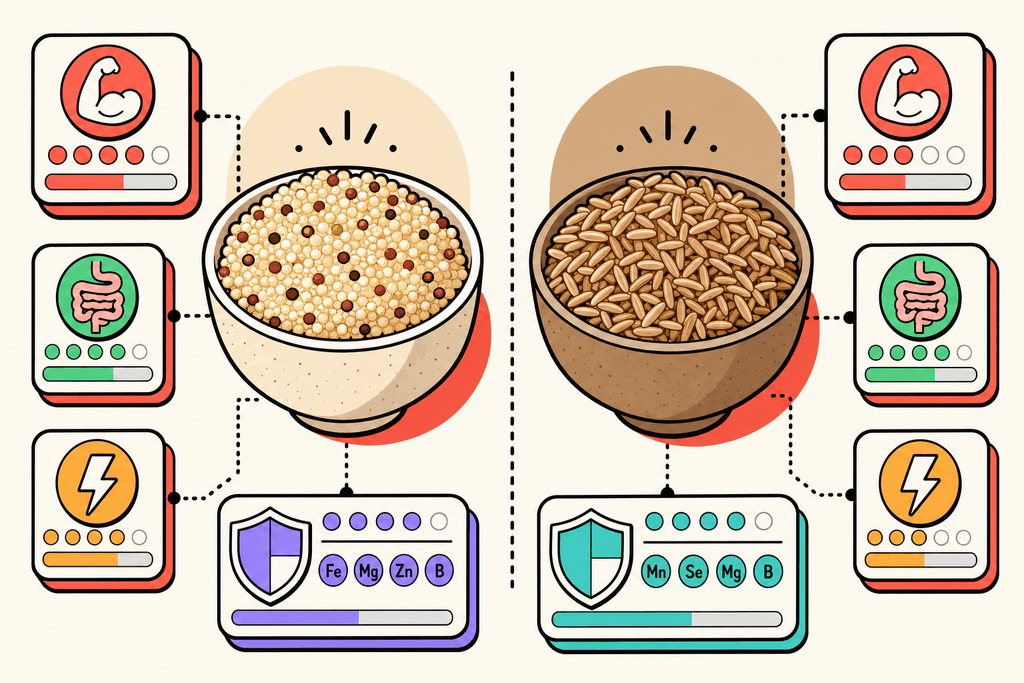
The protein quality difference is where things get interesting. Quinoa contains all 9 essential amino acids, making it a complete protein source that's rare in the plant world. Brown rice falls short here because it's low in lysine, one of those essential amino acids your body can't make on its own.
| Nutrient (per 1 cup cooked) | Quinoa | Brown Rice |
|---|---|---|
| Calories | 222 | 248 |
| Protein | 8g | 5.5g |
| Carbohydrates | 39g | 52g |
| Fiber | 5g | 3.5g |
| Fat | 3.5g | 2g |
| Iron | 2.8mg (15% DV) | 0.8mg (4% DV) |
| Magnesium | 118mg (28% DV) | 86mg (20% DV) |
When you're logging meals in a tracking app, these differences add up throughout the day. Brown rice packs more carbs per serving, which might work better if you're fueling for endurance activities or need higher carb intake. But quinoa gives you more protein and fiber in fewer calories, which can help if you're trying to stay full while keeping calories in check.
The micronutrient profiles tell another story. Quinoa delivers significantly more iron and magnesium, two minerals that many people don't get enough of through their regular diet. Brown rice has its own strengths with B vitamins, particularly niacin and thiamine. If you're using something like MyFoodBuddy to track over 20 nutrients including vitamins and minerals, you'll notice how swapping one grain for another shifts your daily totals in ways that might surprise you.
Meal Prep Practicality and Time Investment
Time is the real currency when you're meal prepping for the week, and the cooking time difference between these two grains is huge. Brown rice takes 45-50 minutes to cook on the stovetop, while quinoa is done in just 15-20 minutes. That's a 30-minute difference that adds up when you're trying to batch cook on a Sunday afternoon. The faster cook time means you can start quinoa later in your prep session or even cook it fresh on busy weeknights without derailing your schedule.
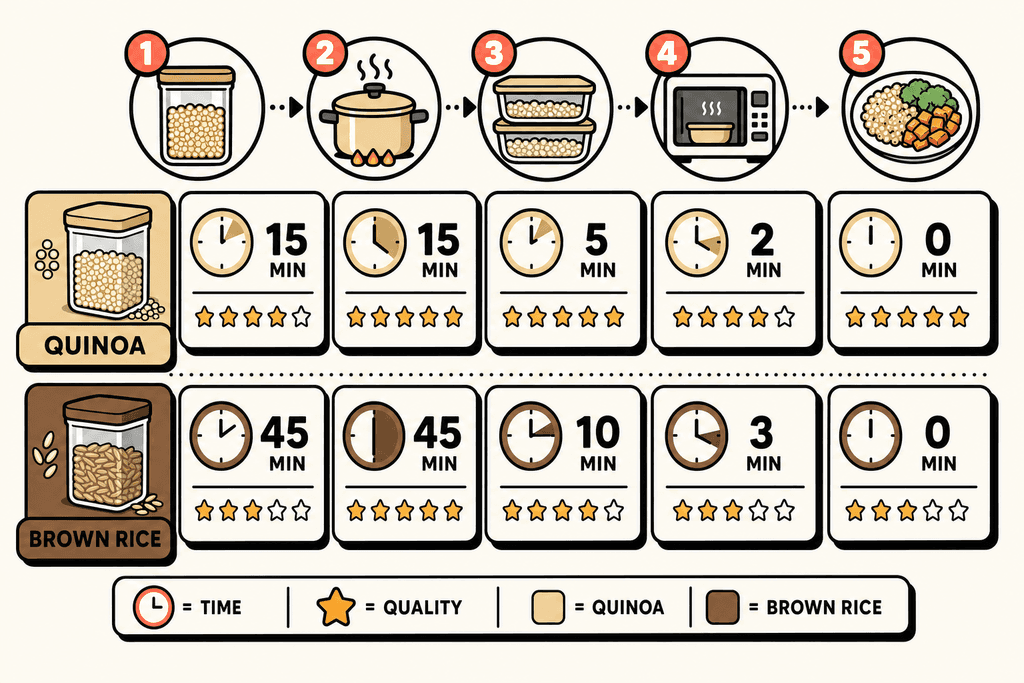
But there's a catch with quinoa that brown rice doesn't have. Quinoa needs a good rinse before cooking to remove its natural coating called saponin, which tastes bitter and soapy if you skip this step. Brown rice goes straight from the bag to the pot with no extra prep needed.
- Quinoa cook time: 15-20 minutes
- Brown rice cook time: 45-50 minutes
- Quinoa prep: Requires rinsing in fine-mesh strainer
- Brown rice prep: No pre-prep needed
- Quinoa storage: 5-7 days in fridge
- Brown rice storage: 4-6 days in fridge
Storage life matters when you're planning meals for the entire week. Both grains store well in the fridge, but quinoa tends to hold up slightly better toward the end of the week. Brown rice can get a bit dry and hard after day five, though a splash of water when reheating helps bring it back to life.
Reheating quality is where personal preference comes in. Quinoa reheats more evenly and maintains its fluffy texture better than brown rice, which can turn mushy or dried out depending on your reheating method. Both work fine in the microwave with a damp paper towel over the container, but quinoa is more forgiving if you're in a rush and don't have time to do it perfectly.
| Factor | Quinoa | Brown Rice |
|---|---|---|
| Prep Time | 2-3 min (rinsing) | 0 min |
| Cook Time | 15-20 min | 45-50 min |
| Fridge Storage | 5-7 days | 4-6 days |
| Reheating Quality | Excellent | Good |
Cost Analysis and Budget Planning
Let's talk about the elephant in the room. Brown rice costs roughly 3-4 times less than quinoa per pound, and that price gap doesn't shrink much even when you buy in bulk. A pound of brown rice typically runs between $1.50 to $3.00 at most grocery stores, while quinoa sits at $5.00 to $8.00 per pound depending on whether you go organic or conventional. For meal preppers eating these grains multiple times per week, this difference hits your monthly budget harder than you might think.
The per-serving cost tells the real story. One serving of cooked brown rice costs about $0.15 to $0.30, while the same amount of quinoa runs $0.50 to $0.80. If you're eating one serving per day, that's an extra $10 to $15 per month just for switching grains.
| Cost Factor | Quinoa | Brown Rice |
|---|---|---|
| Price per pound | $5.00-$8.00 | $1.50-$3.00 |
| Price per serving | $0.50-$0.80 | $0.15-$0.30 |
| Monthly cost (1 serving/day) | $15-$24 | $4.50-$9 |
| Monthly cost (2 servings/day) | $30-$48 | $9-$18 |
Buying in bulk helps both grains, but the percentage savings favor brown rice. Bulk brown rice from warehouse stores can drop to under $1 per pound, while bulk quinoa rarely goes below $4 per pound. The math gets trickier when you factor in the nutritional differences though.
Here's where it gets interesting for your specific goals. If you're paying for protein powder to hit your daily protein targets, quinoa's extra protein per serving might offset some of its higher cost. A scoop of protein powder costs about $1 to $1.50, and quinoa gives you an extra 2.5g of protein per serving compared to brown rice. It's not a perfect trade-off, but it narrows the cost gap when you look at your total food budget rather than just the grain itself.
Which Grain Fits Your Goals
Your fitness and health goals should drive which grain ends up in your meal prep containers, not just what sounds healthier or what's trending on social media. For muscle building and high protein needs, quinoa wins because of its complete amino acid profile and higher protein content per serving. That extra 2.5g of protein per cup adds up when you're trying to hit 0.8 to 1 gram of protein per pound of body weight. The complete protein aspect matters too since you're getting all the building blocks your muscles need in one food.
Weight loss goals shift the equation slightly. Brown rice actually has more calories per serving, but the difference is only about 26 calories. What matters more is the fiber content and how full each grain keeps you.
- Best for muscle building: Quinoa (complete protein, higher protein per serving)
- Best for weight loss: Quinoa (more fiber, fewer calories, better satiety)
- Best for endurance athletes: Brown rice (higher carbs for glycogen stores)
- Best for budget-conscious preppers: Brown rice (3-4x cheaper)
- Best for time-crunched preppers: Quinoa (cooks in 15-20 minutes)
Endurance athletes and people doing high-intensity training might prefer brown rice. Those extra 13g of carbs per serving help refill glycogen stores faster after long runs or intense workouts. If you're training for a marathon or doing CrossFit multiple times per week, the higher carb content of brown rice supports your performance better than quinoa's lower carb profile.
Budget-conscious meal preppers have a clear winner in brown rice. When you're trying to eat healthy on a tight budget, spending 3-4 times more for quinoa doesn't make sense unless you have specific dietary needs that justify the cost. You can always add other protein sources to brown rice meals to make up for the amino acid gap. Check out our guide on budget dinners with balanced meal planning for more ideas on keeping costs down while hitting your nutrition targets.
Tracking both grains in your calorie counting app should be straightforward. With voice-powered tracking, you can just say "one cup of quinoa" or "brown rice with chicken" and let the app handle the calculations. MyFoodBuddy makes this even easier since you don't need to search through databases or create custom meals. The AI pulls nutritional data automatically, whether you're eating quinoa, brown rice, or mixing both throughout the week. If you're curious about other tracking options, our comparison of better alternatives to MyFitnessPal breaks down how different apps handle this process.
The truth is, most people don't need to pick just one grain. Rotating between quinoa and brown rice based on your weekly budget, time availability, and specific meals makes more sense than declaring one the absolute winner. Use quinoa when you need quick prep time or want higher protein. Use brown rice when you're watching costs or need more carbs. Both fit into a healthy meal prep routine, and tracking them takes seconds with the right tools. For more strategies on making meal prep work without spending your entire weekend cooking, check out our article on meal prep without spending your Sunday.
Making Tracking Easier With Smart Choices
The biggest reason people quit tracking their food isn't because they don't care about their goals. It's because logging every meal feels like a part-time job. When you're meal prepping with either quinoa or brown rice, picking one grain and sticking with it for the week makes your tracking way more accurate. You're not guessing portions or trying to remember if you used a cup or a cup and a half three days ago. Consistency in your base ingredients means consistency in your data, and that's what actually helps you reach your goals.
Most traditional calorie tracking apps make you search through endless databases, adjust serving sizes, and manually input every ingredient. That's fine for the first meal, but by Wednesday you're already tired of the process.
Why Repetitive Meals Need Simple Logging
Meal preppers eat the same base meals multiple times per week. That's the whole point of meal prep. But here's where most tracking apps fail you:
- You have to search for the same foods over and over
- Portion sizes get inconsistent when you're manually entering data
- Creating custom meals still requires multiple taps and selections
- Voice features on apps like MyFitnessPal still need manual corrections
MyFoodBuddy handles this differently. You can just say "one cup of cooked quinoa with grilled chicken and broccoli" and it logs everything. No searching, no database diving, no multiple screens.
Setting Up Your Meal Prep Favorites
The real time-saver comes from saving your go-to meals as favorites. Whether you're team quinoa or team brown rice, you prep the same meals each week anyway. With one-tap logging, you can track your lunch in literally two seconds.
- Log your meal once with voice or text
- Save it as a favorite with a custom name
- Re-log it throughout the week with one tap
- Adjust portions on the fly if needed
The quinoa vs brown rice debate matters less when you can track either one without thinking about it. What matters more is that you actually stick with tracking long enough to see results. When logging takes seconds instead of minutes, you're way more likely to keep doing it past the first week.
Your Grain, Your Goals
The quinoa vs brown rice debate doesn't have a clear winner because your best choice depends entirely on what you're trying to achieve. If you need more protein and want faster cooking times, quinoa makes sense for your meal prep routine. If you're watching your budget and need more carbs for energy, brown rice is probably the better pick. Both grains work well for meal preppers, and honestly, you don't have to choose just one forever.
The smartest approach is rotating both grains based on your weekly goals and what your body needs. Maybe you do quinoa bowls when you're focused on hitting protein targets, then switch to brown rice when you're training harder and need those extra carbs. Meal prep doesn't have to be boring when you mix things up like this.
What really matters is tracking what you eat so you know if your grain choice is helping you hit your goals. MyFoodBuddy makes this easy since you can just say "quinoa bowl with chicken and veggies" and it calculates everything for you. No need to measure every grain or spend time searching databases like you would with other tracking apps.
The truth is, achieving balanced meals becomes way more sustainable when tracking takes seconds instead of minutes. Whether you pick quinoa, brown rice, or both, the key is making sure your choice actually fits into your daily nutrition targets without turning meal logging into a second job.
Common Questions About Quinoa and Brown Rice
Choosing between quinoa vs brown rice for your meal prep can bring up a lot of questions. Both grains have their fans, and both work well in different situations. Here are the answers to the most common questions people ask when deciding which grain to stock in their kitchen.
Can you mix quinoa and brown rice together?
Yes, you can absolutely mix quinoa and brown rice together, and many meal preppers do exactly that. Cook them separately since they have different cooking times, then combine them in your meal prep containers. This gives you the best of both worlds, balancing the protein content of quinoa with the heartier texture of brown rice.
Which grain is better for weight loss?
Quinoa has a slight edge for weight loss because it contains more protein and fiber per serving, which helps you feel full longer. Brown rice is still a solid choice though, especially if you're watching your budget. The real key is portion control and tracking your intake accurately, which is where apps like MyFoodBuddy make things easier by letting you log "one cup of quinoa" or "half cup brown rice" without doing math.
Does quinoa have more protein than brown rice?
Yes, quinoa contains about 8 grams of protein per cooked cup compared to brown rice's 5 grams. Quinoa is also a complete protein, meaning it has all nine essential amino acids your body needs. Brown rice is an incomplete protein, so you'll need to pair it with other foods like beans or lentils to get the full amino acid profile.
How long does each grain last in meal prep containers?
Both quinoa and brown rice last about 4 to 6 days in the fridge when stored properly in airtight containers. Quinoa tends to dry out a bit faster, so adding a splash of water or broth when reheating helps. If you're prepping for longer than a week, freeze individual portions and they'll keep for up to three months.
Is quinoa worth the extra cost?
It depends on your goals and budget. If you're trying to increase protein intake or need a complete protein source as a vegetarian, quinoa's extra cost might be worth it. Brown rice gives you more volume for less money, making it better for bulk meal prep on a tight budget. Many people rotate between both to balance nutrition and cost.
Which grain is easier to-digest?
Quinoa is generally easier to digest than brown rice because it's technically a seed, not a grain, and contains less phytic acid. Brown rice has more fiber, which is great for gut health but can cause bloating in some people. If you have a sensitive stomach, start with smaller portions of either grain and see how your body responds.
Ready to start tracking smarter?
Download MyFoodBuddy and start tracking your calories by just saying what you ate. No more searching databases or guessing portions.
Get started