
Oat Milk vs Whole Milk: Which Fits Your Calorie Goals?
Oat milk vs whole milk calorie comparison for coffee lovers. Learn which milk choice helps you hit your daily nutrition targets faster.
That splash of milk in your morning coffee might seem harmless, but if you're drinking two or three cups a day, the choice between oat milk vs whole milk can mean hundreds of extra calories each week. Most people tracking their nutrition with apps like MyFitnessPal or Cronometer focus on meals but overlook these small additions that quietly derail their goals. With MyFoodBuddy, you can quickly log "coffee with oat milk" using voice or text and see exactly how your milk choice impacts your daily targets without the hassle of manual calculations.
Table of Contents
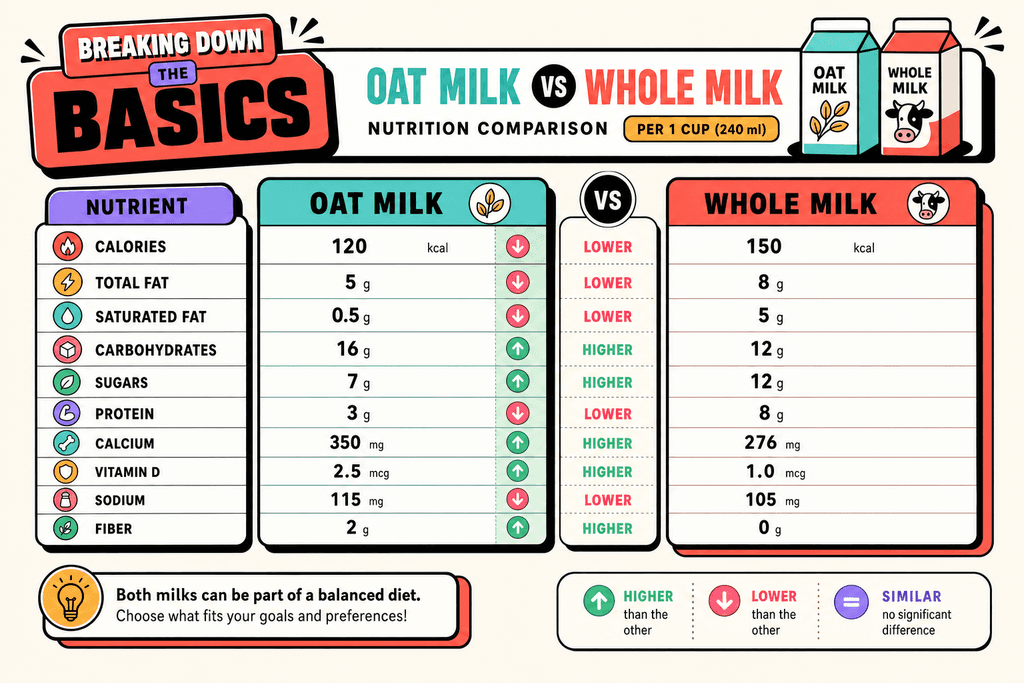
Breaking Down the Basics
More than 65% of adults worldwide have some level of lactose intolerance, which has pushed plant-based milk alternatives into mainstream grocery stores everywhere. Oat milk has become one of the fastest-growing dairy alternatives, sitting right next to traditional whole milk in coffee shops and kitchen fridges. But when you're tracking your nutrition and trying to hit specific calorie goals, understanding what's actually in your glass matters more than just taste preferences. The numbers tell a pretty different story when you compare these two popular options side by side.
The Calorie Count Showdown
A standard cup of whole milk packs about 150 calories, while most commercial oat milk brands come in around 120 calories per cup. That 30-calorie difference might not seem huge at first glance, but it adds up fast if you're drinking multiple cups a day or adding it to your coffee, cereal, and smoothies. The real surprise comes when you look at where those calories actually come from in each type of milk.
Here's what matters for anyone using apps like MyFoodBuddy to track their daily intake. The macronutrient split between oat milk vs whole milk shows some pretty big differences that affect how full you feel and how your body uses the energy.
Nutrition Facts at a Glance
| Nutrient (per cup) | Whole Milk | Oat Milk |
|---|---|---|
| Calories | 150 | 120 |
| Protein | 8g | 3g |
| Fat | 8g | 5g |
| Carbohydrates | 12g | 16g |
| Calcium | 300mg (natural) | 350mg (fortified) |
| Vitamin D | 2.5mcg (fortified) | 2mcg (fortified) |
| Vitamin B12 | 1.3mcg (natural) | 1.2mcg (fortified) |
What Natural Versus Fortified Really Means
Whole milk naturally contains most of its vitamins and minerals because they come straight from the cow. Oat milk starts as oats and water, so manufacturers add nutrients during processing to match what you'd get from dairy. Both options can help you hit your daily nutrition targets, but the source of those nutrients differs completely.
The protein gap stands out the most when comparing oat milk vs whole milk. Whole milk gives you more than double the protein, which matters if you're trying to build muscle or stay full between meals. On the flip side, oat milk has more carbs and less fat, which some people prefer depending on their macro goals.
When you're logging meals in a calorie tracking app, these differences change how each milk fits into your daily targets. Some key points to remember:
- Whole milk provides complete protein with all essential amino acids
- Oat milk offers more fiber than whole milk (about 2g per cup)
- Both contain similar amounts of calcium, though from different sources
- Whole milk has naturally occurring B vitamins that support energy
The fortification process in oat milk isn't bad, it just means the nutrients are added rather than naturally present. Your body absorbs both types pretty well, though some studies suggest natural nutrients from whole foods might have slightly better absorption rates.
Calorie Counts and What They Mean for Your Goals
Most people don't realize that switching from whole milk to oat milk saves about 30 calories per cup. That might not sound like much when you're standing in the coffee shop line, but these small differences add up faster than you'd think. Whole milk clocks in at roughly 150 calories per cup, while oat milk sits at around 120 calories for the same amount. The gap gets interesting when you start thinking about your daily habits and what you're actually trying to achieve with your diet.
Let's say you're someone who drinks three coffees a day, each with a half cup of milk. That's an extra 45 calories daily if you're using whole milk instead of oat milk. Over a month, that adds up to about 1,350 calories, which is nearly half a pound of body weight for most people.
Here's how the math breaks down for typical daily use:
- One coffee per day: 900 extra calories per month with whole milk
- Two coffees per day: 1,800 extra calories per month
- Three coffees per day: 2,700 extra calories per month
But here's where it gets less straightforward. Those extra calories aren't always a bad thing. If you're trying to build muscle or maintain your current weight, whole milk's higher calorie count might actually work in your favor. The key is knowing what your body needs and tracking these differences consistently so you can see how they affect your progress.
When you're in a calorie deficit trying to lose weight, every 30 calories matters because it determines how quickly you'll reach your goal. But if you're struggling to eat enough calories for muscle gain, switching to whole milk could help you hit your targets without forcing down extra food. The choice between oat milk vs whole milk really depends on which direction you're heading.
Protein Power and Satiety Differences
The calorie difference is just part of the story. Whole milk delivers about 8 grams of protein per cup, while oat milk only provides around 3 grams. That 5-gram gap might seem small, but protein is what keeps you feeling full between meals and helps your body maintain muscle mass when you're cutting calories. If you've ever wondered why you feel hungrier on some days than others, the protein content in your morning coffee could be part of the answer.
Think about it this way: if you're drinking two cups of milk throughout the day in your coffee and cereal, choosing whole milk gives you an extra 10 grams of protein. That's roughly the same amount you'd get from eating an egg and a half.
| Milk Type | Protein per Cup | Satiety Rating |
|---|---|---|
| Whole Milk | 8g | High |
| Oat Milk | 3g | Medium |
Oat milk does have one advantage though. It contains about 2 grams of fiber per cup, which whole milk doesn't have at all. Fiber slows down digestion and helps you feel satisfied, even if it doesn't build muscle the way protein does. For some people, this fiber content makes oat milk surprisingly filling despite its lower protein numbers.
The best choice depends on when you're drinking it. If you're having milk with breakfast and won't eat again for five hours, the extra protein in whole milk might help you avoid that mid-morning hunger crash. But if you're just adding a splash to your afternoon coffee, the difference probably won't matter much. When you log "coffee with oat milk" in MyFoodBuddy, it automatically tracks these nutrients so you can see how your choices affect your daily totals without doing mental math.
Fat Content and Your Macro Targets
Fat is where things get really interesting for people following specific diet plans. Whole milk contains about 8 grams of fat per cup, compared to oat milk's 5 grams. But it's not just about the total amount. The type of fat matters too, especially if you're trying to hit certain macro targets or following a particular eating style. Whole milk's fat is mostly saturated, while oat milk contains more unsaturated fats that come from the oats themselves.
If you're doing keto or a higher-fat diet, whole milk's extra fat grams can actually help you reach your daily targets. Some people struggle to eat enough fat when they're cutting carbs, and switching from oat milk to whole milk is an easy way to add healthy fats without changing your entire meal plan.
Here's how each milk fits different diet approaches:
- Keto or low-carb: Whole milk works better due to higher fat content
- Low-fat diets: Oat milk fits the plan with 3 fewer grams of fat
- Balanced macros: Either works, depending on your other meals
- Plant-based eating: Oat milk is the obvious choice
The cool thing about tracking your food is that you don't have to guess which option fits your goals. MyFoodBuddy calculates your macro balance automatically when you log meals, so you can see exactly how that morning latte affects your fat intake for the day. This makes it way easier to adjust your other meals if you need to balance things out.
Most people don't need to obsess over whether they're getting saturated or unsaturated fats from their milk. But if you're working with a nutritionist or following personalized calorie goals, knowing these details helps you make smarter choices throughout the day.
Making the Switch Work for You
So which milk should you actually choose? The honest answer is that it depends on what you're trying to accomplish and what fits your lifestyle. If you're focused on weight loss and every calorie counts, oat milk gives you a small advantage. If you're trying to build muscle or maintain your weight while getting more protein, whole milk makes more sense. But there's more to consider than just the numbers on a nutrition label.
Taste matters more than people admit. Some folks think oat milk tastes better in coffee because it's naturally sweeter and froths nicely. Others prefer the creamy richness of whole milk and find oat milk too watery. The best diet is the one you'll actually stick to, so if you hate the taste of your milk choice, you're setting yourself up to quit.
| Your Goal | Better Choice | Why |
|---|---|---|
| Weight Loss | Oat Milk | Lower calories |
| Muscle Gain | Whole Milk | More protein |
| Maintenance | Either | Personal preference |
| Plant-Based | Oat Milk | No animal products |
Cost and sustainability are real factors too. Oat milk usually costs more at the grocery store, sometimes twice as much as whole milk. If you're drinking multiple cups a day, that adds up over time. On the environmental side, oat milk generally has a smaller carbon footprint than dairy milk, which matters to some people when making food choices.
The smartest approach is to track what you're currently doing for a week or two and see how it affects your progress. Maybe you'll find that the 30-calorie difference doesn't actually impact your weight loss because you naturally eat less at other meals. Or maybe you'll discover that whole milk keeps you fuller and prevents afternoon snacking. You won't know until you test it with real data from your own body.
If you're already using a calorie tracking app, switching between oat milk and whole milk is easy to monitor. Apps like MyFoodBuddy let you log your meals by voice, so you can just say what you ate and see how it fits your goals. This makes it simple to experiment with different milk types and actually measure the results instead of guessing.
At the end of the day, both oat milk and whole milk can fit into a healthy diet. The question isn't which one is better overall, but which one helps you reach your specific goals while fitting your taste preferences and budget. Start by figuring out realistic calorie goals for what you're trying to achieve, then choose the milk that makes hitting those targets easier and more enjoyable.
The Real-World Impact on Your Daily Tracking
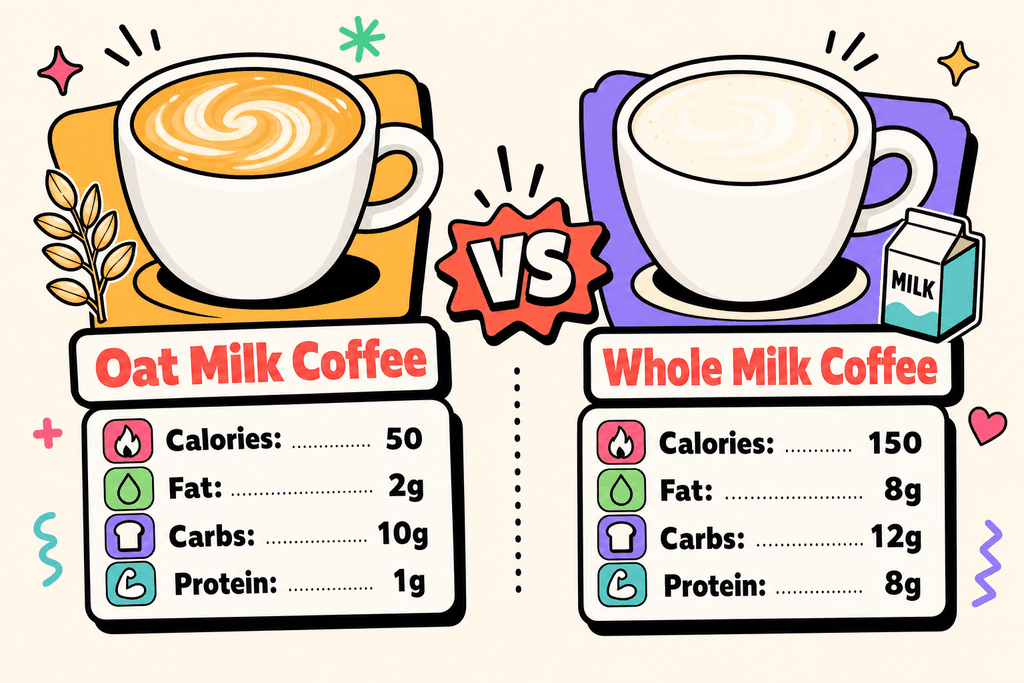
Most people don't realize that their morning coffee choice can make or break their calorie budget for the entire day. When you're choosing between oat milk vs whole milk, you're not just picking a dairy alternative. You're making a decision that affects your remaining calories, your macro balance, and whether you'll hit your nutrition goals. The difference becomes even more significant when you consider that many people don't just have one coffee per day.
How Multiple Coffees Add Up
Let's say you grab a latte in the morning, another coffee at lunch, and maybe an afternoon pick-me-up. That's three servings of milk you need to account for. With whole milk, you're looking at around 450 calories just from the milk alone. Switch to oat milk and you're at about 360 calories. That 90-calorie difference might not seem huge, but it's the equivalent of a small snack you could have later.
- Three whole milk lattes: ~450 calories, 24g fat, 36g carbs
- Three oat milk lattes: ~360 calories, 15g fat, 48g carbs
- Daily difference: 90 calories that could go toward an actual meal
- Weekly impact: 630 calories (nearly a full day's deficit for weight loss)
Where Manual Tracking Falls Short
Here's where things get tricky with traditional calorie counting apps. When you're manually searching for "coffee with milk," you have to remember which type of milk you used, estimate the amount, and hope the database entry matches what you actually consumed. Most people just pick the first result and move on, which means they're often logging the wrong nutritional information without even knowing it.
| Tracking Method | Time Required | Accuracy Rate |
|---|---|---|
| Manual search & entry | 2-3 minutes | ~60% |
| Voice logging | 5-10 seconds | ~95% |
The Voice Logging Advantage
When you tell MyFoodBuddy "coffee with oat milk," the app knows exactly what you mean. It doesn't require you to dig through databases or guess at portion sizes. The AI understands natural language and pulls accurate nutritional data automatically. Compare that to opening a traditional app, searching for coffee, then searching for oat milk, then trying to figure out if you had 1 cup or 1.5 cups.
- Voice entry captures specific milk types without database searching
- No guessing between "oat milk" and "oat milk barista blend" entries
- Consistent logging means better long-term data for tracking trends
The compound effect of accurate tracking matters more than most people think. If you're off by even 50 calories per coffee, and you have three coffees a day, that's 150 calories of untracked intake. Over a week, that's 1,050 calories that could explain why the scale isn't moving despite "perfect" tracking.
Your Milk Choice, Your Goals
The oat milk vs whole milk debate doesn't have a winner because your goals decide what works best. If you're trying to cut calories and saturated fat, oat milk usually saves you about 30-40 calories per cup. If you need more protein or want natural nutrients without fortification, whole milk gives you around 8 grams of protein compared to oat milk's 2-3 grams. Both options fit into a healthy diet when you know what you're actually consuming.
Here's what matters most when choosing between these two:
- Your daily calorie target and whether you're trying to lose, maintain, or gain weight
- How much protein you're getting from other sources throughout the day
- Whether you have dietary restrictions or preferences that rule out dairy
- The actual portion sizes you use, since most people pour more than one cup
Small choices like picking one milk over another might seem minor, but they add up fast. Switching from whole milk to oat milk in your daily coffee could save you around 900 calories per month. The trick is actually tracking these choices so you can see the patterns. MyFoodBuddy lets you log "coffee with oat milk" or "coffee with whole milk" in seconds using voice or text, so you don't have to guess or do math every morning.
The real difference between hitting your goals and missing them often comes down to whether tracking feels easy or annoying. When you can log your meals using voice commands instead of searching databases and measuring everything, you're more likely to stick with it. That consistency is what turns your milk choice from a random decision into a tool that actually helps you reach your targets.
Whether you're setting realistic calorie goals for weight loss or just trying to understand where your calories come from, knowing the difference between oat milk and whole milk gives you one more way to fine-tune your diet without feeling restricted.
Common Questions About Milk and Calories
Switching between milk types can feel confusing when you're trying to hit specific calorie or macro goals. These questions come up all the time from people tracking their nutrition, whether they're using traditional apps or something simpler like MyFoodBuddy where you just say what you ate and it handles the calculations. Here's what you actually need to know about making milk choices work for your goals.
Which milk is better for weight loss?
Neither milk is automatically better for weight loss. What matters is your total calorie intake for the day, not whether you choose oat milk or whole milk. That said, oat milk typically has fewer calories per cup (around 120 calories) compared to whole milk (around 150 calories), so it gives you a bit more wiggle room if you're working with a tight calorie budget.
Does oat milk have more sugar than whole milk?
Yes, most oat milk brands contain more sugar than whole milk. Oat milk usually has about 7 grams of sugar per cup, while whole milk has around 12 grams, but here's the catch: oat milk's sugar often comes from added sweeteners, while whole milk's sugar is naturally occurring lactose. If you're watching added sugars specifically, check the label on your oat milk brand since some have way more than others.
How much milk is actually in a typical coffee?
A standard latte contains about 8 ounces of milk, which is a full cup. A cappuccino uses roughly 4-6 ounces, and a regular coffee with a splash might only have 1-2 ounces. The difference between oat milk and whole milk in a simple coffee with a splash is only about 5-10 calories, but in a large latte, you're looking at a 30-40 calorie difference.
Can I switch between milks and still hit my goals?
Absolutely. The calorie difference isn't big enough to derail your progress as long as you're tracking what you actually consume. Some people use whole milk at home and oat milk when they're out, and it works fine. The key is consistency in tracking, not consistency in which milk you choose every single time.
How do I track milk accurately without measuring?
You can estimate based on your drink size. With MyFoodBuddy, you can just say "large oat milk latte" and the app figures out the nutritional breakdown for you without needing to measure anything. Most traditional tracking apps require you to input exact amounts, which is why so many people give up on tracking after a few weeks.
Is the calorie difference really significant?
For one serving, no. But if you drink three lattes a day, that 30-40 calorie difference per drink adds up to about 90-120 calories daily, or roughly one pound every month. Whether that matters depends entirely on your goals and how tight your calorie target is. For someone maintaining weight, it's probably not worth stressing over. For someone trying to lose weight on 1,500 calories a day, it might be worth considering.
Ready to start tracking smarter?
Download MyFoodBuddy and start tracking your calories by just saying what you ate. No more searching databases or guessing portions.
Get started