How Many Calories Are in Green Beans by Serving
Discover calorie counts for green beans by serving size. Fresh, frozen, canned, and cooked options compared. Track nutrition effortlessly.
The Low-Calorie Veggie You're Probably Underestimating
Green beans pack just 31 calories per cup, making them one of the most diet-friendly vegetables you can eat, yet most people have no idea how the numbers change when you add butter or oil. Whether you're trying to lose weight or just want to know what you're actually eating, understanding how many calories are in green beans by different serving sizes and cooking methods takes the guesswork out of meal planning. With tools like MyFoodBuddy, you can simply say what you ate and let the app calculate everything for you, so you spend less time searching nutrition databases and more time enjoying your food.
Table of Contents
Green Beans Nutrition at a Glance
Green beans are one of those vegetables that show up on dinner plates everywhere, but most people have no idea what they're actually eating from a nutrition standpoint. Whether you call them string beans, snap beans, or just green beans, these crunchy veggies pack way more nutrition than you might think for such a low calorie count. If you're tracking what you eat, knowing exactly how many calories are in green beans can help you make smarter choices without pulling out a calculator every time you serve yourself. Apps like MyFoodBuddy make this easier by letting you just say what you ate and getting instant nutrition info, but it still helps to know the basics.
The Basic Numbers
A standard serving of raw green beans is about one cup, which weighs roughly 100 grams. That single cup gives you a surprisingly complete nutritional package without loading you up with calories.
| Nutrient | Amount per 1 Cup (100g) | % Daily Value |
|---|---|---|
| Calories | 31 | 2% |
| Protein | 1.8g | 4% |
| Carbohydrates | 7g | 2% |
| Fiber | 2.7g | 11% |
| Fat | 0.2g | 0% |
| Vitamin C | 12.2mg | 20% |
| Vitamin K | 43mcg | 54% |
| Vitamin A | 690 IU | 14% |
| Folate | 33mcg | 8% |
| Manganese | 0.2mg | 11% |
What Makes Green Beans Special
The macro breakdown of green beans makes them perfect for almost any diet plan. With barely any fat and only 31 calories per cup, you can eat a pretty big portion without worrying about your daily totals.
Here's what stands out about green bean macros:
- Almost zero fat content means they fit into low-fat diets easily
- The carbs are mostly complex carbs and fiber, not sugar
- Decent protein for a vegetable, though not enough to count as a protein source
- High water content keeps you feeling full
Vitamin and Mineral Highlights
Green beans aren't just low calorie filler food. They actually deliver some serious vitamins and minerals that your body needs every day.
The vitamin K content is probably the most impressive thing about green beans:
- One cup gives you over half your daily vitamin K needs
- Vitamin K helps with blood clotting and bone health
- You also get a solid dose of vitamin C for immune support
- The vitamin A content supports eye health and immune function
The mineral content includes important nutrients too:
- Manganese helps with bone formation and nutrient processing
- Folate is crucial for cell growth and DNA formation
- Small amounts of iron, magnesium, and potassium round out the profile
When you're logging meals in a calorie tracker, green beans are one of those foods where the serving size actually matters less because the calorie density is so low. Whether you're using traditional apps like MyFitnessPal or newer voice-based options, getting the exact count helps you see how much nutrition you're getting for so few calories.
Calorie Counts by Serving Size
Green beans are one of those vegetables that seem too good to be true when it comes to calories. A full cup of raw green beans contains only about 31 calories, which makes them a favorite for anyone watching their intake. But here's where it gets interesting: the way you measure and prepare them can change those numbers more than you'd think. Most people eyeball their portions, which is fine for casual eating, but if you're serious about tracking, knowing the exact numbers matters.
The standard serving sizes break down pretty simply. Half a cup of raw green beans has roughly 15 calories, while a full cup sits at 31 calories. If you prefer measuring by weight, 100 grams of raw green beans comes in at about 31 calories too, which is convenient since that's how nutrition labels often list things.
- 1/2 cup raw green beans: 15 calories
- 1 cup raw green beans: 31 calories
- 100g raw green beans: 31 calories
- 1 pound raw green beans: 140 calories
What does this look like on your actual plate though? A cup of green beans is about the size of a baseball, or roughly what fits in your cupped hand. Most restaurant side portions give you about 1 to 1.5 cups, which means you're looking at 30 to 45 calories before any butter or oil gets added. When you're logging meals in an app like MyFoodBuddy, you can just say "one cup of green beans" and it calculates everything for you without needing to pull out measuring cups.
The reason measuring matters comes down to accuracy over time. If you're off by half a cup here and there, it might not seem like much with green beans since they're so low in calories. But those small errors add up across all your meals throughout the day, and suddenly your tracking is off by a few hundred calories without you realizing it.
How Cooking Methods Change the Calories
Raw green beans and cooked green beans aren't that different calorie-wise, but the cooking method you choose can either keep them super low or push them into a different category entirely. The beans themselves don't gain calories from heat, but what happens during cooking is what changes the game. Steaming or boiling green beans keeps them at basically the same calorie count as raw, maybe dropping to about 28 calories per cup because they lose a tiny bit of water-soluble nutrients.
Steaming and boiling are your best friends for keeping calories minimal. These methods don't add any fats or oils, so what you see is what you get. A cup of steamed green beans still hovers around 30 calories, making them perfect for anyone trying to fill up their plate without filling up their calorie budget.
| Cooking Method | Calories per Cup | Added Ingredients |
|---|---|---|
| Raw | 31 | None |
| Steamed/Boiled | 28-31 | None |
| Roasted (no oil) | 35-40 | Minimal |
| Sautéed (1 tbsp oil) | 150-170 | Oil/butter |
Now here's where things get tricky. Roasting green beans in the oven can bump up the calories slightly even without added fat, just from moisture loss that concentrates the beans. But the real calorie jump happens when you start adding oils, butter, or bacon. One tablespoon of olive oil adds 120 calories, and that's easy to use when you're sautéing a pan of green beans. Suddenly your 30-calorie vegetable becomes a 150-calorie side dish.
Canned green beans sit at about 20 calories per cup because they're packed in water, but they come with a catch. The sodium content shoots way up, sometimes hitting 300-400mg per serving. Frozen green beans are basically the same as fresh when it comes to calories, usually around 25-30 per cup, and they retain most of their nutrients since they're frozen right after harvest.
Fresh, Frozen, and Canned Green Beans Compared
Walking down the grocery store aisle, you've got three main options for green beans, and each one has its own calorie profile and trade-offs. Fresh green beans are the baseline we've been talking about, sitting at 31 calories per cup raw. They taste great, have a nice crunch, and give you full control over how you prepare them. But they also go bad faster, usually within a week in your fridge, and they cost more per serving than the other options.
Frozen green beans are basically identical to fresh when it comes to calories and nutrition. They're picked and frozen at peak ripeness, which actually locks in nutrients better than fresh beans that sit in transport and on shelves for days. A cup of frozen green beans has about 25-30 calories, and you can keep them in your freezer for months without worrying about waste.
- Fresh green beans: 31 calories per cup, highest cost, shortest shelf life
- Frozen green beans: 25-30 calories per cup, moderate cost, longest shelf life
- Canned green beans: 20 calories per cup, lowest cost, high sodium content
Canned green beans are the budget-friendly option at usually under a dollar per can. They're already cooked, which saves time, but that convenience comes with added sodium that can mess with your daily intake goals. For calorie tracking purposes, all three types work fine, but you need to account for any added ingredients in canned versions. Some brands add butter or seasonings that bump up the numbers.
When you're using a tracking app, the type of green bean you choose matters less than being consistent with how you log it. With MyFoodBuddy, you can simply say "half a cup of frozen green beans" or "one can of green beans" and the app pulls the right nutritional data without you needing to dig through different entries. This makes it way easier than traditional apps where you'd scroll through dozens of user-submitted entries trying to figure out which one is actually accurate.
The best option really depends on your situation. If you meal prep and want the freshest taste, go with fresh or frozen. If you need something quick that sits in your pantry, canned works fine as long as you rinse them to cut down on sodium. For tracking purposes, they're all low enough in calories that the difference won't make or break your goals, unlike trying to figure out how many calories are in fried chicken where the cooking method completely changes everything.
The bigger picture here is that green beans are one of those foods where you can eat a lot without worrying too much about the numbers. Whether you're tracking calories in homemade meals or trying to stay full on 1500 calories daily, green beans give you volume and nutrients without eating up your calorie budget. Just watch what you add to them during cooking, and you'll be fine.
Why Accurate Calorie Tracking Matters
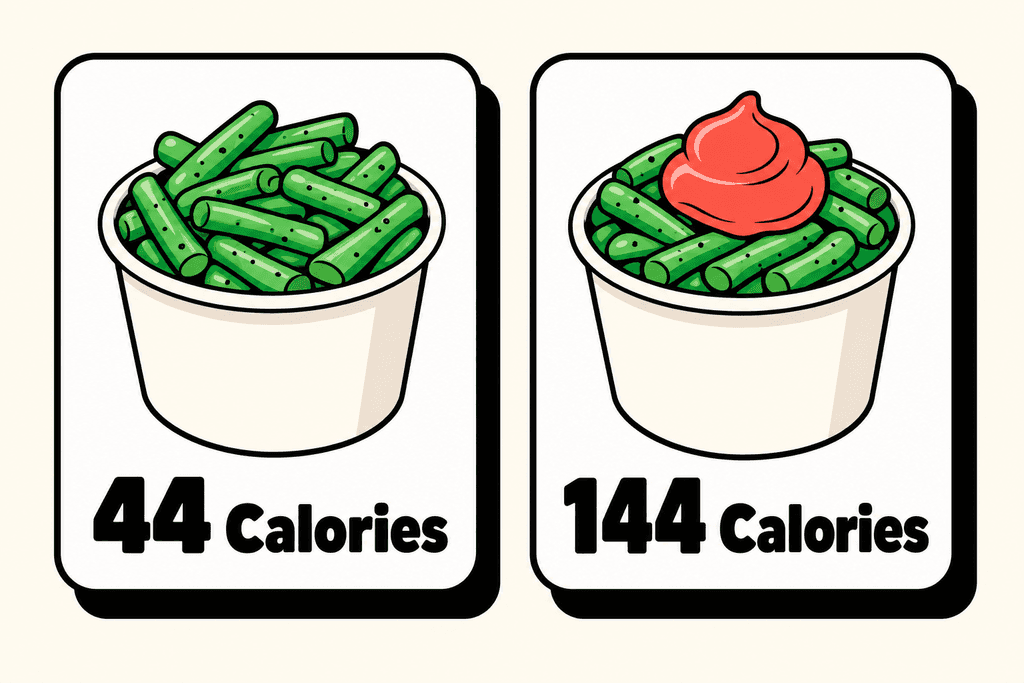
Most people think tracking how many calories are green beans is simple math, but the reality is way more complicated. A cup of steamed green beans might have 44 calories, but add a tablespoon of butter and suddenly you're at 144 calories. That's more than triple the amount, and most people don't even realize they're making this mistake. When you're trying to lose weight or hit specific nutrition goals, these small errors happen multiple times per day and can completely derail your progress without you even knowing why.
Studies show that people underestimate their calorie intake by an average of 20-30% when tracking manually. Over a week, that's potentially 3,000-6,000 uncounted calories.
The Hidden Cost of Manual Tracking
Think about what it takes to log a single meal the traditional way. You need to search for each ingredient, measure portions, select the right database entry from dozens of options, and manually add everything up. For a simple dinner with green beans as a side, you might spend 5-10 minutes just logging your food.
- Searching through thousands of food database entries to find the right match
- Weighing or measuring every single ingredient separately
- Calculating how cooking methods change nutritional values
- Remembering to log everything before you forget what you ate
- Doing this process 3-5 times every single day
That adds up to 30-60 minutes of tracking time daily. Most people quit calorie tracking apps within the first two weeks because it feels like a part-time job.
How Preparation Changes Everything
The way you cook green beans matters just as much as the portion size. Raw green beans, steamed green beans, and green bean casserole are three completely different calorie scenarios, but traditional tracking apps make you figure this out yourself.
| Preparation Method | Calories (1 cup) | Calorie Multiplier |
|---|---|---|
| Steamed plain | 44 calories | 1x baseline |
| With butter | 144 calories | 3x baseline |
| Green bean casserole | 200+ calories | 4-5x baseline |
Modern Solutions That Actually Work
The good news is that tracking doesn't have to be this hard anymore. Apps like MyFoodBuddy use AI to understand natural language, so you can just say "green beans with butter" and it figures out the calories automatically. No searching, no measuring, no math.
- Voice logging takes 10 seconds instead of 10 minutes per meal
- AI understands preparation methods without you specifying every detail
- USDA database integration ensures accurate nutritional information
- Automatic calculations mean no more mental math or guesswork
When tracking becomes this simple, people actually stick with it. The difference between knowing green beans have 44 calories versus 144 calories might seem small, but multiply that across every meal and every day, and you'll understand why so many people struggle to reach their goals despite "tracking everything."
Making Green Beans Work for Your Goals
Green beans are one of those foods that make calorie tracking easier because they're naturally low in calories and packed with nutrients. A cup of raw green beans has about 31 calories, while steamed ones clock in around 44 calories per cup. The real calorie differences show up when you start adding butter, oil, or creamy sauces, which can triple or quadruple the count. Knowing how many calories are green beans in different preparations helps you make choices that fit your goals without giving up foods you enjoy.
The tricky part isn't the green beans themselves, but remembering to account for everything you add to them. Most people underestimate calories from cooking oils and toppings, which is where tracking gets messy with traditional apps that require multiple steps and searches. MyFoodBuddy handles this differently since you can just say "green beans with butter and almonds" and it calculates everything for you using AI and USDA data.
Whether you're trying to lose weight or just eat healthier, green beans fit into almost any plan. They work just as well in a plant-based diet as they do alongside fried chicken or a burger. The key is tracking accurately without making it a chore that takes up half your day.
Getting your nutrition right doesn't require perfect meals every time, just consistent awareness of what you're eating. Some questions come up more often than others when people start tracking green beans and vegetables in general.
Common Questions About Green Bean Calories
Green beans are one of those vegetables that seem simple, but people have a lot of questions about them. Whether you're trying to lose weight, count carbs, or just figure out if you're eating the right amount, these answers will help you understand green beans better. Most tracking apps make logging vegetables more complicated than it needs to be, but knowing the basics makes everything easier.
Are green beans good for weight loss?
Yes, green beans are excellent for weight loss because they're low in calories and high in fiber. A cup of green beans has only about 31 calories but keeps you feeling full, which means you can eat a satisfying portion without worrying about your calorie budget. The fiber also helps with digestion and keeps your blood sugar stable throughout the day.
Do green beans have carbs?
Green beans do contain carbs, but not many. One cup of raw green beans has about 7 grams of carbs, with 3 grams coming from fiber. This means the net carbs are only around 4 grams per cup, making them a good choice even for lower-carb diets.
How many green beans equal one serving?
A standard serving of green beans is one cup raw or half a cup cooked. In practical terms, that's about a handful of raw beans or what fits in a small cereal bowl after cooking. Most people can eyeball this pretty easily, which makes green beans one of the simpler vegetables to track without a scale.
Are canned green beans as healthy as fresh?
Canned green beans have similar calories and nutrients to fresh ones, but they usually contain a lot more sodium. If you're watching your salt intake, look for low-sodium or no-salt-added versions, or rinse regular canned beans before eating them. Fresh and frozen green beans are generally better options when available.
Can I eat unlimited green beans on a diet?
While green beans are very low in calories, eating truly unlimited amounts isn't realistic or necessary. A few cups throughout the day is perfectly fine and won't derail any diet. The bigger issue is usually what you add to them, like butter or oil, which can add up quickly in calories.
How do I track green beans in my meals?
Tracking green beans should be quick and simple. With MyFoodBuddy, you can just say "one cup of steamed green beans with my dinner" and the app calculates everything for you automatically. This beats spending time searching through databases or trying to remember if you logged them as raw or cooked, which is where traditional tracking apps slow you down.
Ready to start tracking smarter?
Download MyFoodBuddy and start tracking your calories by just saying what you ate. No more searching databases or guessing portions.
Get started