
How Many Calories Are in a Lemon? Plus Tasty Snack Ideas
Discover how many calories are in a lemon (17 per fruit!) plus creative low-calorie lemon snacks. Track them easily with MyFoodBuddy.
That bright yellow fruit sitting in your fridge has fewer calories than you'd find in a single potato chip. A whole lemon contains just 17 calories, making it one of the most diet-friendly ingredients you can add to your meals and snacks. Whether you're squeezing it into water, zesting it over fish, or tracking your intake with tools like MyFoodBuddy, knowing exactly how many calories are in a lemon helps you log your meals accurately without second-guessing the small stuff.
Table of Contents
Breaking Down Lemon Nutrition
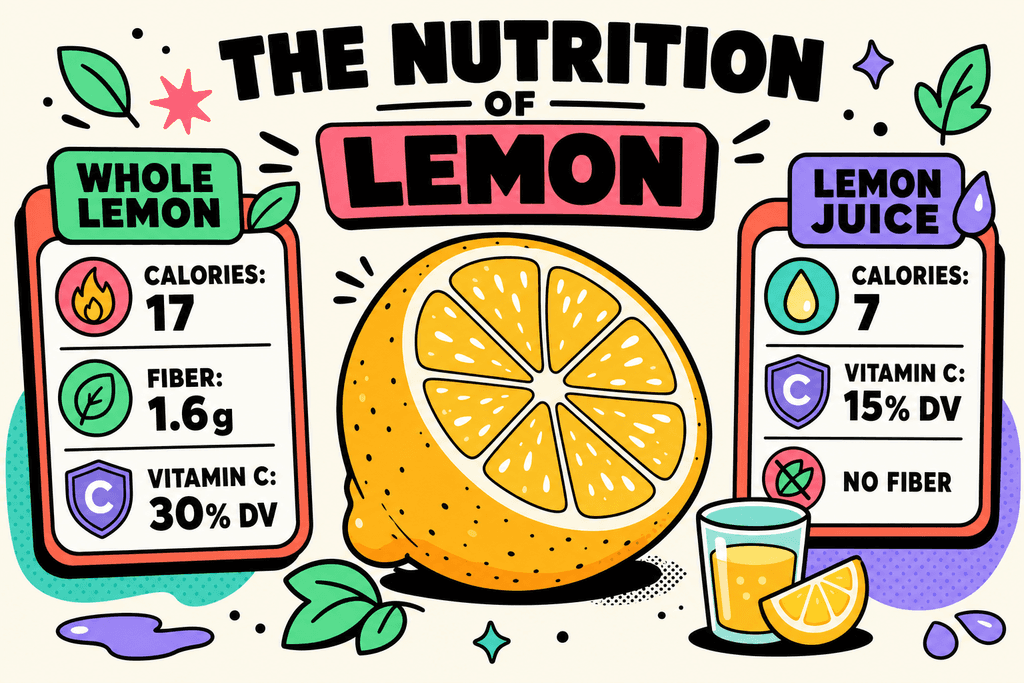
A single medium lemon weighs about 58 grams and contains roughly 17 calories, making it one of the lowest-calorie fruits you can add to your diet. But here's the thing most people don't realize: the way you use a lemon completely changes its nutritional value. Squeezing just the juice gives you different nutrients than eating the whole fruit with its fiber-rich pulp. And if you're tracking your food intake with apps like MyFitnessPal or Cronometer, you've probably noticed how confusing it can be to log something as simple as "lemon" when there are dozens of entries to choose from.
Why Lemon Form Matters
The calorie content in lemons changes based on how you're using them. A tablespoon of lemon juice has way fewer calories than a whole lemon because you're missing out on the pulp and fiber. Most people who track calories need to know these differences to log their meals accurately.
Here's what makes tracking lemons tricky:
- Whole lemons include the pulp, which adds fiber and a few extra calories
- Lemon juice is mostly water with vitamin C but almost no fiber
- Lemon zest is super concentrated and packs flavor with barely any calories
- Bottled lemon juice often has preservatives that change the nutritional profile
Complete Nutritional Breakdown
Understanding how many calories are in a lemon means looking at the whole picture. The table below shows exactly what you're getting from different lemon forms, which makes logging your meals way easier whether you're using MyFoodBuddy's voice logging feature or manually entering data.
| Lemon Form | Amount | Calories | Vitamin C | Fiber | Carbs |
|---|---|---|---|---|---|
| Whole lemon | 1 medium (58g) | 17 | 31mg (34% DV) | 1.6g | 5.4g |
| Lemon juice | 1 tablespoon (15ml) | 3 | 7mg (8% DV) | 0g | 1g |
| Lemon juice | 1 cup (244ml) | 54 | 112mg (125% DV) | 1g | 16.8g |
| Lemon zest | 1 teaspoon (2g) | 1 | 2mg (2% DV) | 0.4g | 0.3g |
| Lemon wedge | 1 wedge (1/8 lemon) | 2 | 4mg (4% DV) | 0.2g | 0.7g |
Key Nutrients Beyond Calories
Lemons give you way more than just vitamin C, even though that's what they're famous for. A whole lemon provides about one-third of your daily vitamin C needs, which helps your immune system and skin health. But there are other nutrients hiding in that yellow fruit that most calorie tracking apps don't highlight.
Here's what else you're getting:
- Potassium for heart health and muscle function
- Folate which supports cell growth and metabolism
- Small amounts of B vitamins like thiamin and riboflavin
The fiber content is another big deal. While lemon juice has almost zero fiber, eating the pulp gives you that 1.6 grams per fruit. That might not sound like much, but it adds up throughout the day.
When you're logging meals, these details matter. Apps like MyFoodBuddy use AI to automatically calculate these nutrients when you say something like "water with lemon juice" versus "ate a whole lemon." Getting the form right means your macro tracking stays accurate without spending extra time searching through food databases.
Calorie Counts for Every Lemon Form
Lemons are one of those foods that seem too light and refreshing to have any calories at all. But if you're tracking your nutrition seriously, you know that every little bit counts. The good news is that lemons are incredibly low in calories, making them perfect for adding flavor without adding much to your daily intake. Whether you're squeezing fresh juice into your water or zesting some peel over your salad, understanding how many calories are in a lemon helps you stay on track with your goals.
A medium-sized lemon contains approximately 17 calories for the whole fruit. That's pretty minimal considering how much flavor and vitamin C you're getting. Most people don't eat whole lemons though, so let's break down the parts you actually use.
- Lemon juice has about 3 calories per tablespoon, which is what you'd squeeze from about half a lemon
- Lemon zest is nearly calorie-free at just 1-2 calories per teaspoon
- Lemon water is essentially zero calories when you're not adding sweeteners
- Bottled lemon juice typically has similar calories to fresh, but always check the label for added ingredients
The calorie difference between fresh and bottled lemon juice matters less than you'd think. What really matters is whether you're adding sugar or other sweeteners. A plain glass of water with a squeeze of lemon stays under 5 calories, but add a teaspoon of honey and you're looking at an extra 20 calories.
Here's something most people don't realize: the way you use lemons throughout the day can actually add up. Morning lemon water, lemon in your tea, lemon dressing on your salad, and lemon squeezed over your fish dinner might only total 20-30 calories, but those are calories that often go untracked.
Easy Lemon Snacks That Won't Break Your Calorie Budget
Now that you know how low-calorie lemons are, let's talk about some actually tasty ways to use them. These aren't just "drink lemon water" suggestions. These are real snacks that satisfy cravings while keeping your calorie count reasonable. The best part is that each of these ideas takes the natural tartness of lemon and turns it into something you'll actually look forward to eating.
Lemon-based snacks work great because they're naturally refreshing and filling without being heavy. The sour taste also tends to satisfy your palate faster than sweet snacks, which means you're less likely to overeat.
| Snack Idea | Calories | Prep Time |
|---|---|---|
| Lemon cucumber mint water | 5-10 | 2 minutes |
| Greek yogurt with lemon zest | 100-150 | 3 minutes |
| Frozen lemon slices | Under 5 | 5 minutes |
| Lemon hummus with veggies | 80-120 | 5 minutes |
| Lemon date energy balls | 70-90 each | 15 minutes |
The lemon-infused Greek yogurt parfait is probably my favorite from this list. You take plain Greek yogurt, add some lemon zest and a tiny drizzle of honey, then layer it with berries. It tastes like lemon cheesecake but clocks in at around 120 calories for a satisfying portion.
Frozen lemon slices are weirdly addictive too. Just slice a lemon thin, freeze the slices on parchment paper, and pop them in your mouth like candy. They're perfect for when you want something cold and refreshing but don't want the sugar from popsicles.
Here's where tracking gets interesting though. If you're using a traditional calorie app, logging "Greek yogurt with lemon zest, honey, and mixed berries" means searching for each ingredient separately and measuring everything. With MyFoodBuddy, you just say exactly that into your phone and it calculates everything for you. The difference between spending 30 seconds versus 3 minutes might not seem huge, but when you're tracking snacks multiple times a day, it adds up to hours saved each week.
Why Tracking Lemon Calories Actually Matters
You might be thinking that tracking something with only 3 calories per tablespoon seems excessive. And honestly, if you're just adding lemon to your water once a day, you're probably right. But here's the thing most people miss: it's not about the lemon itself. It's about building the habit of tracking everything, and it's about all those small additions that seem insignificant but actually matter when you're trying to hit specific nutrition goals.
Think about your typical day. Lemon in your morning water, lemon juice in your salad dressing, lemon squeezed over your chicken, lemon in your evening tea. None of these seem worth tracking individually, but together they might add 30-50 calories you didn't account for. Multiply that by every "small" ingredient you skip tracking, and suddenly you're off by 200-300 calories per day.
- Small calories compound throughout the day
- Accurate tracking helps you understand why you're not hitting your goals
- Lemon additions to drinks and meals are the most commonly forgotten items
- The effort required to track small items often leads people to skip them entirely
Traditional calorie tracking apps make this worse because they're designed around the idea that you'll search a database for every single thing you eat. That works fine for "grilled chicken breast" but becomes tedious for "water with lemon and a splash of apple cider vinegar." You end up either spending way too much time logging or just not logging at all.
This is exactly why voice logging exists. When you can just say "water with lemon" and have it automatically logged, there's no friction. MyFoodBuddy handles the calculation using USDA data, so you don't have to think about whether that squeeze of lemon was one tablespoon or two. The app figures it out based on normal usage patterns.
Manual Tracking: Search for "lemon juice" → Select serving size → Measure actual amount → Log it → Repeat for every ingredient (2-3 minutes per item)
Voice Tracking: Say "Greek yogurt with lemon and berries" → Done (5 seconds)
The difference becomes even more obvious when you're making something like homemade meals where you're combining multiple ingredients. Instead of logging each component separately, you describe what you made and let the AI handle the breakdown.
For people who love adding lemon to everything, this matters even more. If you're someone who uses lemon in your cooking regularly, you'll appreciate how much easier it is to just mention it naturally when describing your meal. The same goes for anyone interested in juicing or making healthy snacks where fresh ingredients like lemon play a supporting role.
At the end of the day, knowing how many calories are in a lemon isn't just about the number. It's about understanding that complete tracking doesn't have to be complicated. Whether you're trying to stick to a specific calorie target or just want better awareness of what you're eating, the easier it is to log everything, the more likely you are to actually do it consistently.
Making Lemon Tracking Simple
So there you have it. A whole lemon has about 17 calories, while a tablespoon of lemon juice only has around 3 to 4 calories. That's pretty much nothing when you think about all the flavor and vitamin C you're getting. Whether you're squeezing lemon into your water, making a homemade dressing, or trying one of those snack ideas we covered, lemons are one of those ingredients that add a lot without adding much to your daily calorie count.
The tricky part isn't really the lemon itself. It's keeping track of everything you eat throughout the day, especially when you're making meals from scratch or grabbing quick snacks. Most people give up on tracking because it takes too long to log every single ingredient.
That's where something like MyFoodBuddy comes in handy. Instead of typing out "half a lemon, two tablespoons olive oil, garlic, salt" and searching for each item, you just say what you ate and the app figures out the rest. It uses AI to break down your meal and calculate everything automatically, which means you spend less time on your phone and more time actually enjoying your food.
If you're curious about how to track calories without the usual headache, or want to see how voice tracking works for snacks, there's a lot more to explore. But first, let's answer some common questions about lemons and calorie counting.
Common Questions About Lemon Calories
Lemons are one of those foods that seem too light to count, but the calories can add up depending on how you use them. Whether you're squeezing fresh juice into your water or grating zest over your dinner, knowing what you're actually consuming helps you stay on track. Here are the most common questions people have about lemon calories and how to track them without pulling out a calculator every time.
How many calories are in lemon water?
Plain lemon water has almost no calories. If you squeeze half a lemon into your water, you're adding about 6 calories. A full lemon would be around 12 calories, which is basically nothing in the grand scheme of your daily intake.
Does lemon juice have the same calories as whole lemon?
Yes, the juice contains most of the calories from a lemon. One tablespoon of fresh lemon juice has about 3-4 calories. The pulp and flesh add a tiny bit more, but the difference is minimal. The main nutritional difference is that whole lemons give you more fiber, while juice is mostly just the liquid and some vitamins.
Are there calories in lemon zest?
Lemon zest has calories, but you'd need to use a lot to make a difference. One tablespoon of zest has about 3 calories. Since most recipes call for just a teaspoon or two, you're looking at 1 calorie or less per serving.
Do bottled and fresh lemon juice have different calorie counts?
Bottled lemon juice usually has the same calorie count as fresh, around 3-4 calories per tablespoon. The catch is that some bottled versions add preservatives or even small amounts of sugar, which can bump up the calories slightly. Always check the label if you're using the bottled stuff regularly.
How can I track lemon calories without doing math?
This is where most calorie tracking apps make things harder than they need to be. You could search through databases and measure exact amounts, or you could just say what you ate. MyFoodBuddy lets you log meals by voice or text, so you can simply say "water with half a lemon" and it calculates everything for you. No measuring spoons or mental math required.
Does adding lemon to tea add calories?
Adding lemon to tea adds the same minimal calories as lemon water. A squeeze of lemon in your tea is about 3-6 calories depending on how much you use. Plain tea itself has zero calories, so your lemon tea stays under 10 calories total unless you add sweetener or milk.
Ready to start tracking smarter?
Download MyFoodBuddy and start tracking your calories by just saying what you ate. No more searching databases or guessing portions.
Get started