
Hidden Nutrition in Chipotle Bowls You're Missing
Discover overlooked nutrients in Chipotle bowls beyond calories. Learn which vitamins, minerals & macros matter most for your health goals.
Your Chipotle bowl might be hiding more than just extra guac under that mountain of lettuce. While most people track the obvious stuff like calories and protein, they're completely missing nutrients that could be sabotaging their health goals or actually helping them way more than they realize. The nutrition of chipotle bowls goes way deeper than what shows up in basic tracking apps like MyFitnessPal, and understanding what you're really eating can change everything about how you build your bowl.
Table of Contents
What's Really in Your Chipotle Bowl
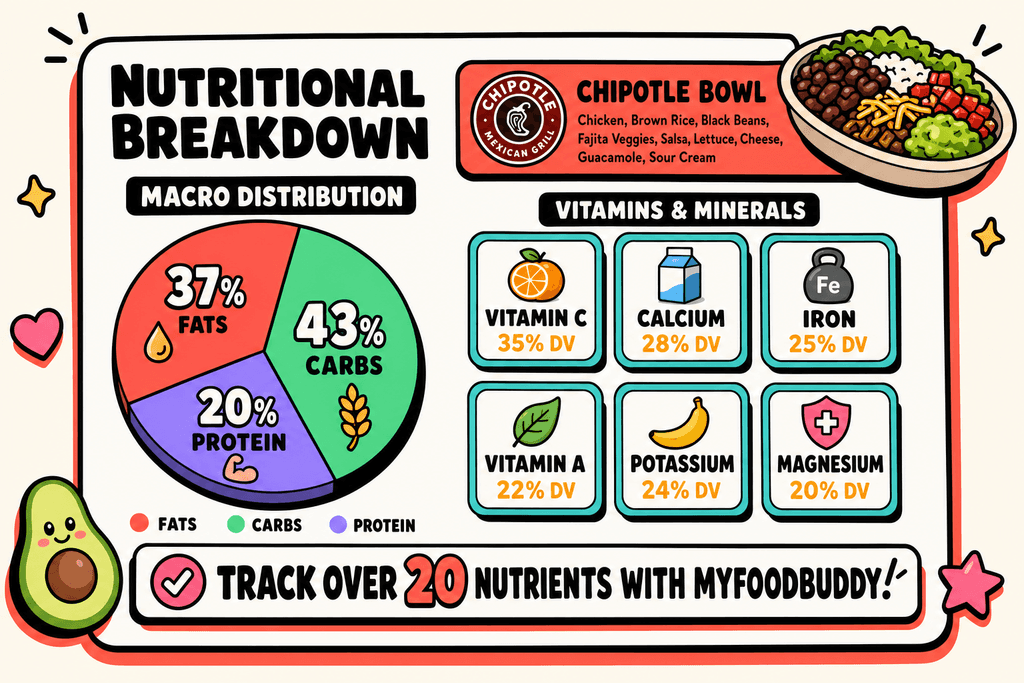
Most people ordering a Chipotle bowl check the calories and maybe the protein count before calling it a day. The nutrition calculator on their website shows you the big three macros (protein, carbs, and fat), plus sodium and fiber if you scroll down. But here's what most tracking apps miss: your bowl contains over 20 different vitamins and minerals that actually matter for your health. While apps like MyFitnessPal or Cronometer might capture some of this data, they often require you to manually search and add each ingredient separately, which takes forever and usually ends with people just picking a generic "burrito bowl" entry that's probably wrong.
The Numbers Everyone Looks At
When you build your bowl online or check the nutrition facts, you'll see the standard stuff. A typical chicken bowl with rice, beans, and veggies clocks in around 600-800 calories depending on your choices. Most people stop there and think they're done tracking.
Here's what the basic nutrition of chipotle bowls usually shows:
- Total calories (usually 500-1000 depending on toppings)
- Protein content (anywhere from 30-70 grams)
- Carbohydrates and fat macros
- Sodium levels (which can be pretty high)
- Basic fiber count
What Your Bowl Actually Contains
The real nutrition of chipotle bowls goes way deeper than calories and protein. Every ingredient adds its own unique vitamin and mineral profile that most people never think about. Black beans bring iron and folate. The fajita veggies pack vitamin C. Even that dollop of sour cream adds vitamin A and calcium.
Traditional calorie tracking apps make you search for each ingredient one by one. With MyFoodBuddy, you just say "chicken bowl with brown rice, black beans, fajita veggies, and guac" and it calculates everything automatically, including those hidden micronutrients.
| Bowl Combination | Calories | Protein (g) | Iron (mg) | Vitamin C (mg) | Calcium (mg) |
|---|---|---|---|---|---|
| Chicken, Brown Rice, Black Beans | 655 | 52 | 4.8 | 12 | 145 |
| Steak, White Rice, Pinto Beans | 720 | 48 | 5.2 | 8 | 120 |
| Carnitas, No Rice, Black Beans | 485 | 44 | 4.1 | 15 | 110 |
| Sofritas, Brown Rice, Pinto Beans | 590 | 28 | 6.5 | 18 | 285 |
Why Most Apps Miss the Good Stuff
The problem with most tracking apps isn't that the data doesn't exist. It's that getting to it takes too much work. You have to add "Chipotle chicken" then "Chipotle brown rice" then "Chipotle black beans" as separate entries. By the time you're done, you've spent five minutes logging one meal.
The micronutrients are where the real health benefits hide, but they're also what gets skipped most often. People focus on hitting their calorie or protein goals and ignore everything else. Your body needs vitamin B12, zinc, magnesium, and a dozen other nutrients to actually function properly.
Here's what gets missed in typical tracking:
- B vitamins from beans and meat
- Vitamin K from leafy greens and veggies
- Potassium from beans and guacamole
- Zinc and selenium from protein sources
The difference between what's listed on the menu board and what actually matters for your health is huge. Chipotle publishes their nutrition data, but most people never look past the calorie count. Meanwhile, that same bowl could be giving you 30% of your daily iron or 50% of your vitamin C needs.
The Sodium Problem Everyone Ignores
Most people walk out of Chipotle thinking they made a healthy choice, but there's something hiding in that bowl that could be sabotaging your progress. A typical Chipotle bowl can pack anywhere from 1,500 to 2,500 milligrams of sodium, which is basically your entire daily limit in one meal. The crazy part is that most calorie tracking apps only show you the sodium number without explaining what it actually does to your body. When you step on the scale the next morning and see a two-pound jump, you might think you gained fat overnight, but that's not what's happening at all.
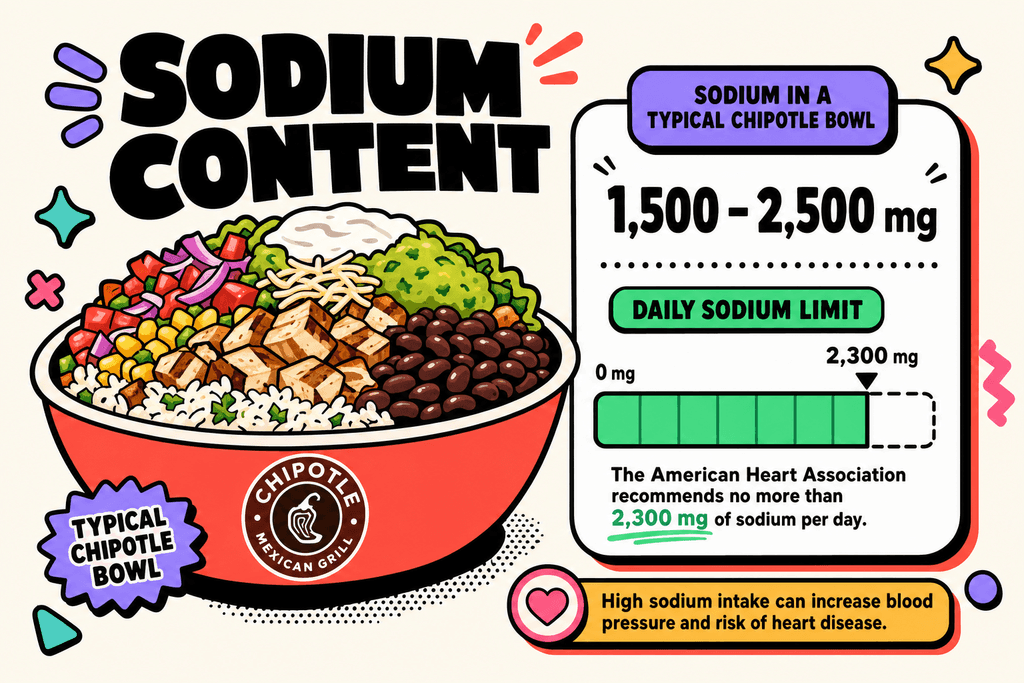
Sodium causes your body to hold onto water, and this water retention can mask actual fat loss for days. If you're trying to lose weight and eating Chipotle regularly, you might be making real progress that you just can't see on the scale.
- Carnitas bowl with cheese, sour cream, and chips: 2,300mg sodium
- Chicken bowl with fajita veggies and mild salsa: 1,200mg sodium
- Sofritas bowl with guacamole and corn salsa: 1,400mg sodium
- Steak bowl with queso and medium salsa: 2,100mg sodium
The biggest sodium contributors aren't always what you'd expect. Sure, the cheese and sour cream add some, but the real culprits are the seasoned meats, salsas, and especially the tortilla chips. A single serving of chips adds about 210mg of sodium before you even start on your bowl.
You can cut sodium in half without making your bowl taste like cardboard. Skip the cheese and sour cream, choose fresh tomato salsa instead of the corn or tomatillo versions, and ask for half the usual portion of meat. The fajita vegetables add tons of flavor with almost no sodium, and guacamole gives you that creamy texture without the salt bomb.
Micronutrients That Make or Break Your Goals
Here's what most tracking apps miss about the nutrition of chipotle bowls. While everyone obsesses over calories and protein, there's a whole world of vitamins and minerals that actually determine whether you feel energized or exhausted, whether you recover from workouts or stay sore for days. Your body needs more than just macros to function, and Chipotle bowls can actually be packed with micronutrients if you build them right. The problem is that most people have no idea what they're getting because traditional calorie counters don't track this stuff.
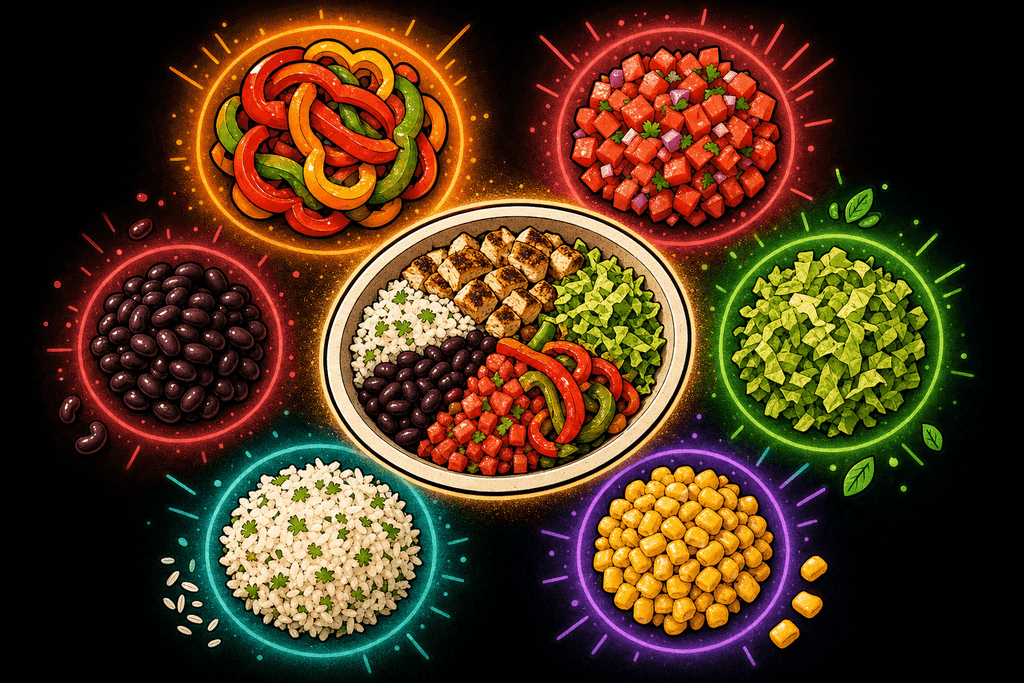
Iron content varies wildly depending on your protein choice. Steak gives you about 15% of your daily iron needs, while sofritas provides around 20%. This matters because iron carries oxygen to your muscles, and without enough of it, you'll feel tired no matter how much you sleep.
| Protein | Iron (% Daily) | Vitamin C (mg) | Calcium (% Daily) |
|---|---|---|---|
| Steak | 15% | 8mg | 4% |
| Chicken | 6% | 6mg | 3% |
| Sofritas | 20% | 4mg | 12% |
| Barbacoa | 18% | 7mg | 5% |
The fresh salsas are where the vitamin C lives. Pico de gallo and the tomatillo salsa can give you 15-20mg of vitamin C, which helps your body absorb all that iron from your protein. Most people don't realize these two nutrients work together.
Apps like MyFoodBuddy track over 20 nutrients automatically, so you can see exactly what vitamins and minerals you're getting without doing any math. When you log "chicken bowl with brown rice, black beans, fajita veggies, and pico de gallo," it calculates not just calories but also your B vitamins from the rice and beans, which help convert food into energy. This is the kind of detail that helps you understand why you feel great after some meals and sluggish after others.
Fiber and Fat Types That Change Everything
Two people can eat the exact same number of calories at Chipotle and have completely different experiences with hunger an hour later. The difference comes down to fiber and the types of fat in your bowl, which most people completely ignore when they're ordering. Fiber slows down digestion and keeps you full, while the right kinds of fat actually help your body absorb vitamins and keep your hormones balanced. A bowl with white rice, chicken, cheese, and sour cream might have 800 calories, but you'll be hungry again in two hours.
Black beans and brown rice together give you about 15 grams of fiber, which is half of what most people need in an entire day. Add fajita veggies and you're up to 18 grams. Compare that to a bowl with white rice and no beans, which might only have 4 grams of fiber.
- High-fiber bowl: Brown rice, black beans, fajita veggies, lettuce = 18g fiber
- Medium-fiber bowl: White rice, pinto beans, mild salsa = 10g fiber
- Low-fiber bowl: White rice, no beans, cheese, sour cream = 4g fiber
The fat situation is more interesting than you'd think. Guacamole contains monounsaturated fats that actually help reduce inflammation and support heart health, while sour cream is mostly saturated fat. Both have similar calorie counts, but your body processes them completely differently.
Building a bowl that actually satisfies you means thinking about more than just calories. You want fiber from beans and veggies to slow digestion, healthy fats from guacamole to keep hormones stable, and enough protein to prevent muscle loss. When you track this stuff properly, you start to see patterns in what keeps you full versus what leaves you raiding the fridge two hours later. Tools that track detailed nutrition help you figure out these patterns without spending hours researching every ingredient. To get a better understanding of your bowl's nutritional profile, try using our Chipotle macro calculator for calories and nutrition.
If you're serious about understanding your nutrition beyond just calories, check out resources on gaining nutritional insights from your daily diet or learn about maintaining nutritional accuracy with automatic food tracking. For more fast food nutrition tips, you might find calorie counting at Qdoba made easy helpful too.
Why Traditional Tracking Misses the Mark
Most people tracking the nutrition of Chipotle bowls are only seeing half the picture. Traditional calorie counting apps require you to break down every ingredient separately, which means you're spending 5-10 minutes per meal just to log a burrito bowl. You have to search for brown rice, then black beans, then chicken, then each topping individually. By the time you're done, your food is cold and you've probably forgotten whether you added extra cheese or not.
The bigger problem isn't just the time sink. When you're manually entering each component, you're likely missing crucial nutritional data that actually matters for your health goals. Most tracking apps focus heavily on calories and basic macros while completely ignoring the micronutrients that make or break your progress.
What Gets Lost in Manual Tracking
- Vitamin and mineral content from fresh ingredients like cilantro, lime, and peppers
- Fiber variations between different bean preparations
- Sodium levels that can mask weight loss progress through water retention
- Iron and zinc from meat portions that affect energy and recovery
- Antioxidants from salsas and vegetables that support overall health
| Average Time | Nutrients Tracked | User Accuracy |
| 7 minutes per meal | 3-5 basic macros | 60-70% accurate |
Apps like MyFitnessPal and Cronometer require multiple steps for each ingredient. You search, select the right database entry, adjust portion sizes, and hope the nutritional data is accurate. Research shows that manual tracking leads to underreporting by about 30% because people get tired of the process and start estimating.
The Micronutrient Blind Spot
Here's what most people don't realize about the nutrition of Chipotle meals. That bowl isn't just protein and carbs. The fajita vegetables provide vitamin C and folate. The guacamole delivers potassium and healthy fats. The pico de gallo adds lycopene and additional vitamin C. These micronutrients directly impact how your body processes those macros and whether you actually reach your fitness goals.
- Vitamin B6 from chicken helps metabolize the protein you're eating
- Magnesium from black beans supports muscle recovery and sleep quality
- Vitamin K from lettuce and cilantro aids in bone health and blood clotting
- Zinc from beef supports immune function and hormone production
AI-powered tracking changes this completely. With MyFoodBuddy, you simply say "Chipotle bowl with brown rice, chicken, black beans, fajita veggies, and guac" and the app captures over 20 nutrients automatically. The system uses USDA data to calculate not just calories, but the complete nutritional profile including vitamins and minerals that traditional apps ignore.
The Real Cost of Incomplete Data
When you're missing micronutrient data, you can't understand why your energy crashes at 3pm or why you're not recovering well from workouts. You might be hitting your calorie target but still feeling terrible because you're deficient in iron or vitamin D. Complete nutrition tracking reveals patterns that basic calorie counting simply can't show.
| Traditional Apps | AI-Powered Tracking |
| 5-10 min per meal | Under 30 seconds |
| 3-5 nutrients | 20+ nutrients |
| Multiple manual entries | Single voice command |
The time difference alone is worth considering. If you're tracking three meals a day, that's 15-30 minutes daily with manual apps versus under two minutes with voice-powered tracking. Over a month, you're saving over 10 hours of tedious data entry while getting more accurate and comprehensive nutritional information.
Building Better Bowls With Complete Nutrition
Most people walk into Chipotle thinking about calories and protein, but they're missing out on tracking the fiber from those black beans, the vitamin A in the fajita veggies, and the iron hiding in that steak. The nutrition of chipotle bowls goes way deeper than what shows up on the menu board. When you start paying attention to these overlooked nutrients, you realize that a well-built bowl can actually cover a huge chunk of your daily vitamin and mineral needs without even trying.
The trick is knowing what to add and what to skip. Load up on the fajita veggies for vitamins A and C, pick beans for fiber and folate, and don't sleep on the salsa for extra nutrients without many calories. If you're tracking your meals, you want to capture all of this information, not just the basic macros.
That's where automatic food tracking makes a real difference. MyFoodBuddy tracks over 20 nutrients including vitamins and minerals, so when you log "chipotle bowl with chicken, brown rice, black beans, fajita veggies, and salsa," you're getting the complete picture of what you just ate. No need to manually calculate each ingredient or wonder if you're getting enough iron or vitamin C.
The same approach works whether you're eating at Qdoba or local restaurants. Understanding the full nutritional profile of your meals helps you make better choices over time, and gaining nutritional insights becomes way easier when you're not stuck doing math every time you eat.
Common Questions About Chipotle Nutrition
Tracking the nutrition of Chipotle bowls can feel confusing when you're trying to stay on top of your health goals. Most people have similar questions about what's actually in their bowl and how to make smarter choices. Here are the answers to the most common questions about Chipotle nutrition that come up when you're trying to eat better without giving up your favorite meals.
How do I accurately track a custom Chipotle bowl?
The easiest way is to use voice or text logging instead of manually entering each ingredient. With MyFoodBuddy, you can just say "chicken burrito bowl with brown rice, black beans, fajita veggies, mild salsa, and guacamole" and the app calculates everything for you using AI and USDA data. This beats spending five minutes searching for each topping separately like you'd have to do with traditional tracking apps.
Which Chipotle bowl combination is the healthiest?
A bowl with chicken or sofritas, brown rice, black beans, fajita veggies, and fresh tomato salsa gives you balanced macros without excessive sodium or calories. Skip the cheese and sour cream to save about 220 calories and 400mg of sodium. If you want healthy fats, add guacamole instead since it provides better nutritional value than dairy toppings.
Can Chipotle fit into keto or low-carb diets?
Yes, but you need to skip the rice, beans, and corn salsa completely. Order a salad bowl with carnitas or steak, cheese, sour cream, guacamole, and fajita veggies to stay under 15g of net carbs. The key is loading up on protein and fats while avoiding all the hidden carbs in salsas and tortillas.
How can I reduce sodium in my Chipotle order?
The biggest sodium sources are cheese, sour cream, and the salsas, especially the corn and tomatillo versions. Ask for half portions of high-sodium toppings or skip them entirely. Fajita veggies and lettuce add volume without much sodium, so pile those on instead to keep your bowl filling.
What is the best protein choice for muscle building?
Chicken gives you the most protein per calorie at about 32g of protein for 180 calories in a standard serving. Steak is a close second with slightly more fat. Double protein is worth it if you're trying to hit higher protein goals, and tracking apps can automatically calculate the nutrition when you mention "double chicken" in your meal log.
Do calorie tracking apps handle complex restaurant meals?
Modern apps like MyFoodBuddy use AI to break down complex meals automatically when you describe them naturally. Instead of searching through databases and adding items one by one, you just describe what you ate and the app figures out the nutrition of Chipotle bowls and other restaurant meals. This makes tracking actually sustainable instead of a chore you give up on after a week.
Ready to start tracking smarter?
Download MyFoodBuddy and start tracking your calories by just saying what you ate. No more searching databases or guessing portions.
Get started