
Apps to Track Eating Without Manual Meal Math
Discover apps to track eating that eliminate manual calorie counting. Log meals with voice or text and get instant nutrition data automatically.
Most people who start tracking their food give up within the first month, and it's not because they lack motivation. The real problem is spending ten minutes per meal hunting through databases, weighing portions, and doing mental math just to log a simple breakfast. Apps to track eating have evolved beyond this tedious process, using voice commands and AI to handle all the calculations automatically so you can focus on your goals instead of playing nutritionist.
Table of Contents
The Evolution from Food Diaries to Smart Tracking
About 80% of people who start tracking their food give up within the first month. The problem isn't a lack of motivation. It's that most apps to track eating still feel like homework. You have to search through massive databases, measure portions, and manually enter every single ingredient. What started as a simple goal to eat better turns into a part-time job that nobody signed up for.
From Pen and Paper to Database Apps
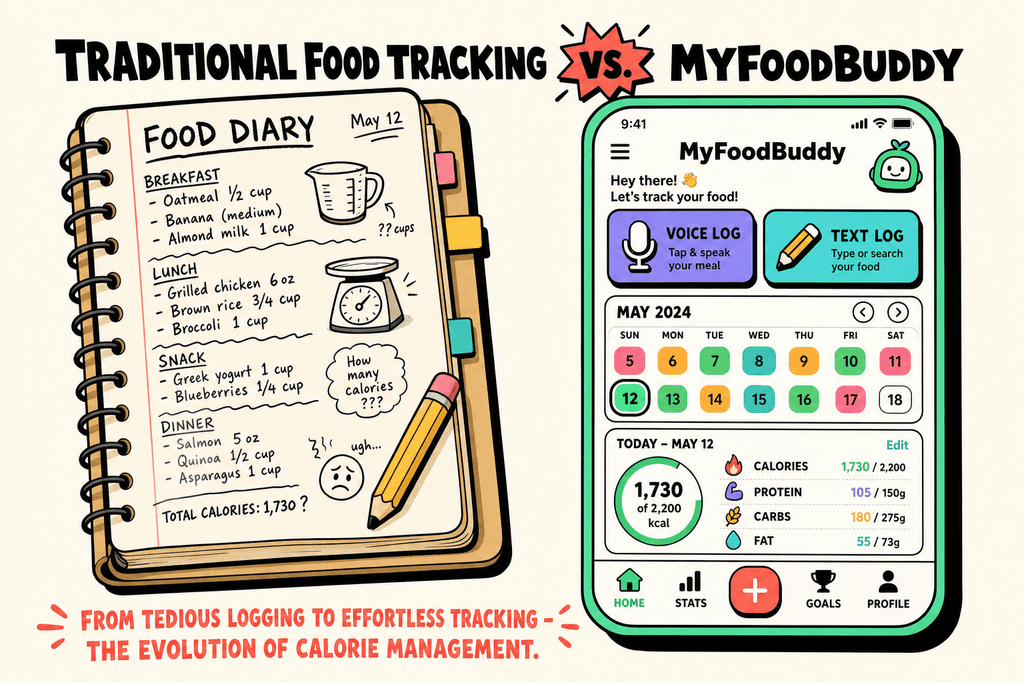
Food tracking used to mean carrying around a little notebook and writing down everything you ate. Nutritionists would give their clients these journals, and people would spend hours flipping through calorie books to figure out what they consumed. Then smartphones came along and apps like MyFitnessPal digitized those food databases, making millions of foods searchable right from your phone.
But here's the thing. Those database apps still require the same basic work as the paper journals. You're just doing it on a screen instead of in a notebook.
| Tracking Method | Average Time Per Meal | User Retention After 30 Days |
|---|---|---|
| Paper journals | 8-10 minutes | 15% |
| Database apps | 3-5 minutes | 20% |
| AI-powered apps | Under 30 seconds | 65% |
Why Traditional Apps Still Feel Like Work
Most calorie tracking apps follow the same pattern. You open the app, search for "chicken breast," scroll through dozens of options with slightly different calorie counts, pick one that seems right, then enter the weight in grams or ounces. The average person spends 3-5 minutes logging a single meal using traditional database apps. Multiply that by three meals a day, and you're looking at 15 minutes of data entry just to track what you ate.
The manual work adds up fast. Here's what goes into logging a typical breakfast:
- Search for each individual food item in the database
- Choose between multiple versions of the same food
- Measure or estimate portion sizes
- Manually adjust serving sizes to match what you actually ate
- Double-check that everything adds up correctly
The AI Breakthrough in Nutrition Tracking
Natural language processing changed everything for apps to track eating. Instead of searching and clicking through menus, you can now just say or type what you ate in plain English. Apps like MyFoodBuddy use AI to understand phrases like "two eggs, toast with butter, and a coffee with oat milk" and automatically calculate all the nutrition info using USDA data. No searching, no measuring, no math.
The difference in user behavior is pretty clear. Studies show that people who use AI-powered tracking apps are three times more likely to stick with their nutrition goals past the first month. When tracking takes seconds instead of minutes, it stops feeling like a chore and becomes something you can actually maintain long-term.
Key Success Metrics:
- People who track food consistently lose 2x more weight than those who don't
- Every additional minute spent logging reduces tracking consistency by 12%
- Users of AI-powered apps log meals 4x more frequently than database app users
Voice-Powered Meal Logging That Actually Works
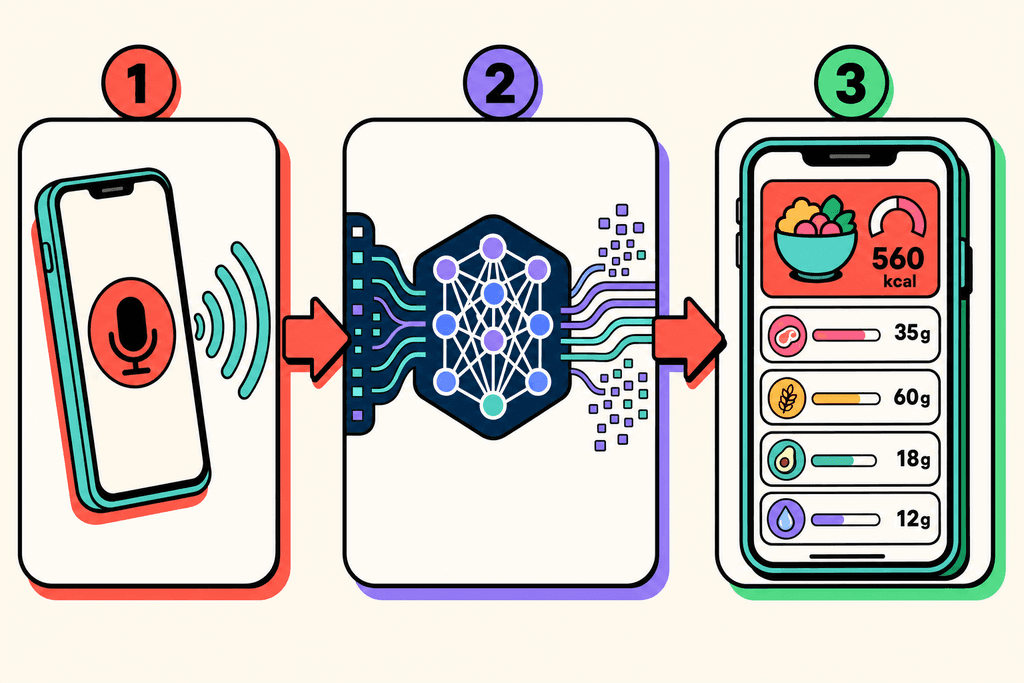
Most people quit tracking their food within the first week. The reason is simple: traditional apps make you search through endless databases, scan barcodes, and manually adjust portion sizes for every single thing you eat. It's exhausting. But apps that use natural language processing have changed how this works. You can now just say "chicken breast with rice and broccoli" and the app figures out the rest.
The technology behind this is pretty straightforward. When you speak or type your meal, the AI breaks down your sentence into individual food items. It then matches those items against USDA nutrition databases to pull accurate calorie and nutrient information. MyFoodBuddy, for example, uses this approach so you don't have to think about measurements or math.
| Method | Time Per Meal | Steps Required |
|---|---|---|
| Traditional Apps | 3-5 minutes | Search, select, adjust portions, confirm |
| Voice-Powered Apps | Under 10 seconds | Speak or type meal |
The difference between voice logging and barcode scanning is night and day. Barcode scanning only works for packaged foods, and you still need to enter portion sizes. Voice logging handles everything in one go, whether you're eating homemade meals or restaurant food.
Here's what makes the accuracy question interesting. Manual entry seems more precise because you control every detail, but most people guess portion sizes anyway. AI-powered extraction uses standardized USDA data for consistency, which often ends up being more reliable than eyeballing measurements. The system learns common portion sizes and adjusts based on how people actually eat.
- Log breakfast in 5 seconds: "Two eggs, toast with butter, coffee with oat milk"
- No searching through databases for each ingredient
- No manual calorie calculations or macro math
- Automatic nutrition breakdown for 20+ nutrients
The real test is whether you'll actually use it every day. When logging takes seconds instead of minutes, you're way more likely to stick with it. That's the whole point of voice-powered calorie counting in the first place.
Smart Features That Keep You Consistent
Speed is only half the battle. The other half is having features that actually help you build a tracking habit. Most apps focus on data collection but forget about the human side of behavior change. The apps that work long-term are the ones that make tracking feel less like homework and more like a natural part of your routine.
Meal favorites and categories solve the repetitive logging problem. If you eat the same breakfast three times a week, you shouldn't have to re-enter it every time. Apps like MyFoodBuddy let you save meals under categories like Breakfast, Lunch, Dinner, and Snack. One tap and you're done.
| Feature Type | Traditional Apps | AI-Powered Apps |
|---|---|---|
| Meal Logging | Manual search and entry | Voice or text input |
| Nutrition Analysis | Basic calories and macros | 20+ nutrients tracked |
| Personalization | Generic recommendations | AI coach with custom insights |
| Motivation | Basic reminders | Streaks and achievements |
AI nutrition coaches take this further. Fiona, the AI coach in MyFoodBuddy, looks at your food logs, health data, and goals to give you personalized insights. It's not just about hitting your calorie target. The coach notices patterns like low protein intake or missing certain vitamins.
- Gamification elements like streaks keep you motivated without feeling childish
- Achievements reward consistency, not perfection
- Apple Health integration syncs your activity and weight data automatically
- Color-coded calendars show your tracking patterns at a glance
- Weight trend charts help you see progress beyond daily fluctuations
Tracking more than just calories matters if you care about actual health. MyFoodBuddy tracks over 20 nutrients, including vitamins and minerals. This gives you a complete picture instead of just focusing on weight loss. You might be hitting your calorie goal but missing important nutrients, and you'd never know without this level of detail.
The visual feedback is what keeps people coming back. A color-coded calendar shows your good days and missed days. Weight trend charts smooth out the daily noise so you can see if you're actually making progress. These features turn raw data into something you can actually understand and use. If you want to learn more about how AI streamlines diet tracking, the technology keeps getting better at understanding what you need.
Finding the Right App for Your Tracking Style
Not every tracking app works for every person. Your tracking style depends on what you're trying to achieve and how much time you want to spend on it. Some people need detailed micronutrient tracking for specific health conditions. Others just want to make sure they're not overeating. The key is matching the app's features to your actual needs, not just downloading whatever has the most stars in the app store.
Start by looking at the core logging method. If you hate typing and searching, voice input is non-negotiable. If you eat a lot of packaged foods, barcode scanning might matter more. For people who cook at home or eat out frequently, natural language processing is the only thing that makes sense.
Essential Features Checklist
- Quick logging method (voice, text, or both)
- Meal favorites for repeated foods
- Comprehensive nutrient tracking beyond basic macros
- Health app integration for activity and weight syncing
- Visual analytics like calendars and trend charts
- AI insights or coaching for personalized guidance
- Reasonable pricing that fits your budget
Price is where things get interesting. Some apps charge $10-15 per month, which adds up to $120-180 per year. Others offer annual plans that save you money if you're committed. MyFoodBuddy's pricing sits at $39 per year, which is significantly lower than most competitors while offering the same AI-powered features. The 7-day free trial lets you test everything before paying.
Voice-Powered Meal Logging That Actually Works
Always try the free trial before committing. A week is enough time to see if the app fits your routine. Pay attention to how often you actually open it and whether logging feels easy or annoying. The best app is the one you'll use every day, not the one with the most features you'll never touch.
Integration capabilities matter more than you'd think. If you use a fitness tracker or smart scale, you want that data flowing into your nutrition app automatically. Apple Health integration is standard for iOS apps, but check what specific data points sync. Weight, activity, and sleep data all help the AI give better recommendations.
User experience is the make-or-break factor for long-term adherence. An app can have perfect nutrition data, but if the interface is confusing or slow, you won't stick with it. Look for apps that feel intuitive from day one. If you're spending more time figuring out how to use the app than actually tracking your food, something's wrong. For more details on fast ways to log meals, the right app should make tracking feel effortless.
Why Automation Beats Manual Tracking Every Time
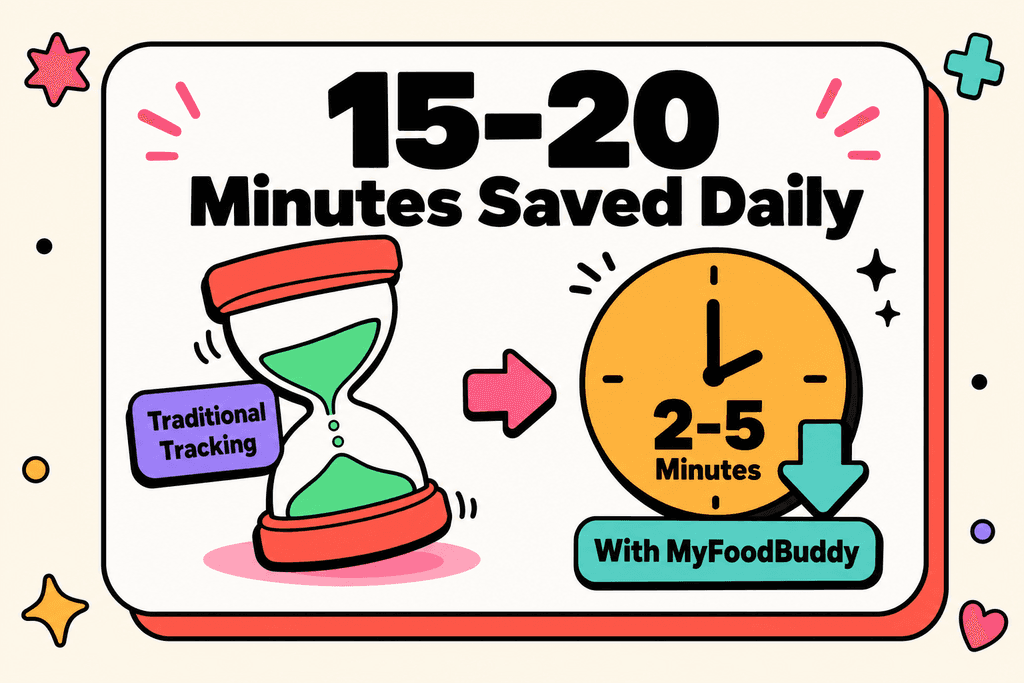
Your brain makes about 35,000 decisions every single day, and each one chips away at your mental energy. When you add manual calorie tracking to that list, you're asking yourself to search databases, measure portions, calculate macros, and double-check entries multiple times per day. That's not just annoying, it's cognitively exhausting. The average person spends 15-20 minutes per day on traditional tracking apps, which means you're burning through your decision-making fuel on something that could happen automatically.
The Friction Problem
Every extra step between you and logging a meal creates what researchers call friction. The more friction exists, the less likely you are to follow through. Traditional apps require you to navigate through multiple screens, search for foods, adjust serving sizes, and verify nutritional data.
Studies show that reducing friction in habit formation increases consistency by over 300%
Apps to track eating that use voice or text input remove almost all of that friction. With MyFoodBuddy, you just say what you ate and move on with your day. No searching, no measuring, no mental math.
The Compound Effect of Saved Time
Saving five minutes per meal doesn't sound like much. But let's do the math that actually matters.
- 5 minutes saved per meal × 3 meals per day = 15 minutes daily
- 15 minutes × 365 days = 91 hours per year
- That's nearly 4 full days of your life back
- Time you could spend cooking healthier meals, exercising, or just relaxing
The real win isn't just time saved though. It's what happens when tracking becomes so easy that you actually stick with it.
Consistency Trumps Perfection
Here's something most people get wrong about nutrition tracking. Being roughly consistent beats being perfectly accurate every single time. You don't need to know if that chicken breast was 4.2 or 4.3 ounces.
- Consistent tracking reveals patterns in your eating habits
- Patterns help you identify what's actually holding you back
- Small adjustments based on trends create lasting results
- Perfect accuracy with inconsistent logging teaches you nothing
The testimonials from MyFoodBuddy users tell this story clearly. One user switched from years of using traditional apps because they were "annoying" and found the voice logging "really easy to use on the go." Another mentioned the convenience of "just being able to say what I've eaten" instead of creating meals and searching databases.
Where AI Takes Nutrition Tracking Next
AI-powered apps to track eating are getting smarter every month. They learn your eating patterns, understand context better, and provide insights that manual tracking never could. The technology handles the boring calculation work while you focus on the part that actually matters, making better food choices.
Making Tracking Work for You, Not Against You
The biggest reason people quit tracking their food isn't lack of motivation. It's the manual meal math that turns every meal into a five-minute chore of searching databases, weighing portions, and calculating macros. When apps to track eating require that much effort, most people give up within a week or two. The solution isn't trying harder, it's finding tools that remove the friction entirely.
Voice-powered apps have changed what's possible with food tracking. Instead of spending minutes per meal, you can log your entire breakfast in under 10 seconds just by saying what you ate. MyFoodBuddy handles all the nutrition calculations automatically using AI and USDA data, so you never touch a calculator or search through endless food lists.
The difference between a tracking habit that sticks and one that fails usually comes down to how much time it takes. When logging feels like homework, it doesn't last. When it takes less time than checking a text message, it becomes automatic.
Most apps to track eating still rely on the old manual approach, but AI-powered options are making tracking actually sustainable for people who've failed with traditional methods. If you've tried tracking before and quit because it took too long, the problem wasn't you.
Try an app with voice logging and a free trial to see how different it feels. You might find that automating the tedious parts is what finally makes tracking stick. The questions below cover what people usually want to know before switching to a simpler approach.
Common Questions About Automated Food Tracking
Switching to apps to track eating that use AI can feel like a big change if you're used to the old way of doing things. Most people have similar questions when they first hear about automated nutrition tracking, especially if they've spent years manually searching databases and weighing portions. Here are the answers to what people ask most often about these newer tracking methods.
How accurate are AI-powered nutrition calculations?
AI-powered apps to track eating pull from databases like the USDA, which means they're working with the same nutritional information as traditional trackers. The difference is how you input the data, not where the numbers come from. MyFoodBuddy uses AI to interpret what you say or type, then matches it to verified nutritional data, so you get accurate results without the manual searching. Most users find the accuracy comparable to apps like MyFitnessPal or Cronometer, just faster to log.
Can voice tracking handle complex meals with multiple ingredients?
Yes, voice tracking works well even when you list several foods at once. You can say something like "grilled chicken breast, brown rice, steamed broccoli, and olive oil" and the app breaks it down into individual items with their nutritional values. If you're eating a homemade recipe with ten ingredients, you can list them all in one go instead of adding each one separately like you would in traditional trackers.
Do these apps work offline or require internet connection?
Most AI-powered apps to track eating need an internet connection to process voice commands and calculate nutrition since the AI runs on cloud servers. This is similar to how voice assistants work on your phone. Once your meals are logged, you can usually view your data offline, but the initial logging requires connectivity.
How do automated apps compare in price to traditional trackers?
Traditional trackers like MyFitnessPal charge around $80-100 per year for premium features, while MacroFactor runs about $72 annually. MyFoodBuddy costs $39 per year, which is less than half what some competitors charge. The free versions of traditional apps often have ads and limited features, whereas automated tracking apps typically offer more complete functionality in their paid tiers since the AI processing has real costs.
What happens to my data and is it private?
Your food logs and health data stay private and aren't sold to third parties. Apps like MyFoodBuddy use your information only to provide personalized insights and improve your experience. If you're syncing with Apple Health, that data follows Apple's privacy standards, which are pretty strict about who can access your health information.
Can I still manually adjust entries if needed?
Absolutely, and you should when something doesn't look right. Every automated tracker lets you edit portions, swap ingredients, or adjust nutritional values after the AI makes its initial calculation. Think of the AI as a helpful starting point that gets you 90% of the way there, and you can fine-tune the last 10% if needed. This still saves way more time than building every entry from scratch.
Ready to start tracking smarter?
Download MyFoodBuddy and start tracking your calories by just saying what you ate. No more searching databases or guessing portions.
Get started