What Is a Net Calorie and Why It Matters For Goals
Net calories = food eaten minus exercise burned. Learn why tracking net calories helps you reach weight goals faster and avoid common mistakes.
You step on the scale after a week of tracking every calorie and hitting the gym daily, only to find you've gained weight or feel exhausted all the time. The problem isn't your effort—it's that you're probably tracking calories eaten without accounting for what is a net calorie, the actual energy your body has left after exercise. Most calorie tracking apps like MyFitnessPal show you food intake, but understanding net calories is what separates people who reach their goals from those who spin their wheels in frustration.
Table of Contents
Breaking Down the Calorie Equation
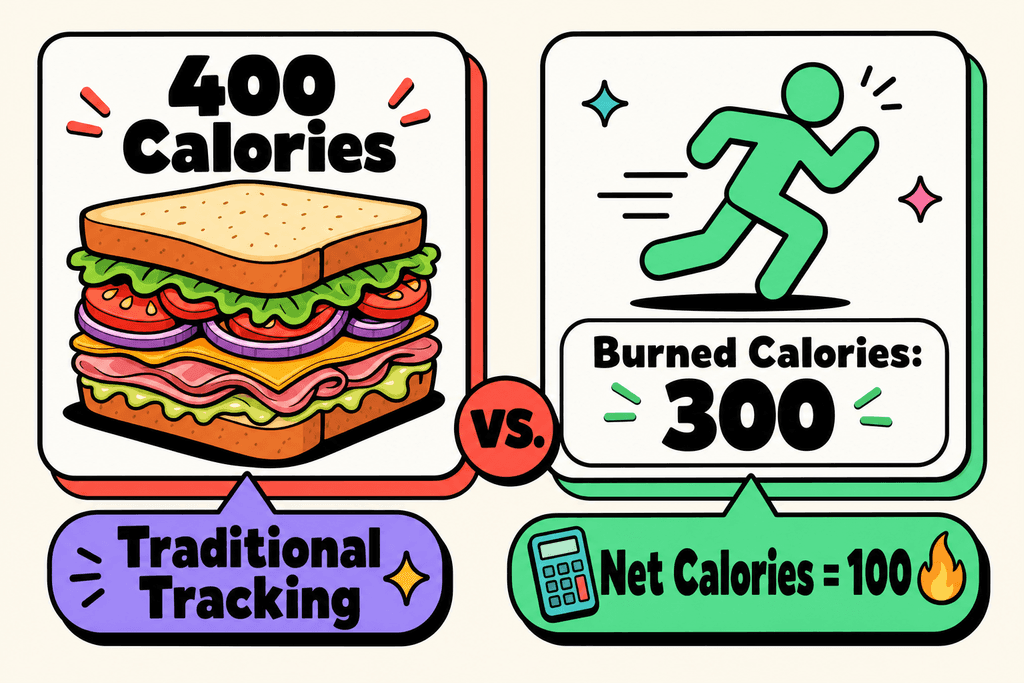
Most people think tracking calories is simple math, but there's actually two different numbers you need to know. When you eat a sandwich with 400 calories and then go for a run that burns 300 calories, you haven't just consumed 400 calories for the day. The real number your body cares about is different, and understanding this difference can make or break your fitness goals. This is where the concept of net calories comes into play, and it's something that many popular tracking apps like MyFitnessPal and Cronometer handle in different ways.
What Gross Calories Really Mean
Gross calories are the total amount of energy you get from all the food and drinks you consume in a day. Think of it like money coming into your bank account. If you eat breakfast, lunch, dinner, and snacks, you're adding up all those calories to get your gross total.
Here's what counts toward your gross calories:
- Every meal you eat throughout the day
- All snacks and drinks, including that coffee with oat milk
- Cooking oils, butter, and sauces you might forget about
- Late-night snacks that you sometimes don't want to admit happened
With MyFoodBuddy, you can log all these items quickly using voice or text, so you don't miss anything. Just say what you ate and the app calculates everything for you.
Understanding Net Calories
Net calories take things one step further by subtracting the calories you burn through exercise from your gross intake. It's like looking at your bank account after paying bills, not just after deposits. This number gives you a more accurate picture of what your body actually has to work with for the day.
The basic formula is super simple:
- Net Calories = Gross Calories - Exercise Calories
- If you eat 2000 calories and burn 500, your net is 1500
- This net number is what actually affects your weight goals
Real World Examples That Make Sense
Let's look at how this plays out in actual daily scenarios. The difference between gross and net calories can be pretty significant depending on how active you are, and this matters a lot for whether you're trying to lose weight, gain muscle, or just maintain.
| Scenario | Gross Calories | Exercise Burned | Net Calories |
|---|---|---|---|
| Desk Job Day | 2000 | 0 | 2000 |
| Light Walk | 2000 | 200 | 1800 |
| Gym Session | 2000 | 500 | 1500 |
| Long Run | 2000 | 800 | 1200 |
Notice how the same 2000 calories eaten can result in very different net numbers. Someone training for a marathon needs to think about this differently than someone who sits at a desk all day.
Why This Matters for Your Goals
Different fitness goals require different approaches to net calories. If you're trying to lose weight, you want your net calories to be below your maintenance level. If you're building muscle, you might need your net to be higher even after exercise.
Here's how it breaks down:
- Weight loss works best with a net calorie deficit of 300-500 below maintenance
- Muscle gain usually needs a net surplus of 200-300 above maintenance
- Maintenance means keeping your net calories at your TDEE level
- Ignoring the net vs gross difference can stall your progress for weeks
Many apps like MacroFactor and Cronometer track both numbers, but they often require manual calculations or multiple steps to log everything. MyFoodBuddy simplifies this by letting you quickly log meals and automatically syncing with Apple Health to track your exercise, giving you a complete picture without the hassle.
How Net Calories Affect Weight Loss
Most people think eating less always means losing more weight, but that's where things get tricky. Your body needs a certain amount of fuel just to keep your heart beating, your brain working, and your cells doing their thing. When you eat 1,500 calories but burn 500 through exercise, your net calories are actually 1,000. That number matters way more than you'd think, especially when you're trying to drop pounds.
How Net Calories Affect Weight Loss
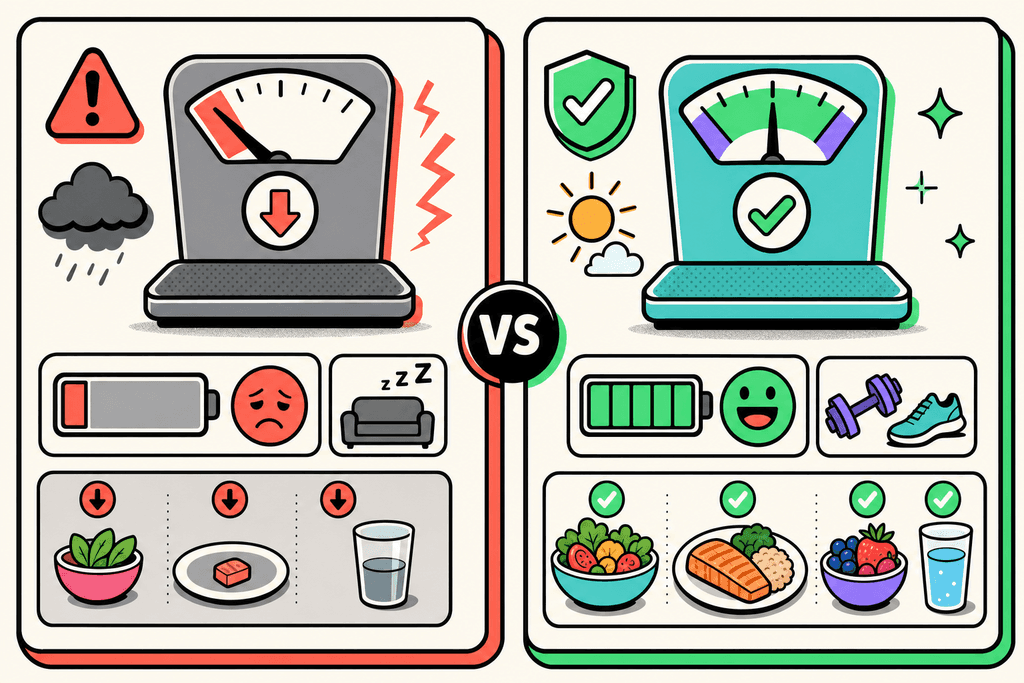
Here's what happens when your net calories drop too low. Your body thinks you're starving and starts holding onto every calorie it can. Your metabolism slows down, you feel tired all the time, and weight loss just stops happening even though you're eating less and exercising more.
- Women should aim for at least 1,200 net calories per day
- Men need a minimum of 1,500 net calories daily
- Going below these numbers can trigger metabolic slowdown
- Your body may start breaking down muscle instead of fat
The math for finding your ideal net calorie target isn't complicated. Take your TDEE (total daily energy expenditure) and subtract 500 to 750 calories for steady weight loss. If you burn 2,000 calories a day and want to lose weight, aim for 1,250 to 1,500 net calories. This creates a deficit without putting your body into panic mode.
A lot of people make the mistake of eating 1,200 calories, burning 600 at the gym, and ending up with only 600 net calories. They wonder why they're exhausted and the scale won't budge after a few weeks. Your body needs enough fuel to function properly, even when you're trying to lose weight.
Net Calories for Muscle Gain and Maintenance
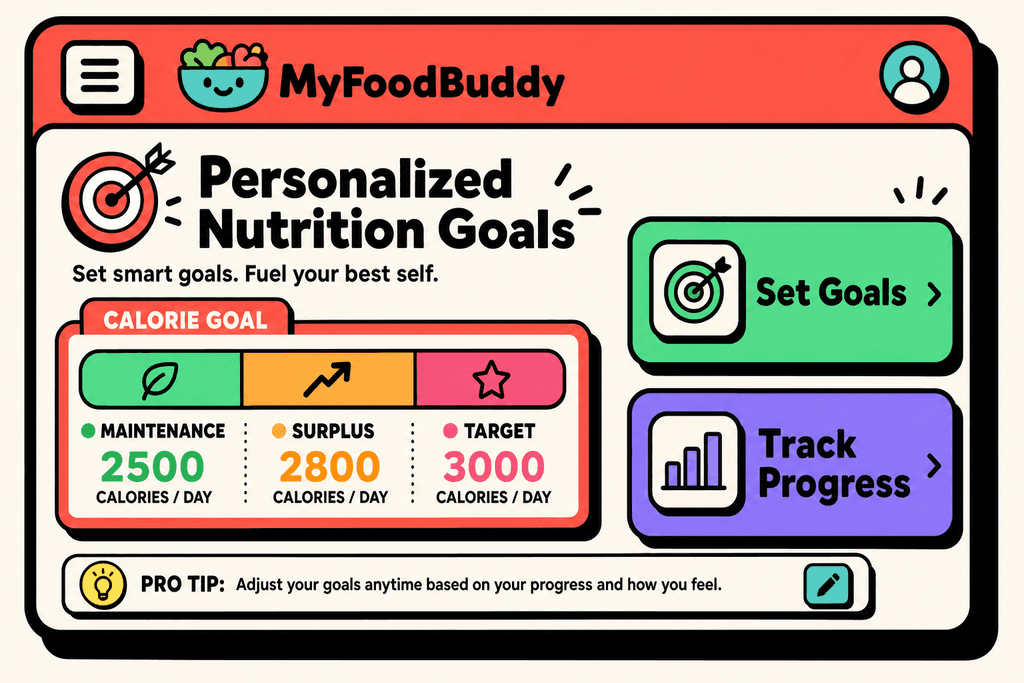
Building muscle requires a completely different approach to net calories than losing fat does. Your muscles need extra energy to grow, which means you actually need to eat more than you burn. Most people trying to gain muscle aim for a surplus of 200 to 500 net calories above their maintenance level. If your body needs 2,500 calories to maintain weight, you'd want to hit 2,700 to 3,000 net calories on training days.
Net Calories for Muscle Gain and Maintenance
The tricky part is that your needs change based on what you're doing that day. A heavy lifting session burns calories differently than a rest day, and your net calorie target should reflect that.
| Goal | Net Calorie Target | Daily Adjustment |
|---|---|---|
| Weight Loss | TDEE minus 500-750 | Stay consistent |
| Maintenance | Match your TDEE | Minor tweaks only |
| Muscle Gain | TDEE plus 200-500 | Higher on workout days |
Once you reach your goal weight, maintaining it means keeping your net calories at your TDEE. This is where a lot of people struggle because they're used to being in a deficit. Maintenance requires finding that sweet spot where you're eating enough to fuel your activities without gaining or losing weight.
Athletes often mess up by not eating enough on training days or eating too much on rest days. Your net calories should be higher when you're lifting heavy or doing intense cardio. On rest days, you can dial it back a bit since you're not burning as much through exercise.
Tracking Net Calories Without the Headache
Trying to track net calories manually is honestly a pain. You have to log every single food item, measure portions, look up calorie counts, then track your exercise, estimate calories burned, and do the math to figure out your net number. Most people spend 10 to 15 minutes per meal doing this, and that's if they're being careful about it. The whole process takes time away from actually living your life.
Modern apps handle all the calculations automatically once you input your food and exercise. MyFoodBuddy takes this even further by letting you just say what you ate instead of typing everything out. You can tell it "grilled chicken breast, brown rice, and steamed broccoli" and it figures out the calories using AI and USDA data.
- Voice logging saves time compared to manual entry
- Automatic calculations reduce human error
- Integration with health apps tracks exercise calories
- Real-time net calorie updates throughout the day
The biggest challenge with net calories is getting accurate exercise numbers. Treadmills and fitness trackers often overestimate how many calories you burn, which can throw off your entire calculation. A good rule of thumb is to use conservative estimates or rely on apps that sync with multiple data sources to get a more accurate picture.
When you're trying to hit specific goals, whether that's losing weight or building muscle, knowing your net calories gives you the real story. It's not just about what you eat or how much you exercise. It's about understanding the balance between the two and making sure your body has what it needs to reach your goals without burning out.
Why Most People Get Net Calories Wrong
Here's something that trips up almost everyone who starts tracking what is a net calorie: they see their fitness watch say they burned 500 calories during a workout and immediately think they can eat an extra 500 calories that day. This simple math seems logical, but it's actually one of the biggest mistakes you can make when trying to reach your weight goals. The problem isn't just about bad math though. It's about how our brains trick us into thinking we've earned more food than we actually have, and how the technology we trust might be lying to us by a pretty big margin.
The Exercise Equals Extra Food Trap
Most fitness trackers and apps overestimate calorie burn by 20 to 30 percent. That means if your watch says you burned 400 calories, you probably only burned around 280 to 320 calories in reality. When you eat back those "earned" calories based on what your tracker says, you're actually eating way more than you should be.
- Cardio machines at the gym often show even higher numbers than wearable trackers
- The calculations don't account for your individual metabolism or fitness level
- Most devices count your baseline calorie burn that would have happened anyway
- Exercise intensity varies person to person, but trackers use generic formulas
The psychological side makes things worse. When you work out hard, your brain tells you that you've earned a reward. This mental trap leads people to eat more than they burned, sometimes without even realizing it.
Warning Signs You Are Miscalculating
Most people don't realize they're getting net calories wrong until they've been stuck at the same weight for weeks. Here are the red flags that show you might be falling into the same traps that derail so many people's progress.
- You eat back all the calories your fitness tracker says you burned
- You're working out more but not losing weight or even gaining weight
- You feel like you "deserve" certain foods after exercising
- Your tracker shows wildly different calorie burns for similar workouts
- You're hitting your calorie goals but not seeing results after 3-4 weeks
- You find yourself planning what you'll eat based on your planned workout
Finding Your Actual Balance
The right approach to what is a net calorie depends on your specific body and goals. Some people do better eating back a small portion of exercise calories, while others should ignore them completely. Apps like MyFoodBuddy help by focusing on simple meal logging without getting caught up in complicated exercise adjustments that often lead people astray.
- Track your food intake accurately for two weeks without adjusting for exercise
- Monitor your actual weight changes during that time
- If you're losing weight too fast or feeling exhausted, add back 25-50 percent of estimated exercise calories
- Adjust based on real results, not what calculators or trackers tell you
The truth is that your body doesn't care what your fitness tracker says. It only responds to the actual energy balance between what you eat and what you burn, and that real number is usually quite different from what the screen shows you.
Making Net Calories Work for You
Understanding what is a net calorie changes how you think about food and exercise. It's not just about eating less or moving more, but about finding the right balance between the two. When you focus on net calories instead of just food intake, you get a clearer picture of what your body actually has to work with each day. This matters whether you're trying to lose weight, build muscle, or just maintain where you are.
The tricky part is keeping track of everything without making it a second job. Most people give up on calorie tracking because it takes too much time and effort. You need to log your meals, calculate your exercise calories, and do the math to figure out your net intake.
That's where tools like smart calorie trackers come in handy. MyFoodBuddy lets you log meals by just talking or typing naturally, and it handles the nutrition calculations automatically using AI and USDA data. No more searching through databases or weighing every ingredient.
The key is to start simple. Pay attention to your net calories for a week and see what patterns emerge. You might find that your exercise isn't burning as much as you thought, or that you're actually eating less than you need. Setting realistic calorie goals based on your actual net intake makes a huge difference in reaching your targets.
If you want to try tracking net calories without the usual hassle, MyFoodBuddy offers a 7-day free trial. The app syncs with Apple Health to pull in your exercise data automatically, so you can see your net calories without doing any manual math. But whatever method you choose, understanding net calories is the first step toward making real progress on your goals.
Common Questions About Net Calories
Net calories can feel confusing at first, especially when you're trying to figure out how much you should actually eat after a workout. Most people have similar questions when they start tracking this way. Here are the answers to the most common ones that pop up.
Should I eat back all my exercise calories?
Not necessarily. Most experts suggest eating back about 50-75% of your exercise calories because fitness trackers and apps often overestimate how many calories you actually burned. If you're really hungry after a workout, go ahead and eat more, but you don't need to force yourself to hit that exact number. Listen to your body and adjust based on how you feel and whether you're seeing progress toward your goals.
What's the minimum net calories I should eat per day?
Women should aim for at least 1,200 net calories per day, and men should target at least 1,500. Going below these numbers can mess with your metabolism, make you lose muscle instead of fat, and leave you feeling exhausted. Your body needs enough fuel to keep your organs working properly, even when you're trying to lose weight. If you're exercising a lot, you might need even more than these minimums to stay healthy.
Do I need to track net calories if I don't exercise much?
If you're only doing light activity like walking to your car or taking the stairs, you probably don't need to worry about net calories. Your regular calorie goal already accounts for basic daily movement. Net calories really only matter when you're doing intentional exercise that burns a significant amount of calories, like running, cycling, or hitting the gym for an hour.
How accurate are fitness trackers for calculating net calories?
Fitness trackers can be off by 20-30% in either direction. They use estimates based on your heart rate, age, weight, and activity type, but everyone burns calories differently. Some people naturally burn more or less than the average. That's why it's smart to use tracker numbers as a starting point and then adjust based on your actual results over a few weeks.
Can I have negative net calories for faster weight loss?
No, and this is actually dangerous. Negative net calories mean you're burning more than you're eating, which sounds good in theory but can lead to serious health problems. You might lose weight faster at first, but you'll also lose muscle, feel terrible, and probably end up binging later. Sustainable weight loss happens when you maintain a reasonable deficit, not when you starve yourself.
How does MyFoodBuddy calculate net calories automatically?
MyFoodBuddy syncs with Apple Health to pull in your exercise data and automatically adjusts your daily calorie target based on what you've burned. You just log your meals using voice or text, and the app handles all the math behind the scenes. Unlike apps like MyFitnessPal or Cronometer where you have to manually track everything, MyFoodBuddy makes the whole process simple so you can focus on your goals instead of doing calculations.
Ready to start tracking smarter?
Download MyFoodBuddy and start tracking your calories by just saying what you ate. No more searching databases or guessing portions.
Get started