
What 20 McNuggets Calories Mean for Your Day
20 McNuggets pack 830 calories. Learn how this fits your daily goals and simple ways to track fast food without the hassle.
That box of 20 McNuggets sitting in front of you packs 830 calories before you even think about dipping sauces or fries. For most people eating around 2,000 calories a day, that's nearly half your daily budget gone in one sitting. The good news is that knowing these numbers doesn't mean you have to give up fast food, it just means making smarter choices about what else you eat that day.
Table of Contents
Breaking Down the McNuggets Nutrition
A 20-piece McNuggets order packs 830 calories before you even think about dipping sauces or fries. That's nearly half the daily calorie needs for many adults, all in one meal. Understanding what you're actually eating matters more than most people realize, especially when those golden nuggets seem so small and harmless. The numbers tell a different story than what your eyes might suggest.
The Complete Nutritional Picture
Here's what 20 McNuggets actually contain. The breakdown might surprise you, especially when you see how it stacks up against what your body needs each day.
| Nutrient | Amount | % Daily Value |
|---|---|---|
| Calories | 830 | 42% |
| Total Fat | 51g | 65% |
| Saturated Fat | 9g | 45% |
| Protein | 46g | 92% |
| Carbohydrates | 54g | 20% |
| Sodium | 1,680mg | 73% |
These percentages are based on a 2,000 calorie daily diet. If you're trying to lose weight or have lower calorie needs, those percentages jump even higher.
What About the Extras
Most people don't eat McNuggets plain. The sauces and sides add up faster than you'd think.
- Each sauce packet adds 25-60 calories depending on the type
- Sweet and Sour sauce has 50 calories per packet
- Ranch dressing packs 110 calories in one small container
- A medium fries adds another 320 calories to your meal
- A medium Coke brings 220 more calories
With just two sauce packets and a medium fries, you're looking at over 1,200 calories total. That's more than half your daily needs in one sitting.
How the Macros Affect Your Goals
The macro split in 20 McNuggets leans heavily toward fat. Over 55% of the calories come from fat, while protein makes up about 22% and carbs fill in the rest. This matters because different macros affect your body in different ways.
- The high fat content can leave you feeling sluggish
- Protein is good, but the fat-to-protein ratio isn't ideal
- The sodium level is concerning for blood pressure
- Carbs are moderate but mostly from breading
Tracking all this manually takes time. Apps like MyFitnessPal require you to search through databases and input each item separately. With MyFoodBuddy, you just say "20 McNuggets with two sweet and sour sauces" and the app calculates everything instantly. No searching, no guessing, no math.
The real challenge isn't knowing the numbers exist. It's fitting them into your daily goals without spending forever on a calorie tracking app. Most people give up on tracking because it takes too long, not because they don't care about their health.
How 830 Calories Fits Your Daily Budget
Twenty McNuggets pack 830 calories, which sounds like just a number until you see what it means for your actual day. If you're eating 1,500 calories to lose weight, those nuggets just ate up 55% of your entire daily budget. That leaves you with 670 calories for breakfast, lunch, dinner, and any snacks you might want. For someone on a 2,000 calorie maintenance plan, you're looking at 41% of your day gone in one meal. Even if you're bulking on 2,500 calories, that's still a third of your food for the day.
The math gets tricky when you start planning the rest of your meals. Most people don't eat 20 McNuggets for breakfast, so you've probably already had coffee and maybe some toast or eggs before your nugget feast hits at lunch or dinner.
Here's what your remaining calorie budget looks like:- 1,500 calorie diet: 670 calories left (about one modest meal and a small snack)
- 2,000 calorie diet: 1,170 calories left (two smaller meals or one regular meal plus snacks)
- 2,500 calorie diet: 1,670 calories left (two decent meals with some wiggle room)
The difference between treating yourself once in a while versus making it a regular thing matters more than you'd think. Having 20 McNuggets on a random Tuesday is one thing. Your body can handle the occasional calorie spike without derailing your progress. But if this becomes your weekly routine, you're constantly playing catch-up with your nutrition goals.
Let's say you had those nuggets for lunch. For the rest of your day on a 2,000 calorie plan, you might have a black coffee and a banana for breakfast (150 calories), leaving you about 1,020 calories for dinner and any evening snacks. That's actually doable if you plan it right. A grilled chicken salad with light dressing, some roasted vegetables, and a small portion of rice could fit comfortably in that range.
Making Fast Food Work With Your Goals
You don't have to give up McNuggets forever just because you're tracking calories. The trick is being smart about portions and timing. Instead of ordering 20 nuggets for yourself, split them with someone and get 10. That cuts your calories in half right there. Or order the 20-piece but save half for later. Cold McNuggets aren't amazing, but they're edible if you're hungry enough.
Timing matters more than most people realize. If you know you're getting McNuggets for dinner, eat lighter during the day. A protein-heavy breakfast with eggs keeps you full without using too many calories. Skip the afternoon snack or keep it small.
Smart strategies for fitting McNuggets into your day:- Plan your McNuggets meal in advance so you can adjust breakfast and lunch accordingly
- Order a smaller size (10-piece instead of 20) and add a side salad for volume
- Skip the fries entirely or split them with someone
- Choose water or zero-calorie drinks instead of regular soda
- Use one sauce packet instead of multiple
The biggest mistake people make is not tracking their fast food at all. They feel guilty about eating it, so they just pretend it didn't happen. But tracking without judgment is how you actually learn to make better choices. When you see that your McNuggets meal was 1,400 calories, you're not beating yourself up. You're just gathering information.
This is where voice logging makes everything easier. Instead of fumbling through a traditional app trying to find the exact menu items and add up all the components, you just say what you ate. With tools like MyFoodBuddy, you can log "20 McNuggets with medium fries and a large Coke" in seconds while you're still in the drive-through. The app calculates everything automatically using USDA data, so you know exactly where you stand for the day.
Traditional calorie tracking apps make you search through databases, select serving sizes, and manually add each sauce packet. That takes minutes and feels like homework. Voice logging takes about five seconds. You're way more likely to actually track your food when it's that easy, which means you're more likely to stay on track with your goals. If you want to learn more about making fast food tracking effortless, voice technology has completely changed how people approach their nutrition.
The point isn't to never eat McNuggets again. It's to understand what they cost you calorie-wise and make informed decisions. Some days, 830 calories for nuggets is totally worth it. Other days, you might decide you'd rather spend those calories on something else. Either way, you're in control because you have the information.
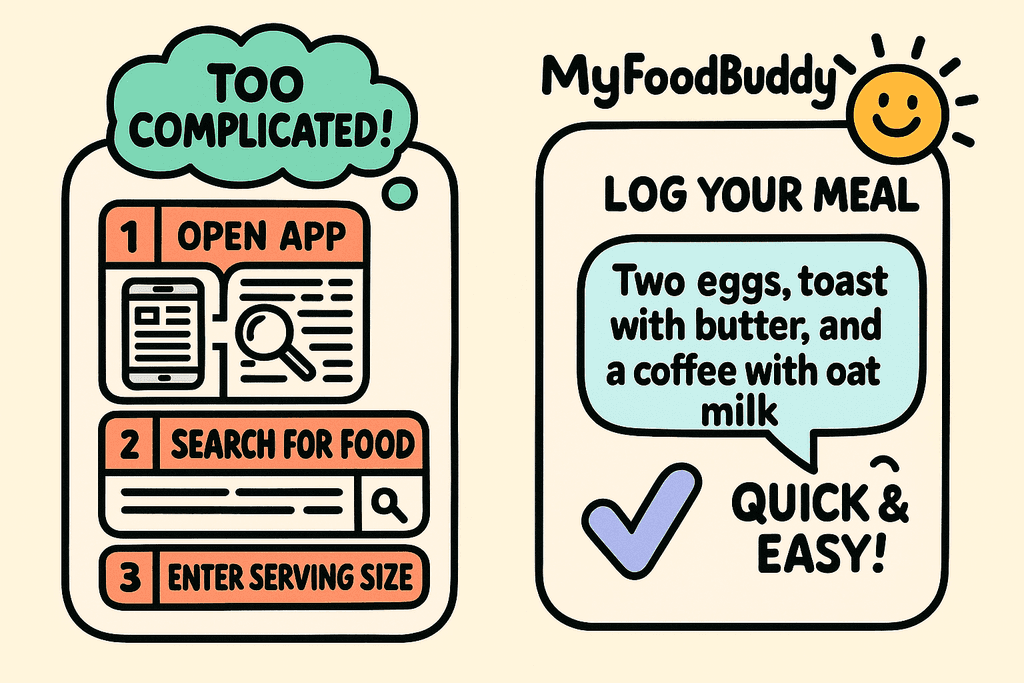
Why Tracking Fast Food Shouldn't Be Complicated
Most people who've tried tracking 20 mcnuggets calories know the feeling of opening their calorie app and immediately wanting to close it. There's something about logging fast food that feels different from tracking a home-cooked meal. It's not just about the numbers on the screen. The real problem is that traditional tracking apps turn a simple meal into a multi-step process that makes you feel worse about your choice before you even finish entering it.
The psychology behind this is pretty straightforward. When you already feel a bit guilty about grabbing fast food, the last thing you want is an app that makes you work hard to log it. Apps like MyFitnessPal require you to search through databases, select portion sizes, and manually add each item separately.
The Friction Problem with Traditional Tracking
Traditional calorie tracking apps create unnecessary barriers that make people give up on tracking altogether. The process typically involves multiple steps that turn a quick meal into a tedious data entry task. This friction is exactly why most people stop tracking within the first few weeks.
- Searching through databases with hundreds of similar entries for the same food
- Manually adjusting serving sizes and quantities for each item
- Creating custom meals or recipes for combination items
- Double-checking that you selected the right restaurant or brand version
How Voice Logging Changes the Game
Voice-powered tracking removes the mental barrier between eating and logging. Instead of opening an app, typing, searching, and selecting, you just say what you ate. MyFoodBuddy lets you simply speak "20 chicken nuggets from McDonald's" and handles all the nutritional calculations automatically. This takes seconds instead of minutes.
| Method | Time Required | Steps Needed | Friction Level |
|---|---|---|---|
| Traditional Manual Entry | 3-5 minutes | 8-12 steps | High |
| Voice Logging | 10-15 seconds | 1-2 steps | Minimal |
Consistency Beats Perfection Every Time
The biggest mistake people make with calorie tracking is thinking they need to be perfect. They skip logging meals they consider "bad" or give up entirely after a few indulgent days. But tracking 20 mcnuggets calories is just as important as tracking a salad if you want accurate data about your intake.
Real users have noticed this difference. One MyFoodBuddy user mentioned how they "don't have to create a bunch of meals and spend time searching" anymore. Another said the app makes it possible to log food "on the go" without the usual hassle. When tracking becomes effortless, you're more likely to stick with it even on days when your food choices aren't perfect.
- Incomplete tracking gives you incomplete data about your actual intake
- Skipping "unhealthy" meals creates blind spots in your nutrition awareness
- Consistent tracking, even of fast food, helps you make better decisions over time
- The easier the logging process, the more likely you are to maintain the habit
Your McNuggets, Your Choice, Your Goals
So those 20 mcnuggets calories add up to 830, which sounds like a lot until you remember it's just information. Knowing this number doesn't mean you can never enjoy McNuggets again. It just means you can make smarter choices about when and how they fit into your day. Maybe you skip the fries and save 400 calories, or maybe you plan ahead and eat lighter at breakfast. The point is you're in control.
The real problem isn't the McNuggets themselves. It's trying to keep track of everything in your head while juggling work, family, and everything else life throws at you. Traditional calorie tracking apps make you search through databases and measure portions like you're running a science experiment. That's why most people quit after a week.
Here's what actually works: quick logging that doesn't feel like homework. With MyFoodBuddy, you just say "20 chicken McNuggets" and the app handles the rest. No searching, no measuring, no math. The same AI that calculates your McNuggets can handle your overnight oats or your favorite coffee order just as easily.
Whether you're trying to lose weight, maintain, or just understand what you're eating, the key is finding something you'll actually stick with. Because knowing those 20 mcnuggets calories only helps if you're tracking consistently enough to see the bigger picture of your nutrition.
Common Questions About McNuggets Calories
Tracking fast food can feel confusing, especially when you're trying to stay on top of your nutrition goals. These questions come up all the time when people try to fit their favorite treats into their daily eating plan. Here's what you need to know about McNuggets and how they fit into your calorie budget.
How many calories are in different McNuggets serving sizes?
A 4-piece has about 170 calories, a 6-piece has around 250 calories, a 10-piece comes in at 420 calories, and 20 McNuggets calories total about 830. The 20-piece is basically half of most people's daily calorie needs in one sitting, which is why portion size matters so much when you're tracking. If you're comparing portions, our breakdown of McChicken Nuggets calories and nutrition by serving size makes it much easier to see how each pack fits into your day.
Can I eat McNuggets and still lose weight?
Yes, you can eat McNuggets and lose weight as long as you stay within your daily calorie goals. Weight loss comes down to eating fewer calories than you burn, not avoiding specific foods. The trick is planning the rest of your day around higher-calorie meals so you don't go over your target.
Which sauces are lowest in calories?
Honey mustard and sweet and sour sauce are your best bets at around 50 calories per packet. BBQ sauce sits in the middle at about 50 calories too. Ranch and creamy ranch pack the most calories at 110-130 per packet, which can add up fast if you're using multiple.
How do I track fast food without spending forever on it?
Most traditional tracking apps make you search through databases and manually enter every item, which gets old fast. With MyFoodBuddy, you can just say "20 McNuggets with sweet and sour sauce" and the app calculates everything for you using AI. It turns a five-minute task into a five-second one.
Does eating fast food occasionally ruin my progress?
No, occasional fast food won't wreck your progress if you're consistent most of the time. What matters is your overall pattern of eating, not one meal here and there. The people who succeed long-term are the ones who find a way to include foods they actually enjoy instead of trying to be perfect all the time.
What if nutritional information isn't available?
When exact nutrition info isn't posted, look for similar items from other chains or estimate based on ingredients and portion size. Most tracking apps pull from USDA databases that include generic versions of common foods. The goal is to get close enough to stay aware of your intake, not to be perfect down to the last calorie.
Ready to start tracking smarter?
Download MyFoodBuddy and start tracking your calories by just saying what you ate. No more searching databases or guessing portions.
Get started