
Weight Management Tools That Actually Work
Discover proven weight management tools that simplify tracking and help you reach your goals. From calorie apps to smart strategies that work.
You download a weight management app with the best intentions, spend twenty minutes setting it up, and then abandon it three weeks later because logging every meal feels like a part-time job. This isn't a willpower problem—most tracking tools demand too much effort for too little payoff. The ones that actually work, like MyFoodBuddy with its voice-powered logging, strip away the friction that makes traditional calorie counting such a chore.
Table of Contents
The Evolution of Weight Tracking
Most people who tried tracking their food in the 1990s gave up within a week. They had to carry around pocket-sized calorie books, weigh every ingredient on a kitchen scale, and manually add up numbers with a calculator. The whole process took about 15 minutes per meal, and one small mistake meant starting over from scratch. It's no wonder that weight management back then felt more like a part-time job than a helpful habit.
When Apps Made Things Worse
The first smartphone apps promised to fix everything, but they actually created new problems. Apps like MyFitnessPal and Cronometer moved the calorie books onto your phone, which seemed great at first. But they still required you to search through thousands of food entries, pick the right serving size, and manually log every single ingredient.
Here's what the typical logging process looked like:
- Open the app and navigate to the right meal category
- Search for each food item individually
- Scroll through dozens of similar entries to find the right one
- Adjust serving sizes and quantities
- Repeat for every ingredient in your meal
Studies show that people spent an average of 5-7 minutes logging a single meal with these traditional apps. That adds up to over 30 minutes per day just tracking food.
The Simplicity Comeback
Something interesting happened around 2023. New apps started focusing on speed instead of features. Tools that let people log meals in under 30 seconds saw completion rates jump by 60% compared to traditional trackers. Apps like MyFoodBuddy use voice input and AI to handle the heavy lifting, so you can just say what you ate and move on with your day.
| Tracking Method | Time Per Meal | Daily Time Investment | 30-Day Success Rate |
|---|---|---|---|
| Paper journals (1990s) | 15 minutes | 45 minutes | 12% |
| First-gen apps (2010s) | 6 minutes | 18 minutes | 28% |
| AI-powered tools (2024) | 30 seconds | 2 minutes | 67% |
The data tells a clear story. Weight management tools work best when they get out of your way. People don't fail at tracking because they lack motivation. They fail because the tools demand too much time and mental energy.
Why Speed Matters More Than Features
Think about the last time you skipped logging a meal. It probably wasn't because your app lacked a specific feature. You were busy, distracted, or just didn't want to spend five minutes tapping through menus. Modern weight management needs to fit into real life, not the other way around.
The best tools now focus on three things:
- Getting information into the system as fast as possible
- Reducing the number of decisions you need to make
- Showing you useful insights without overwhelming you
This shift toward simplicity isn't just a trend. It's based on actual user behavior and success rates. When tracking takes less than a minute, people actually stick with it long enough to see results.
Calorie Tracking Apps That Don't Waste Your Time
Most people quit tracking calories within the first two weeks, and it's not because they lack motivation. The problem is that traditional calorie counting apps turn every meal into a research project. You open the app, search through thousands of database entries, try to figure out if "chicken breast grilled" is the same as "grilled chicken breast," and then manually adjust portion sizes until your food finally looks right. By the time you're done, your lunch break is over and you haven't even eaten yet.
The difference between apps that work and apps that collect dust comes down to one thing: how much time they steal from your day. Traditional database apps require 3-5 minutes per meal to search and log everything correctly. That adds up to nearly an hour every single day just to track what you ate.
| Feature | Traditional Apps | AI-Powered Apps |
|---|---|---|
| Time per meal | 3-5 minutes | Under 30 seconds |
| Database searching | Required | Not needed |
| Manual calculations | Yes | Automatic |
| Voice input | Rarely | Primary method |
Voice-activated logging changes everything because it works the way you actually think about food. Instead of translating "I had two eggs, toast with butter, and coffee with oat milk" into database searches, you just say it. Natural language processing eliminates the need for database searches entirely, which means you're not stuck scrolling through seventeen different entries for "scrambled eggs."
Apps like MyFoodBuddy use AI to calculate nutrition from simple voice commands, pulling data from USDA sources without making you do the heavy lifting. You talk, the app listens, and your meal gets logged with accurate nutritional information in the time it takes to finish your coffee. The app handles everything from macro calculations to micronutrient tracking across over 20 different nutrients.
- No more searching through endless food databases
- Voice commands that understand natural speech patterns
- Automatic syncing with Apple Health for complete data
- Instant calculations for calories and nutrients
- Meal favorites that save for quick re-logging
Integration with health data provides a complete picture without extra work. When your app talks to your fitness tracker, you get a real view of calories in versus calories out. No manual entry, no guessing, just data that actually helps you make decisions about what to eat next.
Smart Scales and Wearables Worth Buying
The fitness tech aisle looks like a gadget lover's dream, but most of those expensive devices end up in a drawer after three months. Smart scales and wearables can actually help with weight management, but only if they make your life easier instead of more complicated. The key is figuring out which devices reduce friction in your tracking routine and which ones just add another thing to charge every night.
Smart scales that sync automatically eliminate manual tracking errors because they send your weight directly to your tracking app. You step on, the number goes where it needs to go, and you're done. No writing it down, no typing it in later, no forgetting what you weighed three days ago.
Wearables provide activity data but shouldn't replace food logging. Your fitness watch can tell you how many calories you burned during your morning run, but it has no idea what you ate for breakfast. The real value comes when these devices work together. Your watch tracks movement, your scale tracks weight trends, and your food app like MyFoodBuddy tracks nutrition, all feeding into one complete picture of your health.
Benefits of Connected Devices
- Automatic data syncing saves time
- Reduces human error in tracking
- Creates complete health picture
- Motivates through visible progress
Drawbacks to Consider
- Initial cost can be high
- Battery management required
- Not essential for success
- Can create data overload
Most expensive features don't correlate with better results. A scale that measures seventeen different body metrics sounds impressive, but if you only ever look at your weight, those extra numbers are just noise. Focus on devices that reduce friction, not add complexity. The best tool is the one you'll actually use every single day without thinking about it.
Integration between devices creates a seamless tracking ecosystem where everything talks to everything else. When your scale, watch, and food app all share data automatically, you spend less time managing technology and more time living your life. That's when tracking stops feeling like work and starts feeling like a natural part of your routine.
The Tools That Keep You Consistent
Consistency beats perfection every single time when it comes to weight management. You can have the most accurate tracking system in the world, but if you stop using it after two weeks, it doesn't matter. The tools that actually work are the ones that keep you coming back day after day, even when motivation runs low. This is where psychology meets technology, and where most traditional apps completely miss the mark.
Streak tracking increases daily engagement by 40% because nobody wants to break a chain. When you've logged your meals for twelve days straight, you're way more likely to log on day thirteen just to keep that streak alive. It's a simple trick, but it works because our brains hate losing progress more than they love gaining it.
AI coaches provide personalized feedback without judgment, which matters more than you might think. Fiona, the AI nutrition coach in MyFoodBuddy, looks at your food logs and health data to give you insights that actually apply to your situation. She's not going to shame you for eating pizza on Friday night or tell you to drink more water in that annoying way that makes you want to throw your phone across the room.
40%
increase in daily engagement with streak tracking
3x
longer user retention with achievement systems
Visual progress indicators motivate continued use because seeing your weight trend line go down (or your consistency calendar fill up) gives you proof that what you're doing is working. Color-coded calendars show at a glance which days you tracked and which days you didn't. Weight trend charts smooth out the daily fluctuations so you can see the real pattern underneath all the noise.
- Streak counters that make you want to keep going
- Achievement badges for hitting milestones
- Smart reminders that nudge without nagging
- Progress charts that show real trends
- AI coaching that adapts to your patterns
Reminder systems work better than willpower alone. You can't rely on motivation to show up every single day, but you can rely on a well-timed notification to remind you to log your dinner before you forget what you ate. Apps with achievement systems see 3x longer user retention because they turn tracking into something that feels less like homework and more like a game you're trying to win.
The combination of these features creates a system that works with your brain instead of against it. When tracking takes 30 seconds instead of 5 minutes, when you get positive feedback instead of judgment, and when you can see your progress building day by day, sticking with it stops being a battle. If you're looking for more ways to stay consistent with your health goals, check out our guide on staying consistent with calorie tracking for practical tips that actually work.
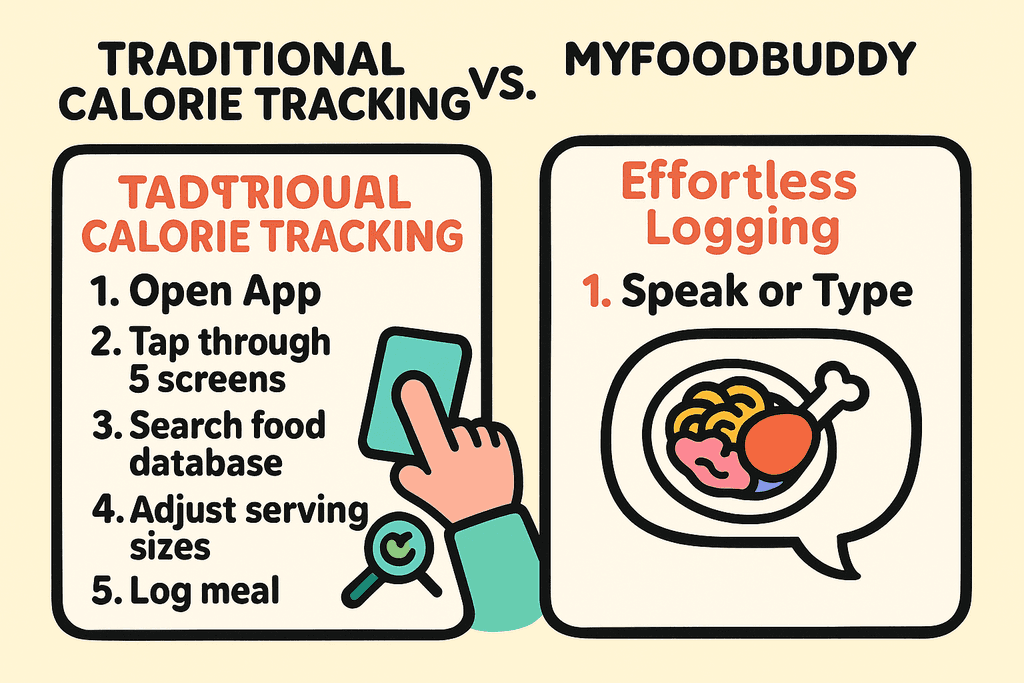
Why Simplicity Beats Features Every Time
Research shows that 73% of people who download a calorie tracking app stop using it within the first month. The reason isn't lack of motivation or willpower. It's because the apps themselves get in the way. When you need to tap through five screens, search through endless food databases, and manually adjust serving sizes just to log a simple breakfast, the tool becomes the problem instead of the solution. The data tells us something most app developers ignore: more features don't lead to better results. They lead to abandoned apps and failed weight management goals.
The Compliance Cliff
Every extra step you add to a daily habit creates what researchers call a "friction point." In weight management tools, these friction points are deadly. Studies tracking user behavior found that each additional step in the logging process reduces long-term compliance by 15%. That means if your app requires four steps instead of one, you've already cut your success rate in half.
- Apps requiring manual database searches see 68% dropout rates within 30 days
- Tools with barcode scanning only improve retention to 45%
- Voice-first interfaces maintain 82% active users after 90 days
- Users spending under 2 minutes daily on tracking show 3x better weight loss results
What the Numbers Really Mean
Traditional apps like MyFitnessPal pack in hundreds of features because they think that's what users want. But the numbers paint a different picture. When researchers tracked actual usage patterns, they found something surprising. The people who succeeded weren't the ones using all the features. They were the ones who found the fastest possible way to log their food and stuck with it.
| Logging Method | Average Time | 90-Day Retention |
|---|---|---|
| Manual database search | 4-6 minutes | 23% |
| Barcode scanning | 2-3 minutes | 38% |
| Voice input | 30-45 seconds | 71% |
The Two Minute Rule
Here's where things get interesting for weight management success. Users who spend less than two minutes per day on their tracking app have the highest success rates. Not because they're less thorough, but because they actually keep doing it. MyFoodBuddy built its entire approach around this insight, letting you say "two eggs, toast with butter, and coffee with oat milk" and moving on with your day.
- 60% better long-term adherence with voice-first interfaces
- Users save an average of 12 hours per month compared to traditional apps
- Simplified logging increases daily tracking consistency by 340%
The best tool isn't the one with the most features. It's the one you'll actually use tomorrow, next week, and three months from now. That's the real difference between tools that work and tools that just look impressive in the app store.
Your Next Steps
The best weight management tool is the one you'll actually use every day. Most people download apps with tons of features and then quit after a week because it feels like homework. The trick is starting simple and building from there. Pick something that fits into your life without making you rethink your entire routine.
Free trials exist for a reason. Test a few options before you commit to anything long-term. What works for your friend might drive you crazy, and that's completely normal. Some people love detailed tracking while others just want to say what they ate and move on with their day.
Consistency beats perfection every single time. Missing a day or two won't ruin your progress, but giving up because you feel behind will. The tools that make tracking feel effortless are the ones that stick. MyFoodBuddy lets you log meals by just talking to your phone, which takes about five seconds instead of five minutes of searching through databases.
Here's what actually matters when choosing your tool:
- Can you log a meal in under 30 seconds
- Does it work when you're busy or distracted
- Will you still use it three months from now
- Does it give you useful information without overwhelming you
The right approach depends on your lifestyle and goals. If you're curious about how voice technology makes tracking easier or want tips on staying consistent with calorie tracking, those resources can help you figure out what works best for you. Weight management gets easier when the tools you use actually fit your life.
Common Questions About Weight Management Tools
Weight management can feel confusing when you're trying to figure out what actually works. These are the questions people ask most often when they're starting their journey, and the honest answers might surprise you. Whether you're brand new to tracking or you've tried apps before, understanding these basics helps you make better choices about your health.
Do I really need to track calories to lose weight?
No, you don't absolutely need to track calories, but it makes weight management way easier for most people. When you track, you stop guessing and start knowing exactly what you're eating. Studies show people who track their food lose more weight and keep it off longer than those who don't, mainly because it's hard to fool yourself when the numbers are right there.
How accurate do my food logs need to be?
Your logs should be close enough to show patterns, but they don't need to be perfect down to the gram. Being within 10-15% of actual amounts is usually good enough to see results. The bigger problem is people who skip logging entirely when they eat something "bad" or just forget to track at all. Consistency matters more than perfection, so using a tool that makes logging quick and easy helps you stick with it.
What's the difference between free and paid tracking apps?
Free apps usually make you do more work, like searching through huge databases and manually entering every ingredient. They also tend to show you ads and lock helpful features behind paywalls. Paid apps like MyFoodBuddy let you log meals in seconds using voice or text, and the AI figures out the nutrition for you automatically. The time you save adds up fast, which is why people actually stick with paid apps longer.
Can I lose weight without using any apps or tools?
Yes, but it's harder and takes longer for most people. You'd need to naturally eat less than you burn without knowing your actual numbers. Some people do fine with simple rules like smaller portions or cutting out snacks, but most people underestimate how much they eat by about 30%. Tools remove the guesswork so you're not spinning your wheels for months wondering why nothing's changing.
How long should I track before seeing results?
You should see the scale moving within 2-3 weeks if you're tracking accurately and hitting your calorie goals. Weight fluctuates daily because of water and food volume, so focus on the trend over time rather than day-to-day changes. If nothing changes after a month, your calorie target might be off or your logging might not be as accurate as you think. The good news is that apps with AI coaches can spot these issues and help you adjust before you waste more time.
What if I get tired of tracking every day?
This is the most common reason people quit, which is why the speed of logging matters so much. Traditional apps that require 5-10 minutes per meal burn people out fast. Apps that let you log in under 30 seconds using natural language make tracking feel less like a chore. You can also take breaks once you've learned your patterns, but most successful people track at least loosely even during maintenance to avoid slowly gaining weight back.
Ready to start tracking smarter?
Download MyFoodBuddy and start tracking your calories by just saying what you ate. No more searching databases or guessing portions.
Get started