
Voice Recognition Fixes Food Logging Frustrations
Advanced voice recognition makes calorie tracking effortless. Log meals in seconds by speaking naturally. No more tedious manual entry.
You start tracking your meals with the best intentions, but after a week of typing "grilled chicken breast, 6 oz" and scrolling through endless database entries, you quietly give up. Studies show that most people abandon calorie tracking apps within the first month because manual food logging feels like a part-time job. Advanced voice recognition technology is changing this completely—apps like MyFoodBuddy let you simply say what you ate and handle all the tedious work for you.
Table of Contents
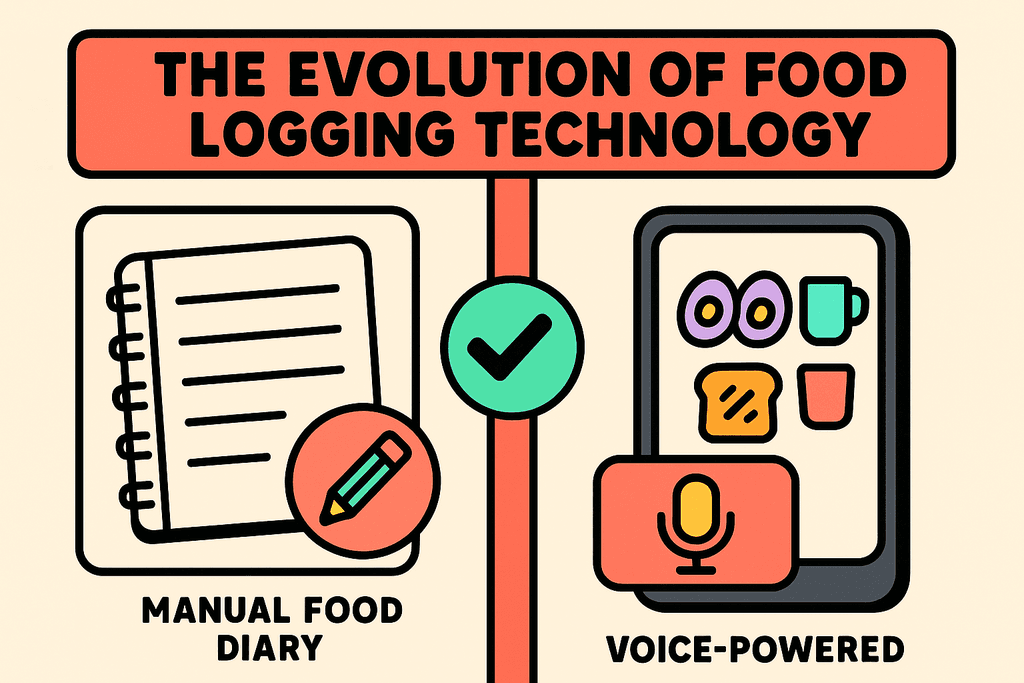
The Evolution of Food Logging Technology
People have been tracking what they eat for decades, starting with simple pen and paper. Back in the day, you'd write down everything you ate, then flip through massive calorie counting books to figure out the numbers. It took forever and most people gave up after a week or two. The whole process felt like homework, and who wants to do math after every meal? This manual approach was so time-consuming that only the most dedicated dieters stuck with it long enough to see results.
When Apps First Showed Up
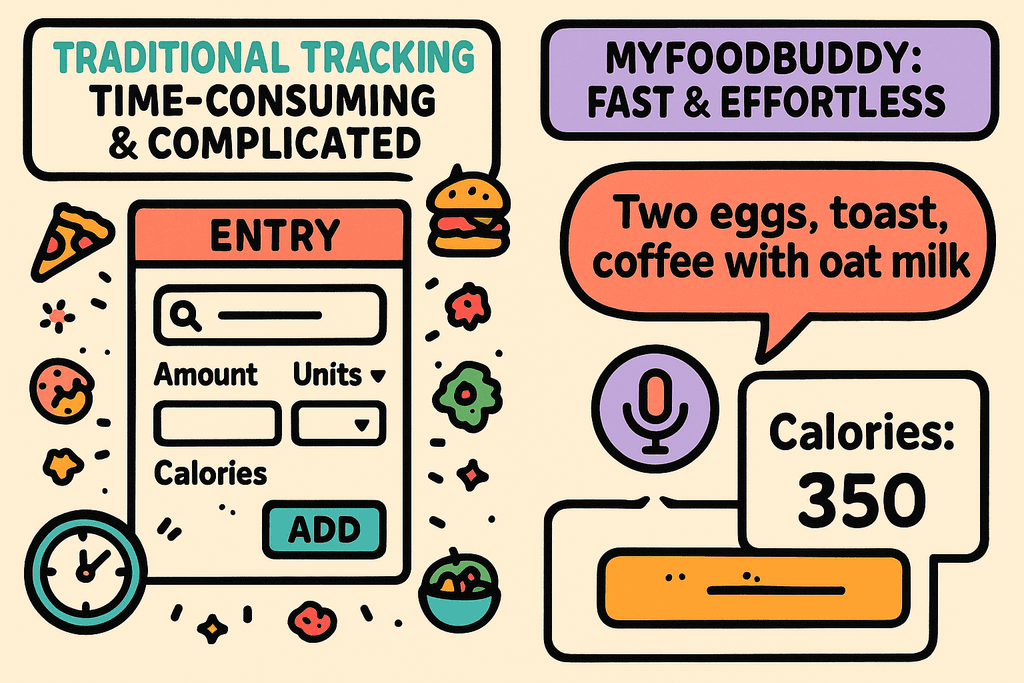
The first wave of calorie tracking apps seemed like a huge step forward. Instead of books, you had databases right on your phone. But anyone who's used apps like MyFitnessPal or Cronometer knows the reality wasn't quite as simple as it sounded.
Here's what you actually had to do with traditional apps:
- Search through thousands of food entries to find the right one
- Scroll past dozens of user-submitted entries with wrong information
- Tap multiple times to adjust serving sizes and portions
- Create custom meals if you wanted to save time later
- Repeat this process three to five times every single day
Most people spent 5-10 minutes logging each meal. That adds up to over 30 minutes a day just recording what you ate. The apps made the math easier, but they didn't really solve the time problem.
How Voice Changes Everything
Advanced voice recognition technology finally addresses the core frustration with food logging. Instead of tapping and searching, you just talk. Apps like MyFoodBuddy use AI to understand natural language, so you can say "two eggs, toast with butter, and coffee with oat milk" and the app figures out the rest.
The difference between old and new methods is pretty dramatic:
- Traditional apps require 15-20 taps per meal on average
- Voice-powered apps need zero taps, just one sentence
- Old method takes 5-10 minutes per entry
- New method takes under 30 seconds
The technology works by combining speech recognition with nutritional databases. When you speak, the AI breaks down your sentence, identifies each food item, estimates portions based on how you describe them, and pulls accurate nutrition data from sources like the USDA database. What used to require multiple steps now happens automatically in the background.
Why This Matters for Actual Humans
The real benefit isn't just saving time, though that's nice. It's about removing the friction that makes people quit. When logging food feels like a chore, you skip days. When you skip days, you lose your streak. When you lose your streak, you stop altogether.
Voice logging removes that friction completely. You can log while cooking, driving, or walking. You don't need to stop what you're doing, pull out your phone, and spend five minutes tapping through menus. Just speak and move on with your day. This small change makes the difference between tracking for a week and tracking for months.
How Voice Recognition Understands Your Meals
Most people spend about three to five minutes logging a single meal in traditional calorie tracking apps. That's because these apps make you search through databases, select portion sizes, and manually enter every ingredient. Voice recognition changes this by letting you talk to your phone the same way you'd describe lunch to a friend. The technology behind this isn't magic, but it does involve some pretty smart systems working together to understand what you're actually eating.
Natural language processing is the first step in making sense of your spoken words. When you say something like "two eggs, toast with butter, and coffee with oat milk," the system breaks down that sentence into individual food items. It recognizes that you're talking about multiple foods, not just one weird dish called "two eggs toast with butter and coffee with oat milk."
- The AI matches your descriptions to comprehensive nutritional databases like USDA
- It handles variations in how different people describe the same foods
- Portion sizes get automatically interpreted from your natural speech
- Preparation methods like grilled, fried, or baked are factored into calculations
The system has to be smart about context too. If you say "a large coffee," it needs to know you probably mean the volume, not that you ate a physically large coffee bean. MyFoodBuddy uses advanced voice recognition to handle these nuances without making you repeat yourself or correct mistakes constantly. The database matching happens in seconds, pulling nutritional information from sources like the USDA to give you accurate calorie and macro counts.
What makes this work well is that the AI learns patterns over time. It starts to understand that when you say "my usual breakfast," you probably mean those same two eggs and toast you've been eating all week. This kind of contextual understanding is what separates useful voice logging from frustrating voice logging.
Real Problems Voice Logging Solves
Anyone who's used MyFitnessPal or similar apps knows the pain of scrolling through fifteen different entries for "chicken breast" trying to figure out which one matches what you actually ate. Was it raw or cooked? What brand? Did someone enter it correctly or is that calorie count way off? Traditional food logging turns every meal into a research project, and that's exactly why most people quit tracking after a few weeks.
Voice logging eliminates the database search problem entirely. You don't need to know if your chicken was 4 ounces raw or cooked because you can just say "grilled chicken breast, about the size of my palm" and let the AI figure out the rest. No scrolling, no comparing entries, no second-guessing yourself.
The workflow interruption is another huge issue that doesn't get talked about enough. With traditional apps, you have to stop eating, pull out your phone, navigate through menus, and spend several minutes inputting data. By the time you're done, your food is cold and you've lost your appetite. Voice logging lets you track while you're cooking, eating, or even driving home from a restaurant.
- No more creating custom meals or recipes manually
- No frustration with incorrect portion size conversions
- Logging time drops from 3-5 minutes per meal to under 10 seconds
- Works in situations where typing isn't convenient, like while cooking or at the gym
The speed difference matters more than you might think. When logging takes five minutes, you start skipping meals or estimating instead of tracking accurately. When it takes ten seconds, there's no excuse not to do it. That consistency is what actually helps people reach their goals, whether they're trying to maintain a calorie deficit or just understand their eating patterns better.
Getting Started with Voice Powered Tracking
The best part about voice logging is that you don't need to learn a special language or format. You literally just talk like a normal person. If you'd tell your friend "I had a turkey sandwich with mayo and some chips," that's exactly what you say to the app. The technology is built to understand human speech patterns, not to make you memorize commands or specific phrases.
Including preparation methods helps the AI give you more accurate results. There's a big calorie difference between fried chicken and grilled chicken, so mentioning how your food was cooked matters. But you don't need to be super precise about it. Saying "fried" or "grilled" or "baked" is enough for the system to pull the right nutritional data.
- Speak naturally as if describing your meal to a friend
- Mention portion sizes in familiar terms like small, medium, large, or cup measurements
- Include cooking methods when they're relevant to calories
- The AI learns your patterns and gets better over time
Portion sizes don't need to be exact either. You can say "a handful of almonds" or "a medium apple" and the system knows what you mean. If you want to be more specific, you can say "two cups of rice" or "six ounces of salmon," but it's not required. The flexibility means you can track accurately without carrying a food scale everywhere.
One thing that makes MyFoodBuddy particularly useful is that you can combine voice and text input. Maybe you want to speak most of your meal but type in a specific brand name. That works fine. Or you can save your favorite meals and re-log them with a single tap, which is even faster than voice for foods you eat regularly. The system is designed to be flexible because everyone's tracking style is different.
The learning curve is basically nonexistent. Most people figure it out on their first try because they're just talking normally. And if the app misunderstands something, you can quickly correct it and move on. Over time, the AI picks up on your preferences and gets better at interpreting what you mean, making the whole process smoother the longer you use it.
If you're interested in how voice technology works for specific situations, check out our guide on simplifying calorie counting for busy individuals or learn about making calorie counting effortless with voice technology. The bottom line is that tracking your food shouldn't feel like a chore, and voice recognition finally makes that possible.
Why Voice Recognition Changes Everything
People who track their food consistently are three times more likely to hit their weight goals than those who track sporadically. Yet most calorie tracking apps see users quit within the first month. The problem isn't motivation or willpower. It's friction. Every extra tap, search, and manual entry creates a tiny barrier that adds up over time until people just stop logging altogether.
Advanced voice recognition removes that friction completely. Instead of opening an app, searching through databases, adjusting portion sizes, and tapping through multiple screens, you just say what you ate. The entire logging process drops from 2-3 minutes down to about 10 seconds. That difference might not sound huge, but it's the difference between tracking becoming a habit versus becoming a chore you avoid.
The Consistency Problem with Traditional Tracking
Traditional apps like MyFitnessPal require multiple steps for every single food item. You search, scroll through similar items, pick the right one, adjust serving sizes, and repeat for each ingredient. When you're eating a simple meal, it's manageable. When you're eating something homemade or complex, it becomes genuinely annoying.
- Most people quit tracking after 2-3 weeks when using traditional apps
- The average meal takes 2-3 minutes to log manually
- Users report skipping meals entirely when they're busy or in social situations
- The psychological burden of "I'll log it later" leads to forgotten meals and inaccurate data
Voice logging solves this by meeting you where you are. You can log while cooking, driving, or sitting at a restaurant without pulling out your phone and typing. MyFoodBuddy uses advanced voice recognition to understand natural speech patterns, so you don't need to speak in a robotic way or use specific commands.
Accessibility Throughout Your Day
The real power of voice technology isn't just speed, it's accessibility. There are dozens of moments throughout the day when typing is inconvenient or impossible, but speaking is easy. You're cooking and your hands are messy. You're walking between meetings. You're finishing lunch with coworkers and don't want to be rude by staring at your phone.
- Voice logging works while your hands are occupied with other tasks
- No need to interrupt conversations or social situations to type
- Can log immediately after eating instead of trying to remember later
- Works in situations where pulling out your phone would be awkward
This accessibility directly impacts long-term success. When tracking fits seamlessly into your life instead of requiring you to stop what you're doing, you actually stick with it. The data shows that consistency matters more than perfection, and voice recognition makes consistency effortless.
The Future of Effortless Nutrition Tracking
Most people quit tracking calories within the first week, and the reason is always the same. It takes too much time and feels like a chore. Advanced voice recognition fixes this problem by letting you log meals in seconds instead of minutes. You just say what you ate, and the app does the rest.
The technology has come a long way in the past few years. Voice recognition is now accurate enough to understand different accents, food names, and even casual descriptions like "a handful of almonds" or "a big bowl of pasta." When you combine this with AI that can extract nutrition data automatically, you get something that actually works in real life.
Apps like MyFoodBuddy make this technology accessible without charging hundreds of dollars. The voice logging feature means you can track your breakfast while you're still eating it, or log your lunch while walking back to your desk. No more forgetting what you ate or guessing portion sizes hours later.
The difference between traditional apps and voice-powered ones is like the difference between typing out a text message and just talking to someone. One feels natural, the other feels like work. That's why people stick with voice-powered calorie tracking longer than they do with manual entry apps.
If you've tried tracking calories before and gave up because it was too annoying, voice recognition might be what finally makes it stick. The technology is ready, and it's already helping thousands of people stay consistent with their nutrition goals without the usual frustration.
Common Questions About Voice Food Logging
Voice logging sounds great in theory, but most people have real questions about how it actually works in daily life. Whether you're worried about accuracy, privacy, or just looking silly talking to your phone at lunch, these concerns are totally normal. Here's what you need to know about using advanced voice recognition for tracking your meals.
How accurate is voice recognition for food logging?
Voice recognition technology has gotten really good at understanding food-related terms, especially when paired with AI that knows nutrition databases. MyFoodBuddy uses advanced voice recognition combined with USDA data to interpret what you say and match it to accurate nutritional information. The system gets smarter over time as it learns your eating patterns and common foods.
Can it understand different accents and speech patterns?
Modern voice recognition works with a wide range of accents and speaking styles. The technology is trained on diverse voice data, so it can handle different pronunciations and regional terms for foods. If you have a strong accent or speak quickly, the app adapts as you use it more frequently.
What happens if the app doesn't recognize a food?
You can always edit entries or add foods manually if the voice recognition misses something. The app shows you what it understood so you can quickly correct any mistakes before saving. Most users find that corrections are rare after the first few days of use.
Is my voice data stored or shared?
Your voice is converted to text for processing, and the actual audio isn't stored long-term. The app focuses on extracting the food information you spoke, not keeping recordings of your voice. Privacy matters, especially when you're sharing personal health data.
Can I use voice logging in public places?
You can definitely use voice logging anywhere, though some people prefer typing in quiet places like libraries or meetings. The beauty of apps like MyFoodBuddy is that you get both options, so you can speak your meals at home and type them out when you're in a crowded restaurant.
Does it work offline?
Most voice recognition features need an internet connection to process your speech and look up nutritional data. However, you can always switch to text input if you're somewhere without service, and the app will sync everything once you're back online. This flexibility means you never miss logging a meal, no matter where you are.
Ready to start tracking smarter?
Download MyFoodBuddy and start tracking your calories by just saying what you ate. No more searching databases or guessing portions.
Get started