
Turn Any Restaurant Meal Healthy in 2 Simple Steps
Learn how to make any restaurant meal healthier with 2 easy steps. Track nutrition effortlessly and stay on track with your health goals.
You just finished a grilled chicken salad at your favorite restaurant, feeling proud of your healthy choice, but that single meal likely packed over 1,200 calories thanks to hidden dressings, oils, and oversized portions. Most diners underestimate restaurant calories by more than 600 calories per meal, which explains why eating out regularly can derail even the best intentions. The good news is that two simple steps can transform any restaurant meal into a healthier choice without giving up the foods you love.
Table of Contents
- The Hidden Truth About Restaurant Food
- Step 1: Master the Menu Swap Strategy
- Simple Swaps That Actually Work
- How to Ask Without Feeling Weird
- Hidden Calorie Bombs to Watch For
- Why Traditional Tracking Fails at Restaurants
- How Voice Logging Changes Everything
- Handling Social Dining Situations
- Common Mistakes That Sabotage Progress
- Your Path to Healthier Restaurant Dining Starts Now
- Common Questions About Healthy Restaurant Eating
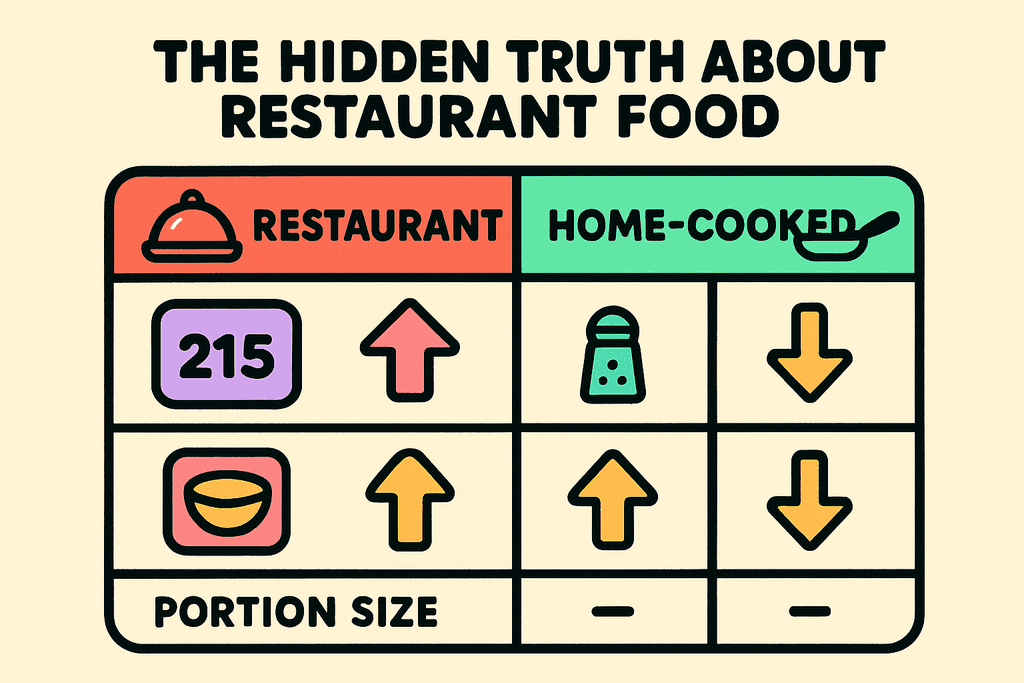
Step 1: Master the Menu Swap Strategy
Most restaurant meals pack between 1,200 and 2,000 calories, which is basically your entire daily budget in one sitting. The good news is that you don't need to avoid restaurants or order plain grilled chicken every time you eat out. Simple menu swaps can cut 300-500 calories per meal without making you feel like you're on a diet. The trick is knowing what to swap and how to ask for it without feeling awkward about it.
Think of menu modifications like building blocks. You're not creating a completely different meal, just tweaking a few elements to work better for your goals.
Simple Swaps That Actually Work
- Swap fried for grilled or baked - saves 200-400 calories instantly
- Ask for sauce on the side - most restaurant sauces add 150-300 calories you don't even taste
- Replace fries with vegetables or a side salad - cuts about 350 calories
- Choose water or unsweetened tea instead of soda - saves 150-250 calories
- Request dressing on the side - salad dressings can add 300+ calories when poured by staff
- Skip the bread basket - those pre-meal rolls add 150-200 calories before you even start
The protein-first ordering strategy works at any restaurant. Start by picking your protein, then build around it. A 6-ounce grilled chicken breast has about 180 calories, while the same amount of fried chicken can hit 400 calories or more.
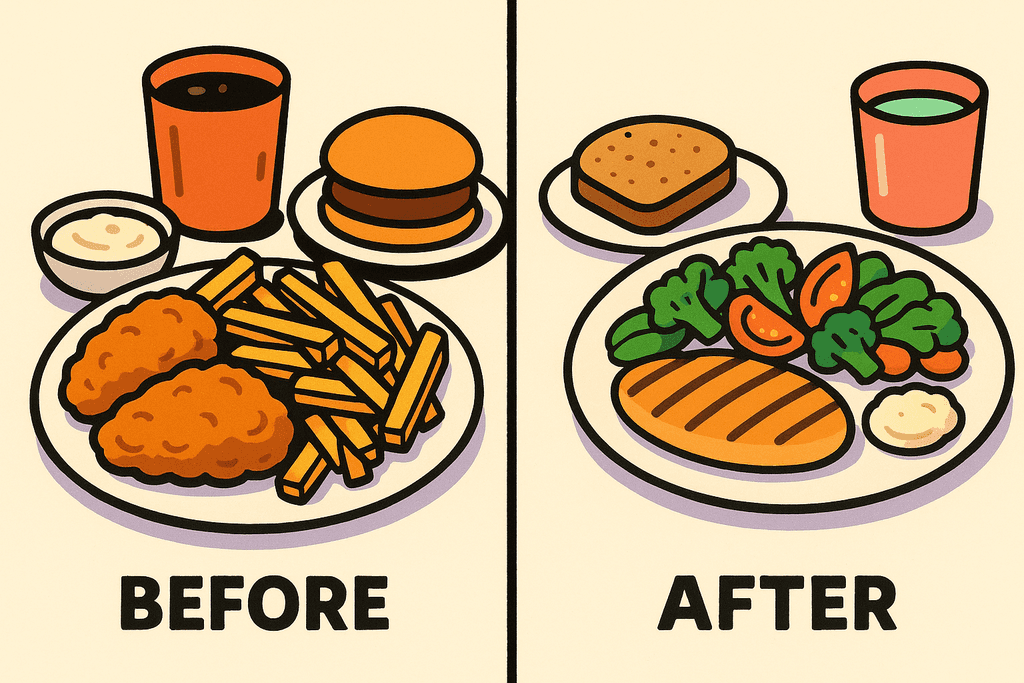
Step 1: Master the Menu Swap Strategy
How to Ask Without Feeling Weird
Servers handle modification requests all day long. They really don't care if you ask for grilled instead of fried. Most restaurants are happy to accommodate simple requests because they want you to come back. Just be polite and specific about what you want.

Step 2: Track It in Seconds with Voice Logging
Here's what works: "Could I get the salmon grilled instead of pan-fried, with the sauce on the side?" That's it. No need to explain you're watching calories or trying to eat healthy.
Hidden Calorie Bombs to Watch For
| Menu Item | Calories | Better Choice | Calories Saved |
|---|---|---|---|
| Caesar Salad | 800-1000 | House Salad, Dressing Side | 500-600 |
| Pasta Alfredo | 1200-1500 | Marinara Pasta | 600-800 |
| Loaded Burger | 1000-1400 | Burger, No Cheese/Mayo | 300-400 |
Portion control at restaurants is tough because servings are usually double what you'd eat at home. The half-plate rule works well - eat half now, box the rest before you start eating. This prevents the "clean plate" mentality that leads to overeating.
Step 2: Track It in Seconds with Voice Logging
You made smart swaps at the restaurant, ordered well, and enjoyed your meal. Now comes the part where most people give up on tracking - trying to log everything they just ate. Traditional calorie counting apps make you search through databases, measure portions, and spend five minutes entering a single meal. Restaurant meals are especially annoying to track because you're guessing at ingredients and portion sizes. This is exactly why people stop tracking after a few weeks, even when they know it helps them stay on track.
The thing about tracking is that it works. Studies show people who track their food consistently lose twice as much weight as those who don't. But only if you actually do it.
Why Traditional Tracking Fails at Restaurants
Apps like MyFitnessPal require you to search, select, and manually adjust every ingredient in your meal. For a simple restaurant burger, you're looking at 8-10 separate entries. Did the bun have butter? How much sauce was on there? What kind of cheese? Most people just skip it or make wild guesses that defeat the purpose of tracking.
- Searching through thousands of database entries takes forever
- Restaurant portions don't match app serving sizes
- You forget half of what you ate by the time you get home
- The whole process kills the enjoyment of eating out
How Voice Logging Changes Everything
Voice logging lets you track your meal in the time it takes to send a text message. Instead of tapping through menus and searching databases, you just say what you ate. MyFoodBuddy uses AI and USDA data to figure out the nutrition automatically, so you don't have to guess at calories or macros.
Here's a real example. You just finished lunch at a casual restaurant and had a grilled chicken sandwich with a side salad. Open the app and say: "Grilled chicken sandwich on wheat bread with lettuce and tomato, side salad with balsamic vinaigrette on the side." Done. The app calculates everything in about 10 seconds.
| Tracking Method | Time Required | Accuracy |
|---|---|---|
| Manual Entry | 3-5 minutes | Depends on guessing |
| Voice Logging | 10-15 seconds | AI-calculated |
The speed matters more than you think. When tracking takes 10 seconds instead of 5 minutes, you actually do it. You can log your meal right at the table, or in the car on the way home, or whenever you think of it. There's no friction, no frustration, no reason to skip it.
Building the tracking habit doesn't require willpower when it's this easy. You're not disrupting your dining experience or making your friends wait while you fiddle with your phone. Just a quick voice note and you're done. Over time, this consistent tracking shows you patterns you'd never notice otherwise - like how you always overeat at certain restaurants, or how your weekend meals differ from weekdays.
Putting Both Steps Together for Real Results
Smart menu choices plus effortless tracking creates a system that actually works long-term. Let's walk through a real scenario at a popular chain restaurant to see how this plays out. You're at Chipotle with friends, and everyone's ordering burritos. You know a regular burrito can hit 1,200 calories easily, but you also know exactly how to cut that in half without feeling deprived. You order a burrito bowl instead of the tortilla (saves 300 calories), skip the cheese and sour cream (saves another 220 calories), double up on fajita veggies (adds volume, minimal calories), and get the dressing on the side.
Right after ordering, while you're waiting for your food, you open MyFoodBuddy and say: "Burrito bowl with chicken, brown rice, black beans, fajita vegetables, mild salsa, and guacamole." The app logs it instantly. You didn't interrupt the conversation, didn't pull out a food scale, didn't spend five minutes searching a database.
Handling Social Dining Situations
The biggest challenge with healthy restaurant eating is social pressure. Your friends order appetizers, desserts, and extra drinks. You don't want to be the person who makes everything awkward by talking about calories or turning down shared plates.
- Order first so you're not influenced by what others choose
- Suggest sharing an appetizer instead of everyone getting their own
- Track everything, even the bites of shared food - it all counts
- Plan ahead by checking the menu online before you go
- Save calories earlier in the day if you know dinner will be bigger
Weekly restaurant meal planning helps you stay consistent without giving up your social life. If you know you're eating out Friday and Saturday, you can make smarter choices Monday through Thursday. This isn't about restriction, it's about balance. Some people using MyFoodBuddy eat out 4-5 times per week and still hit their goals because they track consistently and make informed choices.
Common Mistakes That Sabotage Progress
The biggest mistake is thinking you need to be perfect. You don't. You just need to be consistent and honest with your tracking. One high-calorie meal won't ruin your progress, but lying to yourself about what you ate definitely will.
Another mistake is only tracking on "good" days. The whole point of tracking is to see the full picture, including the days when you overeat. That data helps you identify patterns and make better choices next time. Apps like voice-powered calorie trackers make it easy enough to track every single day, even when meals don't go as planned.
Over time, consistent tracking reveals surprising patterns. Maybe you always overeat at Italian restaurants, or you make better choices at lunch than dinner, or certain friends influence your ordering habits. This awareness is what leads to lasting change. You start making better decisions automatically because you understand how different choices affect your goals. The combination of smart ordering and effortless tracking through voice logging creates a sustainable system that works whether you're eating out once a week or five times a week.
Your Path to Healthier Restaurant Dining Starts Now
So there you have it. Making smart swaps when you order and tracking what you eat are the two steps that can turn any restaurant meal healthy. Neither one requires you to give up eating out or spend hours planning every meal. You just need to be a bit more aware of what you're putting on your plate and keep track of it somehow.
The truth is, restaurant meals don't have to mess up your health goals. Most people think eating out means throwing their diet out the window, but that's only true if you let it be. Starting with just one of these steps is way better than doing nothing at all.
The tracking part used to be the hard part. Apps like MyFitnessPal made you search through endless databases and guess at portion sizes. But MyFoodBuddy handles the second step differently. You just say what you ate, like "grilled chicken salad with dressing on the side and a water," and the AI figures out the rest using USDA data. No searching, no guessing, no spending five minutes trying to log one meal.
If you want more tips on achieving balanced meals without the hassle, we've got plenty of resources. The key is finding what works for you and sticking with it. Because consistency beats perfection every single time.
Ready to see how easy tracking can actually be? The questions below cover what most people wonder about when they're trying to turn any restaurant meal healthy today.
Common Questions About Healthy Restaurant Eating
Making healthier choices at restaurants brings up a lot of questions, especially when you're trying to track what you eat. Most people wonder if it's even possible to get accurate nutrition info from restaurant meals, or if they'll have to give up their favorite spots entirely. The good news is that eating out and staying on track with your health goals can work together, you just need to know how to handle the common challenges that come up.
How accurate is tracking restaurant meals?
Restaurant meal tracking is usually accurate enough to keep you on track with your goals, even if it's not perfect down to the last calorie. Chain restaurants often provide official nutrition data, while local spots require educated estimates based on ingredients and portion sizes. Apps like MyFoodBuddy make this easier by using AI to estimate nutritional values when you describe your meal in plain language, which beats skipping tracking altogether.
What if the restaurant doesn't have nutrition information?
You can still track meals from restaurants without published nutrition facts by breaking down what's on your plate into basic components. Look at the protein source, cooking method, sauces, and sides, then log them separately. Most tracking apps have generic entries for common restaurant items like grilled chicken breast or steamed vegetables that get you close enough to maintain awareness of your intake.
Can I still enjoy my favorite restaurants?
Yes, you can absolutely keep going to your favorite restaurants while eating healthier. The two-step approach of choosing better proteins and watching your sides works at pretty much any restaurant, from fast food to fine dining. You might order differently than before, but you're not banned from the places you love.
How do I handle special occasions and celebrations?
Special occasions are meant to be enjoyed, and one celebratory meal won't derail your progress if you're consistent the rest of the time. You can still apply the healthy ordering principles even at birthday dinners or holiday meals, or you can choose to enjoy the meal fully and get back on track the next day. The key is not letting one special meal turn into a week of off-track eating.
Is it awkward to ask for menu modifications?
Asking for simple modifications like dressing on the side or grilled instead of fried is completely normal, and servers handle these requests constantly. Most restaurants are happy to accommodate basic changes, especially when you're polite about it. You're paying for the meal, so requesting it prepared in a way that fits your needs isn't unreasonable.
How long does it take to see results from these changes?
Most people notice changes within two to four weeks of consistently making healthier restaurant choices, though results vary based on how often you eat out and your overall diet. The combination of better food choices and tracking your intake creates awareness that leads to better decisions across all your meals. Tracking apps help you see patterns in your eating habits, and staying consistent with logging builds the kind of streak that keeps you motivated even when progress feels slow.
Ready to start tracking smarter?
Download MyFoodBuddy and start tracking your calories by just saying what you ate. No more searching databases or guessing portions.
Get started