
Turn Any Recipe into Health Food in Three Steps
Transform your favorite recipes into healthier meals with three simple steps. Learn smart swaps and tracking tips to reach your nutrition goals.
You've probably skipped your favorite pasta dish or homemade pizza because you thought healthy eating meant saying goodbye to comfort food forever. The reality is that any recipe can become healthier without losing the flavors you love, and it only takes three simple changes that work whether you're making lasagna or chocolate chip cookies. Most calorie tracking apps like MyFitnessPal make logging modified recipes feel like a math test, but tools like MyFoodBuddy let you simply describe what you made and handle the nutrition calculations for you.
Table of Contents
Why Most Healthy Recipe Swaps Fail
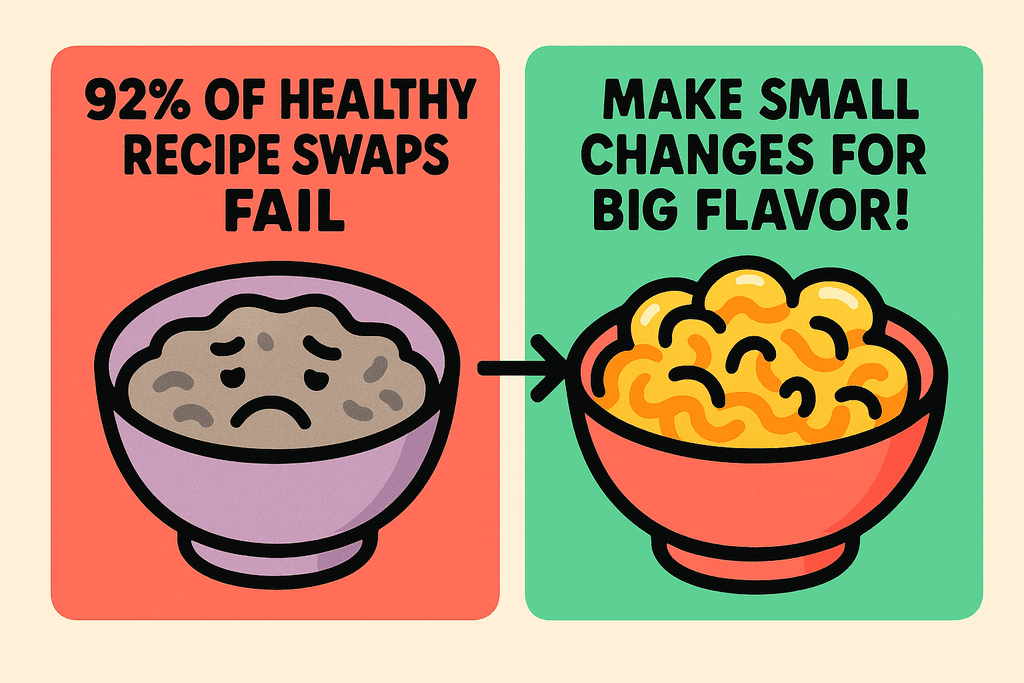
About 92% of people who try to make their favorite recipes healthier end up going back to the original version within a month. The problem isn't that people don't want to eat better. It's that most recipe makeovers fail because people try to change everything at once, and the food ends up tasting like cardboard. When your "healthy" mac and cheese tastes nothing like the creamy comfort food you love, you're not going to stick with it. The secret to making recipes healthier isn't about replacing every ingredient with a diet version.
The All or Nothing Trap
Most people make the same mistakes when trying to turn any recipe into health food. They swap out five ingredients at once, use weird substitutes they've never tried before, and wonder why dinner tastes terrible. Here's what usually goes wrong:
- Replacing butter with applesauce in cookies (they turn into hockey pucks)
- Using cauliflower rice in fried rice without adjusting cooking methods
- Swapping regular cheese for fat-free cheese that doesn't melt right
- Cutting all the sugar from baked goods and ending up with dry, flavorless results
The truth is that one or two smart swaps work better than a complete recipe overhaul. But here's the catch: if you're not tracking what you're actually changing, you have no idea if your "healthier" version is actually better for you.
The Tracking Problem
Even when people make good swaps, they rarely know the actual nutritional difference. You might think using Greek yogurt instead of sour cream saves you tons of calories, but without tracking it, you're just guessing. Apps like MyFitnessPal require you to manually enter every single ingredient change, which takes forever and kills your motivation to cook.
With MyFoodBuddy, you can just say what you're making and get instant nutritional info without the hassle. But before we get into solutions, you need to understand what's actually making your recipes unhealthy in the first place.
What Really Makes Recipes Unhealthy
Most recipes aren't unhealthy because of one bad ingredient. It's usually a combination of things that add up fast. Check out how common recipe problems stack up:
| Recipe Problem | Calories Added | Main Culprit |
|---|---|---|
| Too much cooking oil | 240 per 2 tbsp | Fat content |
| Heavy cream in sauces | 400 per cup | Saturated fat |
| Excess cheese | 110 per ounce | Fat and sodium |
| Added sugar | 200 per 1/4 cup | Empty calories |
| White flour base | 455 per cup | Refined carbs |
Understanding these problem areas helps you target your swaps strategically instead of changing random ingredients and hoping for the best. A single tablespoon of oil here, an extra handful of cheese there, and suddenly your "homemade healthy meal" has more calories than fast food.
The good news? You don't need to eliminate these ingredients completely. Small changes in the right places can cut 300-500 calories from a recipe without anyone noticing the difference. But you need to know which swaps actually work and which ones will ruin your food.
Step 1: Swap High-Calorie Ingredients for Better Ones
Most recipes weren't written with your health goals in mind. They were created to taste amazing, which usually means lots of butter, oil, cheese, and other calorie-dense ingredients. But here's something interesting: you can often cut hundreds of calories from a recipe without anyone noticing the difference. The trick is knowing which ingredients to swap first and which ones to leave alone.
Start with the biggest calorie contributors in your recipe. That creamy pasta sauce probably has more calories from heavy cream and cheese than from the actual pasta. Your favorite muffin recipe might pack in half a cup of oil. These are your targets.
Simple Swaps That Actually Work
Greek yogurt is probably the most versatile swap you can make. It works in place of sour cream on tacos, mayo in chicken salad, and even some of the oil in baked goods. The texture stays creamy and you get extra protein as a bonus.
Step 1: Swap High-Calorie Ingredients for Better Ones
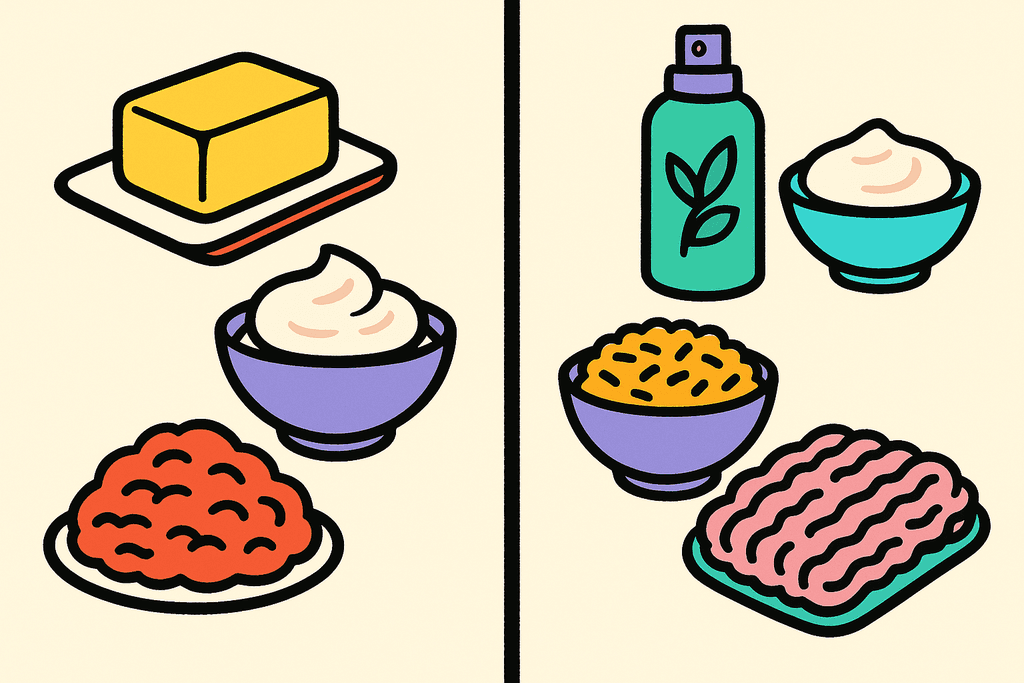
- Replace sour cream or mayo with Greek yogurt in dips, dressings, and toppings
- Use applesauce for half the oil or butter in muffins, cakes, and brownies
- Choose lean proteins and trim visible fat before cooking
- Swap white pasta and rice for whole grain versions to add fiber
- Use cooking spray instead of pouring oil when sautéing vegetables
Baking is where you can make the biggest changes without affecting taste. Most recipes have way more fat than they actually need. You can replace up to half the butter or oil with unsweetened applesauce in most baked goods and nobody will know.
| Original Ingredient | Healthier Swap | Calories Saved (per serving) |
|---|---|---|
| 1 cup sour cream | 1 cup Greek yogurt | 200 calories |
| 1/2 cup oil (baking) | 1/4 cup oil + 1/4 cup applesauce | 240 calories |
| Ground beef (80/20) | Ground turkey (93/7) | 70 calories |
| White rice (1 cup) | Cauliflower rice (1 cup) | 175 calories |
| 2 tbsp oil for cooking | Cooking spray | 240 calories |
The key is making swaps that don't change what you love about the recipe. If cheese is the star of your dish, keep it but measure it out. If the crispy texture comes from frying, try baking with a light spray of oil instead.
Step 2: Adjust Portions Without Feeling Deprived
Swapping ingredients only gets you halfway there. The other half is about portions, but not in the way you might think. This isn't about eating tiny amounts and feeling hungry an hour later. It's about making your portions look and feel satisfying while actually eating less of the calorie-dense stuff.
Vegetables are your secret weapon here. They add volume, fiber, and nutrients without packing in calories. A cup of broccoli has about 30 calories. A cup of pasta has around 200. You can see where this is going.
Making Portions Work for You
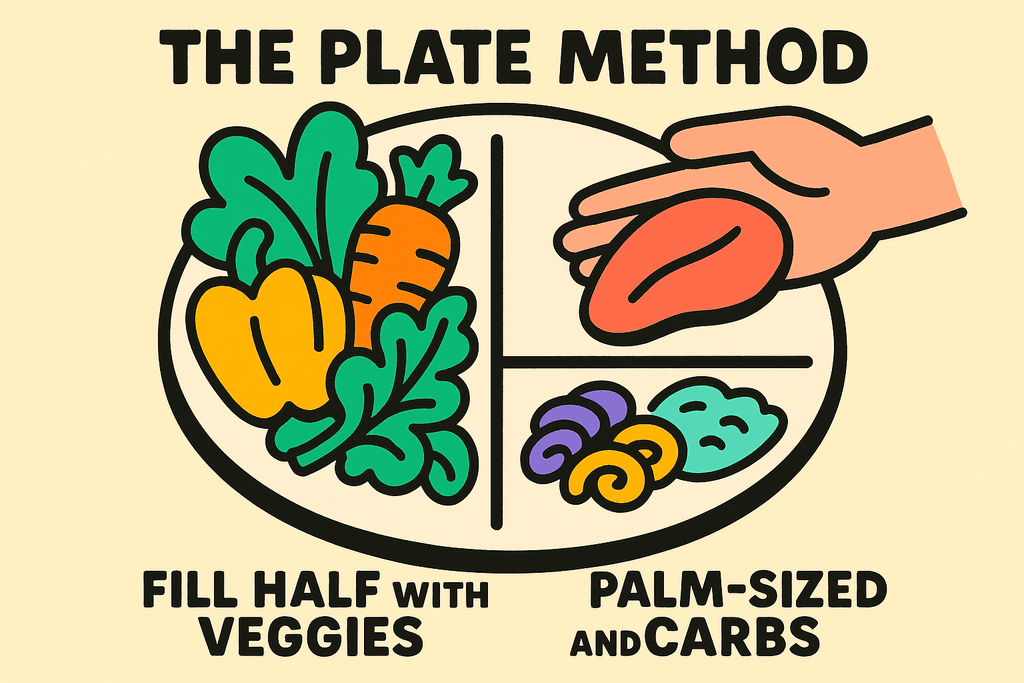
The plate method is simple but it works. Fill half your plate with vegetables first. Then add your protein (about the size of your palm). The rest can be your carbs or other sides. This naturally controls portions without you having to think too hard about it.
Step 2: Adjust Portions Without Feeling Deprived
- Add vegetables to bulk up meals like pasta, stir-fries, and casseroles
- Use smaller plates so normal portions look more filling
- Measure high-calorie ingredients like cheese, nuts, oils, and dressings
- Keep protein portions to palm-sized servings for most meals
- Fill half your plate with vegetables before adding anything else
- Add fiber-rich foods like beans and whole grains to stay full longer
Here's something most people don't realize: you can double the volume of many recipes by adding vegetables without changing the flavor much. Throw zucchini or mushrooms into your pasta sauce. Mix cauliflower rice with regular rice. Add spinach to smoothies.
Quick Portion Control Checklist
- ☐ Measure oils, butter, and dressings with spoons, not by pouring
- ☐ Use a food scale for cheese, nuts, and other calorie-dense toppings
- ☐ Prep vegetables first so you're more likely to eat them
- ☐ Drink water before meals to help with fullness
- ☐ Wait 20 minutes before getting seconds
The weird thing about portions is that our eyes matter more than our stomachs at first. A smaller plate with a full-looking portion feels more satisfying than a big plate with the same amount of food spread out. Your brain sees a full plate and feels good about it.
Step 3: Track Your New Recipe the Easy Way
You've made all these changes to your recipe, but now comes the part where most people give up. Traditional calorie tracking apps want you to enter every single ingredient separately, measure everything precisely, and do math to figure out your portion. It takes forever and honestly, who has time for that when you're just trying to make dinner?
The problem with most tracking apps is they were built for people eating packaged foods, not cooking real meals. They make you search through databases, create custom recipes, and update serving sizes every time you make a small change. If you modified your recipe, you have to create a whole new entry.
Why Tracking Your Changes Matters
But here's the thing: you need to track your modified recipes to know if your changes actually worked. Did swapping Greek yogurt for sour cream really save you 200 calories? Is your new portion size keeping you full until your next meal? Without tracking, you're just guessing.
This is where voice logging changes everything. Instead of typing out "1 cup whole wheat pasta, 4 oz grilled chicken breast, 1/2 cup marinara sauce, 1 tbsp parmesan cheese, 1 cup steamed broccoli," you just say it. MyFoodBuddy uses AI to understand what you ate and calculates all the nutrition automatically.
Time Comparison:
Traditional app with manual entry: 3-5 minutes per meal
Voice logging with MyFoodBuddy: 10-15 seconds per meal
That's up to 95% less time spent tracking
Once you've logged your healthier version of a recipe, you can save it as a favorite. The next time you make it, you don't have to say all the ingredients again. Just tap your saved meal and you're done. This makes it actually possible to stick with tracking long enough to see results.
The real benefit is seeing patterns over time. Maybe you notice that your modified pasta recipe keeps you full for four hours, but your regular version only lasted two. Or you see that swapping ingredients saved you 300 calories per serving, which adds up to real weight loss over a few weeks. You can learn more about achieving balanced meals without the hassle on our blog.
Some people worry about accuracy with voice logging, but the AI pulls from the same USDA database that other apps use. The difference is you don't have to do the work of finding each ingredient and entering amounts. You just talk like a normal person and the app figures it out.
If you're serious about making your recipes healthier, you need a way to track them that doesn't feel like a part-time job. Voice logging makes it quick enough that you'll actually do it every day. And when you track consistently, you can see what's working and what's not. Check out how others are using voice-powered calorie tracking for accurate meal tracking to reach their goals.
Start Making Your Recipes Healthier Today
The whole point of these three steps is that you don't need to throw out your favorite recipes or start eating food you hate. You just need to make a few smart swaps, watch your portions, and add some extra nutrients where you can. Most people think eating healthy means giving up everything they love, but that's not how it works.
Pick one recipe you make all the time and try these steps on it this week. Maybe it's your go-to pasta dish or that comfort food casserole you grew up with. Just one recipe is enough to start seeing how simple changes can add up.
The tricky part is actually tracking what you're eating to see if your changes are working. That's where something like MyFoodBuddy comes in handy since you can just say what you ate and it figures out the nutrition for you. No need to spend twenty minutes searching through databases or doing math.
Here's what matters most:
- Start with just one favorite recipe
- Make one or two swaps at a time, not everything at once
- Track your meals to see the actual difference
- Remember that small changes stick better than big overhauls
The recipes you already love can become healthier versions of themselves without losing what makes them good in the first place. You might find that achieving balanced meals is easier than you thought once you start paying attention to these three simple steps. And if you're looking for more ways to make healthy eating easier, check out our guide on healthy snacks your kids will actually want to eat for more practical ideas.
Common Questions About Making Recipes Healthier
Making your favorite recipes healthier sounds great in theory, but most people have real concerns about how it actually works. You might wonder if the changes are worth it, or if your family will stage a dinner revolt. These questions come up every time someone tries to turn any recipe into health food, and they're all totally valid.
How much healthier will my recipe actually be?
It depends on what you swap, but even small changes add up fast. Replacing sour cream with Greek yogurt in a casserole can cut hundreds of calories and add protein. Swapping white rice for cauliflower rice in a stir-fry can reduce carbs by 80% while keeping you just as full.
Will my family notice the changes?
Some swaps are invisible, others are obvious. Using applesauce instead of oil in brownies? Nobody will know. Switching regular pasta to zucchini noodles? Yeah, they'll notice that one. The trick is starting with the sneaky swaps first, then gradually introducing the bigger changes once everyone trusts that dinner won't taste like cardboard.
Do I need to swap everything at once?
Absolutely not, and you probably shouldn't. Change one or two ingredients per recipe and see how it goes. If you swap everything at once and it tastes weird, you won't know which change caused the problem. Plus, gradual changes are way easier to stick with long-term.
How do I track a recipe with multiple ingredients?
This is where most people give up on traditional calorie trackers because entering twelve ingredients one by one is painful. MyFoodBuddy lets you just say or type your entire recipe in one go, and the AI figures out the nutrition for everything. Instead of spending ten minutes searching databases, you're done in seconds.
What if I don't like the healthier version?
Then don't eat it. Seriously, if a swap makes your food taste bad, try a different one or just eat the original in smaller portions. The goal isn't to suffer through meals you hate. It's to find versions of your favorite foods that taste good and happen to be better for you.
Can I still eat my favorite comfort foods?
Yes, and anyone who tells you otherwise is lying. You can make healthier versions of almost anything, from mac and cheese to chocolate cake. Some will taste exactly like the original, some will taste different but still good, and some might need a few tries to get right. The point is that nothing is off-limits when you know how to adjust recipes to fit your goals.
Ready to start tracking smarter?
Download MyFoodBuddy and start tracking your calories by just saying what you ate. No more searching databases or guessing portions.
Get started