Three Protein Easy Wins With a 30g Protein Breakfast
Start your day with 30g protein breakfast ideas that boost energy, curb cravings, and support your goals. Simple, delicious wins anyone can make.
Most people start their day with barely 10 grams of protein, then wonder why they're raiding the snack drawer by 10 AM. Research shows that hitting 30g protein at breakfast can slash your daily cravings by more than half, but getting there doesn't mean choking down six egg whites or spending an hour in the kitchen. In this guide, you'll discover three dead-simple strategies to hit that 30g target every morning, even if you're tracking your meals with tools like MyFoodBuddy to stay on top of your nutrition goals.
Table of Contents
The Science Behind 30g Protein Breakfasts
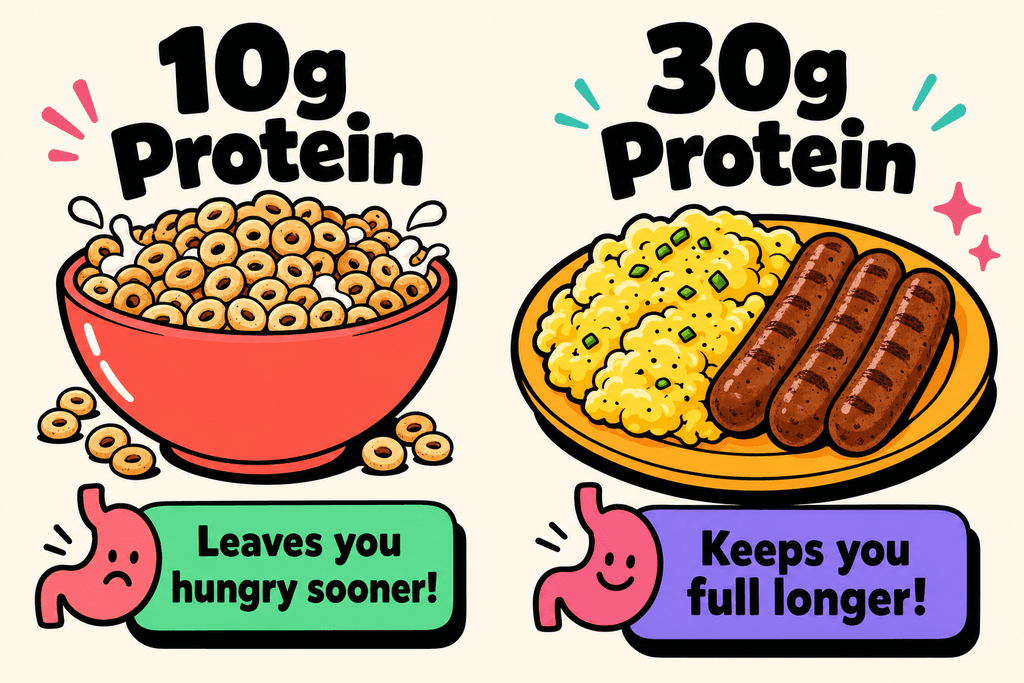
Your body treats a 10g protein breakfast completely differently than a 30g protein breakfast. When you eat protein, your gut releases hormones like GLP-1 and PYY that tell your brain you're full. The more protein you eat, the stronger these signals get, which is why a bowl of cereal leaves you hungry an hour later while eggs and turkey sausage keep you satisfied until lunch. Protein also slows down how fast sugar enters your bloodstream, preventing the energy crash that comes after eating toast or pancakes alone. Most people who track their food in apps like MyFitnessPal or Cronometer discover they're barely hitting 10-15g at breakfast, which explains the mid-morning snack attacks.
What Happens at Different Protein Levels
Research shows clear differences in how your body responds to varying amounts of breakfast protein. Here's what actually happens inside you at each level.
- 10g protein breakfast: Hunger returns within 2-3 hours, blood sugar spikes and crashes, minimal muscle protein synthesis
- 20g protein breakfast: Moderate fullness for 3-4 hours, better blood sugar control, some muscle building triggered
- 30g protein breakfast: Strong satiety lasting 4-6 hours, stable energy levels, maximum muscle protein synthesis activated
The jump from 20g to 30g matters more than most people think. That extra 10g is often the difference between making it to lunch comfortably or raiding the office snack drawer.
Why Normal Breakfast Foods Miss the Mark
Traditional American breakfast foods were designed for taste and convenience, not protein content. A typical breakfast of cereal, toast, or a muffin barely scratches the surface of what your body needs to stay full and energized.
| Breakfast Food | Serving Size | Protein Content |
|---|---|---|
| Bowl of cereal with milk | 1 cup cereal, 1 cup milk | 12g |
| Bagel with cream cheese | 1 bagel, 2 tbsp cream cheese | 11g |
| Two slices of toast with butter | 2 slices, 1 tbsp butter | 6g |
| Pancakes with syrup | 3 medium pancakes | 9g |
| Oatmeal with banana | 1 cup oats, 1 banana | 8g |
| Muffin and orange juice | 1 large muffin, 8oz juice | 5g |
The gap between what people eat and what actually works is huge. When you log your breakfast in MyFoodBuddy using voice or text, you can instantly see if you're hitting that 30g target or falling short. Most users are shocked to discover their "healthy" breakfast has less protein than a single chicken breast.
Easy Win #1: The Power Combo Method
Most people think hitting 30g of protein at breakfast means eating six eggs or downing a chalky protein shake. But here's what actually works better: combining two protein sources that you already like eating. When you pair foods strategically, you can hit that 30g target without feeling like you're forcing down food or spending an hour in the kitchen. The math is simple, and once you know a few winning combinations, you'll never struggle with breakfast protein again.
Easy Win #1: The Power Combo Method
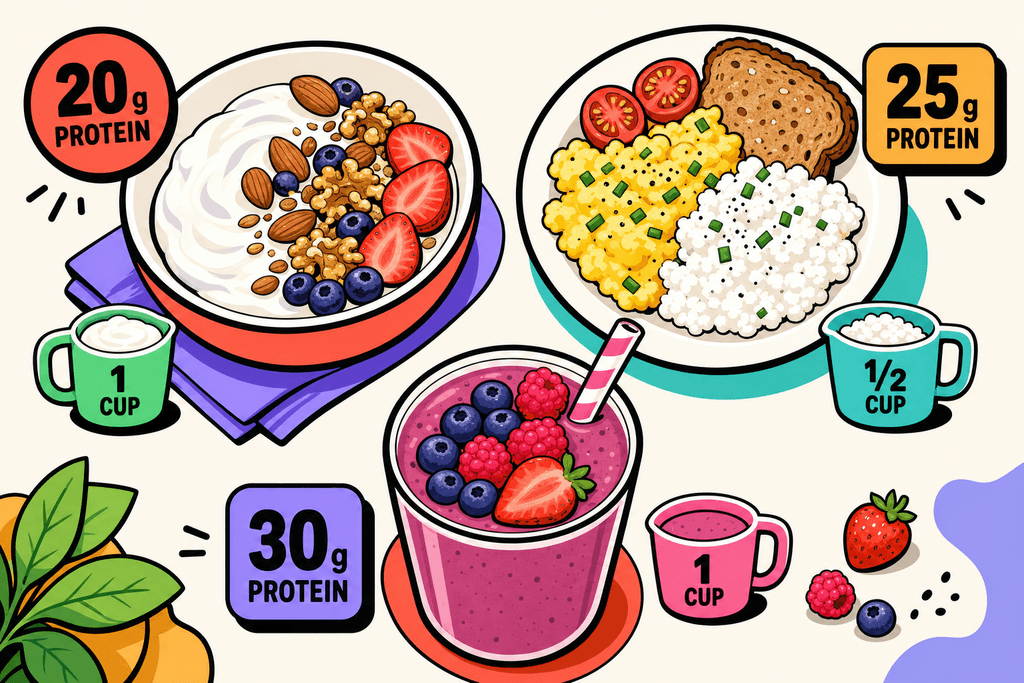
Greek yogurt is your secret weapon here. A single cup of plain Greek yogurt gives you about 15-20g of protein right off the bat. Add a scoop of protein powder or a half cup of cottage cheese, and you're already at 30g before you even think about toppings.
Quick combos that hit exactly 30g:- 1 cup Greek yogurt (17g) + 2 tablespoons peanut butter (8g) + 1/4 cup granola with nuts (5g) = 30g
- 3 scrambled eggs (18g) + 1/2 cup cottage cheese (12g) = 30g
- 1 scoop protein powder (25g) + 1 cup milk (8g) + 1 tablespoon almond butter (3g) = 36g
- 2 eggs (12g) + 1/2 cup Greek yogurt (10g) + 1 ounce cheese (7g) = 29g
The beauty of this approach is that you're eating real food that actually tastes good. No one wants to choke down plain chicken breast at 7am. These combinations work because they give you different textures and flavors while the protein adds up in the background.
| Base Protein | Protein Amount | Add This | Additional Protein | Total |
|---|---|---|---|---|
| Greek yogurt (1 cup) | 17g | Protein powder (1/2 scoop) | 12g | 29g |
| Eggs (3 large) | 18g | Cottage cheese (1/2 cup) | 12g | 30g |
| Protein shake (1 scoop) | 25g | Almond butter (1 tbsp) | 3g | 28g |
| Cottage cheese (1 cup) | 24g | Nuts (1/4 cup) | 7g | 31g |
The time-saving part comes from keeping these staples stocked. When your fridge always has eggs, Greek yogurt, and cottage cheese, you're never more than five minutes away from a 30g protein breakfast. Mix and match based on what sounds good that morning.
Easy Win #2: The Make-Ahead Strategy
Sunday afternoon is when the magic happens for people who actually stick to their protein goals. Spending just one hour prepping breakfast for the week means you'll never have an excuse to skip it. The trick is making things that taste just as good on Thursday as they did on Sunday, and that you can grab straight from the fridge or freezer without thinking. When breakfast is already done, you're way more likely to actually eat it.
Egg muffin cups are probably the easiest win here. Whisk together 12 eggs with some cheese, cooked sausage or turkey, and vegetables. Pour into a muffin tin and bake for 20 minutes. Each muffin has about 7-8g of protein, so eating four of them gets you to 30g. They keep in the fridge for five days or the freezer for a month.
Make-ahead formulas that hit 30g protein:- Overnight oats: 1 cup oats + 1 cup Greek yogurt + 1 scoop protein powder + milk = 35g protein
- Breakfast burritos: 3 eggs + 1/4 cup cheese + 2 oz turkey sausage in a tortilla = 32g protein
- Protein pancakes: Mix with cottage cheese, freeze individually, reheat in toaster = 28g per serving
- Egg muffins: 2 eggs + cheese + meat per muffin, eat 4 = 30g protein
For overnight oats that actually hit the protein target, you need to go beyond just oats and milk. The winning formula uses Greek yogurt as the base instead of regular yogurt, adds a half scoop of protein powder, and includes some nut butter. This gets you to 30g while still tasting like dessert for breakfast.
Sunday prep checklist for the week:- Make 12 egg muffin cups (stores 5 days in fridge)
- Prep 5 overnight oats jars with protein powder
- Assemble and wrap 5 breakfast burritos for freezer
- Portion out Greek yogurt into containers with toppings separate
- Hard boil a dozen eggs for quick protein additions
The best part about having these ready to go is that tracking them becomes effortless. With MyFoodBuddy, you can save each recipe as a favorite meal and just tap to log it each morning. No need to remember every ingredient or do math before your coffee kicks in. You prep once, save the meal once, and then logging takes literally two seconds for the rest of the week.
Storage matters more than people think. Breakfast burritos wrapped individually in foil and then placed in a freezer bag will last three months. Overnight oats stay fresh for five days if you keep the wet and dry ingredients separate until the night before. Egg muffins should go in an airtight container with paper towels between layers to absorb moisture.
Easy Win #3: The Restaurant and On-the-Go Hack
Travel days and busy mornings happen to everyone. The difference between people who hit their protein goals and those who don't often comes down to knowing what to order when you're not cooking at home. Most restaurant breakfasts are carb-heavy and protein-light, but a few simple modifications can flip that ratio. You don't need to be difficult or high-maintenance about it either. Just knowing which menu items to combine or what to add makes all the difference.
Easy Win #3: The Restaurant and On-the-Go Hack
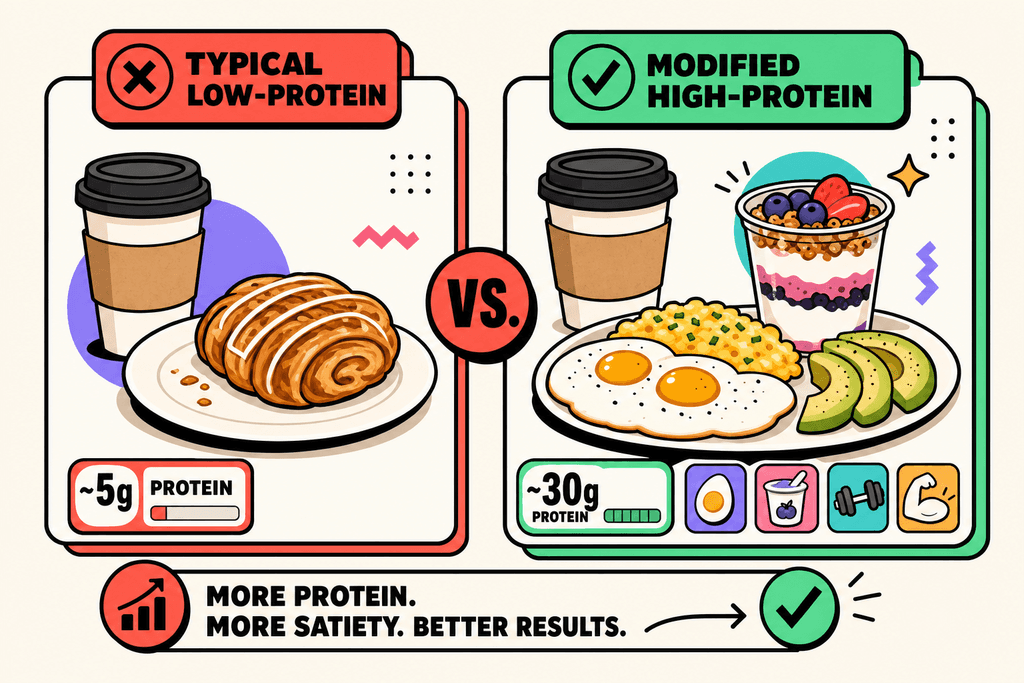
Coffee shops are actually easier than you'd think. Most places now offer protein boxes or egg bites that pack a decent protein punch. The key is stacking items instead of ordering just one thing. An egg sandwich plus a Greek yogurt parfait gets you there. Two orders of egg bites plus a protein shake hits the target perfectly.
| Location | Order This | Protein Count | Simple Modification |
|---|---|---|---|
| Starbucks | 2 egg bite packs | 24g | Add Greek yogurt parfait (+10g) |
| McDonald's | 2 Egg McMuffins | 30g | No modification needed |
| Dunkin' | Wake-Up Wrap + hash browns | 14g | Add 2 more wraps (total 32g) |
| Convenience store | 2 hard-boiled eggs + Greek yogurt | 27g | Add string cheese (+7g) |
Fast food breakfast gets a bad reputation, but the protein is usually there if you know where to look. Two Egg McMuffins give you exactly 30g of protein. A Chick-fil-A chicken biscuit plus their Greek yogurt parfait gets you to 29g. The importance of protein in your daily diet doesn't change just because you're eating on the road.
Quick estimation tricks when eating out:- Each egg = 6g protein (round up to make math easier)
- Meat portions the size of your palm = about 20-25g
- Cheese slices = roughly 5-7g each
- Greek yogurt cups = usually 10-17g (check the label)
Convenience stores are underrated for high-protein breakfasts. Most now stock hard-boiled eggs, Greek yogurt, string cheese, and protein shakes. Grab two hard-boiled eggs (12g), a large Greek yogurt (17g), and you're at 29g. Add a string cheese and you're over the target. It takes two minutes and costs less than a coffee shop breakfast.
The real game-changer for restaurant meals is being able to log them quickly without pulling out a calculator. MyFoodBuddy's voice logging means you can just say what you ordered while you're walking to your car. "Two Egg McMuffins and a coffee" and it calculates everything for you. No searching through databases or trying to remember if you added cheese. For anyone interested in voice-powered calorie counting for breakfast, this approach removes the friction that usually makes people give up on tracking.
The pattern you'll notice across all three of these strategies is that hitting 30g of protein isn't about perfection or complicated recipes. It's about knowing a few reliable combinations, doing a bit of prep when you have time, and understanding your options when you don't. Whether you're blending two protein sources at home, grabbing something you prepped on Sunday, or ordering smart at a drive-through, the goal stays achievable. And when tracking becomes as simple as speaking what you ate, there's no reason not to stay consistent. If you want to dive deeper into tracking your caloric and protein intake efficiently, the tools exist to make it actually stick this time.
Making 30g Protein Breakfasts Your New Normal
Getting to a 30g protein breakfast doesn't have to be complicated. The Greek yogurt bowl gives you a quick grab-and-go option that takes less than two minutes to throw together. The egg and cottage cheese combo works when you have a bit more time and want something warm and filling. And the protein smoothie is perfect for those mornings when you're running late but still want to hit your goals.
The truth is, you don't need to nail all three methods or be perfect every single day. Pick whichever one feels easiest for your schedule and start there. Most people find that once they get used to one high-protein breakfast, the others become easier to add into rotation.
The hardest part is usually just remembering what actually gets you to 30 grams. That's where tracking your protein intake makes a real difference. With MyFoodBuddy, you can just say what you ate and see if you hit your target without doing any math. Once you log a few of these breakfasts, you can save them as favorites and re-log them in seconds.
Building this habit gets easier when you can see your progress. The app shows you patterns over time, which helps you figure out which breakfasts actually work for your routine. If you want to learn more about how protein tracking fits into your overall diet, there's a lot more to explore about making these changes stick long-term.
Start with one easy win this week and see how it goes.
Common Questions About 30g Protein Breakfasts
Getting 30 grams of protein at breakfast sounds simple until you actually try to do it. Then the questions start piling up. Most people wonder if they really need that much, or if they can get away with less and still see results. Others worry about whether eating this much protein every day is actually safe for their kidneys or digestive system. The good news is that high-protein breakfasts are backed by solid research, and most concerns people have are based on outdated information or myths that have been floating around for years.
Do I really need 30g or will 20g work?
Research shows that 30 grams is the sweet spot for maximizing muscle protein synthesis, which is the process your body uses to build and repair muscle tissue. While 20 grams will give you some benefits, you're leaving gains on the table. The difference between 20g and 30g might seem small, but over weeks and months, it adds up to better muscle retention, improved satiety, and more stable energy levels throughout your day.
What if I'm not hungry in the morning?
Start small and work your way up. Your body adapts to eating patterns, so if you've been skipping breakfast for years, jumping straight to a 30g protein breakfast might feel uncomfortable at first. Try beginning with 15 grams and gradually increasing over a week or two. You can also try liquid options like protein smoothies, which tend to be easier to consume when you're not feeling particularly hungry.
Is it safe to eat this much protein every day?
Yes, for most healthy adults, eating 30 grams of protein at breakfast is completely safe. The myth that high protein intake damages your kidneys has been debunked by numerous studies. Unless you have pre-existing kidney disease, your body handles dietary protein just fine. In fact, most people don't eat enough protein, not too much.
How do I track protein without spending forever on it?
This is where most people get stuck with traditional tracking apps that require endless searching and manual entry. MyFoodBuddy lets you simply say what you ate, like "three eggs and two sausage links," and the app calculates your protein and other nutrients automatically. Instead of spending five minutes logging each meal like you might with other calorie trackers, you're done in seconds. The voice logging feature means you can track your 30g protein breakfast while you're still eating it.
Can I do this on a vegetarian or vegan diet?
Absolutely, though it requires a bit more planning. Greek yogurt, cottage cheese, and eggs work great for vegetarians. Vegans can hit 30 grams by combining sources like tofu scramble, protein powder, hemp seeds, and high-protein plant milks. You might need to eat a larger volume of food compared to animal protein sources, but it's definitely doable with the right combinations.
What if I don't like traditional breakfast foods?
Who says breakfast has to be eggs and bacon? Leftover chicken, turkey burgers, protein pasta, or even a steak from last night's dinner all count toward your morning protein goal. The "breakfast food" concept is just a social construct. Eat whatever protein sources you enjoy, regardless of whether they're traditionally considered breakfast items. Your muscles don't care if you're eating scrambled eggs or grilled salmon at 7 AM.
Ready to start tracking smarter?
Download MyFoodBuddy and start tracking your calories by just saying what you ate. No more searching databases or guessing portions.
Get started