
Stop Stress Eating in One Week with Tracking Tools
Learn how tracking tools help you stop stress eating in just one week. Discover simple strategies to break emotional eating patterns fast.
You reach for the chips during a work deadline, finish a pint of ice cream after an argument, or grab fast food when you're overwhelmed. Most people don't realize they're stress eating until the wrapper is already in the trash, making it nearly impossible to stop the cycle. The good news is that tracking what you eat creates instant awareness that interrupts this automatic response, and tools like MyFoodBuddy make it simple enough to actually stick with for the one week it takes to break the pattern.
Table of Contents
The Science Behind Stress Eating
Your brain doesn't care about your diet goals when stress hits. When you're overwhelmed at work or dealing with personal problems, your body releases a hormone called cortisol that literally changes how you think about food. This hormone makes you crave cookies, chips, and ice cream instead of salads and grilled chicken. It's not because you're weak or lack discipline. Your body is running an ancient survival program that thinks stress means danger, and danger means you need quick energy from high-calorie foods.
What Happens in Your Brain
The moment stress kicks in, your brain starts looking for fast relief. Think of it like your phone battery dying and desperately searching for a charger. Your brain wants dopamine, the feel-good chemical, and it wants it now.
Here's what's actually going on inside your head:
- Cortisol levels spike and stay high during prolonged stress
- Your prefrontal cortex (the part that makes smart decisions) basically goes offline
- The reward center of your brain lights up at the thought of comfort foods
- Your body craves quick energy sources like sugar and fat
| Stress Eating Statistic | Percentage |
|---|---|
| Adults who eat more when stressed | 38% |
| People who choose unhealthy foods during stress | 79% |
| Individuals who stress eat weekly | 27% |
Why Willpower Fails
You've probably tried to "just stop" stress eating before. Maybe you told yourself you'd have more self-control or made promises to stick to your diet no matter what. But willpower is like a battery that drains throughout the day, and stress drains it even faster.
Traditional calorie tracking apps like MyFitnessPal or Cronometer require you to manually search, measure, and log every single thing you eat. When you're already stressed and your willpower is gone, spending five minutes logging a snack feels impossible. That's why most people give up on tracking exactly when they need it most.
The Automatic Response Problem
Stress eating happens on autopilot. One minute you're working on a difficult project, and the next minute you're halfway through a bag of chips without even remembering opening it. This automatic behavior is your brain's way of self-medicating with food.
The cycle looks like this:
- Stressful situation triggers cortisol release
- Brain craves immediate comfort and dopamine
- You eat high-calorie foods without thinking
- Brief relief followed by guilt and more stress
- The cycle repeats, often multiple times per day
Breaking this cycle requires awareness, not willpower. You need to see the pattern before you can change it. Tools like MyFoodBuddy make tracking so easy (just speak what you ate) that you can actually maintain awareness even during stressful weeks. When logging takes seconds instead of minutes, you're more likely to do it consistently, which is the first step to stopping stress eating for good.
Day 1-2: Making Your Eating Visible
Most people who stress eat don't actually realize how often they're doing it. You might grab a handful of chips while working on a deadline, or finish off the ice cream after a tough conversation, and by the next day it's like it never happened. Your brain conveniently forgets these moments because they happen when you're distracted or upset. The first two days of stopping stress eating aren't about changing anything at all. They're just about seeing what's really going on.
Your only job during days 1-2 is to log everything you eat, no matter what. This includes the three cookies you ate standing at the counter, the handful of crackers while making dinner, and yes, even that late-night snack you had after a stressful day. The goal isn't to judge yourself or feel bad about your choices.
- Log every meal, snack, and stress eating episode
- Use voice logging when you're too stressed to type
- Don't try to change your behavior yet
- Just observe what you're eating and when
Here's where most tracking apps fail people who stress eat. When you're already feeling overwhelmed, the last thing you want to do is spend five minutes searching through a database, weighing your food, and manually entering everything. MyFoodBuddy lets you just say what you ate, like "two handfuls of pretzels and a soda," and the app figures out the rest using AI and USDA data.
The power of this approach is that you start seeing patterns in black and white. Maybe you always reach for something sweet around 3pm when work gets intense. Or perhaps you notice that Sunday evenings trigger mindless snacking. You can't fix what you can't see, and these first two days are all about making the invisible visible.
Simple Action Steps for Days 1-2
- Download the app and set up your profile
- Log your first meal using voice or text
- Set a reminder to log after each eating occasion
- Review your logs before bed each night
- Notice patterns without judgment
Day 3-5: Spotting Your Stress Triggers
By day three, you've got enough data to start seeing the real story behind your eating habits. This is where things get interesting because stress eating follows patterns that regular hunger doesn't. When you're actually hungry, you'll eat a variety of foods at relatively predictable times. When you're stress eating, you'll notice something different entirely. The same types of foods show up again and again, often at the same times or in response to similar situations.
Pull up your food logs from the past few days and look for these telltale signs. Do you always grab something crunchy when you're frustrated? Does chocolate appear every time you have a difficult phone call? The calendar view in tracking apps can show you patterns you'd never notice otherwise.
| Stress Eating | Hunger Eating |
|---|---|
| Sudden, urgent cravings | Gradual hunger build-up |
| Specific food cravings | Open to various foods |
| Eating past fullness | Stops when satisfied |
| Guilt after eating | No negative feelings |
Common stress triggers include work deadlines, family conflicts, boredom, loneliness, and even good stress like planning a big event. Write down what was happening right before you ate when you log your food. This simple habit turns your food log into a stress diary.
- Review logs at the same time each day
- Look for timing patterns (always at 10pm, always after meetings)
- Notice which foods appear during stress vs. regular meals
- Identify emotional states that trigger eating
- Use the color-coded calendar to spot weekly patterns
The AI coach Fiona can help spot patterns you might miss on your own. She analyzes your eating data and can point out things like "You tend to eat more carbs on Mondays" or "Your snacking increases after 8pm." Sometimes an outside perspective, even from an AI, helps you see what's been hiding in plain sight. If you're interested in understanding other eating patterns, check out our guide on beating sugar cravings which uses similar tracking techniques.
Day 6-7: Building Your Response Plan
Now that you know your triggers, you need something else to do when they show up. This is the part where most people fail because they try to just "not eat" without replacing the behavior with anything else. Your brain needs an alternative action, not just a prohibition. Stress eating serves a purpose, even if it's not a healthy one. It distracts you, soothes you, or gives you something to control when everything else feels chaotic. You need to find other ways to meet those needs.
Start by making a list of activities that take about the same amount of time as your typical stress eating episode. If you usually spend ten minutes eating chips while scrolling your phone, you need ten-minute alternatives. The key is having these options ready before the stress hits, not trying to think of them in the moment when your willpower is already low.
Alternative Stress Responses to Try
- Take a five-minute walk outside
- Do ten pushups or jumping jacks
- Call a friend for a quick chat
- Write three sentences in a journal
- Listen to one favorite song
- Do a two-minute breathing exercise
- Organize one small area of your space
Set up reminders in your tracking app to check in with yourself at the times you identified as high-risk for stress eating. MyFoodBuddy includes streak tracking and achievements that can help reinforce your new habits. When you successfully choose a different response instead of stress eating, log it in your notes. Seeing those wins add up matters more than you'd think.
The gamification features like streaks aren't just gimmicks. They work because your brain responds to visible progress. Each day you log your food and each time you choose a different response to stress, you're building a streak. Breaking that streak starts to feel worse than dealing with the stress in a healthier way. For more strategies on building consistent habits, our article on starting fresh without guilt offers helpful insights.
- Create your alternative activities list today
- Set up app reminders for your high-risk times
- Track your streak of logging meals daily
- Ask Fiona for personalized suggestions based on your patterns
- Celebrate each time you choose differently
By the end of week one, you won't have completely stopped stress eating. That's not realistic and it's not the goal. What you will have is awareness of your patterns, knowledge of your triggers, and a plan for responding differently. You'll also have seven days of data showing you exactly what's been happening, which is more insight than most people ever get into their eating habits. The tracking tools at MyFoodBuddy make this whole process faster and easier than traditional methods, turning what used to take minutes into seconds with simple voice commands.
Why Tracking Works When Willpower Fails
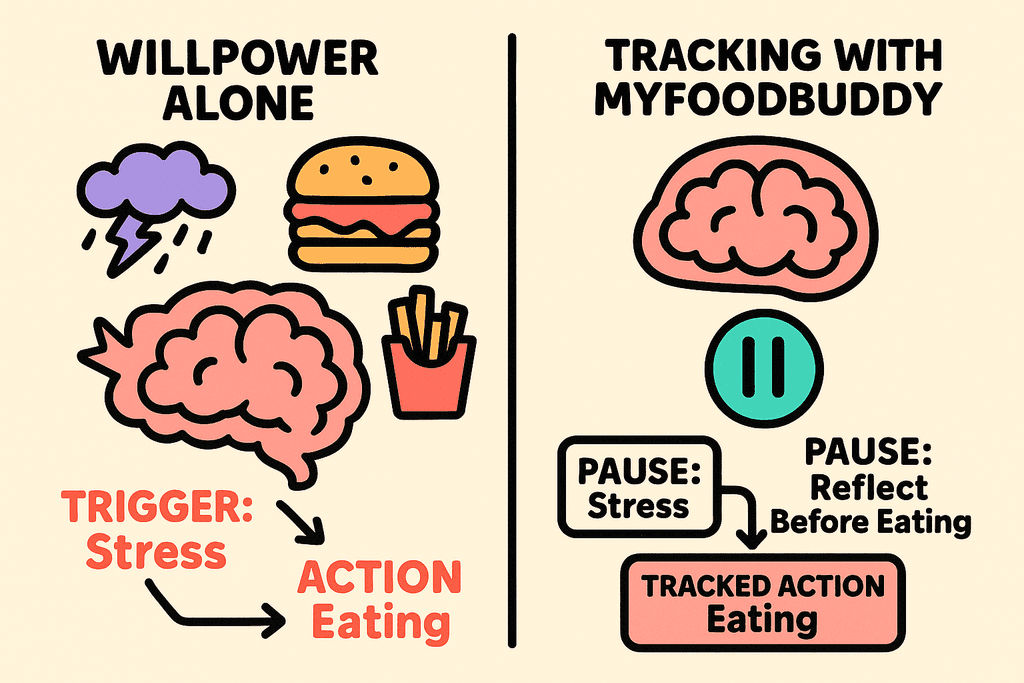
Your brain treats stress eating the same way it treats any other habit loop: trigger, action, reward. When you rely on willpower alone, you're essentially trying to fight your brain's autopilot mode with conscious effort. That's exhausting and it rarely works for more than a few days. Tracking tools work differently because they interrupt the automatic pattern by creating a small pause between the trigger (stress) and the action (eating). This pause is where change actually happens, and it's why people who track their food consistently see better results than those who just try to "be good."
The Pause That Changes Everything
When you know you'll need to log what you eat, something shifts in your brain. You start asking yourself questions before you eat, not after. That's the difference between reactive eating and conscious choice.
- Logging creates a mental speed bump that slows down automatic behavior
- The act of recording forces you to acknowledge what you're doing
- You become an observer of your patterns instead of being controlled by them
- Data shows you the truth without judgment or emotion
Data Removes Shame, Adds Clarity
Traditional dieting makes you feel bad about yourself when you mess up. Tracking just shows you information. When you see that you ate 2,400 calories on a stressful Tuesday, that's not a moral failure. It's just data that helps you understand your patterns better.
| Willpower-Only Approach | Tracking-Based Approach |
|---|---|
| Relies on constant self-control | Creates automatic awareness |
| Feels restrictive and punishing | Feels informative and neutral |
| No feedback until weight changes | Immediate daily insights |
| Easy to lie to yourself | Hard to ignore the numbers |
How Gamification Rewires Your Motivation
Your brain loves winning small games. Apps like MyFoodBuddy use streaks and achievements because they tap into the same reward pathways that make stress eating feel good. Instead of getting dopamine from food, you start getting it from maintaining your tracking streak. This isn't manipulation, it's just redirecting an existing system in your brain toward something that actually helps you.
- Streaks create momentum that makes skipping a day feel like a loss
- Achievements give you wins even when the scale isn't moving yet
- Visual progress (like color-coded calendars) satisfies your need for immediate feedback
The real magic happens when tracking becomes easier than not tracking. With voice logging, you can say "two cookies and a coffee" in five seconds instead of spending mental energy trying to forget you ate them. That's when awareness-based change beats restriction every single time.
Your Week One Success Plan
So here's what you've learned about how to stop stress eating in one week. First, you need visibility into what you're actually eating and when those stress moments hit. Then comes the detective work of identifying your triggers, whether that's a tough work call or just being bored at home. Finally, you build better responses that don't involve raiding the pantry. These three phases work together, but they only work if you actually track what's happening.
The thing is, one week gives you the foundation, but it's really just the start. Most people who stick with tracking for that first week notice patterns they never saw before. They realize they're not actually hungry at 3pm, they're just stressed about an upcoming meeting.
Building on week one means keeping that tracking habit going without it feeling like a chore. The people who succeed long-term are the ones who find a way to log their food that doesn't take forever. MyFoodBuddy lets you just say what you ate instead of typing everything out or searching through databases, which is why it works when you're already stressed and don't want another task on your plate.
If you're ready to actually see where your stress eating happens, the 7-day free trial lines up perfectly with this one-week challenge. You might also want to check out our guide on beating sugar cravings if that's part of your stress eating pattern, or learn about achieving balanced meals without the hassle once you've got the stress eating under control.
The real question is whether you'll actually start tracking today or keep telling yourself you'll do it later.
Common Questions About Stopping Stress Eating
When you're trying to stop stress eating in one week, you probably have questions about how tracking actually works in real life. Most people worry about the same things when they start using food tracking tools to manage emotional eating. Here are the answers to the most common concerns that come up when you're getting started with this approach.
What if I forget to track during stressful moments?
Missing a log here and there won't ruin your progress. The goal is to build awareness over time, not to be perfect from day one. If you forget to track during a stressful moment, just log it when you remember, even if it's hours later. MyFoodBuddy makes this easy with voice logging, so you can quickly say what you ate without pulling out your phone and typing everything manually.
Can tracking make me more obsessed with food?
Tracking actually does the opposite for most people because it removes the mystery around eating. When you can see patterns in your stress eating, food becomes less of an emotional issue and more of a data point. The key is using tracking as an awareness tool, not a punishment system. Apps like MyFoodBuddy are designed to make logging quick and simple, taking just seconds instead of the minutes required by traditional apps like MyFitnessPal.
How long until I see real changes in my stress eating?
Most people notice shifts in their awareness within the first three to four days of consistent tracking. Real behavior changes usually start showing up around day five or six. One week gives you enough data to spot your patterns and start making different choices when stress hits.
What if I don't have time to track everything?
You don't need to spend ten minutes logging every meal. Modern tracking tools let you log meals in seconds using voice or text input. MyFoodBuddy uses AI to calculate all the nutritional information automatically, so you just say what you ate and move on with your day. You can also save frequent meals as favorites to make re-logging even faster.
Is it normal to still stress eat sometimes after one week?
Yes, completely normal. One week of tracking helps you understand your patterns and start making changes, but it doesn't erase years of habits overnight. The difference is that after a week, you'll stress eat with awareness instead of on autopilot. That awareness is what eventually leads to choosing different coping strategies when you're stressed.
Do I need to count calories to stop stress eating?
Not necessarily. While tracking calories can be helpful, the main benefit comes from logging what you eat and when you eat it. This helps you see the connection between your emotions and your eating habits. The act of pausing to log your food creates a moment of awareness that can interrupt the stress-eating cycle before it starts.
Ready to start tracking smarter?
Download MyFoodBuddy and start tracking your calories by just saying what you ate. No more searching databases or guessing portions.
Get started