Save Money While Eating Clean With These Tips
Learn how to eat clean on a budget with smart shopping, meal prep, and tracking tips. Save money without sacrificing nutrition goals.
Most people spend about 30% more on groceries when they try to eat healthy, which is why so many give up after just a few weeks. The truth is that clean eating doesn't have to drain your wallet if you know the right strategies. With some smart planning and simple tracking habits, you can actually save money while eating clean and still hit your nutrition goals.
Table of Contents
Why Clean Eating Feels Expensive
Most people think eating clean means spending twice as much at the grocery store, but that's not actually true. The real problem is that we've been taught to shop for healthy food in all the wrong ways. When you walk into a health food store and see $8 almond butter or $12 organic chicken breasts, it's easy to think clean eating is only for rich people. But here's what nobody tells you: the most expensive way to eat clean is to do it without a plan.
The Pricing Myths Everyone Believes
Walk down any grocery aisle and you'll see why people get confused about food costs. A bag of chips costs $3.99 while a pound of apples costs $2.99, but somehow we still think junk food is cheaper. The truth is more complicated than that.
Here are the biggest myths that make people overspend:
- Thinking everything needs to be organic to be healthy
- Buying pre-cut vegetables and fruits that cost three times more
- Shopping at specialty stores when regular grocery stores have the same stuff
- Believing that healthy food has to come in fancy packaging with health claims
Where Your Money Actually Goes
The biggest money drain isn't the food itself. It's buying ingredients without knowing what you'll make, letting produce rot in your fridge, and grabbing takeout when you don't have a meal ready. Poor planning costs the average person about $1,500 per year in wasted food, according to the USDA.
Most calorie tracking apps like MyFitnessPal or Cronometer help you log what you eat, but they don't help you plan ahead or save money. That's where tools like MyFoodBuddy come in handy since you can quickly log meals and see patterns in what you're actually eating versus what's going to waste.
Processed Versus Whole Foods The Real Costs
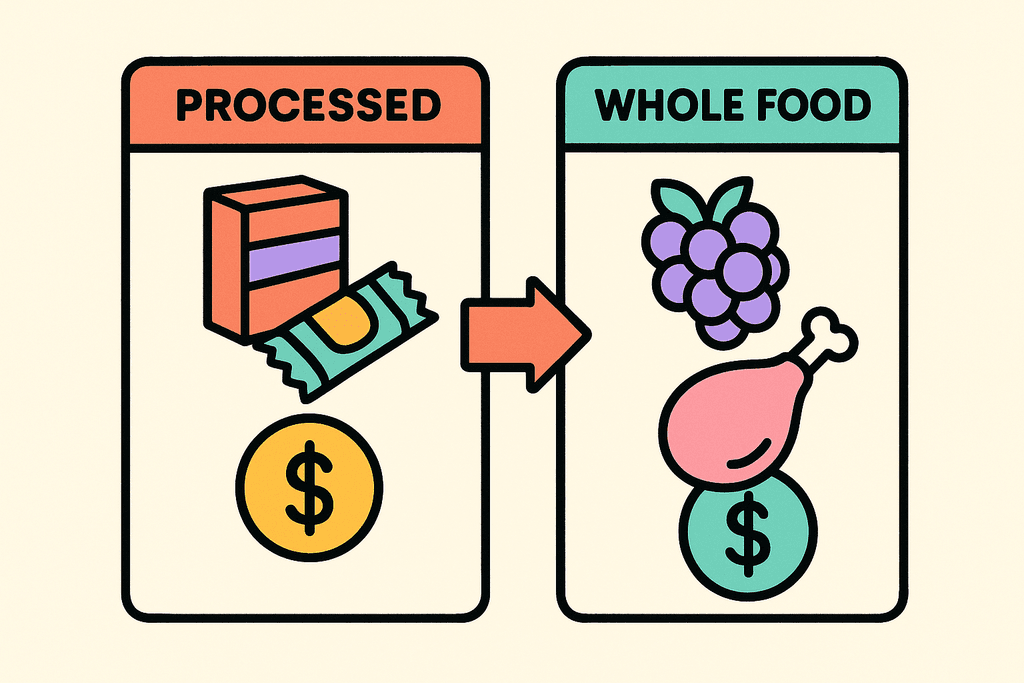
Let's look at what you actually pay when you compare processed snacks to whole food options. The numbers might surprise you because we usually only look at the sticker price, not the cost per serving or per calorie.
| Food Type | Processed Option | Cost | Whole Food Option | Cost |
|---|---|---|---|---|
| Breakfast | Cereal bar (1 bar) | $1.25 | Oatmeal with banana | $0.65 |
| Snack | Chips (1 bag) | $1.50 | Apple with peanut butter | $0.85 |
| Lunch | Frozen meal | $4.99 | Rice, beans, vegetables | $2.30 |
| Drink | Soda (20 oz) | $2.19 | Water with lemon | $0.10 |
| Dinner | Fast food burger meal | $9.99 | Chicken, potato, broccoli | $4.50 |
The hidden costs of processed foods go beyond your wallet too. You're paying for packaging, marketing, preservatives, and convenience fees. Whole foods give you more nutrients per dollar, which means your body actually gets more value from each meal.
The Planning Problem Nobody Talks About
Here's the thing that makes clean eating expensive: buying healthy food without knowing when or how you'll eat it. You grab spinach because it's healthy, but then it turns into green slime in your fridge three days later.
The solution isn't complicated:
- Track what you actually eat for a week to see your real patterns
- Buy only ingredients you know you'll use in the next few days
- Save meals you make often so you can shop from a list
- Use voice logging tools to quickly note what works and what doesn't
When you know what you're going to eat and can log it quickly, you stop wasting money on food that goes bad. Apps that let you save favorite meals and log with voice commands make this way easier than the old method of searching through huge food databases every single time you eat something.
Smart Shopping Strategies That Cut Costs
Most people throw away about 30% of the food they buy, which means you're literally tossing money in the trash. The good news is that eating clean doesn't have to drain your bank account if you know where to shop and what to buy. Learning to shop smarter is the first step to save money while eating clean, and it starts with understanding when and where to buy your food. The difference between shopping randomly and shopping strategically can save you hundreds of dollars each month. You just need to know a few simple tricks that grocery stores don't want you to figure out.
Seasonal produce is your secret weapon for cutting costs while still eating fresh, whole foods. When fruits and vegetables are in season, they're abundant and cheap because farmers have more supply than demand. Strawberries in June cost half what they do in December, and winter squash in October is practically giving itself away compared to summer prices.
- Shop at discount grocers like Aldi or Lidl for basics
- Visit farmers markets near closing time for deals
- Buy rice, beans, oats, and nuts in bulk bins
- Choose store brands for items like olive oil and spices
- Stock up on frozen vegetables when they're on sale
Here's something most people don't realize about frozen produce. Frozen vegetables and fruits are often more nutritious than fresh because they're frozen right after harvest, locking in nutrients. Plus, they last for months in your freezer, which means zero food waste from forgotten produce rotting in your crisper drawer.
Shopping Checklist for Budget-Friendly Clean Eating Staples
- Dried beans and lentils (protein for pennies)
- Brown rice and quinoa in bulk
- Frozen mixed vegetables
- Seasonal fresh produce
- Eggs (cheapest complete protein)
- Canned tomatoes and beans
- Oats for breakfast
- Store-brand olive oil
- Frozen berries for smoothies
- Sweet potatoes and regular potatoes
The store brand versus name brand debate is pretty simple when you look at the ingredients. Most store brands are made in the same factories as name brands, just with different labels slapped on them. You're paying for marketing and packaging, not better quality food.
Meal Prep Magic for Your Wallet
That $15 takeout order you grab when you're too tired to cook adds up to over $400 a month if you do it just twice a week. Meal prepping isn't just for fitness influencers with matching containers. It's actually the most effective way to stop bleeding money on convenience food while still eating clean, healthy meals. When you have ready-to-eat food in your fridge, you're not tempted to order delivery or hit the drive-through. The math is simple but the savings are real.
Batch cooking saves both time and money because you're using your oven or stove efficiently. Instead of cooking one chicken breast for dinner, you roast a whole tray of them. The energy cost is nearly the same, but you've got protein for the entire week.
- Pick one day for grocery shopping and prep
- Cook 2-3 base proteins (chicken, beans, ground turkey)
- Prep 3-4 different vegetables
- Cook a big batch of grains (rice, quinoa)
- Portion everything into containers
The real trick to meal prep is using the same ingredients in different ways throughout the week. That rotisserie chicken becomes three different meals when you get creative. Monday it's chicken and rice bowls, Wednesday it's chicken tacos, and Friday you throw the leftover bits into a soup with vegetables.
Weekly Meal Prep Action Steps
- Sunday: Plan your meals and make a shopping list
- Sunday or Monday: Shop for everything at once
- Sunday afternoon: Wash and chop all vegetables
- Sunday evening: Cook proteins and grains
- Sunday night: Portion meals into containers
- Wednesday: Quick refresh prep if needed
- Throughout week: Just reheat and eat
Proper storage is where most people mess up and end up wasting food anyway. Glass containers keep food fresh longer than plastic, and investing in good containers pays for itself when your food lasts the full week. Label everything with dates so you know what to eat first.
If you're new to this, start small. Prep just your lunches for the week, not every single meal. Once that becomes easy, you can add breakfast or snacks to your routine.
Track Your Food and Your Spending
You can't fix what you don't measure, and that applies to both your nutrition and your grocery budget. Most people have no idea how much they actually spend on food each month because they're not tracking it. The same goes for calories and nutrients. When you start paying attention to both numbers, patterns emerge that show you exactly where your money is going and whether you're actually getting nutritional value for those dollars. Tracking might sound tedious, but it's the difference between guessing and knowing.
Food tracking prevents overspending because you become aware of your habits. When you log that $8 smoothie from the juice bar, you realize you could make the same thing at home for $2. Suddenly those daily purchases don't seem so harmless.
Key Statistics:
- People who track their food waste 50% less
- Meal planning reduces grocery bills by 25-30% on average
- The average person spends $3,000+ yearly on food they throw away
- Tracking calories helps people stay within budget 60% more often
Apps like MyFoodBuddy make tracking easy because you can just say what you ate instead of manually entering everything. Voice logging takes seconds, so you're more likely to actually do it consistently. When you tell the app "chicken breast, brown rice, and broccoli," it calculates everything for you using AI and USDA data.
The cool part is how tracking helps you plan budget-friendly meals that still hit your nutrition goals. You can see that beans give you the same protein as expensive meat for a fraction of the cost. Data shows you the truth about what's worth spending money on and what isn't.
- Track every meal for one week to establish baseline spending
- Identify your most expensive eating habits
- Compare cost per serving of different protein sources
- Set a realistic weekly food budget based on your goals
- Use your tracking data to meal plan within that budget
MyFoodBuddy's AI coach Fiona can actually help you spot patterns in your eating that are costing you money. Maybe you're buying expensive snacks when cheaper whole food options would keep you fuller longer. The app tracks over 20 nutrients, so you can make sure you're getting nutritional bang for your buck, not just empty calories from pricey processed foods.
Setting realistic nutrition goals within your budget is easier when you have data to work with. You might find that hitting your protein goals costs less than you thought when you rely on eggs, Greek yogurt, and beans instead of fancy protein powders and bars. If you want to learn more about achieving balanced meals without the hassle, tracking is your starting point.
The bottom line is that eating clean on a budget isn't about deprivation or eating boring food. It's about being smart with your shopping, strategic with your meal prep, and honest with your tracking. When you combine all three approaches, you'll save money while eating clean and actually enjoy the process.
Your Clean Eating Budget Starts Now
Eating clean doesn't have to drain your bank account if you know where to focus your efforts. The three main strategies we covered are meal planning to reduce waste, buying seasonal produce when it's cheapest, and cooking in batches to save both time and money. These aren't complicated tricks that require a complete lifestyle overhaul. They're simple changes that add up over time.
You don't need to implement everything at once. Start with one or two changes that feel manageable for your current routine. Maybe you begin by planning just three dinners a week, or you swap out one expensive ingredient for a budget-friendly alternative.
The real savings come from consistency, not perfection. When you stick with these habits for a few weeks, you'll notice your grocery bills dropping while your nutrition stays on track. That's when the magic happens.
Tracking what you eat helps you see patterns in both your spending and your health goals. MyFoodBuddy makes this easier by letting you log meals with just your voice, so you can quickly see if you're hitting your nutrition targets without spending extra time on manual entry. When you know exactly what you're eating, you make better choices about where your food budget goes.
If you're looking for more ways to stick to your health goals without breaking the bank, check out our guide on achieving balanced meals without the hassle. The combination of smart shopping and simple tracking creates a system that actually works long-term.
Common Questions About Eating Clean on a Budget
Eating clean doesn't have to drain your wallet, but a lot of people have questions about how to make it work. The confusion around organic labels, meal prep time, and tracking expenses can stop you before you even start. Here are the most common questions people ask when they're trying to save money while eating clean, along with straight answers that actually help.
Is organic always necessary for clean eating?
No, organic isn't required to eat clean. Focus on whole foods like fresh vegetables, fruits, whole grains, and lean proteins, whether they're organic or not. If you want to prioritize organic purchases, stick to the "Dirty Dozen" list for produce with higher pesticide residues, and save money by buying conventional options for everything else.
How much should I budget for clean eating per week?
Most people can eat clean on $50 to $75 per week if they plan meals around sales and seasonal produce. This budget works when you buy basics like rice, beans, eggs, frozen vegetables, and whatever proteins are on sale that week. Tracking your food intake helps you see exactly where your money goes, which makes it easier to cut waste and stick to your budget.
Can I eat clean if I don't have time to cook?
Yes, but you need a simple system. Batch cooking on weekends, using a slow cooker, or prepping ingredients instead of full meals can cut your daily cooking time to under 15 minutes. Apps like MyFoodBuddy let you log meals in seconds using voice commands, so tracking doesn't add extra time to your routine even when you're busy.
What are the cheapest clean protein sources?
Eggs, canned tuna, dried beans, lentils, and chicken thighs are your best options for cheap protein. Greek yogurt and cottage cheese also offer good value when they're on sale. These foods cost a fraction of what you'd pay for fancy protein powders or premium cuts of meat, and they work just as well for hitting your nutrition goals.
How do I avoid wasting fresh produce?
Buy what you'll actually use within three to five days, and prep it as soon as you get home from the store. Wash and chop vegetables right away so they're ready to cook, and freeze anything you won't use in time. Planning your meals before shopping prevents you from buying things that end up rotting in your fridge.
Is meal tracking really necessary for saving money?
Tracking shows you patterns you'd otherwise miss, like realizing you're buying lunch out four times a week or throwing away the same vegetables every month. You don't need to track forever, but doing it for a few weeks reveals where your money actually goes. When you can log a meal by just saying what you ate, like with voice-based tracking apps, it takes seconds instead of becoming another chore you'll skip.
Ready to start tracking smarter?
Download MyFoodBuddy and start tracking your calories by just saying what you ate. No more searching databases or guessing portions.
Get started