Protein Shake Calories by Milk, Fruit and Powder
Learn how many calories are in protein shakes based on milk type, fruits, and powder. Get exact calorie counts to track your nutrition goals.
That post-workout protein shake you think has 200 calories might actually pack 400 or more, and most people have no idea. The milk you choose, the fruit you toss in, and even the type of powder you scoop can completely change your calorie count. If you're trying to hit specific weight goals, knowing exactly how many calories are in your protein shake matters more than you think.
Table of Contents
- The Basic Building Blocks of Protein Shakes
- How Different Milk Types Change Your Shake Calories
- Fruit Add-Ins and Their Calorie Impact
- Protein Powder Types and Their Calorie Counts
- Common Protein Shake Recipes and Total Calories
- Making Protein Shakes Work for Your Goals
- Your Protein Shake Calorie Cheat Sheet
- Common Questions About Protein Shake Calories
The Basic Building Blocks of Protein Shakes
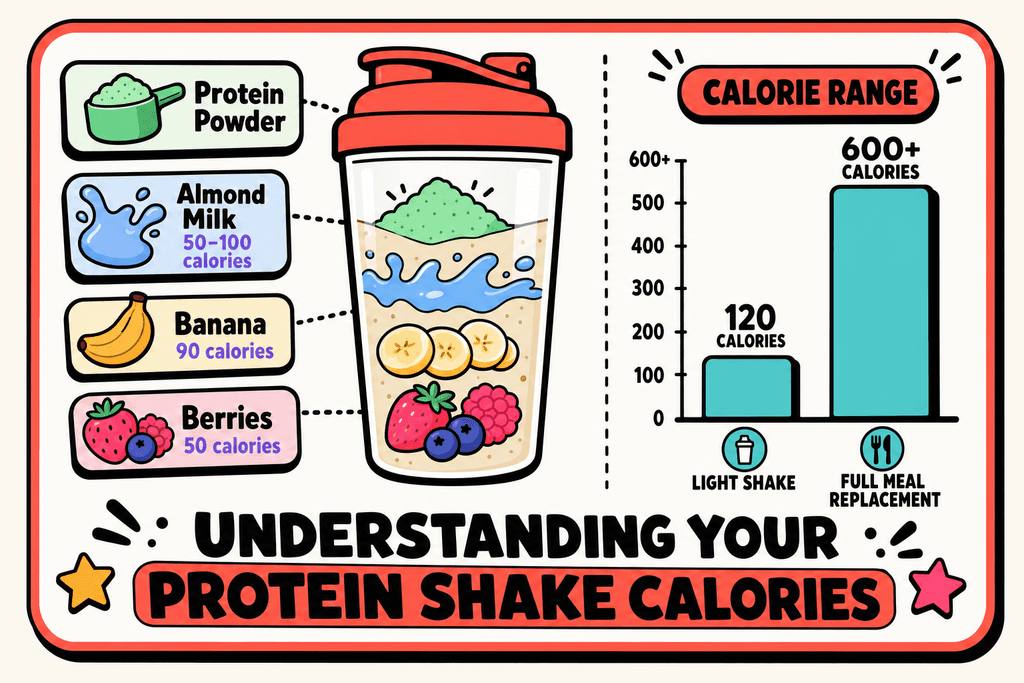
Most people think protein shakes are just protein powder and water, but the reality is way more complicated when you're trying to figure out how many calories in a protein shake you're actually drinking. A basic shake can range anywhere from 120 calories to over 600 calories depending on what you throw in the blender. The difference between a light post-workout drink and a full meal replacement often comes down to three simple choices you make before you hit the blend button.
Protein Powder Your Calorie Foundation
The protein powder you scoop into your blender sets the baseline for everything else. Most protein powders contain between 100-150 calories per scoop, but that number changes based on what type you buy. Whey protein isolate usually sits on the lower end while mass gainers can pack 300+ calories in a single serving.
Here's what affects your powder's calorie count:
- Type of protein (whey, casein, plant-based, or blends)
- Added sugars or artificial sweeteners
- Extra ingredients like fiber, vitamins, or digestive enzymes
- Whether it's an isolate, concentrate, or mass gainer formula
Liquid Bases Where Calories Add Up Fast
The liquid you choose makes a bigger difference than most people realize. Water adds zero calories, but switch to whole milk and you've just added 150 calories to your shake. This is where tracking apps like MyFoodBuddy come in handy since you can just say what you used and it calculates everything automatically.
| Liquid Base (1 cup) | Calories | Protein |
|---|---|---|
| Water | 0 | 0g |
| Almond Milk (unsweetened) | 30-40 | 1g |
| Oat Milk | 120 | 3g |
| Skim Milk | 80 | 8g |
| Whole Milk | 150 | 8g |
Add-Ins That Double Your Calorie Count
Fruits, nut butters, and other extras can turn a simple protein shake into a calorie bomb without you even noticing. A banana adds about 100 calories, while two tablespoons of peanut butter throws in another 190 calories. These add-ins aren't bad, but you need to know what you're consuming if you're tracking your intake.
Common add-ins and their calorie impact:
- Banana (medium): 105 calories
- Berries (1 cup): 50-85 calories
- Peanut butter (2 tbsp): 190 calories
- Honey (1 tbsp): 64 calories
- Greek yogurt (1/2 cup): 65-100 calories
The tricky part is remembering everything you added when you're logging your meals later. Apps that let you speak your ingredients naturally make this whole process way easier than trying to search through databases or do math in your head while you're making breakfast.
How Different Milk Types Change Your Shake Calories
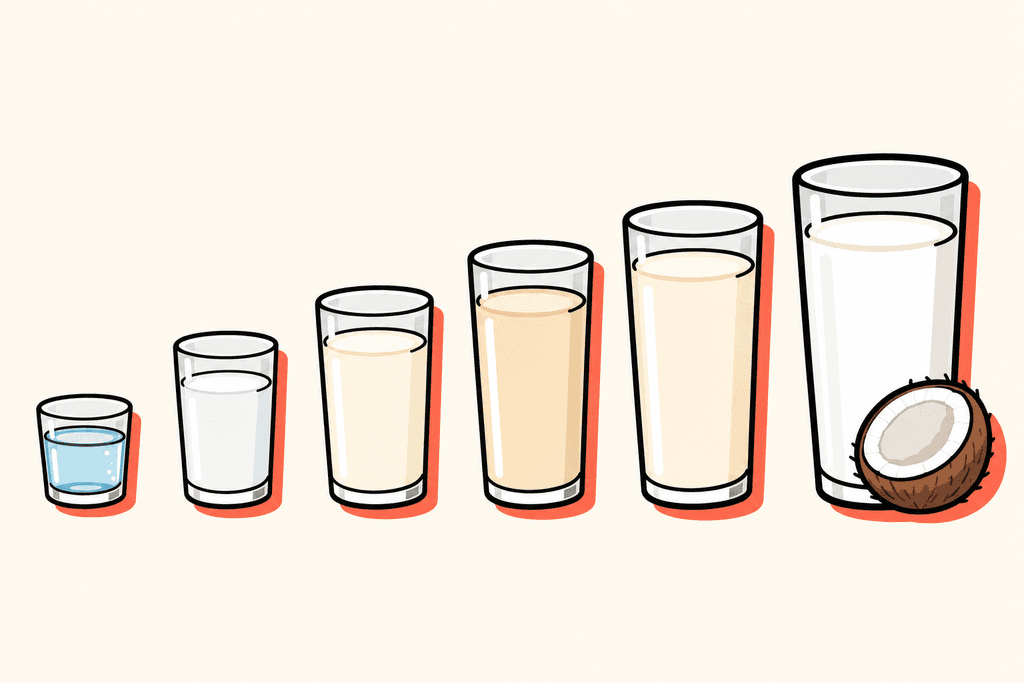
Most people don't realize that the liquid base in their protein shake can add anywhere from zero to 450 calories before they even scoop in the powder. The milk you choose makes a bigger difference than you might think. If you're wondering how many calories in a protein shake, the answer starts with what you're pouring into that blender. Some folks use water to keep things lean, while others prefer the creamier taste of whole milk, and each choice comes with its own calorie price tag.
How Different Milk Types Change Your Shake Calories
Water is the obvious zero-calorie option, but it makes your shake taste pretty bland and watery. Most people who stick with water are either cutting calories hard or just don't mind the thin texture.
| Milk Type | Calories per Cup | Best For |
|---|---|---|
| Water | 0 | Maximum calorie control |
| Almond milk | 30-60 | Low-calorie alternative |
| Skim milk | 80 | Protein boost |
| Oat milk | 120 | Creamy plant-based |
| Whole milk | 150 | Muscle building |
| Coconut milk (canned) | 75-450 | High-calorie needs |
The plant-based options fall all over the map. Almond milk is super popular because it only adds 30 to 60 calories depending on whether you get the unsweetened or regular version. Oat milk has gotten trendy lately, but it packs about 120 calories per cup, which puts it closer to 2% milk than the low-calorie alternatives.
Coconut milk is tricky because the type matters a lot. The stuff in cartons is usually around 75 calories, but if you grab a can of full-fat coconut milk, you're looking at 450 calories for the same amount.
Fruit Add-Ins and Their Calorie Impact
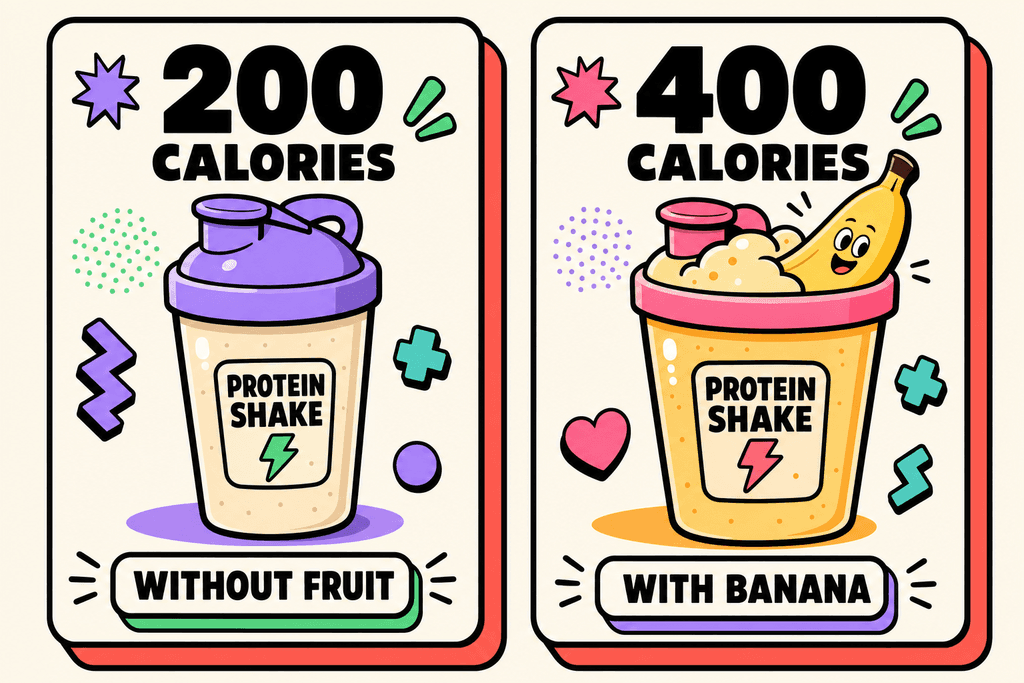
Tossing fruit into your protein shake seems healthy, and it is, but those natural sugars and carbs add up faster than most people expect. A single banana can add over 100 calories to your shake. The fruit you choose can be the difference between a 200-calorie snack and a 400-calorie meal replacement. Fresh or frozen doesn't really matter for calories, but it does change the texture quite a bit.
Fruit Add-Ins and Their Calorie Impact
Bananas are the go-to fruit for protein shakes because they make everything creamy and sweet. One medium banana adds about 105 calories, plus it helps blend everything smooth.
- Strawberries: 50 calories per cup
- Blueberries: 85 calories per cup
- Raspberries: 65 calories per cup
- Blackberries: 62 calories per cup
- Mango chunks: 100 calories per cup
- Pineapple chunks: 82 calories per cup
Berries give you the best calorie-to-volume ratio if you're trying to keep things light. A full cup of strawberries only adds 50 calories, which is less than half a banana. But here's what most people mess up: they eyeball portions instead of measuring, and that cup of berries turns into two cups without them noticing.
Tropical fruits like mango and pineapple taste amazing but they're denser in calories. They're still way better than adding chocolate syrup or honey, but if you're tracking your intake carefully, the portions matter more than which fruit you pick.
Protein Powder Types and Their Calorie Counts
The protein powder itself is usually the smallest calorie contributor in your shake, which surprises a lot of people. Most standard protein powders hover around 100 to 150 calories per scoop, but the type you buy makes a real difference. Whey isolate is the leanest option, while mass gainers are basically designed to pack in as many calories as possible. The serving size also varies wildly between brands, so one scoop might be 25 grams for one brand and 40 grams for another.
Whey protein isolate is the cleanest option at 100 to 120 calories per scoop because it's been filtered to remove most of the fat and carbs. Whey concentrate keeps more of the natural milk components, so it usually sits at 120 to 140 calories.
| Protein Type | Calories per Scoop | Typical Serving Size |
|---|---|---|
| Whey isolate | 100-120 | 25-30g |
| Whey concentrate | 120-140 | 30-35g |
| Pea protein | 110-130 | 30g |
| Rice protein | 120-140 | 30g |
| Blend proteins | 130-150 | 35-40g |
| Mass gainers | 400-1200 | 100-300g |
Plant-based proteins like pea or rice protein fall in the 110 to 150 calorie range. They're not necessarily lower in calories than whey, but some people prefer them for dietary reasons. The blended plant proteins that mix pea, rice, and hemp together tend to be on the higher end because they include more ingredients.
Mass gainers are a completely different animal. They're loaded with carbs and sometimes fats to help people who struggle to eat enough calories. A single serving can be anywhere from 400 to 1200 calories, which is more than some people eat for lunch.
Common Protein Shake Recipes and Total Calories
Putting it all together helps you see how these ingredients stack up in real life. A basic post-workout shake with just water and protein powder might only hit 120 calories, but once you start adding milk, fruit, and maybe some nut butter, you're easily in the 400 to 600 calorie range. The total depends on what you're trying to accomplish with your shake. Some people want a light protein boost after the gym, while others are replacing an entire meal.
A simple post-workout shake keeps things minimal with just one scoop of whey isolate and water, landing around 120 to 200 calories if you add a handful of berries.
| Shake Type | Ingredients | Total Calories |
|---|---|---|
| Basic post-workout | Whey + water + berries | 170-200 |
| Breakfast replacement | Whey + oat milk + banana + peanut butter | 400-450 |
| Weight gain | Mass gainer + whole milk + banana + oats | 800-1000 |
| Low-calorie | Whey isolate + almond milk + spinach | 150-180 |
Breakfast replacement shakes need more substance. Mixing whey with oat milk, a banana, and a tablespoon of peanut butter gets you into the 400 to 450 calorie range, which is about right for a morning meal. The peanut butter alone adds around 95 calories, but it makes the shake way more filling.
Weight gain shakes are for people who need serious calories. Using a mass gainer with whole milk, a banana, and some oats can easily hit 800 to 1000 calories in one drink. That's basically three meals worth of energy in a glass.
If you want to calculate your own shake accurately, the easiest way is to log each ingredient separately. Apps like MyFoodBuddy let you just say what you put in your shake, and it does the math for you using USDA data. You can check out how to track your caloric and protein intake efficiently if you want to get better at logging without spending forever on it. For more complex recipes, simplifying calorie counting for homemade meals shows you how to break down ingredients quickly.
The bottom line is that protein shakes can range from 150 calories to over 1000 depending on what you throw in the blender. Knowing the calorie breakdown helps you make shakes that actually fit your goals instead of accidentally drinking way more than you planned.
Making Protein Shakes Work for Your Goals
The difference between a protein shake that helps you reach your goals and one that sabotages them often comes down to just 100-200 calories. Most people don't realize that the same shake recipe can either support weight loss or completely stall it depending on how the ingredients add up. Understanding how many calories in a protein shake you actually need makes all the difference in whether you see results or just waste money on powder.
Your goals should dictate your shake's calorie content, not the other way around. A 500-calorie shake might be perfect for someone trying to bulk up, but it could wreck a weight loss plan if you're not careful.
Calorie Targets by Goal
Weight loss shakes need to stay lean, typically under 250 calories total. This usually means water or unsweetened almond milk as your base, one scoop of protein powder, and maybe a handful of berries. Going over this range means you're drinking what could be a small meal without the satisfaction that comes from actually eating food.
- Keep protein powder to one scoop (100-120 calories)
- Use water or low-calorie milk alternatives (0-30 calories)
- Add only low-calorie fruits like berries (30-50 calories)
- Skip nut butters and high-sugar additions entirely
- Save room in your daily budget for actual meals
Muscle building shakes can be more generous, ranging from 300-500 calories. This is where you can add that banana, use whole milk, or throw in a tablespoon of peanut butter without guilt.
| Goal | Calorie Range | Best Base | Add-ins |
|---|---|---|---|
| Weight Loss | 150-250 cal | Water/Almond Milk | Berries only |
| Muscle Gain | 300-500 cal | Whole Milk | Banana, nut butter |
| Meal Replacement | 350-500 cal | Oat/Soy Milk | Fruit, healthy fats |
Meal Replacement Considerations
Meal replacement shakes need at least 350-500 calories to actually replace a meal properly. Anything less and you'll be hungry an hour later, which defeats the purpose. These shakes should include protein, healthy fats, and some carbs to keep you satisfied until your next meal.
- Include a protein source (25-30g minimum)
- Add healthy fats like avocado or nut butter
- Use a substantial milk base for extra nutrients
- Consider adding oats or other complex carbs
Timing Myths and Daily Totals
Here's something that might surprise you: when you drink your protein shake matters way less than your total daily calorie intake. The whole "anabolic window" thing has been mostly debunked by recent research. What actually matters is hitting your protein and calorie targets by the end of the day.
This is where tracking becomes essential, but it doesn't have to be complicated. Apps like MyFoodBuddy let you just say "protein shake with banana and almond milk" and it calculates everything for you, instead of manually entering each ingredient separately.
Tracking Your Shakes the Easy Way
The biggest reason people fail at tracking how many calories in a protein shake they're consuming is because traditional methods take too long. You have to search for each ingredient, measure everything precisely, and add it all up manually.
| Method | Time Required | Accuracy | Consistency |
|---|---|---|---|
| Manual Tracking | 3-5 minutes | High (if done right) | Low |
| Voice Logging | 10-15 seconds | High | High |
| Not Tracking | 0 minutes | None | N/A |
The reality is that most people either spend way too much time logging or give up entirely. Voice-based tracking solves this problem by letting you log your shake in the time it takes to say what's in it. MyFoodBuddy handles the math and nutritional breakdown automatically, so you can focus on your goals instead of playing calculator with your breakfast.
Your Protein Shake Calorie Cheat Sheet
So here's what you need to remember about how many calories in a protein shake. The basic formula is pretty simple: your powder adds about 120 calories, your liquid can range from 0 to 150 calories depending on what you pick, and any extras you throw in can add anywhere from 0 to 200 or more calories. Most protein shakes people make at home end up somewhere between 200 and 400 calories, which is actually a pretty reasonable range for a meal replacement or post-workout snack.
The thing is, knowing these numbers is one thing. Actually tracking them every single day is where most people give up. Opening an app, searching for each ingredient, measuring portions, and adding everything up takes time that most of us don't have in the morning.
That's where tracking your caloric and protein intake efficiently becomes important. MyFoodBuddy lets you just say "protein shake with banana and almond milk" and it figures out the calories for you in seconds. No searching through databases or creating custom recipes. If you're making homemade meals like protein shakes regularly, this kind of quick logging makes the difference between sticking with tracking or giving up after a week.
The numbers matter, but only if you can actually track them without it becoming a second job. Whether you're trying to lose weight, gain muscle, or just understand what you're putting in your body, automatic calorie calculation takes the guesswork out of the equation.
Common Questions About Protein Shake Calories
Tracking protein shake calories can feel confusing when you're trying to figure out what actually goes into your daily totals. Most people have similar questions about whether their homemade shakes are helping or hurting their goals. Here are the answers to the most common questions we hear about protein shake calories and how to track them without the headache.
How many calories in a typical protein shake?
A basic protein shake with one scoop of powder and water usually has around 120-150 calories. Add milk instead of water and you're looking at 250-300 calories depending on whether you use whole, skim, or plant-based milk. Throw in a banana, peanut butter, or other mix-ins and you can easily hit 400-600 calories. The actual number depends entirely on what you put in it, which is why tracking each ingredient matters more than guessing.
Does blending add calories to a protein shake?
No, blending doesn't add any calories to your shake. The blender just mixes everything together but doesn't change the nutritional content of the ingredients. The only calories in your shake come from what you actually put into the blender, not from the blending process itself.
Are protein shakes good for weight loss?
Protein shakes can help with weight loss if they fit into your daily calorie goals and keep you full between meals. They're convenient and can replace higher-calorie meals, but they're not magic. A 500-calorie shake won't help you lose weight if it pushes you over your daily calorie target. The key is knowing exactly how many calories are in your shake and making sure it fits your plan.
How do I track protein shake calories easily?
The fastest way is to just say what you put in your shake and let an app do the math. With MyFoodBuddy, you can simply tell the app "protein shake with one scoop vanilla powder, cup of almond milk, banana, and tablespoon of peanut butter" and it calculates everything for you. No need to search databases or add each ingredient separately like you'd have to do with traditional trackers.
What's the lowest calorie protein shake I can make?
The lowest calorie option is one scoop of protein powder mixed with water, which gives you about 120-150 calories and 20-25 grams of protein. If water seems too boring, try mixing with unsweetened almond milk for only 30-40 extra calories. You can also add ice, cinnamon, or vanilla extract for flavor without adding calories.
Do homemade protein shakes have more calories than store-bought?
It depends on what you make, but homemade shakes often have more calories because we tend to add extras like fruit, nut butter, and full-fat milk. Store-bought ready-to-drink shakes are usually portioned out to specific calorie amounts, typically 150-200 calories. The advantage of making your own is you control exactly what goes in, but you need to track those ingredients to know what you're actually consuming.
Ready to start tracking smarter?
Download MyFoodBuddy and start tracking your calories by just saying what you ate. No more searching databases or guessing portions.
Get started