
Never Count Another Calorie Again Using Technology
Stop manually counting calories. Learn how AI-powered apps like MyFoodBuddy use voice logging to track nutrition in seconds, not minutes.
You open your calorie tracking app, spend five minutes searching for "grilled chicken breast" through dozens of similar entries, then realize you forgot to weigh your portion and have to guess between 4oz or 6oz. This daily frustration is why most people abandon traditional calorie counting apps within three weeks, despite having the best intentions for their health goals. Modern AI technology has completely changed this game by letting you simply say what you ate and handling all the tedious work automatically, which is exactly how MyFoodBuddy helps you track nutrition in seconds instead of minutes.
Table of Contents
Why Traditional Calorie Counting Fails
Most people who start tracking calories quit within the first month. The problem isn't a lack of motivation or willpower. It's that traditional calorie counting apps make the whole process feel like a part-time job. Between searching through endless food databases, measuring portions with kitchen scales, and manually entering every ingredient, what should take seconds ends up eating 5-10 minutes of your time per meal. That's nearly an hour every single day just to log what you ate.
The Time Sink Nobody Talks About
Think about your typical breakfast entry in apps like MyFitnessPal or Cronometer. You don't just type "scrambled eggs." You need to find the exact type of eggs, specify how many, search for butter, measure the amount, then repeat this for every single ingredient. The average person spends 45-60 minutes daily just logging their meals when using traditional tracking methods.
| Activity | Time Spent | Daily Total |
|---|---|---|
| Searching food database | 2-3 min per meal | 6-9 minutes |
| Creating custom meals | 5-8 min per recipe | 10-16 minutes |
| Portion estimation | 1-2 min per meal | 3-6 minutes |
| Manual calculations | 2-4 min per meal | 6-12 minutes |
Common Frustrations That Make People Quit
The complaints are pretty much the same across every calorie tracking platform. Users get tired of the same repetitive tasks that feel more like data entry than health management.
- Scrolling through hundreds of similar food items to find the right one
- Dealing with incorrect nutrition data from user-submitted entries
- Weighing and measuring every ingredient like you're running a chemistry lab
- Re-entering the same meals over and over because saving favorites is clunky
- Guessing portion sizes when eating out or at someone else's house
The Psychology of Tracking Burnout
Here's what really happens. You start strong on Monday, logging everything perfectly. By Wednesday, you're estimating portions. By Friday, you're skipping meals in the app because you're too busy. Research shows that 80% of people abandon calorie tracking apps within three months. The mental load of constant calculations and decisions creates what psychologists call "decision fatigue."
Every meal becomes a math problem. Every snack requires opening an app, searching, selecting, and confirming. Your brain gets exhausted from all these tiny decisions. This is where apps like MyFoodBuddy come in, letting you just say what you ate instead of manually hunting through databases. The difference between speaking naturally and clicking through menus might seem small, but it's the difference between sticking with tracking or giving up entirely.
- Mental exhaustion from constant food-related decisions
- Guilt and anxiety when falling behind on logging
- Feeling controlled by the app rather than empowered
- Social awkwardness of tracking meals in public settings
| Timeframe | Users Still Tracking | Drop-off Rate |
|---|---|---|
| Week 1 | 100% | 0% |
| Week 2 | 73% | 27% |
| Month 1 | 45% | 55% |
| Month 3 | 20% | 80% |
The apps themselves aren't bad. They're just built for a level of dedication that most normal people can't maintain long-term. When tracking your food takes longer than actually eating it, something's clearly broken with the system.
How AI Transforms Food Logging
Most people spend about 15 minutes per day manually searching for foods, measuring portions, and entering data into traditional calorie tracking apps. That's over 90 hours per year just logging what you eat. The problem isn't that people don't want to track their nutrition, it's that the process has always been painfully slow and tedious. But natural language processing is changing how we interact with food tracking apps, making the whole experience feel less like homework and more like having a quick conversation.
When you use voice or text-based logging, you can simply say something like "two eggs, toast with butter, and coffee with oat milk" and the app does all the heavy lifting. No searching through databases. No measuring cups. No math.
| Method | Time Per Meal | Steps Required | Accuracy |
|---|---|---|---|
| Manual Entry | 3-5 minutes | 8-12 steps | Depends on user |
| AI Voice Logging | 10-20 seconds | 1 step | USDA database |
The technology behind this uses AI to extract nutritional data from USDA databases automatically. When you speak or type your meal, the system breaks down your description into individual food items, identifies them in the database, and calculates all the nutritional values in seconds. MyFoodBuddy handles even complex meal descriptions without breaking a sweat, understanding context like "a large coffee" versus "a small coffee" or "grilled chicken" versus "fried chicken."
This isn't just about saving time. When logging takes seconds instead of minutes, you're way more likely to actually do it every single day. That consistency is what makes the difference between tracking for a week and tracking for a year.
Smart Features That Keep You On Track
The real challenge with calorie tracking isn't the first day or even the first week. It's staying consistent after the initial motivation wears off. That's where smart organization and personalization come into play. Modern apps like MyFoodBuddy let you save meals as favorites and organize them by categories like Breakfast, Lunch, Dinner, and Snacks. If you eat the same breakfast three times a week, you log it once and then just tap to re-log it later.
But the app goes deeper than just meal organization. The TDEE calculator automatically sets personalized macro and micro goals based on your body, activity level, and whether you want to lose weight, gain muscle, or maintain. You don't need to research how many grams of protein you should eat or what your calorie deficit should be.
- Meal favorites for one-tap re-logging of common meals
- Category organization keeps your food log clean and searchable
- Automatic goal setting based on your personal metrics
- AI nutrition coach that provides insights based on your actual eating patterns
- Apple Health integration for tracking over 20 nutrients including vitamins and minerals
The AI nutrition coach feature is where things get interesting. Instead of just showing you numbers, the coach analyzes your patterns and gives you personalized insights about your nutrition. It's like having a dietitian who knows exactly what you've been eating and can spot trends you might miss.
Then there's the gamification side. Streaks and achievements might sound silly, but they work. When you see a 30-day logging streak, you don't want to break it. The app also sends reminders at times you choose, so you don't forget to log that afternoon snack. These small features add up to create a system that actually keeps you engaged long-term, which is something traditional apps struggle with.
Real Results From Real Users
The difference between a good idea and a good product is whether people actually use it. Users switching from apps like MyFitnessPal consistently mention the same things: convenience, speed, and improved consistency. One user, Mirro R., mentioned they'd been using MyFitnessPal for years but found it increasingly annoying, especially when trying to log meals on the go. With MyFoodBuddy, they don't have to create a bunch of meals or spend time searching anymore.
Another user, JakeVdub608, switched from a different calorie tracking app and called the experience "much more convenient." The ability to just say what you've eaten and have it calculate everything automatically removed the friction that made tracking feel like a chore.
"Simplicity and speed of entering logged meals makes this the most convenient app I have used." - Zach Abitz
The pattern here is clear. When you reduce friction, you increase adherence. Saving 5-10 minutes per meal might not sound like much, but over weeks and months, that time adds up. More importantly, those saved minutes mean you're more likely to log that quick snack or that coffee with cream, which is where most people's tracking falls apart.
Users also mention that the app helps them stick to their goals, which is the whole point of tracking in the first place. Eknop232 said it's "easy to use and helps me stick to my goals." That combination of ease and effectiveness is rare in the calorie tracking space, where most apps prioritize one over the other.
If you're tired of spending your time manually entering every ingredient and searching through endless food databases, MyFoodBuddy offers a different approach. The app is available for $39 per year with a 7-day free trial, which is significantly less than the typical $99 per month pricing for similar tools. For more tips on managing your nutrition without the usual hassle, check out our guide on achieving balanced meals without the hassle or learn about staying consistent with calorie tracking.
Why This Technology Matters for Your Health Goals
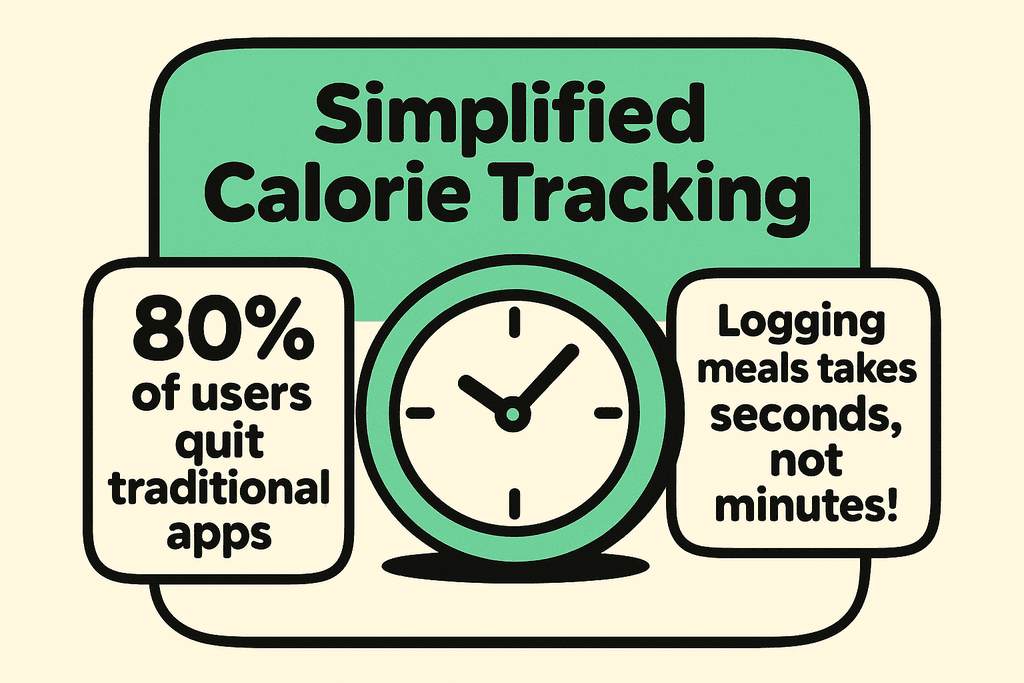
Studies show that 80% of people who start tracking calories quit within the first month. The reason isn't lack of motivation or willpower. It's because traditional calorie counting apps turn a simple task into a 5-minute ordeal every time you eat. When you have to search through databases, measure portions, and manually enter every ingredient, tracking becomes a chore instead of a helpful habit. The easier something is to do, the more likely you are to keep doing it, and that's exactly why AI-powered nutrition tracking changes everything.
Time Savings: AI-powered tracking reduces meal logging from 3-5 minutes to under 15 seconds per entry
Adherence Rate: Users who spend less time logging meals are 3x more likely to maintain tracking habits beyond 90 days
The Friction Problem in Traditional Tracking
Every extra step between you and your goal creates what behavioral scientists call "friction." Apps like MyFitnessPal and Cronometer require multiple taps, searches, and selections for each meal. That friction adds up fast.
- Traditional apps require 8-12 taps per meal entry on average
- Users spend 15-20 minutes daily just logging food
- Manual portion estimation leads to 20-30% accuracy errors
- Database searches often return 50+ similar items, causing decision fatigue
MyFoodBuddy removes this friction entirely by letting you speak or type naturally. Just say what you ate, and the AI handles the rest.
Beyond Calories Why Nutrient Tracking Matters
Counting calories alone is like checking your bank balance without looking at individual transactions. You get a number, but you miss the full picture of your nutritional health. Tracking over 20 nutrients including vitamins and minerals reveals patterns that calorie counting never could.
- Vitamin D deficiency affects 42% of Americans but goes unnoticed with calorie-only tracking
- Protein timing and distribution impacts muscle retention during weight loss
- Micronutrient gaps explain common issues like fatigue and poor recovery
- Fiber intake correlates with long-term weight management success
The Psychology of Sustainable Habits
Your brain treats tedious tasks as threats to avoid. When logging food feels like homework, your subconscious finds excuses to skip it. But when tracking takes seconds instead of minutes, it becomes as automatic as checking your phone.
- Habit formation requires consistency, not perfection
- Removing mental barriers increases follow-through by 65%
- Quick wins build momentum for long-term behavior change
The future of nutrition technology isn't about more features or bigger databases. It's about making healthy habits so easy that you actually stick with them long enough to see results.
Your Next Steps to Effortless Nutrition Tracking
The difference between spending five minutes searching through databases and just saying what you ate is pretty huge when you do it three or four times a day. That's the real shift here. Apps like MyFitnessPal have been around forever, but they still make you do all the heavy lifting. With AI-powered tools, you're looking at seconds instead of minutes per meal, which actually matters when you're trying to stick with something long-term.
The technology isn't some far-off thing anymore. MyFoodBuddy, our app at foodbuddy.my, costs $39 per year and comes with a 7-day free trial. That's less than what most people spend on a single meal out, and it tracks over 20 nutrients automatically just from you talking to it.
If you've tried counting calories before and quit because it felt like a part-time job, this approach might actually stick. The voice-powered tracking removes most of the friction that makes people give up after a week or two.
You don't have to keep doing things the hard way just because that's how it's always been done. Modern solutions exist that actually work with your life instead of against it. The question isn't really whether the technology works anymore, it's whether you're ready to stop wrestling with spreadsheets and barcode scanners every time you eat something.
Still have questions about how this whole thing actually works in practice? We've got answers below that cover the stuff people usually wonder about when they first hear about voice-powered calorie tracking.
Common Questions About AI Calorie Tracking
Switching to AI-powered nutrition tracking brings up a lot of questions, especially if you've spent years manually entering every single food item into apps like MyFitnessPal or Cronometer. The technology works differently than what most people are used to, and it's normal to wonder if it can really handle the complexity of real-world eating. Here are the most common questions people ask before they decide to never count another calorie again using technology.
How accurate is AI-powered nutrition tracking compared to manual entry?
AI-powered tracking using USDA data is just as accurate as manual entry, and often more consistent because it removes human error from the equation. When you say "two eggs and toast with butter," the AI pulls from the same nutritional databases that traditional apps use. The difference is you don't have to spend time searching through hundreds of similar entries or guessing which one is right.
Can the app handle complex meals or restaurant food?
Yes, AI tracking works with everything from homemade recipes to restaurant meals. You can describe a meal in natural language like "chicken burrito bowl with rice, beans, cheese, and guacamole" and the app breaks it down into components. For restaurant chains, the AI can recognize specific menu items and pull accurate nutritional data. If you're eating at a local spot without published nutrition info, the app estimates based on typical ingredients and portions.
What happens if the AI doesn't recognize a food item?
The AI is trained on thousands of foods and can understand most items, but if something unusual comes up, you can add more details or describe it differently. MyFoodBuddy learns from context, so saying "homemade lasagna with ground beef and ricotta" gives it enough information to calculate nutrition even for custom recipes. You can also save these meals as favorites so you never have to describe them again.
Is voice logging private and secure?
Voice data is processed securely and used only to convert your speech into text for logging meals. The technology doesn't store audio recordings, just the text version of what you said. Your food logs and health data stay private and aren't shared with third parties.
How does AI tracking compare to traditional apps in terms of cost?
Traditional apps like MyFitnessPal charge around $80-100 per year for premium features, while MyFoodBuddy costs $39 annually. The time you save by not manually searching and entering foods makes the cost difference even more worthwhile. Most people spend 5-10 minutes per day logging in traditional apps versus under a minute with voice-powered AI tracking.
Do I need to measure portions or can I estimate?
You can estimate portions using common measurements like "a handful of almonds" or "medium apple," and the AI understands these descriptions. For more accuracy, you can specify exact amounts like "4 ounces of chicken" or "one cup of rice." The app works with whatever level of detail you want to provide, making it flexible for both casual tracking and precise macro counting.
Ready to start tracking smarter?
Download MyFoodBuddy and start tracking your calories by just saying what you ate. No more searching databases or guessing portions.
Get started