Healthy Lifestyle App Habits to Beat Burnout
Beat burnout with healthy lifestyle app habits. Learn how simple tracking tools help manage stress, nutrition, and wellness without adding overwhelm.
You downloaded that healthy lifestyle app to feel better, but now you're stressed about hitting your daily streak and guilty when you forget to log breakfast. The tools meant to help us stay healthy can actually make burnout worse when they demand too much time and mental energy. The good news is that tracking your wellness doesn't have to feel like another chore on your endless to-do list, especially when apps like MyFoodBuddy let you log meals in seconds using just your voice.
Table of Contents
What Burnout Does to Your Health Habits
About 77% of people report experiencing physical symptoms caused by stress, and one of the first things to fall apart is how we eat. When your brain is fried from work deadlines, family responsibilities, and endless notifications, making healthy food choices feels impossible. Your body starts running on autopilot, reaching for whatever's quick and easy instead of what's actually good for you. The connection between burnout and declining health behaviors isn't just in your head—it's backed by real research showing how chronic stress rewires our decision-making around food.
The Stress Eating Cycle
When you're burned out, your body pumps out cortisol like it's going out of style. This stress hormone doesn't just make you feel anxious—it actually changes what foods you crave. Studies show that stressed individuals consume up to 40% more calories than they normally would, and most of those extra calories come from sugar and fat.
76% of adults say stress impacts their food choices, leading them to eat more unhealthy foods or skip meals entirely
Here's what typically happens when burnout takes over:
- You skip breakfast because you're rushing or not hungry from stress
- By lunch, you're starving and grab whatever's fastest
- Afternoon crashes lead to vending machine runs or multiple coffee trips
- Dinner becomes takeout because you're too exhausted to cook
- Late-night snacking happens while you decompress from the day
Why Tracking Fails When You're Stressed
Traditional calorie tracking apps require mental energy you simply don't have during burnout. Opening an app like MyFitnessPal or Cronometer means searching through databases, measuring portions, and logging every ingredient separately. When you're already mentally drained, spending five minutes logging a meal feels like climbing a mountain.
Research shows that 80% of people quit traditional food tracking apps within the first month, with "too time-consuming" as the top reason
The problem gets worse because:
- Mental fatigue reduces your willpower to stick with complicated routines
- Decision fatigue makes even simple choices feel overwhelming
- Guilt from not tracking perfectly leads to giving up entirely
How Mental Exhaustion Breaks Healthy Routines
Your brain only has so much energy for making good decisions each day. Scientists call this decision fatigue, and it's why you can eat a perfect salad for lunch but end up eating ice cream straight from the container at 10 PM. By the end of a stressful day, the part of your brain responsible for self-control is basically offline.
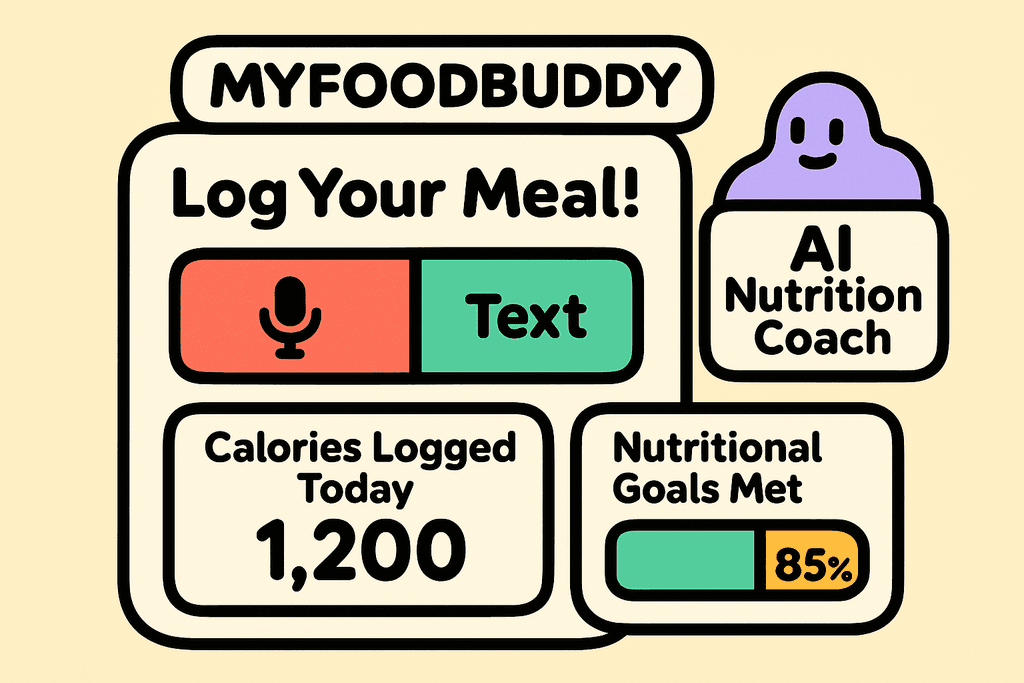
This is where a healthy lifestyle app needs to work differently. MyFoodBuddy lets you log meals by just saying what you ate—no searching, no measuring, no mental gymnastics. When you can track your food in seconds instead of minutes, you're way more likely to actually do it, even on your worst days.
People experiencing burnout are 3 times more likely to abandon health goals that require multiple steps or complex tracking
The patterns are clear:
- High stress periods correlate with 60% drops in gym attendance
- Meal prep habits decline by 70% during busy work seasons
- Sleep quality decreases, which further impacts food choices the next day
- Hydration drops as people replace water with coffee and energy drinks
Make Tracking So Easy You'll Actually Do It
Most people quit tracking their food within the first week, and it's not because they lack willpower. The real problem is that traditional calorie counting apps turn a simple task into a 10-minute ordeal of searching databases, weighing portions, and clicking through endless menus. When you're already dealing with work stress, family obligations, and the general chaos of daily life, spending that much time on every meal becomes impossible. Your brain is already maxed out, and the last thing it needs is another complicated system to manage.
The difference between tracking that works and tracking that fails comes down to one thing: friction. Every extra step between you and logging your meal is another chance to give up. Every database search that returns 47 versions of "chicken breast" is another moment of decision fatigue.
- Traditional apps require you to search, select, measure, and confirm each ingredient
- Voice logging lets you say "grilled chicken salad with ranch" and move on with your day
- Natural language input means no more guessing between "medium apple" and "large apple"
- Quick logging takes seconds instead of minutes, making it actually sustainable
MyFoodBuddy handles the heavy lifting through voice and text input that understands how real people talk about food. You can say "two eggs, toast with butter, and a coffee with oat milk" and the app figures out the rest using AI and USDA data. No searching through databases or second-guessing portion sizes.
The mental load matters more than you think. When you're burned out, your decision-making capacity is already running on empty. Traditional tracking apps demand dozens of micro-decisions per meal, which is why they feel so exhausting. Voice logging removes almost all of those decisions.
Real people are logging their meals while walking to meetings, sitting in carpool lines, or standing in their kitchens between tasks. One user mentioned switching from an app where they had to "create a bunch of meals and spend time searching" to something that works on the go. That's the difference between a habit that sticks and one that dies after a few days.
Build Habits That Stick Without the Pressure
Your brain responds better to rewards than punishment, but most tracking apps accidentally create a system of guilt and shame. Miss a day and you lose your streak. Go over your calories and see red numbers everywhere. Forget to log dinner and wake up to notifications that feel like scolding. This approach might work for a few highly motivated people, but for most of us dealing with burnout, it just adds another source of stress to an already overwhelming day.
Positive reinforcement actually changes behavior in ways that guilt never can. When you celebrate small wins instead of punishing small failures, your brain starts associating the habit with good feelings instead of dread.
Streaks and achievements work because they tap into something deeper than willpower. They create visible progress that your brain can latch onto, even when the number on the scale isn't moving as fast as you'd like. But the key is making these systems flexible enough to accommodate real life.
- Set goals that adjust to your current energy levels, not some ideal version of yourself
- Use AI coaching that provides support without making you feel judged
- Track progress visually so you can see patterns without obsessing over daily fluctuations
- Build in grace periods for the days when life gets messy
The AI coach named Fiona provides personalized insights based on your actual patterns, not generic advice that assumes everyone's the same. This matters because what works during a calm week might be completely unrealistic during a stressful one.
Visual progress tracking through features like color-coded calendars gives you feedback without requiring deep analysis. You can glance at your week and see patterns emerging without spending mental energy on calculations. This kind of gentle accountability keeps you moving forward without the pressure that leads to giving up entirely.
Get Insights Without the Information Overload
Data without context is just noise, and most tracking apps drown you in numbers that don't actually help you make better decisions. You can see that you ate 1,847 calories yesterday, consumed 23 grams of fiber, and hit 67% of your protein goal, but what are you supposed to do with that information? When you're already mentally exhausted, parsing through spreadsheets of nutritional data becomes another task you'll avoid. The apps that track over 20 nutrients might sound impressive until you realize you have no idea what to do with most of that information.
Useful insights tell you what to change, not just what happened. They connect your eating patterns to how you feel, your energy levels, and your actual goals instead of just reporting numbers.
Fiona, the AI nutrition coach in MyFoodBuddy, looks at your food logs alongside your health data and goals to provide advice that's actually relevant to your situation. Instead of generic tips about eating more vegetables, you get specific guidance based on what you're already doing and where small changes could make a real difference.
- Pattern recognition shows you trends over time without requiring manual analysis
- Color-coded calendars provide instant visual feedback on your consistency
- Weight trend charts smooth out daily fluctuations to show real progress
- Personalized recommendations focus on your specific goals and challenges
The difference between helpful tracking and obsessive tracking comes down to how the information is presented. Quick visual cues work better than detailed reports when you're trying to maintain healthy habits without letting them take over your life.
During burnout recovery, progress matters more than perfection. The goal isn't to hit every macro target every single day. It's to build awareness of your patterns and make gradual improvements that actually stick. Analytics that focus on trends rather than daily performance help you see the bigger picture without getting discouraged by normal fluctuations.
This approach to nutrition tracking fits into a broader strategy for achieving balanced meals without the hassle that usually comes with detailed food logging. When the system works with you instead of against you, tracking becomes a tool for self-awareness rather than another source of stress.
Why Simple Beats Complex When You're Burned Out
Your brain uses about 20% of your body's energy, and when you're burned out, that energy tank is already running on empty. This is where cognitive load theory comes into play, and it explains why that feature-packed healthy lifestyle app you downloaded with such good intentions ends up abandoned after three days. When stress levels are high, your brain literally can't handle the mental gymnastics of navigating complex interfaces, searching through food databases, and manually calculating portions.
The Decision Fatigue Trap
Every choice you make throughout the day depletes your mental resources. By the time you sit down to log your lunch, you've already made hundreds of decisions. Traditional calorie tracking apps force you into even more choices.
- Searching through thousands of food entries to find the right one
- Deciding between similar items with slightly different calorie counts
- Estimating portion sizes and adjusting serving amounts
- Choosing which meals to create and save for later
- Navigating multiple screens just to complete one entry
This is why convenience isn't just a nice feature during burnout, it's the difference between success and giving up entirely. Apps like MyFitnessPal require an average of 3-5 minutes per meal entry, which adds up to 15-20 minutes daily. When you're already exhausted, those minutes feel like hours.
What the Numbers Tell Us
Research on habit formation shows that the easier a behavior is to complete, the more likely it becomes automatic. Simple tracking methods have completion rates up to 3x higher than complex ones during high-stress periods.
- Apps requiring manual database searches see 60-70% user drop-off within the first month
- Voice-based logging reduces entry time from minutes to seconds
- Natural language input eliminates the need for portion size calculations
- Fewer steps means less friction between intention and action
Real-World Recovery Stories
The testimonials from actual users paint a clear picture. Mirro R. mentioned how their previous app had "been annoying" and required creating "a bunch of meals" with time-consuming searches. After switching to a simpler approach, the experience became "really easy to use on the go." That shift from frustration to ease is what breaks the burnout cycle.
JakeVdub608 highlighted the core issue: just being able to say what you've eaten instead of manually calculating everything. This reduction in mental effort is what makes long-term adherence possible when you're already struggling with stress. MyFoodBuddy takes this approach by letting you simply speak or type naturally, like "two eggs, toast with butter, and a coffee with oat milk," and the AI handles the rest.
- Users report spending 90% less time logging meals
- The simplicity removes the guilt of "not doing it right"
- Quick logging means you're more likely to stay consistent
- Less app time means more energy for actual recovery
When Zach Abitz called out "simplicity and speed" as the most convenient experience, he was describing exactly what burned-out brains need. The pattern is consistent across user feedback: complexity kills consistency, especially when your mental resources are already depleted.
Your Path to Sustainable Wellness
Burnout happens when your healthy lifestyle app becomes another source of stress instead of a helpful tool. The apps that demand too much time, too many steps, and too much mental energy are the ones that end up deleted from your phone. What works is something that fits into your life without making you feel like you need a degree in nutrition just to log breakfast.
The key is choosing tools that reduce friction instead of adding it. When tracking takes seconds instead of minutes, you're more likely to stick with it past the first week. MyFoodBuddy lets you log meals by just saying what you ate, which means you can track while cooking, driving, or dealing with kids.
Starting small matters more than most people think. You don't need to track every micronutrient or hit perfect macros from day one. Pick one meal to log consistently, then build from there. The habits that last are the ones that don't feel like work.
Your relationship with food tracking shouldn't feel like a second job. If you've tried apps like MyFitnessPal or Cronometer and felt overwhelmed by all the manual searching and data entry, there's a simpler way. Voice logging removes most of the annoying parts while still giving you the insights you need to achieve balanced meals without the hassle.
The difference between burning out and building lasting habits often comes down to how much resistance you face every single day. Less resistance means better consistency, and consistency is what actually gets results. If you're ready to try tracking that doesn't drain your energy, the approach is already here.
Common Questions About Healthy Lifestyle Apps
Using apps to manage your health can feel like adding another task to your already full plate. These questions come up a lot when people are trying to figure out if a healthy lifestyle app will actually help or just create more stress. Here's what you need to know before you start tracking.
How much time should tracking actually take?
If you're spending more than 30 seconds logging a meal, something's wrong. Traditional apps like MyFitnessPal can take several minutes per entry because you're searching databases and adjusting portions manually. Voice-based logging should take about 10-15 seconds per meal, which is roughly the time it takes to say what you ate. MyFoodBuddy uses natural language processing so you can just say "two eggs, toast with butter, and coffee" and move on with your day.
Can apps really help with burnout or do they make it worse?
It depends entirely on how complicated the app is. Apps that require tons of manual input, barcode scanning, and constant decision-making can absolutely add to your mental load. The key is finding tools that remove friction instead of creating it. When tracking becomes effortless, it actually reduces decision fatigue because you're not guessing about your nutrition anymore.
What features matter most in a wellness app?
Speed and simplicity beat fancy features every time. Look for quick input methods, automatic calculations, and the ability to save your regular meals. Analytics are nice, but only if you don't need a degree to understand them. A color-coded calendar that shows your tracking streaks at a glance is way more useful than complicated charts you'll never look at.
How accurate is voice logging compared to manual entry?
Voice logging using AI and USDA databases is just as accurate as manual entry, sometimes more so. The difference is that AI can interpret "a handful of almonds" or "a medium apple" without you needing to weigh everything. You're getting the same nutritional data, just without the tedious searching and selecting.
Is it worth paying for a premium health tracking app?
If the app saves you even five minutes per day, that's over 30 hours per year. The real question is whether the app helps you stay consistent, because consistency matters more than perfection. Free apps often come with ads, limited features, or clunky interfaces that make you quit after a week. A good paid app should feel like it's working for you, not the other way around.
How do I stay consistent without becoming obsessive?
Set boundaries from the start. Track your meals but don't re-log the same entry five times to get it perfect. Use features like meal favorites so you're not overthinking breakfast every single day. Gamification elements like streaks can help, but remember that missing a day doesn't erase your progress. The goal is building a sustainable habit, not achieving a perfect record.
Ready to start tracking smarter?
Download MyFoodBuddy and start tracking your calories by just saying what you ate. No more searching databases or guessing portions.
Get started