
Exercise Without Setting Foot in Gym Still Works
Discover effective home workouts that burn calories without gym equipment. Track your fitness journey with simple nutrition tools.
About 67% of people with gym memberships never actually use them, yet they keep paying month after month hoping motivation will magically appear. The truth is that exercise without setting foot in gym facilities works just as well as any fancy equipment, and your living room might be the only workout space you ever need. Whether you're tracking your fitness journey with tools like MyFoodBuddy or just getting started, understanding that location doesn't determine results changes everything about how you approach staying healthy.
Table of Contents
Why Home Workouts Are Taking Over
About 67% of people with gym memberships never actually use them, which means millions of dollars get wasted every year on facilities people drive past on their way home from work. The fitness world has been changing fast, and more people are ditching their gym cards for workout routines they can do at home. This shift started picking up speed a few years ago, but it's become a permanent part of how we think about staying healthy. The reasons make a lot of sense when you look at the numbers and hear what real people have to say about their fitness routines.
The Money Side of Things
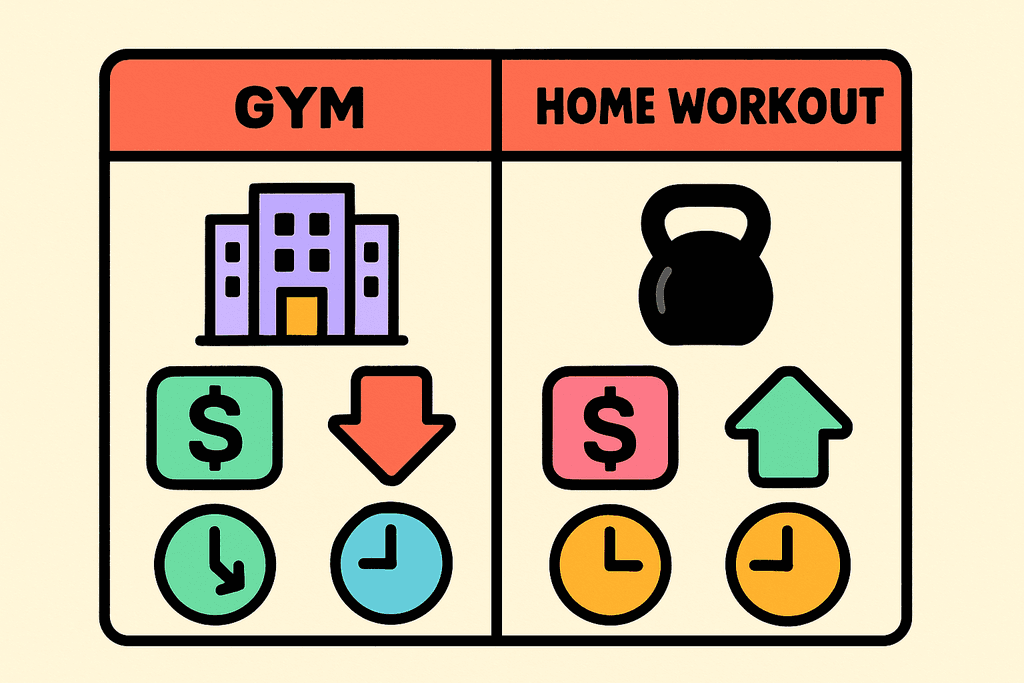
Gym memberships cost way more than most people realize when you add everything up. The average person spends between $40 to $70 each month just for basic access, and that doesn't include the hidden costs that sneak up on you.
Here's what gym-goers actually spend money on:
- Monthly membership fees that keep charging even when you don't go
- Gas money driving back and forth several times a week
- Special workout clothes because you feel weird wearing old t-shirts at the gym
- Protein shakes and snacks from the gym's overpriced cafe
- Parking fees if you're in a city
Working out at home costs almost nothing to start. You can do bodyweight exercises without spending a single dollar, and even if you want to buy some basic equipment like resistance bands or dumbbells, you're looking at a one-time cost of maybe $50 to $100.
Time Is the Real Game Changer
The average person spends 30 minutes just getting to and from the gym. That's before they even start warming up or changing clothes. When you work out at home, you can finish an entire session in the time it would take just to drive to a gym and find parking.
Time breakdown for a typical gym visit:
- 15 minutes driving there
- 10 minutes finding parking and walking in
- 5 minutes changing in the locker room
- 45 minutes actual workout
- 10 minutes showering and changing back
- 15 minutes driving home
That's 100 minutes total for a 45-minute workout. At home, you could be done in under an hour and already back to your day. For people trying to track their fitness and nutrition together, apps like MyFoodBuddy make it easy to log what you eat right after a home workout without the hassle of remembering everything later.
Flexibility Wins Every Time
Home workouts let you exercise whenever works for your schedule. Got 20 minutes before a meeting? You can knock out a quick session. Want to work out at 6 AM or 11 PM? No problem. Gyms have hours, and those hours don't always match when you actually have energy or free time.
What people love about home fitness:
- No waiting for equipment or dealing with crowded spaces
- Wear whatever you want without feeling judged
- Play your own music as loud as you like
- Take breaks whenever you need them
- Work out with your kids or pets around
The numbers tell a clear story. People are choosing convenience and savings over fancy equipment they rarely use anyway. Exercise without setting foot in gym spaces has become the norm for millions of people who realized they don't need a monthly membership to stay healthy.
Bodyweight Exercises That Actually Work
Most people think you need fancy gym equipment to build muscle and burn calories, but your own body weight is actually one of the most effective tools you can use. The human body is designed to move, push, pull, and lift itself in ways that create real strength and endurance. You don't need a monthly membership or expensive machines to see results. What you need is the right approach to using what you already have.
Push-ups remain one of the most complete upper body exercises you can do anywhere. They work your chest, shoulders, triceps, and core all at once. The beauty of push-ups is that you can modify them to match your fitness level. Start with wall push-ups if you're a beginner, move to knee push-ups as you get stronger, and eventually work up to standard push-ups or even decline variations.
- Standard push-ups burn approximately 7 calories per minute for a 155-pound person
- Burpees can burn up to 10 calories per minute, making them one of the highest calorie-burning bodyweight exercises
- Mountain climbers burn around 8-10 calories per minute while building core strength
- Jumping jacks burn about 8 calories per minute and get your heart rate up quickly
Squats and lunges build lower body strength without needing any weights at all. These movements target your quads, hamstrings, glutes, and calves while also engaging your core for balance. The key is proper form, not how many you can do. A slow, controlled squat with good depth works better than fifty rushed ones with poor technique.
Planks might look simple, but they're incredibly effective for building core stability. A strong core supports everything else you do, from running to lifting groceries. Start with 20-30 second holds and gradually increase your time. Side planks add variety and target different muscle groups.
For cardio without equipment, burpees and mountain climbers are your best friends. They combine strength training with cardiovascular work, getting your heart rate up while building muscle. A complete bodyweight routine might look like this: 3 sets of 10-15 push-ups, 3 sets of 15-20 squats, 3 sets of 30-second planks, and 3 sets of 10 burpees. Rest for 60 seconds between sets.
Turning Household Items Into Workout Equipment
Your home is full of workout equipment that you've never thought to use. That gallon of milk in your fridge weighs about 8 pounds, which makes it perfect for shoulder presses or bicep curls. Water bottles work great for lighter weights, and you can adjust the resistance by filling them more or less. The best part is that these items cost you nothing extra since you already own them.
Chairs are incredibly versatile for home workouts. You can use them for tricep dips, which target the back of your arms effectively. Step-ups on a sturdy chair give you a cardio and leg workout similar to what you'd get on gym equipment. Just make sure the chair is stable and won't slide around.
Household Items Workout Checklist:- Water bottles or milk jugs (1-8 pounds each) for arm exercises
- Sturdy chair for tricep dips, step-ups, and elevated push-ups
- Bath towel for resistance training and stretching
- Backpack filled with books for weighted squats and lunges
- Stairs for cardio intervals and calf raises
- Wall space for wall sits and modified push-ups
- Couch or bed for incline and decline variations
Towels create resistance when you pull against them during exercises. You can use a towel for rows by looping it around a door handle or even for assisted stretching after your workout. The friction and tension you create by pulling on the towel engages your muscles in ways that mimic resistance bands.
A backpack loaded with books becomes a weighted vest for squats, lunges, or even push-ups. Start light and add more books as you get stronger. This simple trick lets you progress your workouts without buying actual weights. Your stairs become a cardio machine when you do intervals of running or walking up and down them.
Pairing Exercise With Smart Nutrition Tracking
Here's something most people don't want to hear but need to understand. You can do burpees until you collapse and still not reach your weight goals if your nutrition isn't dialed in. Exercise burns calories and builds muscle, but what you eat determines whether you lose weight, gain muscle, or stay exactly where you are. The math is simple but the execution is where people struggle. A 30-minute home workout might burn 200-300 calories, but a single large muffin can contain 400-500 calories.
The 80/20 rule in fitness states that 80% of your results come from nutrition and 20% from exercise. This doesn't mean exercise isn't important, but it does mean you can't out-train a bad diet. When you combine consistent home workouts with proper calorie tracking, that's when real changes happen.
- Studies show that people who track their food intake lose twice as much weight as those who don't
- Exercise alone typically results in only 2-3% weight loss without dietary changes
- Combining exercise with calorie tracking can increase weight loss success rates by up to 70%
- Most people underestimate their calorie intake by 20-50% when not tracking
The problem with traditional calorie tracking is that it takes forever. Opening an app, searching for each ingredient, measuring portions, and manually entering everything turns a simple meal into a 10-minute data entry project. That's why most people quit after a few days. If tracking your nutrition is harder than doing the actual workout, something needs to change.
This is where tools like MyFoodBuddy make the difference between giving up and actually sticking with your goals. Instead of typing and searching, you just say what you ate. "Chicken breast, rice, and broccoli" gets logged in seconds, not minutes. The app handles the calculations using AI and USDA data, so you don't have to guess or measure obsessively.
When tracking becomes as easy as your home workout, you're more likely to do both consistently. You can log your post-workout meal by voice while you're still catching your breath. No need to wait until you're at your computer or spend time searching through databases. For anyone serious about getting results from exercise without setting foot in a gym, pairing those bodyweight workouts with effortless nutrition tracking creates a system that actually works long-term.
The combination of home exercise and smart nutrition tracking gives you everything a gym membership promises, minus the commute, the crowds, and the monthly fees. Your results depend on consistency, not location. Whether you're interested in achieving balanced meals or learning more about effective weight management, the tools exist to make both exercise and nutrition simple enough to maintain for life.
The Real Reason Home Workouts Succeed
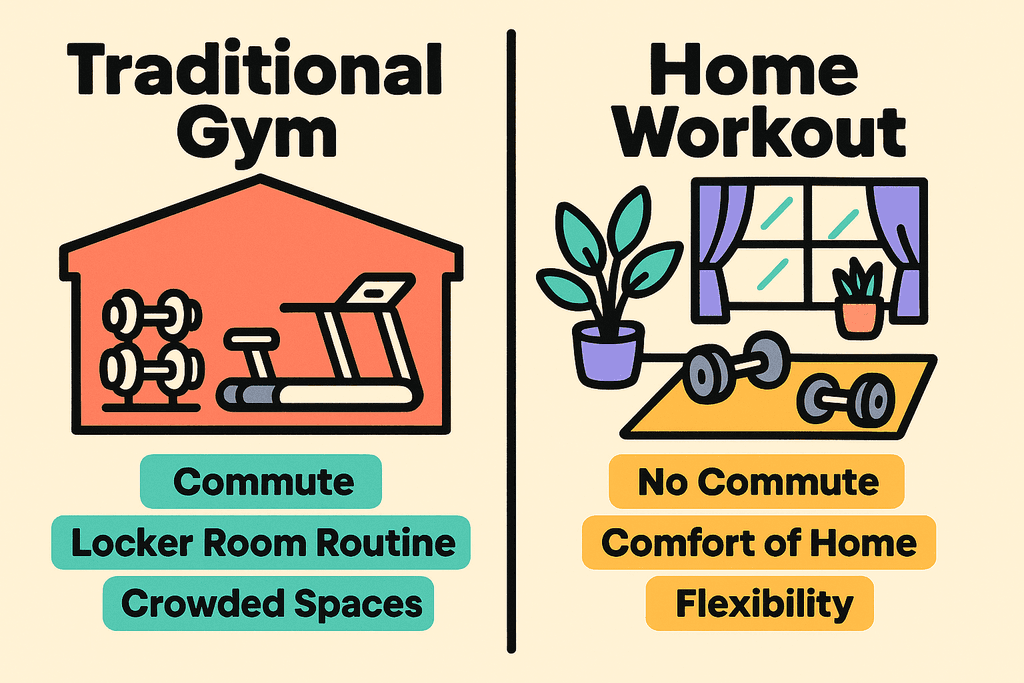
Studies show that 67% of people with gym memberships never actually use them, yet home workout enthusiasts maintain an 80% consistency rate over six months. The difference isn't about motivation or willpower. It's about removing friction from the process. When you can exercise without setting foot in gym facilities, you eliminate the mental barriers that kill most fitness routines before they even start. The commute, the parking, the locker room routine, and the intimidation factor all disappear when your workout space is just steps away from your bedroom.
Why Convenience Creates Consistency
The psychology behind home workouts is simple but powerful. Your brain loves easy wins, and the easier something is to start, the more likely you'll actually do it. Traditional gyms require planning, preparation, and a chunk of dedicated time that many people just don't have on busy days.
- No travel time means you can fit in a 20-minute workout during lunch breaks
- No equipment means no excuses about the squat rack being taken
- No audience means beginners feel comfortable learning new movements
- No closing hours means you can exercise at 6 AM or 11 PM without restriction
This convenience factor compounds over time. Missing one gym session often leads to missing two, then three, until you've fallen off completely. But when exercise is as simple as rolling out a yoga mat in your living room, that pattern breaks.
Home Workouts vs Gym Memberships
The comparison between home-based fitness and traditional gyms reveals some surprising truths about what actually drives results. Both approaches have their place, but the data tells an interesting story about long-term adherence.
Advantages of Home Workouts
- Zero commute time saves 30-60 minutes per workout session
- No monthly fees beyond optional equipment purchases
- Complete privacy for those who feel self-conscious exercising around others
- Flexibility to pause and resume workouts around family or work obligations
- Lower intimidation factor for beginners just starting their fitness journey
Challenges of Home Workouts
- Limited equipment variety compared to fully-stocked gyms
- Requires self-discipline without the social accountability of a gym environment
- Distractions from household tasks, family members, or pets
- Less access to professional trainers for form correction
Advantages of Gym Memberships
- Access to specialized equipment for targeted muscle development
- Built-in social environment that can boost motivation
- Professional staff available for guidance and safety spotting
- Dedicated space that mentally separates workout time from home life
Challenges of Gym Memberships
- Monthly costs ranging from $30 to $200 depending on facility quality
- Travel time and parking hassles add friction to the routine
- Peak hours mean waiting for equipment and crowded spaces
- Fixed operating hours that may not align with your schedule
The Nutrition Tracking Multiplier
Here's where things get interesting. Exercise alone only accounts for about 20% of weight management success. The other 80% comes from what you eat. When you combine the consistency of home workouts with proper nutrition tracking, you create a powerful feedback loop that traditional gym-goers often miss.
Most people who join gyms focus exclusively on burning calories through exercise. They spend an hour on the treadmill, then reward themselves with a 600-calorie smoothie that negates their entire workout. Without tracking both sides of the equation, you're essentially flying blind.
- Tracking creates awareness of portion sizes and hidden calories
- Seeing your nutrition data alongside workout logs reveals patterns you'd otherwise miss
- Apps like MyFoodBuddy make logging as simple as speaking what you ate
- Combined tracking shows whether you're actually in a caloric deficit or surplus
The beauty of home workouts is they pair naturally with nutrition awareness. When you're already building one convenient habit, adding another becomes easier. You finish your living room workout, grab your phone, and quickly log your post-workout meal by voice. The whole process takes seconds, not the minutes required by traditional calorie trackers that demand manual searching and portion calculations.
Habit Formation Beats Intensity Every Time
The fitness industry sells intensity. High-intensity interval training, extreme boot camps, and punishing workout programs promise rapid results. But research on behavior change tells a different story. Small, consistent actions beat sporadic intense efforts in almost every long-term study.
A person doing 15 minutes of bodyweight exercises at home five days per week will see better results after six months than someone doing intense 90-minute gym sessions twice per week. The math seems wrong, but the psychology is sound.
- Consistency builds neural pathways that make the behavior automatic
- Lower intensity means faster recovery and less burnout
- Frequent repetition improves form and reduces injury risk
- Regular activity keeps your metabolism elevated throughout the week
This is why the best workout is genuinely the one you'll actually do. A perfect program you abandon after three weeks helps nobody. A simple routine you maintain for three months changes everything. Home workouts remove enough barriers that maintaining consistency becomes realistic for people with jobs, families, and actual lives outside the gym.
Your Fitness Journey Starts at Home
The truth is, you don't need a gym membership to get in shape. Exercise without setting foot in gym spaces works just as well when you stay consistent with bodyweight movements, walking, and simple home routines. The real challenge isn't finding the perfect workout spot, it's tracking what you eat and making sure your nutrition matches your effort.
Most people focus only on exercise and forget that what you eat matters just as much. You can do push-ups and squats every day, but if you're eating way more than you burn, you won't see the results you want. That's where the missing piece comes in.
Starting small is the key to building habits that stick. Pick one or two exercises you actually enjoy, do them a few times a week, and track your meals without making it complicated. Tools like MyFoodBuddy remove the annoying parts of calorie counting by letting you just say what you ate instead of searching through endless food databases.
The combination of home workouts and simple nutrition tracking creates a system that actually works for busy people. You don't need fancy equipment or complicated meal plans. If you're curious about making nutrition tracking easier while you build your home fitness routine, check out our guide on achieving balanced meals without the hassle or learn how to stay consistent tracking calories without losing your mind.
Your fitness journey doesn't require a gym pass. It just requires showing up for yourself, one day at a time, with movement and nutrition working together.
Common Questions About Home Workouts
Working out at home brings up a lot of questions, especially if you're used to having gym equipment and trainers around. Most people wonder if they can actually get real results without all that fancy gear. The truth is that home workouts can be just as effective as gym sessions when done right, but there are some things you need to know to make them work. Here are the most common questions people ask when they start exercising at home.
Can you really build muscle without gym equipment?
Yes, you can build muscle using just your bodyweight. Push-ups, squats, lunges, and planks all create enough resistance to stimulate muscle growth, especially when you're starting out. As you get stronger, you can make exercises harder by changing the tempo, adding pauses, or trying more challenging variations like one-legged squats or diamond push-ups.
How long should home workouts be?
Most effective home workouts last between 20 to 45 minutes. You don't need hours of exercise to see results. Quality matters more than quantity, so focus on keeping your intensity high and your rest periods short. A solid 30-minute session done consistently will beat a random 90-minute workout any day.
Do I need to track calories if I'm exercising regularly?
Exercise alone won't guarantee weight loss or muscle gain if your nutrition isn't aligned with your goals. Many people overestimate how many calories they burn during workouts and end up eating more than they think. Tracking your food intake helps you understand what you're actually consuming versus what your body needs. Apps like MyFoodBuddy make this easy by letting you log meals through voice or text in seconds, so you can see if your nutrition matches your workout efforts without spending forever on manual entry.
What's the best time of day for home workouts?
The best time is whenever you'll actually do it consistently. Some people have more energy in the morning, while others prefer evening sessions after work. Pick a time that fits your schedule and stick with it so it becomes a habit. Your body will adapt to whatever time you choose.
How do I stay motivated without a gym environment?
Set up a dedicated workout space at home, even if it's just a corner of your living room. Track your progress through photos, measurements, or workout logs to see how far you've come. Having a routine helps too, like working out at the same time each day. Some people find that tracking their nutrition alongside their workouts keeps them more accountable since they can see both sides of the fitness equation.
Can I lose weight with just bodyweight exercises?
Bodyweight exercises burn calories and build muscle, which helps with weight loss. But weight loss happens when you burn more calories than you consume, so your diet plays the bigger role here. You could do bodyweight exercises every day and still gain weight if you're eating too much. Combining regular home workouts with proper calorie tracking gives you the full picture of what's actually happening with your body.
Ready to start tracking smarter?
Download MyFoodBuddy and start tracking your calories by just saying what you ate. No more searching databases or guessing portions.
Get started