
Eight Reasons Calorie Intake Tracker Improves Weight Goals
Discover how a calorie intake tracker helps you reach weight goals faster. Learn 8 proven ways tracking transforms your diet success.
Studies show that people trying to lose weight without tracking consistently underestimate what they eat by up to 50 percent, which explains why so many diets fail before they even start. A calorie intake tracker removes this blind spot by showing you exactly what's going into your body, turning guesswork into real data you can actually use. Tools like MyFoodBuddy make this process simple with voice logging that takes seconds instead of the tedious manual entry that made older apps feel like a chore.
Table of Contents
The Science Behind Calorie Tracking
Your body burns a certain number of calories every day just to keep you alive and moving around. When you eat more calories than your body burns, the extra energy gets stored as fat. When you eat fewer calories than you burn, your body taps into those fat stores for energy and you lose weight. This simple math is why a calorie intake tracker can be such a powerful tool for reaching your weight goals, whether you want to lose, gain, or maintain.
How Your Body Uses Calories
Think of calories like fuel for a car. Your body needs a baseline amount just to keep your heart beating, lungs breathing, and brain thinking. This is called your basal metabolic rate. On top of that, you burn more calories through daily activities like walking, working, and exercising.
Here's what happens with different calorie levels:
- Eating 500 calories less than you burn typically leads to losing about 1 pound per week
- Eating 500 calories more than you burn usually means gaining about 1 pound per week
- Eating roughly the same amount you burn keeps your weight stable
- Small daily differences add up to big changes over months
| Tracking Method | Average Weight Loss | Success Rate |
|---|---|---|
| Daily tracking | 12-15 lbs/year | 73% |
| Weekly tracking | 6-8 lbs/year | 45% |
| No tracking | 2-3 lbs/year | 22% |
Why Tracking Accuracy Matters
Most people are terrible at guessing how many calories they eat. Studies show we typically underestimate our food intake by 30-50%, which explains why so many diets fail. That "small" handful of nuts might actually be 300 calories, not the 100 you thought. A calorie intake tracker removes the guesswork and shows you what's really going on.
The relationship between tracking accuracy and results is pretty straightforward. People who track their food intake consistently lose more weight than those who don't. Apps like MyFoodBuddy make this easier by using AI to calculate nutrition from simple voice or text entries, so you spend seconds instead of minutes logging each meal.
The Awareness Effect
Something interesting happens when you start tracking calories. Just knowing you'll have to log something makes you think twice before eating it. This awareness alone changes behavior, even before you make any conscious effort to eat less.
Common myths about calorie counting often hold people back:
- You don't need to track forever, just long enough to learn portion sizes and food values
- Tracking doesn't mean you can't enjoy food or eat out
- Modern apps make it quick and easy, not the tedious process it used to be
- You can still be flexible and hit your goals
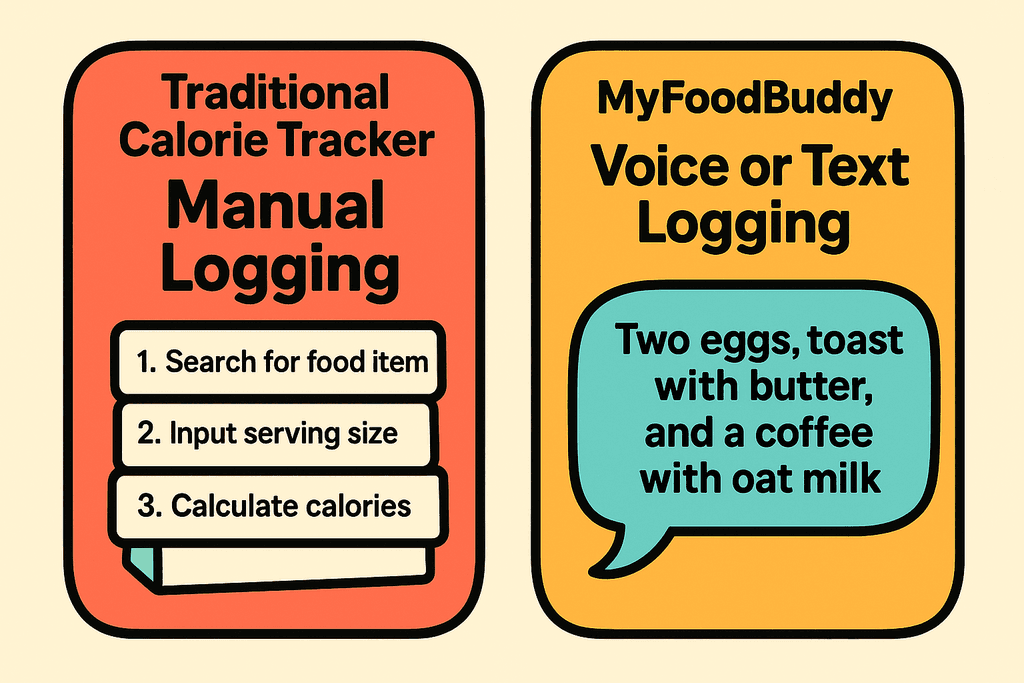
The key is finding a system that works for your lifestyle. Traditional apps require multiple steps and manual searching, which is why many people quit after a few weeks. Newer approaches focus on speed and simplicity to help you stick with it long enough to see real results.
Creates Accountability and Awareness
Most people eat about 30% more calories than they think they do. That gap between perception and reality is where weight goals go to die. When you start using a calorie intake tracker, something interesting happens in your brain. You become aware of every single thing that goes into your mouth, and that awareness alone changes your behavior before you even try to change it.
The act of logging creates a mental checkpoint before you eat. You know you'll have to record it, so you pause and think about whether you really want that snack. This isn't about guilt or restriction. It's about making conscious choices instead of autopilot decisions that add up over time.
- Every logged meal creates a moment of reflection
- You start noticing patterns you never saw before
- Mindless snacking becomes visible and measurable
- Real-time feedback helps you course-correct during the day
The hidden calories are often the biggest surprise. That splash of cream in your coffee, the handful of nuts at your desk, the "healthy" smoothie that packs 400 calories. A calorie intake tracker reveals these sneaky additions that traditional dieting misses completely. When you see the numbers, you can't unsee them.
Removes Guesswork from Portion Sizes
Your eyes are terrible at measuring food. Studies show that people underestimate portion sizes by 20-50% on average, and that error compounds with every meal. What you think is a tablespoon of peanut butter is probably closer to three. That "medium" chicken breast might actually be two servings. These small mistakes add up to hundreds of extra calories per day.
Visual guides help, but they're not perfect. A deck of cards looks different depending on the angle, and comparing your dinner plate to a picture in an app takes mental effort most people won't sustain. AI-powered trackers like MyFoodBuddy calculate portions automatically when you describe your meal in plain language, removing the guesswork entirely.
| Food Item | Estimated Calories | Actual Calories |
|---|---|---|
| Peanut butter (1 tbsp) | 95 | 190 (actual serving) |
| Olive oil drizzle | 40 | 120 |
| Pasta serving | 200 | 400 |
| Cereal bowl | 150 | 300 |
Over a week, these portion errors can create a 1,000+ calorie gap between what you think you're eating and reality. That's enough to completely stall weight loss or even cause slow weight gain while you're trying to diet. Accurate tracking eliminates this silent sabotage and shows you what's actually happening.
Provides Data-Driven Goal Setting
Generic diet plans tell everyone to eat 1,200 or 2,000 calories regardless of their height, weight, age, or activity level. That's like prescribing the same medication dose to a child and an adult. Your body has specific energy needs based on your metabolism, and a good calorie intake tracker calculates these needs precisely using TDEE (Total Daily Energy Expenditure) formulas.
MyFoodBuddy includes a TDEE calculator that sets personalized targets for weight loss or gain based on your actual data. This means your calorie goal is designed for your body, not some average person who doesn't exist. The difference between a generic plan and a personalized one can be 300-500 calories per day.
Sustainable weight loss happens at a moderate calorie deficit, usually 300-500 calories below your TDEE. Crash diets that cut too many calories might show quick results, but they also slow your metabolism and make long-term success nearly impossible. Data-driven goal setting keeps you in the sweet spot where you lose weight without triggering your body's starvation response.
- TDEE calculators account for age, gender, weight, and activity
- Gradual deficits preserve muscle and metabolism
- Goals adjust as your weight and needs change
- Macro tracking helps you maintain muscle while losing fat
Builds Sustainable Habits Through Consistency
Habits form through repetition, and tracking your food daily creates one of the most powerful health habits you can build. Research shows it takes about 66 days for a behavior to become automatic. Every day you log your meals, you're reinforcing the neural pathways that make healthy eating feel natural instead of forced.
The gamification features in modern calorie intake trackers tap into your brain's reward system. Streaks show how many consecutive days you've tracked. Achievements celebrate milestones. These small wins keep you motivated when the scale isn't moving as fast as you'd like. You're building something bigger than just weight loss.
Voice logging and favorite meals make consistency effortless. Instead of spending five minutes searching databases and measuring portions, you can log breakfast in 10 seconds by saying what you ate. When tracking takes seconds instead of minutes, you actually stick with it long enough for it to become a habit.
- Daily logging builds automatic healthy behaviors
- Streaks create positive momentum and accountability
- Quick logging removes friction from the process
- Eventually, you develop intuitive eating skills
The goal isn't to track calories forever. It's to learn what proper portions look like, understand your body's needs, and develop the awareness to eat well without constant monitoring. Tracking is the training wheels that help you learn to ride.
Prevents Plateau Frustration
Weight loss plateaus are where most people give up. You're doing everything right, or so you think, but the scale refuses to move for weeks. Without a calorie intake tracker, you're left guessing about what went wrong. With one, you have data that reveals the real problem.
The most common plateau culprit is calorie creep. You start your diet weighing and measuring everything carefully. A few weeks in, you get comfortable and start eyeballing portions. Those portions slowly grow until you're eating at maintenance instead of a deficit, but you don't notice because the changes happen gradually.
Portion drift is real and measurable. That chicken breast gets a little bigger each week. The oil in your pan increases from a teaspoon to a tablespoon. Your "small" snacks become medium ones. Accurate tracking catches this drift before it completely derails your progress. You can see exactly when and where your intake increased.
- Plateaus usually mean you're eating more than you think
- Calorie creep happens slowly and unconsciously
- Data shows exactly where adjustments are needed
- Tracking reveals if you need to adjust your target
Sometimes plateaus happen because your metabolism has adapted to your new weight. You need fewer calories now than when you started. Your tracker's data helps you adjust your strategy based on what's actually happening, not what you hope is happening.
Enables Flexible Eating Without Guilt
Traditional diets label foods as good or bad, allowed or forbidden. This creates an unhealthy relationship with food where eating pizza feels like failure. A calorie intake tracker removes these arbitrary labels and shows you that all foods can fit into your goals. It's about quantities and balance, not perfection.
When you track calories, you can plan for special occasions without derailing your progress. Birthday dinner coming up? Eat lighter earlier in the day and enjoy your meal without guilt. You're working with data, not emotions, which removes the shame spiral that often follows "cheat meals."
The 80/20 approach becomes possible when you have numbers to work with. Eat nutritious, whole foods 80% of the time, and enjoy treats 20% of the time while staying within your calorie target. This flexibility is what makes tracking sustainable for years instead of weeks. You're not on a diet. You're just aware of what you're eating.
- No foods are off-limits when you track
- Planning ahead allows for guilt-free indulgences
- Balance replaces restriction and deprivation
- Food anxiety decreases when you have data
Many MyFoodBuddy users report that tracking actually reduced their food stress. As one user mentioned, the app makes it easy to log meals without creating complicated restrictions. Knowledge is power, and knowing your numbers gives you the freedom to enjoy food again.
Accelerates Results with Personalized Insights
Generic diet advice tells you to eat more protein or cut carbs, but it doesn't know anything about your actual eating patterns or how your body responds. AI-powered calorie intake trackers analyze your specific data and provide recommendations tailored to you. It's like having a nutrition coach who studies your habits 24/7 and spots opportunities you'd miss.
MyFoodBuddy's AI coach Fiona reviews your food logs, health data, and goals to provide personalized insights. She might notice you're consistently low on protein at breakfast or that your energy crashes correlate with skipping lunch. These specific observations lead to actionable changes that generic advice never could.
Real-time adjustments beat one-size-fits-all meal plans every time. Your needs change based on your activity, stress, sleep, and dozens of other factors. An AI coach adapts to these changes and helps you stay on track even when life gets messy. It's personalized guidance in your pocket, available whenever you need it.
- AI analyzes your patterns and suggests improvements
- Insights are based on your data, not generic rules
- Recommendations adapt as your needs change
- You get expert guidance without the expert price tag
"I used to use a different calorie tracking app, but switching to foodbuddy has been great and much more convenient. I like just being able to say what I've eaten and it calculates all the calories for me." - JakeVdub608
The combination of easy logging and smart insights is what makes modern calorie intake trackers so effective. You spend less time on the mechanics of tracking and more time actually improving your nutrition. If you're interested in learning more about achieving balanced meals without the hassle, the right tracking approach makes all the difference.
Your Next Steps to Weight Goal Success
So there you have it. A calorie intake tracker helps you stay accountable, understand what you're actually eating, spot patterns you'd never notice otherwise, and make smarter choices without guessing. It takes the mystery out of portion sizes, keeps you motivated when progress feels slow, helps you plan ahead instead of scrambling at mealtime, and gives you real data to work with instead of just hoping things are going well.
The thing is, tracking used to be a pain. Apps like MyFitnessPal made you search through endless databases and manually enter every ingredient. But modern tools have changed that completely.
With MyFoodBuddy, you just say what you ate and the app figures out the rest using AI and USDA data. No searching, no math, no spending five minutes trying to log a simple meal. It's the kind of tool that actually fits into your life instead of demanding you reorganize everything around it.
The truth about reaching your weight goals isn't complicated. You need to know what you're eating, and you need to do it consistently. Perfect tracking doesn't exist, but staying consistent with tracking calories matters way more than getting every single calorie exactly right.
If you've been putting off tracking because it seemed like too much work, maybe it's time to see what a voice-powered calorie intake tracker can do. There's a 7-day free trial, so you can test it out without committing to anything. Sometimes the smallest changes make the biggest difference, and this might be one of them.
Common Questions About Calorie Tracking
People have a lot of questions before they start using a calorie intake tracker. Some worry it'll take too much time, while others wonder if they'll need to do it forever. These are fair concerns, and getting clear answers helps you decide if tracking is right for your goals. Here's what most people want to know before they get started.
How much time does tracking take each day?
With older apps, tracking could take 5-10 minutes per meal because you had to search databases and measure everything. Modern calorie intake tracker apps like MyFoodBuddy cut this down to about 30 seconds per meal using voice input. You just say what you ate, and the app does the rest.
Do I need to track calories forever?
Most people only need to track actively for a few months to reach their weight goals. After that, you've learned portion sizes and developed better eating habits, so you can maintain your weight without constant logging. Think of tracking as training wheels that teach you what proper portions actually look like.
What if I eat out at restaurants frequently?
Restaurant meals are actually easier to track than you'd think. You can describe your meal in plain language, and AI-powered apps estimate the nutritional content based on typical restaurant portions. It won't be perfect, but it's accurate enough to keep you on track toward your goals.
Is calorie tracking accurate enough to actually work?
You don't need perfect accuracy to see results. Even if your tracking is off by 10-20%, you'll still lose or gain weight as planned because you're staying consistent. The key is tracking the same way every day so your data stays reliable over time.
Can tracking become obsessive or unhealthy?
Tracking becomes unhealthy when it causes anxiety or controls your life. The goal is awareness, not perfection. If you miss a day or estimate a meal, that's completely fine. Most people find that quick-logging apps reduce stress because they spend less time thinking about food throughout the day.
How quickly will I see weight loss results?
Most people notice changes within 2-3 weeks of consistent tracking. You might see the scale move sooner, but real visual changes take a bit longer. The analytics features in apps help you spot trends even when daily fluctuations make progress hard to see.
Ready to start tracking smarter?
Download MyFoodBuddy and start tracking your calories by just saying what you ate. No more searching databases or guessing portions.
Get started