
Dietary Goals App Comparison for Busy People
Compare dietary goals apps for time-strapped users. Find the fastest way to track calories and hit your nutrition targets without the hassle.
Most people quit tracking their diet within the first two weeks, and the reason isn't lack of willpower. Traditional dietary goals apps demand 15-20 minutes of tedious meal logging every single day, turning what should be a helpful habit into an exhausting chore. Apps like MyFoodBuddy are changing this with voice-powered logging that cuts tracking time down to seconds, making it actually possible for busy people to stick with their goals.
Table of Contents
What Makes a Dietary Goals App Actually Work
Most people quit tracking their food within the first week. The reason isn't lack of motivation or willpower. It's because traditional calorie tracking apps turn a simple task into a 5-minute research project every time you eat. You open the app, search through thousands of database entries, pick the closest match, adjust serving sizes, and manually add each ingredient. By the time you're done logging breakfast, you've already lost interest in tracking lunch.
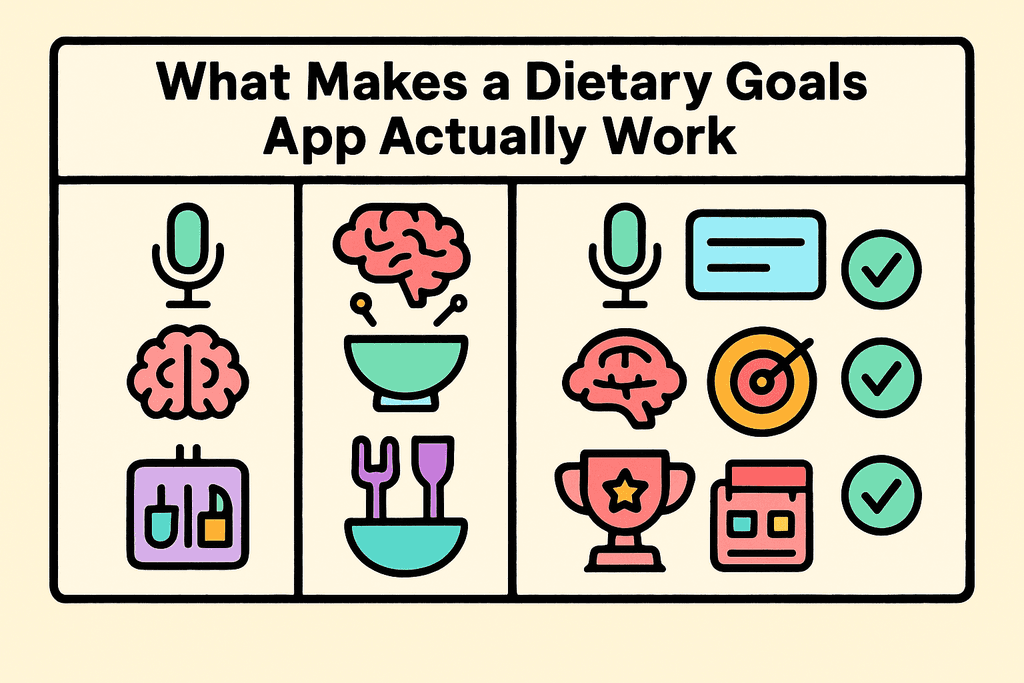
The difference between apps you'll actually use and apps that collect dust on your phone comes down to how much friction they create. Modern dietary goals apps have figured out that speed matters more than perfection. If logging a meal takes 30 seconds instead of 5 minutes, you're way more likely to stick with it for months instead of days.
Old Way vs New Way of Tracking
Traditional apps like MyFitnessPal built their systems around massive food databases. You had to become a detective, searching for the exact brand and portion size. Here's what that looked like compared to newer approaches:
Traditional Database Method:
- Search through thousands of user-submitted entries
- Pick between 47 different versions of "chicken breast"
- Manually enter each ingredient separately
- Adjust serving sizes with confusing measurements
- Double-check nutrition info because user data is often wrong
Modern Voice and AI Method:
- Say or type what you ate in plain English
- AI calculates nutrition from USDA data automatically
- Entire meal logged in one entry
- Natural portions like "a handful" or "medium bowl"
- Consistent, verified nutritional information
Why Automation Beats Manual Entry
The apps that work long-term handle the boring stuff for you. When you tell MyFoodBuddy "I had two eggs, toast with butter, and a coffee with oat milk," it doesn't make you search for each item. It just calculates everything and moves on. This matters because tracking should take less time than actually eating your meal.
Smart goal-setting is another place where automation helps. Instead of guessing how many calories you need, good apps use your actual data to set realistic targets. They look at your age, weight, activity level, and whether you want to lose or gain weight. Then they adjust as you go.
Consistency Matters More Than Perfect Numbers
Here's something most people get wrong about food tracking. You don't need to know the exact calorie count of every single almond. You need to track often enough to spot patterns. An app that gets you to log 6 days a week with 90% accuracy beats an app you use twice a month with 100% accuracy.
The best dietary goals app features focus on building habits, not creating work:
- Quick logging that takes seconds, not minutes
- Reminders that don't feel annoying
- Streaks and simple rewards for showing up
- Easy ways to repeat common meals
Apps that understand this design philosophy keep you coming back. The ones that don't end up deleted by day eight, right around when the initial motivation wears off and real life gets busy again.
Speed Champions: Apps That Save You Time
Most people spend about 15 minutes a day logging their meals in traditional calorie tracking apps. That's over 90 hours a year just typing in what you ate. When you're juggling work, family, and everything else life throws at you, those minutes add up fast. The difference between sticking with a dietary goals app and giving up often comes down to one thing: how much time it actually takes to use it.
Voice-enabled apps have changed the game completely. Instead of searching through endless food databases and adjusting portion sizes, you can just say what you ate. Apps like MyFoodBuddy let you speak naturally, like "two eggs, toast with butter, and a coffee with oat milk," and the AI handles everything else in seconds. Compare that to the old way of doing things, where you'd search for each item separately, scroll through dozens of similar entries, and manually adjust serving sizes.
- Voice logging: 10-30 seconds per meal
- Photo-based apps: 30-90 seconds (when lighting is good)
- Traditional database search: 3-5 minutes per meal
- Manual entry with calculations: 5-10 minutes per meal
Photo-based apps sound convenient in theory, but they come with their own headaches. You need good lighting, the right angle, and clear visibility of all your food. Ever tried taking a picture of a dark restaurant meal or a mixed dish like a burrito bowl? The results can be pretty hit or miss.
The real test is how these apps handle complex meals. Traditional apps make you break down every ingredient in your homemade stir-fry or restaurant meal. MyFoodBuddy's natural language processing understands context and combinations, so you can describe your entire plate in one sentence. One user mentioned switching from MyFitnessPal specifically because they were tired of creating custom meals and spending time searching. That's the kind of friction that makes people quit tracking altogether.
Accuracy vs Convenience: Finding the Balance
Here's something most people don't realize about calorie tracking: being 100% accurate doesn't matter nearly as much as being consistent. You could spend 10 minutes carefully weighing every ingredient and calculating exact macros, but if you only do it for a week before burning out, what's the point? The apps that actually help people reach their goals are the ones they'll use every single day, not just when they have extra time.
AI-powered apps using USDA data typically hit 85-95% accuracy without any manual input. That's more than good enough for most people's dietary goals. The small margin of error gets balanced out over time, especially when you're tracking consistently. Meanwhile, manual entry might be slightly more precise on paper, but it leads to what experts call "tracking burnout" where people just stop logging altogether.
Think about it this way: would you rather have perfect data for two weeks or pretty good data for six months? The answer seems obvious when you put it like that. Consistency beats perfection every time when it comes to reaching your health goals.
- AI apps learn your eating patterns and improve suggestions over time
- Favorites and meal templates maintain accuracy while saving time
- Small daily errors average out over weekly and monthly tracking
- Perfect tracking that you abandon after a week helps nobody
MyFoodBuddy uses AI that gets smarter the more you use it. If you regularly eat the same breakfast or have go-to meals, the app learns these patterns. You can save favorites and re-log them instantly, which gives you both speed and accuracy. It's like having a personal nutritionist who remembers everything you eat and makes logging easier each time.
The sweet spot is apps that make accuracy effortless. When the technology handles the hard parts, you can focus on actually following your dietary goals instead of becoming a data entry clerk. If you're interested in maintaining balanced nutrition without the hassle, this approach to meal planning might help.
Features That Actually Help You Stick to Goals
Marketing materials for dietary goals apps love to list dozens of features, but most of them just clutter the interface. What actually matters are the features that keep you coming back day after day. After talking to people who've successfully tracked their nutrition for months or years, a pattern emerges: the apps that work are the ones that make you want to open them, not the ones you force yourself to use out of guilt.
AI coaching makes a bigger difference than you'd expect. Having an AI coach like Fiona in MyFoodBuddy means getting personalized insights based on your actual eating patterns, not generic advice. It's the difference between someone saying "eat more protein" and someone saying "you tend to be low on protein at lunch, try adding chicken to your usual salad." That kind of specific feedback actually changes behavior.
- Streaks and achievements that celebrate consistency, not perfection
- Color-coded calendars that show patterns at a glance
- Weight trend charts that smooth out daily fluctuations
- TDEE calculators that adjust goals as your body changes
- Apple Health integration for complete health picture
Gamification gets a bad rap sometimes, but it works. Seeing a 30-day streak builds momentum. You don't want to break it, so you log that late-night snack even when you're tired. These small psychological nudges add up to real habit formation.
The TDEE calculator feature deserves special mention because it removes guesswork. Instead of using some random online calculator and hoping for the best, apps like MyFoodBuddy automatically adjust your targets based on your actual progress. If you're trying to lose weight but the scale isn't moving, the app can suggest adjustments. If you're losing too fast, it can bump up your calories to keep things healthy.
Integration with health platforms matters more than most people think. When your dietary goals app talks to Apple Health, it can factor in your actual activity level, not just what you planned to do. Had an unexpectedly active day? Your calorie target adjusts. This kind of dynamic goal-setting keeps you on track without constant manual tweaking.
The apps that succeed long-term are the ones that feel like helpful tools, not homework. They give you insights without overwhelming you with data. They celebrate progress without making you feel guilty about setbacks. And most importantly, they respect your time. For busy people trying to manage their nutrition, that last part might be the most important feature of all. You can explore more about how voice technology simplifies tracking for people with packed schedules.
Why Time-Strapped Users Need Different Solutions
Most people quit their dietary goals app within 17 days of downloading it. The reason isn't lack of motivation or willpower. It's because traditional calorie tracking demands too much mental energy at the exact moments when you have the least to give. When you're rushing between meetings or juggling kids after work, the last thing your brain wants to do is search through databases, measure portions, and manually input every ingredient in your lunch.
The psychology behind this failure is simple. Decision fatigue hits hardest when we're already overwhelmed, and asking someone to make dozens of micro-decisions about food logging creates a mental barrier that grows higher each day.
The Two Week Wall
Research on habit formation shows that busy professionals hit a critical breaking point around the 2-3 week mark with complex tracking systems. This happens because:
- Traditional apps require 5-8 minutes per meal to log accurately
- Database searches often return 20+ similar items, forcing choice paralysis
- Manual portion estimation adds cognitive load during already stressful moments
- The cumulative time investment reaches 30-45 minutes daily
That time adds up fast. Spending 15 minutes per day on food logging means you're investing 91 hours per year just on data entry. Most people don't consciously calculate this cost until they've already abandoned the app.
The Consistency Advantage
Voice-first dietary goals app solutions like MyFoodBuddy change this equation entirely. When you can log "grilled chicken salad with olive oil dressing" in 5 seconds while walking to your car, the mental barrier disappears. The compound effect of saving 10-15 minutes daily isn't just about time. It's about removing friction at the exact moment when friction kills habits.
Key Insight: Users who spend less than 60 seconds logging meals show 4x higher retention rates after 90 days compared to those using traditional manual entry methods.
Modern multitasking lifestyles demand tools that fit into the gaps between activities. You can't pull out your phone and spend 8 minutes searching databases while your toddler is melting down or during a quick break between Zoom calls. But you can speak a sentence. This shift from perfection-focused tracking to consistency-focused tracking is what separates apps that people actually use from apps that collect digital dust.
Finding Your Perfect Dietary Goals App
Picking a dietary goals app isn't about finding the fanciest one with the most features. It's about finding the one that fits into your actual life, not the life you wish you had. If you're someone who barely has time to eat lunch, you probably won't stick with an app that needs five minutes of button-tapping every meal. The app that works is the one you'll actually open when you're standing in line at a coffee shop or sitting in your car between meetings.
Most people who quit tracking do it because the process takes too long. Apps like MyFitnessPal and Cronometer work great if you have the time and patience, but busy people need something faster. That's where voice-powered options like MyFoodBuddy come in, letting you just say what you ate instead of searching through databases.
Here's what actually matters when choosing a dietary goals app:
- How fast can you log a meal in real-world situations
- Whether it matches your current schedule, not your ideal one
- If you've failed at tracking before, whether it removes the parts that made you quit
- Whether you can test it risk-free before committing
The seven-day trial period exists for a reason. Use it to track meals during your busiest week, not your calmest one. If you can stick with it when life gets messy, you've found your match. And if you're curious about how voice technology makes tracking easier for people with packed schedules, that might be worth exploring before you decide.
The best dietary goals app is simply the one you'll still be using three months from now.
Common Questions About Dietary Goals Apps
Choosing the right dietary goals app can feel overwhelming when you're already juggling work, family, and everything else life throws at you. Most people have the same questions before committing to a tracking system, and the answers can make or break your success. Here's what you actually need to know before downloading your next nutrition app.
How accurate are voice-based food logging apps?
Voice-based apps like MyFoodBuddy use AI combined with USDA nutritional databases to estimate calories and nutrients, which makes them surprisingly accurate for everyday tracking. The accuracy depends on how specific you are when logging, like saying "two scrambled eggs" instead of just "eggs." While they won't match the precision of weighing every ingredient, they're accurate enough for most people to see real progress without the hassle.
Can I track macros and micros, not just calories?
Yes, most modern dietary goals apps track macronutrients like protein, carbs, and fats alongside your calorie intake. Advanced apps also monitor micronutrients including vitamins and minerals, with some tracking over 20 different nutrients. MyFoodBuddy tracks comprehensive nutritional data and syncs with Apple Health, so you get the full picture of your nutrition without manually calculating anything.
Do I need to weigh my food for these apps to work?
No, you don't need a food scale to use most dietary tracking apps effectively. Apps that accept natural language input let you estimate portions using common measurements like cups, tablespoons, or simple descriptions like "a handful of almonds." While weighing food increases accuracy, the best app is the one you'll actually use consistently, and that usually means keeping things simple.
What happens if the app doesn't recognize my food?
Most AI-powered apps will make their best estimate based on similar foods in their database when they encounter something unfamiliar. You can usually edit entries afterward if the estimate seems off, or add custom foods for items you eat regularly. The AI learns from massive food databases, so it recognizes most common foods and even many restaurant meals without issues.
Are expensive apps worth it compared to free options?
Free apps often work fine for basic calorie counting, but they typically require more manual input and include ads that slow you down. Paid apps save you time with features like voice logging and AI-powered nutrition extraction, which matters when you're busy. MyFoodBuddy costs $39 per year compared to apps like MyFitnessPal that charge monthly, and the time you save on logging usually makes up for the cost if you stick with it.
How long does it take to see results with consistent tracking?
Most people notice changes in energy levels within the first week of tracking, while visible weight changes typically appear after two to three weeks of consistent logging. The key is actually sticking with it, which is why apps that make logging quick and painless tend to produce better results than more detailed options that people abandon after a few days. Tracking itself doesn't create results, but it helps you stay aware of your eating patterns long enough for new habits to form.
Ready to start tracking smarter?
Download MyFoodBuddy and start tracking your calories by just saying what you ate. No more searching databases or guessing portions.
Get started