Curb Sugar Cravings in Three Days Easily
Beat sugar cravings in 72 hours with simple strategies. Learn how to reset your taste buds and track progress effortlessly with smart tools.
Your brain lights up for sugar the same way it does for addictive drugs, which explains why that afternoon cookie craving feels impossible to ignore. The good news is that your taste buds can actually reset in just 72 hours when you cut back, making it easier to curb sugar cravings in three days than you might think. This quick reset works because your body stops expecting that constant sugar rush, and the intense cravings that feel so overwhelming right now start to fade naturally.
Table of Contents
- What Really Happens When You Crave Sugar
- Day One: Reset Your System
- What to Focus on Day One
- Strategies That Work on Day Two
- Healthy Swaps to Try
- What People Notice by Day Three
- Setting Yourself Up for Week Two
- Why Tracking Makes the Difference
- Your Three-Day Reset Starts Now
- Common Questions About Sugar Cravings
What Really Happens When You Crave Sugar
Your brain lights up when you eat sugar the same way it does with addictive drugs. Scientists have found that sugar triggers a flood of dopamine, the feel-good chemical that makes you want more and more. This isn't just about willpower or being weak. Your brain is literally wired to seek out sugar because for thousands of years, sweet foods meant quick energy and survival. The problem is that modern life gives us way more sugar than our ancestors ever had, and our brains haven't caught up yet.
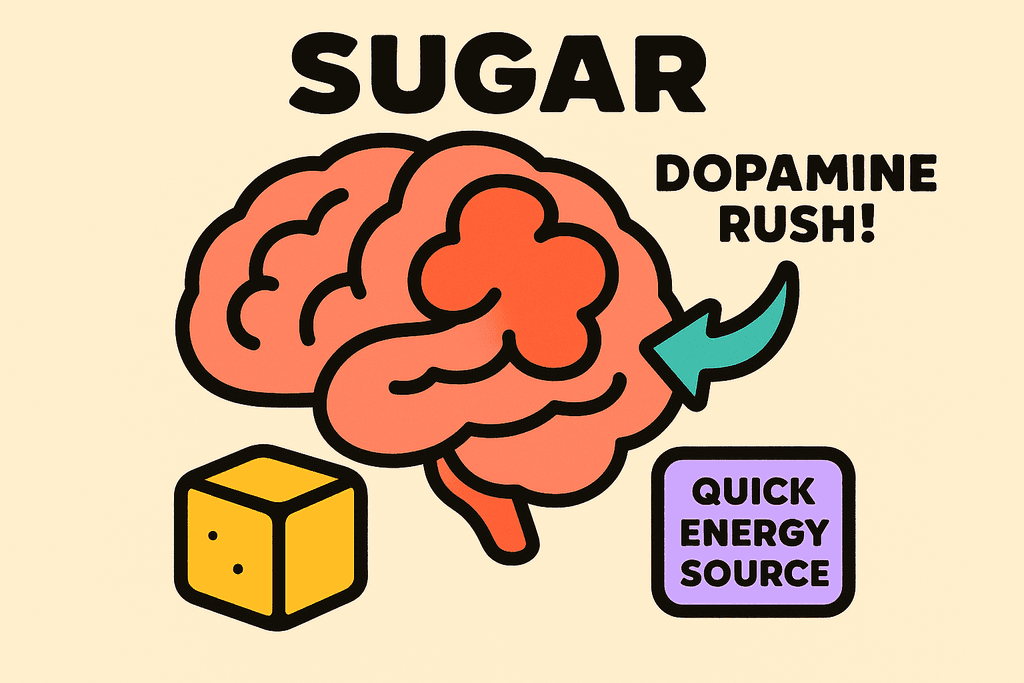
When you eat something sweet, your blood sugar shoots up fast. Your body panics and releases insulin to bring it back down. But here's the tricky part: that insulin often works too well, and your blood sugar crashes below where it started.
Americans eat about 77 grams of sugar per day, which is more than triple what health experts recommend. That's roughly 17 teaspoons of sugar every single day.
The Crash and Crave Cycle
That blood sugar crash makes you feel tired, foggy, and irritable. Your brain remembers that sugar fixed this problem before, so it sends out urgent signals for more sweet stuff. This creates a loop that's hard to break without understanding what's happening.
The cycle looks like this:
- You eat sugar and feel great for 30-60 minutes
- Your blood sugar crashes and you feel worse than before
- Your brain screams for more sugar to feel better
- You give in and the whole thing starts over
Sugar cravings peak between 3-4 PM for most people, which is when blood sugar naturally dips and stress from the day builds up.
Why Some Days Are Worse Than Others
Ever notice how you want sugar more when you're stressed or tired? That's not random. Your body has specific triggers that make cravings way more intense, and knowing them helps you curb sugar cravings in three days instead of struggling for weeks.
Three main things make sugar cravings worse:
- Poor sleep messes with hunger hormones and makes your brain seek quick energy
- High stress raises cortisol, which tells your body to store fat and crave sugar
- Skipping meals causes blood sugar drops that trigger emergency cravings
When you're tracking what you eat with tools like MyFoodBuddy, you start to see these patterns clearly. You might notice that on days when you sleep less than six hours, you log way more sugary snacks. Or that skipping breakfast always leads to a 3 PM candy bar.
People who sleep less than 6 hours per night consume 385 more calories the next day, with most of those extra calories coming from sugar and simple carbs.
Your Brain on Sugar
Think of sugar like a credit card for energy. It gives you a quick boost now, but you pay for it later with interest in the form of crashes and more cravings. Your brain associates sugar with instant reward and relief, which is why it's so hard to just say no when you're standing in front of the vending machine.
The good news is that this cycle can be broken faster than you think. Your taste buds and brain chemistry can actually reset in just a few days when you know the right steps. Understanding what drives your cravings is the first step to curb sugar cravings in three days and finally break free from the constant ups and downs.
Day One: Reset Your System
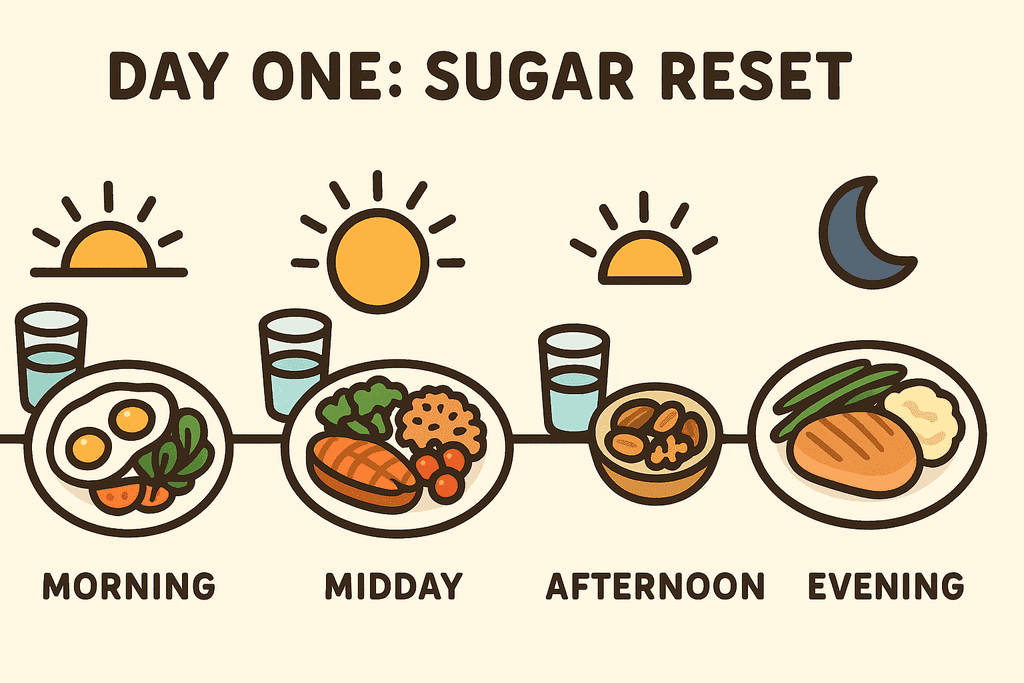
Your body runs on sugar like a car runs on gas, but too much of it keeps you stuck in a cycle that's hard to break. The first 24 hours of cutting back on sugar can feel rough, but it's also when you start taking control back. Most people don't realize that eating protein first thing in the morning is one of the easiest ways to stop sugar cravings before they even start. When you skip the sugary cereal and grab eggs or Greek yogurt instead, your blood sugar stays steady instead of spiking and crashing an hour later.
The next step is simple but important. Walk through your kitchen and move the obvious sugar sources out of sight. You don't have to throw everything away, but putting cookies in a high cabinet instead of on the counter makes a real difference when a craving hits.
What to Focus on Day One
- Start with protein at breakfast to keep blood sugar stable
- Remove temptations from easy reach in your kitchen
- Drink water constantly because thirst often disguises itself as hunger
- Eat every 3-4 hours to prevent energy crashes that trigger cravings
- Choose whole foods like vegetables, lean proteins, and healthy fats
Herbal tea becomes your best friend on day one. When you think you're hungry between meals, try drinking a cup of peppermint or chamomile tea first. A lot of times what feels like a sugar craving is actually your body asking for water. The headaches and irritability you might feel are normal, and they're actually a sign that your body is adjusting to running on steady fuel instead of sugar spikes.
Day One: Reset Your System
Logging what you eat helps more than you'd think. When you track your meals, even just quickly saying "grilled chicken, broccoli, and brown rice" into an app, you start noticing patterns you never saw before. This is where something like MyFoodBuddy makes the process easier since you can just speak what you ate instead of typing everything out.
Day Two: Build Momentum
Day two is when things get interesting, and not always in a good way. This is typically when cravings hit their peak, but here's something most people don't know: the cravings on day two are actually shorter than day one, even though they feel more intense. Your body is fighting hard to get you back to your old habits, but it's also starting to adapt. The good news is that if you can make it through today, tomorrow gets significantly easier.
Adding more fiber to your meals is the secret weapon most people overlook. Foods like lentils, black beans, and oats keep you full longer and slow down how quickly sugar enters your bloodstream. When you feel satisfied after eating, you're less likely to go searching for something sweet an hour later.
Strategies That Work on Day Two
- Go for a short walk when a craving hits hard
- Call a friend or do something with your hands
- Keep cut vegetables ready in the fridge
- Notice how your energy feels more stable than yesterday
- Track everything you eat to spot your trigger times
Distraction techniques sound simple, but they work because most cravings only last about 10-15 minutes. If you can occupy yourself during that window, the craving passes. Some people do pushups, others text a friend, and some just step outside for fresh air. The method doesn't matter as much as having a plan before the craving shows up.
Day Two: Build Momentum
You might notice something subtle happening with your mood and energy by the afternoon of day two. The crashes you used to get around 3pm might not be as severe. Your focus might stick around a bit longer. These small wins matter because they show you that your body is already responding to the changes you're making. If you're tracking with voice logging, you can look back at yesterday and today to see exactly what you ate and how it made you feel.
Healthy Swaps to Try
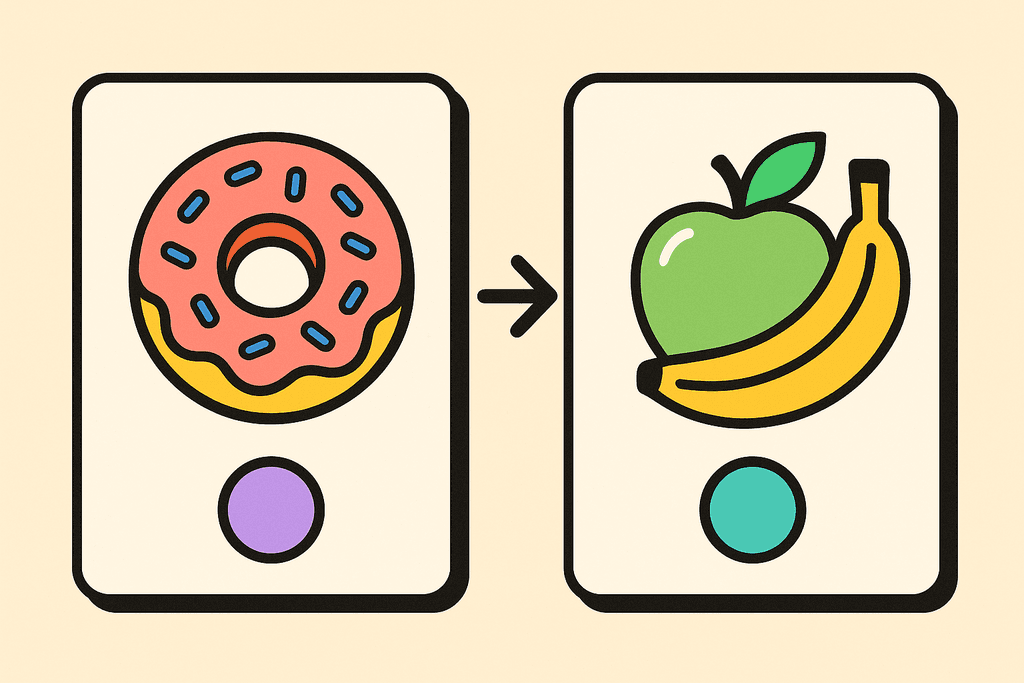
- Instead of candy: Apple slices with almond butter
- Instead of soda: Sparkling water with lemon
- Instead of cookies: A handful of nuts with a few dark chocolate chips
- Instead of sweetened yogurt: Plain Greek yogurt with berries
Day Three: Lock In Your Progress
By day three, something shifts. Most people wake up and realize they're not thinking about sugar as much as they were 48 hours ago. The constant mental chatter about wanting something sweet starts to quiet down. Your taste buds are actually changing right now, becoming more sensitive to the natural sweetness in foods like carrots, bell peppers, and fruit. A strawberry that tasted just okay on day one might taste surprisingly sweet today.
This is the day to think beyond the three-day reset. The habits you build today determine whether you slide back into old patterns next week or keep the momentum going. Planning your meals for the next few days takes about 10 minutes but saves you from making poor decisions when you're tired or stressed.
What People Notice by Day Three
- Cravings are 60-70% less intense than day one
- Energy levels feel more consistent throughout the day
- Sleep quality often improves
- Skin might look slightly clearer
- Mood swings decrease noticeably
The tracking routine you started on day one becomes crucial now. When you can quickly log meals without it feeling like a chore, you're more likely to stick with it long-term. Apps that let you just say what you ate, like MyFoodBuddy, remove the friction that makes people quit tracking after a few days. You can see your sugar intake over the past three days and watch the numbers drop.
Celebrating the small wins matters more than you think. You made it three days without giving in to major sugar cravings. That's worth acknowledging. Some people reward themselves with a new book, a relaxing bath, or time doing something they enjoy. Just avoid using food as a reward, especially sweet food, since that reinforces the old patterns you're trying to break.
Setting Yourself Up for Week Two
The next seven days are about making these changes stick. Prep some grab-and-go options like hard-boiled eggs, cut vegetables, and portioned nuts. When healthy food is as convenient as junk food, you'll reach for it more often. Keep logging your meals so you can spot patterns and adjust as needed.
If you want to dive deeper into maintaining balanced nutrition without the hassle, check out our guide on achieving balanced meals without the hassle. And for those Monday morning fresh starts we all love, there's helpful advice in starting fresh every Monday without the guilt.
The three-day reset isn't magic, but it does give your body enough time to break the immediate sugar dependency cycle. What you do on day four and beyond determines whether this becomes a lasting change or just another failed attempt. The tools are there, the knowledge is there, and now you've proven to yourself that you can do this.
Why Tracking Makes the Difference
Studies show that people who track their food intake are twice as likely to reach their health goals compared to those who don't. The reason is simple: you can't manage what you don't measure. When you're trying to curb sugar cravings in three days, awareness becomes your most powerful tool. Most people have no idea how much sugar they're actually consuming because it hides in places you'd never expect, like salad dressings, bread, and even "healthy" yogurt.
The Hidden Sugar Problem
The average person consumes about 17 teaspoons of added sugar daily, which is way more than the recommended 6-9 teaspoons. Without tracking, you're basically flying blind through a minefield of hidden sugars.
- A single tablespoon of ketchup contains about 1 teaspoon of sugar
- Flavored yogurt can pack up to 7 teaspoons of sugar per serving
- Store-bought smoothies often contain more sugar than a candy bar
- Even whole wheat bread typically has added sugars you don't taste
Traditional Tracking Versus Modern Solutions
Here's where most people give up. Traditional calorie tracking apps require you to search through massive databases, measure portions, and manually input every ingredient. It takes forever and feels like a part-time job.
Traditional Tracking Methods
- Requires 5-10 minutes per meal to log accurately
- Forces you to search through thousands of food entries
- Demands precise measurements and portion calculations
- Often abandoned within the first week due to time commitment
Voice-Based Tracking
- Takes 10-15 seconds to log an entire meal
- Uses natural language like talking to a friend
- Automatically calculates nutritional values using AI
- Removes the friction that causes people to quit
Real-Time Awareness Changes Behavior
When you log your food immediately, something interesting happens. You start making better choices before you even finish your meal. Real-time feedback creates a mental checkpoint that helps you pause and reconsider that second cookie or sugary afternoon snack.
MyFoodBuddy's AI coach Fiona takes this a step further by analyzing your sugar intake patterns and providing personalized insights. Instead of just seeing numbers, you get context about how your choices affect your goals to curb sugar cravings in three days. The voice logging feature means you can track anywhere, anytime, without pulling out your phone to type for five minutes.
Your Three-Day Reset Starts Now
Breaking free from sugar doesn't need to be a month-long struggle. Three days is actually enough time to reset your taste buds and start feeling the difference. Your body adapts faster than you think, and most people notice their cravings drop significantly after just 72 hours of eating whole foods and staying hydrated.
The secret is keeping things simple. Regular meals prevent those desperate hunger moments when you'd normally reach for something sweet. Drinking enough water helps too, since thirst often disguises itself as a craving.
Here's what makes the biggest difference during your reset:
- Eating whole foods instead of processed stuff with hidden sugars
- Having meals at consistent times so your blood sugar stays stable
- Tracking what you eat to spot patterns you might miss otherwise
- Pushing through day two, which is usually the hardest
Most tracking apps make logging food feel like homework, which is why people quit. MyFoodBuddy lets you just say what you ate and handles the rest, so you can focus on actually sticking to your reset instead of fiddling with databases. The AI pulls nutrition data automatically, which means you'll catch those sneaky added sugars in foods you thought were healthy.
Day two will test you. That's when your body really starts asking for its usual sugar fix. But once you get past that hump, things get easier fast. If you want more details on exactly what to eat each day, check out our three-day plan to beat sugar cravings for a complete breakdown.
The tools you use matter less than actually using them. But when tracking takes seconds instead of minutes, you're way more likely to stick with it long enough to see results.
Common Questions About Sugar Cravings
Breaking free from sugar isn't always straightforward, and you probably have questions about what you can and can't do during your three-day reset. The good news is that this process is more flexible than most strict diets, and small mistakes won't ruin your progress. Here are the most common questions people ask when they're ready to curb sugar cravings in three days, along with honest answers that'll help you succeed.
Can I have fruit during the three-day reset?
Yes, you can eat fruit during your reset, but stick to lower-sugar options like berries, green apples, or citrus fruits. The natural fiber in whole fruit slows down sugar absorption, which means it won't trigger the same intense cravings as candy or soda. Just avoid fruit juice and dried fruit since these are concentrated sugar bombs without the beneficial fiber.
What if I slip up and eat sugar on day two?
Don't panic or give up completely if you eat something sugary mid-reset. Just get back on track with your next meal and keep going. The three-day timeline isn't magic, so adding an extra day or two won't hurt. What matters most is building momentum and showing your body that you can go longer periods without added sugars.
Will the cravings come back after three days?
The intense physical cravings usually stay away as long as you don't go back to eating lots of added sugar regularly. Your body adapts to whatever you feed it most often, so if you keep sugar intake moderate after the reset, you'll maintain your progress. Occasional treats won't restart the cycle, but daily desserts probably will.
How much sugar is okay to eat daily?
The American Heart Association recommends no more than 25 grams of added sugar per day for women and 36 grams for men. That's about six to nine teaspoons, which sounds like a lot until you realize one can of soda has about 39 grams. Reading labels becomes essential since sugar hides in everything from bread to salad dressing.
What's the easiest way to track sugar without spending hours?
Traditional calorie trackers make you search databases and measure everything, which gets old fast. MyFoodBuddy lets you just say what you ate, like "Greek yogurt with blueberries and a handful of almonds," and it automatically calculates your sugar intake along with other nutrients. You can track your entire day's sugar in under a minute instead of the 10-15 minutes other apps require.
Can I drink coffee during the reset?
Coffee is totally fine during your three-day reset, but skip the flavored syrups and sweeteners. Black coffee, coffee with unsweetened milk, or coffee with a small amount of cream won't interfere with breaking your sugar addiction. If you absolutely need sweetness, try a tiny bit of stevia or monk fruit sweetener, though your taste buds will adjust faster if you go without.
Ready to start tracking smarter?
Download MyFoodBuddy and start tracking your calories by just saying what you ate. No more searching databases or guessing portions.
Get started