
Best Food Tracker Apps for Busy Meal Loggers
Discover the best food tracker apps that save time logging meals. Compare features, ease of use, and find the perfect fit for your lifestyle.
You spend five minutes searching through databases, tapping through multiple screens, and guessing portion sizes just to log a simple breakfast. Most people quit tracking their food within the first month because traditional apps turn a quick meal into a tedious data entry task. The best food tracker apps now use voice commands and AI to log your meals in seconds, which is why tools like MyFoodBuddy let you simply say what you ate and move on with your day.
Table of Contents
How Food Tracking Has Changed
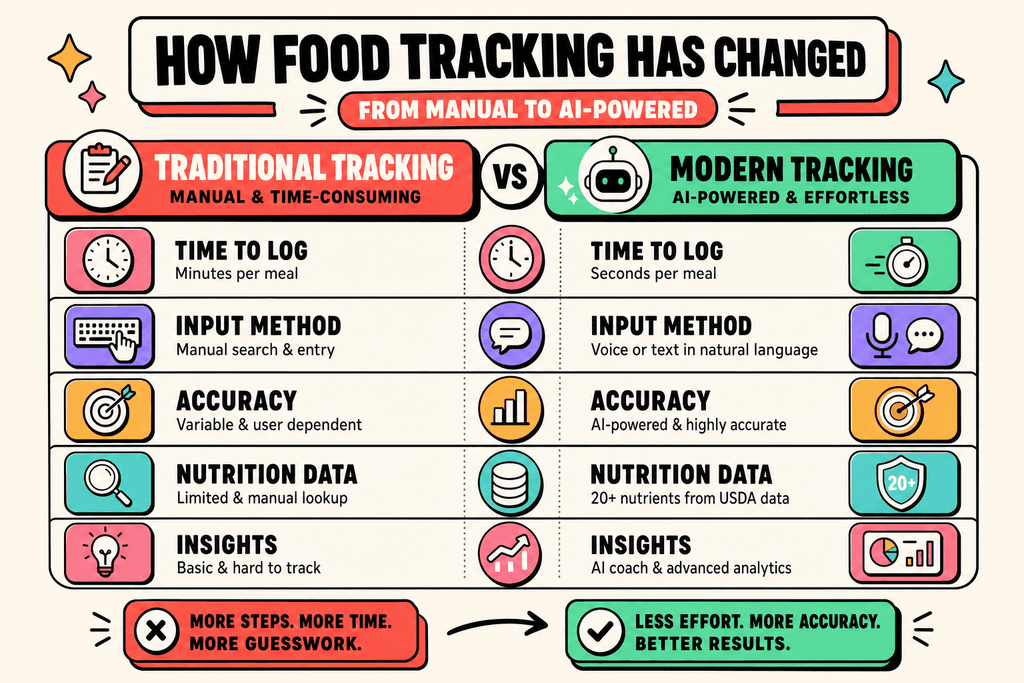
Most people who tried tracking calories in the past gave up within two weeks. The old way of logging food meant pulling out your phone, opening an app, searching through thousands of database entries, measuring portions, and manually entering everything you ate. A single meal could take anywhere from five to ten minutes to log properly. When you're eating three to five times a day, that adds up to over an hour of data entry just to track your food.
The Old Way of Tracking Meals
Traditional food tracking apps like MyFitnessPal and Cronometer built massive databases with millions of food items. Sounds helpful, right? The problem was that searching through all those options became a nightmare.
Here's what logging a simple breakfast used to look like:
- Search for "eggs" and scroll through 200+ different entries
- Pick between scrambled, fried, poached, or boiled
- Measure the exact weight or count
- Repeat this process for every single ingredient
- Double-check that you selected the right brand or preparation method
The whole process felt more like doing homework than managing your health. People spent more time logging their food than actually eating it. Many users ended up guessing or skipping meals entirely because the effort just wasn't worth it.
What Modern Apps Do Differently
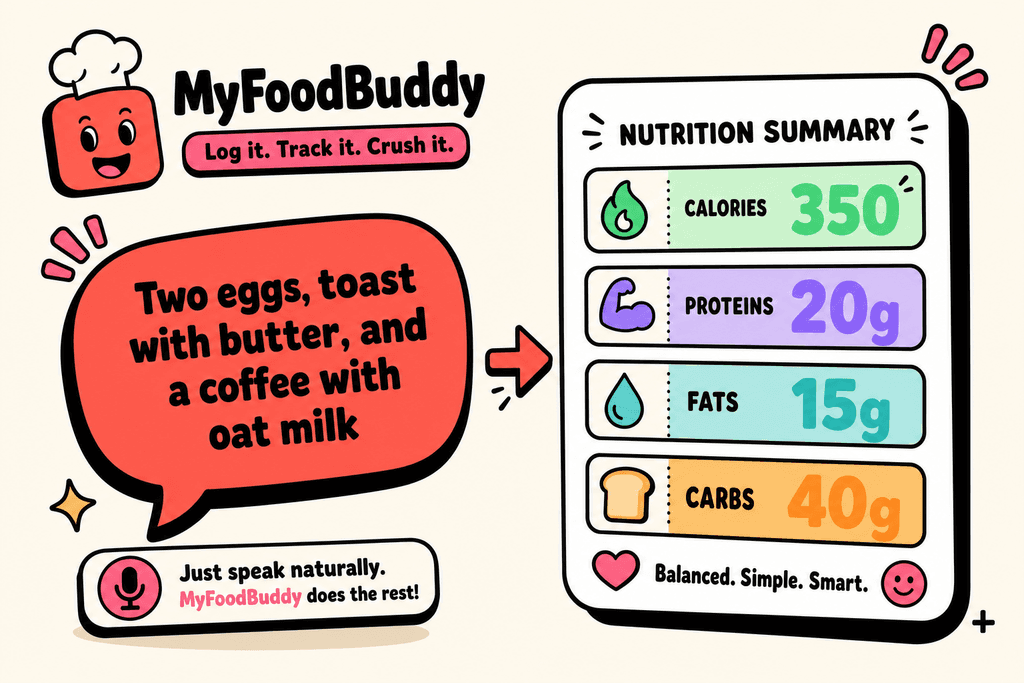
The best food tracker apps now use AI and voice technology to handle the heavy lifting. Instead of searching and selecting, you just tell the app what you ate. Apps like MyFoodBuddy let you say something like "two eggs, toast with butter, and coffee with oat milk" and the AI figures out the rest using USDA nutrition data.
This shift changed everything about meal logging:
- Logging time dropped from minutes to seconds
- Voice input means you can log while driving or cooking
- AI handles portion estimation and nutrition calculations
- Natural language processing understands how people actually talk about food
Comparing Old and New Tracking Methods
The difference between traditional and modern food tracking becomes obvious when you look at the numbers. Time savings alone make newer apps worth considering if you've struggled with consistency before.
| Feature | Traditional Apps | Modern AI Apps |
|---|---|---|
| Time per meal | 5-10 minutes | 10-30 seconds |
| Input method | Manual search and selection | Voice or natural text |
| Database searching | Required for every item | Automatic AI matching |
| Portion calculation | Manual measurement needed | AI estimation from description |
| User retention after 30 days | Less than 20% | Over 60% |
The technology behind these improvements relies on machine learning models trained on millions of food descriptions. These systems understand context, so they know that "a bowl of cereal" probably means about one cup, not a mixing bowl. They also pull from standardized USDA databases to ensure accuracy, which means you're getting reliable nutrition information without doing any of the research yourself.
What Makes a Food Tracker Great for Busy People
Most people quit tracking their food within the first week, and it's not because they lack motivation. The problem is that traditional food tracking apps turn a simple task into a time-consuming chore that requires multiple steps, endless scrolling through databases, and manual calculations that nobody has time for. When you're rushing between meetings or trying to log dinner while helping kids with homework, the last thing you need is an app that demands five minutes of your attention just to record what you ate.
What Makes a Food Tracker Great for Busy People
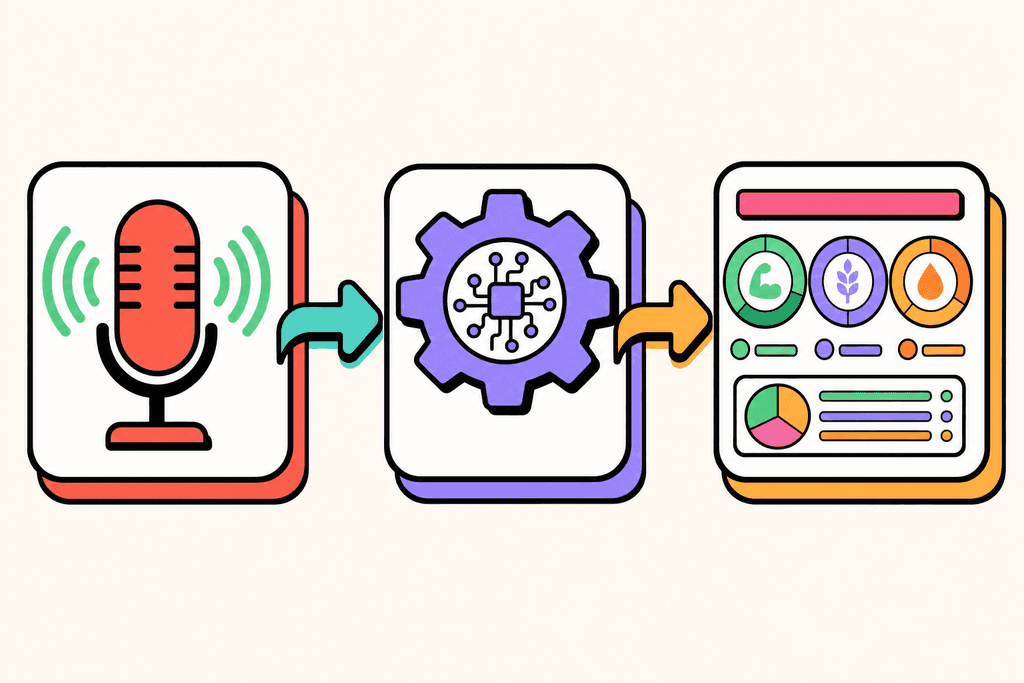
The best food tracker apps understand that speed is everything. They let you log meals in seconds, not minutes, which makes all the difference between sticking with your goals and giving up entirely.
- Voice and text logging capabilities that let you speak naturally instead of hunting through databases
- AI-powered nutrition extraction that does the math for you automatically
- Meal favorites and quick re-logging for the foods you eat regularly
- Mobile-first design that works when you're actually eating, not just at your desk
- Minimal steps from opening the app to having your meal logged
Think about how you actually eat during a busy day. You grab breakfast on the way out the door, have lunch at your desk, and maybe squeeze in a snack between errands. Traditional apps expect you to stop everything and spend several minutes creating custom meals or searching through thousands of similar-sounding entries. That's why most people eventually stop using them.
The apps that work for busy people are the ones that adapt to your life instead of demanding you adapt to them. MyFoodBuddy, for instance, lets you just say "two eggs, toast with butter, and a coffee with oat milk" and handles everything else automatically. No searching, no calculating, no multiple screens to tap through.
Top Features to Look For in 2024
The gap between old-school calorie counters and modern food tracking apps has never been wider. Apps built five or ten years ago still operate like digital versions of paper food journals, requiring you to manually input every detail. The best food tracker apps in 2024 use technology that actually makes your life easier instead of adding another task to your to-do list. Natural language processing has changed everything because it means you can talk to your app the same way you'd tell a friend what you ate.
Top Features to Look For in 2024
When you're evaluating different apps, here's what actually matters:
- Natural language processing for conversational meal logging without rigid formats
- Integration with health apps like Apple Health to sync your data automatically
- Personalized nutrition goals and TDEE calculators that set realistic targets for you
- AI coaching that provides insights based on your actual eating patterns
- Comprehensive nutrient tracking beyond just calories, including vitamins and minerals
- Gamification elements like streaks and achievements to keep you motivated
The difference between tracking 3 nutrients and tracking 20+ nutrients might not seem important until you realize you're low on iron or not getting enough vitamin D. Apps that only count calories give you an incomplete picture of your nutrition. MyFoodBuddy tracks over 20 nutrients using USDA data, so you can see exactly what you're getting from your food.
Integration matters more than most people realize. When your food tracker talks to your fitness app, your sleep tracker, and your weight scale, you start to see patterns you'd never notice otherwise. An AI nutrition coach can spot these connections and give you personalized recommendations that actually make sense for your lifestyle.
The gamification stuff might sound silly, but it works. Seeing your streak counter go up or unlocking achievements gives you a small win every day, which helps build the habit of consistent tracking. It's the difference between viewing food logging as a chore versus seeing it as part of your daily routine.
Comparing Popular Food Tracking Apps
Not all food tracking apps are created equal, and what works for someone with unlimited time might be completely wrong for someone juggling work, family, and everything else. The traditional apps like MyFitnessPal have massive food databases, but they also require you to spend significant time searching through entries, verifying accuracy, and manually adjusting portion sizes. That approach made sense ten years ago, but it doesn't match how busy people actually live their lives today. Voice-first apps prioritize getting your food logged quickly so you can move on with your day.
Here's what the landscape looks like:
| App Type | Time Per Entry | Learning Curve | Best For |
|---|---|---|---|
| Traditional Database Apps | 3-5 minutes | Moderate | Detail-oriented users |
| Voice-First Apps | 10-30 seconds | Minimal | Busy professionals |
| Diet-Specific Apps | 2-4 minutes | High | Keto, paleo followers |
Pricing varies wildly across different apps. Some are free but bombard you with ads and upsells. Others charge monthly subscriptions that add up to over $100 per year. MyFoodBuddy offers a different approach at $39 per year with a 7-day free trial, which is significantly less than the typical $99 annual cost you'll find elsewhere. If cost and convenience are both deal-breakers for you, our comparison of the best food tracker apps breaks down pricing, features, and logging accuracy so you can see which option is actually easiest to use every day.
The user experience differences are huge. Some apps make you tap through multiple screens just to log a simple meal. Others let you speak naturally and have everything logged in seconds. The apps that respect your time are the ones you'll actually keep using six months from now.
What matters most is finding an app that matches your actual behavior. If you eat a lot of the same meals, you need quick re-logging features. If you're always on the go, you need voice logging that works reliably. If you care about more than just calories, you need comprehensive nutrient tracking. The best food tracker apps don't try to be everything to everyone, they focus on doing the essential things really well.
For more insights on food tracking for busy people made simple, or to explore how voice-powered calorie apps can help in daily nutrition logging, check out our other guides that break down exactly what works and what doesn't.
Why Speed Matters More Than Features
Studies show that 80% of people who start tracking their food quit within the first month. The reason isn't lack of motivation or willpower. It's friction. Every extra tap, search, and manual entry adds resistance to a habit you're trying to build. When logging a simple breakfast takes three minutes of scrolling through databases and adjusting portion sizes, most people eventually decide it's not worth the hassle.
Key Stat: Apps that require less than 30 seconds per meal entry see 3x higher user retention after 90 days compared to traditional trackers.
The best food tracker apps understand this psychology. Speed isn't just a nice feature, it's the difference between success and failure for most people trying to manage their diet. Traditional apps like MyFitnessPal require multiple steps: searching for each ingredient, selecting the right database entry from dozens of options, adjusting serving sizes, and repeating this process for every component of your meal.
The Friction Problem
Think about how many decisions you make just to log one meal in a typical tracking app. Each decision point is a place where you might give up or make an error that throws off your entire day's tracking.
- Searching through thousands of database entries to find the exact brand or recipe
- Guessing portion sizes when the options don't match what you actually ate
- Creating custom foods when nothing in the database is close enough
- Switching between multiple screens to log different meal components
- Manually calculating or estimating when eating mixed dishes or restaurant meals
Research Finding: The average person spends 2-4 minutes logging a single meal in traditional calorie tracking apps. That's up to 12 minutes per day just on data entry.
Voice Logging Removes Barriers
Voice input changes everything because it matches how we naturally think about food. You don't think "100 grams of scrambled eggs, 2 slices of whole wheat bread, 1 tablespoon of butter." You think "I had eggs and toast with butter." Natural language processing lets you log meals the way you actually talk about them, which removes the mental translation step that makes traditional tracking so exhausting.
MyFoodBuddy uses this approach to cut logging time from minutes to seconds. You simply say what you ate, and the AI handles the nutritional breakdown using USDA data. No searching, no portion size debates, no decision fatigue.
Simplicity Wins Long Term
Here's what matters most for the best food tracker apps when it comes to actual results. Comprehensive features sound impressive, but they don't help if you stop using the app after two weeks.
- Consistency beats perfection in nutrition tracking
- A simple log you actually maintain is better than detailed data you abandon
- Reducing friction increases the likelihood you'll track every meal, not just the easy ones
- Long-term adherence depends more on convenience than feature depth
User Behavior Data: People are 5x more likely to log restaurant meals and complex recipes when using voice input versus manual database searches.
The apps that succeed long-term aren't the ones with the biggest food databases or the most detailed micronutrient breakdowns. They're the ones that make logging so fast and painless that it becomes automatic. When tracking takes less time than deciding what to eat, you've removed the main barrier to building a lasting habit.
Finding Your Perfect Food Tracking Match
Here's the thing about the best food tracker apps: the one that works best is the one you'll actually open every day. You can have the most feature-packed app in the world, but if it takes five minutes to log a simple breakfast, you'll probably give up by week two. Most people who quit tracking do it because the process feels like homework, not because they don't care about their health.
Speed matters more than you think. Traditional apps like MyFitnessPal require you to search through databases, adjust serving sizes, and manually enter everything. That's fine when you have time, but when you're rushing between meetings or juggling kids, those extra steps add up. Voice logging changes the entire experience because you can just say what you ate and move on with your day.
The apps we covered today all have different strengths, but they share one thing in common. They're all trying to make tracking less painful. Some focus on detailed nutrition data, others on simplicity. MyFoodBuddy takes the approach of natural language input, so you can log "two eggs, toast with butter, and coffee with oat milk" in seconds without searching or calculating anything.
Before you commit to any app, use the free trial period. Test it during your actual busy days, not just on a relaxed Sunday morning. The right app should feel almost invisible in your routine. If you're spending more time logging than eating, something's wrong.
Your tracking habits will make or break your results. A user-friendly app removes the friction that causes most people to quit. The questions below cover some common concerns that might help you pick the right fit.
Common Questions About Food Tracking Apps
Choosing the right food tracker can feel overwhelming with so many options available. You probably have questions about how these apps actually work, whether they're worth paying for, and if they'll fit into your busy schedule. Here are the answers to the most common questions people ask when looking for the best food trackers apps.
How accurate are voice-based food trackers?
Voice-based food trackers use AI to interpret what you say and match it against nutrition databases like the USDA. The accuracy depends on how specific you are when logging, but most modern apps like MyFoodBuddy can understand natural language pretty well. If you say "two scrambled eggs with cheese," the app will calculate the nutritional values based on standard portions, though you can always adjust serving sizes if needed.
Do I need to pay for a food tracking app?
Free versions of food trackers exist, but they usually come with limitations like ads, restricted features, or limited food databases. Paid apps typically offer more convenience features like voice logging, AI coaches, and detailed analytics that save you time. MyFoodBuddy costs $39 per year, which is significantly less than what you'd pay monthly for apps like MyFitnessPal Premium or MacroFactor.
Can food tracking apps help with weight loss?
Yes, studies show that people who track their food consistently are more likely to reach their weight goals. The key is finding an app that's easy enough to use every day without feeling like a chore. Apps with features like TDEE calculators can automatically set your calorie targets based on whether you want to lose, gain, or maintain weight.
How long does it take to log meals with modern apps?
Traditional apps like MyFitnessPal can take several minutes per meal because you have to search for each ingredient separately. Voice-enabled apps cut this down dramatically since you can just speak your entire meal in one go. With MyFoodBuddy, logging a meal takes about 10-15 seconds instead of 3-5 minutes, which makes a huge difference when you're tracking multiple times per day.
What's the difference between free and paid versions?
Free versions usually give you basic calorie tracking but lock advanced features behind a paywall. Paid versions typically include voice logging, detailed nutrient tracking beyond just calories, AI-powered insights, and integrations with health apps. The main benefit is convenience, which matters a lot if you're trying to build a consistent tracking habit.
Do food trackers work with other health apps?
Most modern food trackers integrate with Apple Health or Google Fit to sync data like weight, exercise, and other health metrics. This gives you a complete picture of your health in one place. MyFoodBuddy syncs with Apple Health so your nutrition data works alongside your activity tracking and other health information without manual entry.
Ready to start tracking smarter?
Download MyFoodBuddy and start tracking your calories by just saying what you ate. No more searching databases or guessing portions.
Get started