
7 Reasons Intuitive Health App Logging Boosts Consistency
Discover how intuitive health app logging makes tracking easier and builds lasting habits. Learn why simple food logging increases consistency.
You download a calorie tracking app with the best intentions, spend twenty minutes logging your first meal, and by day fifteen, you've completely forgotten it exists. The problem isn't your willpower or motivation—it's that most tracking apps demand too much time and mental energy for something you need to do multiple times every day. That's where an intuitive health app like MyFoodBuddy changes everything by letting you log meals in seconds using simple voice or text commands, removing the friction that makes most people quit before they see results.
Table of Contents
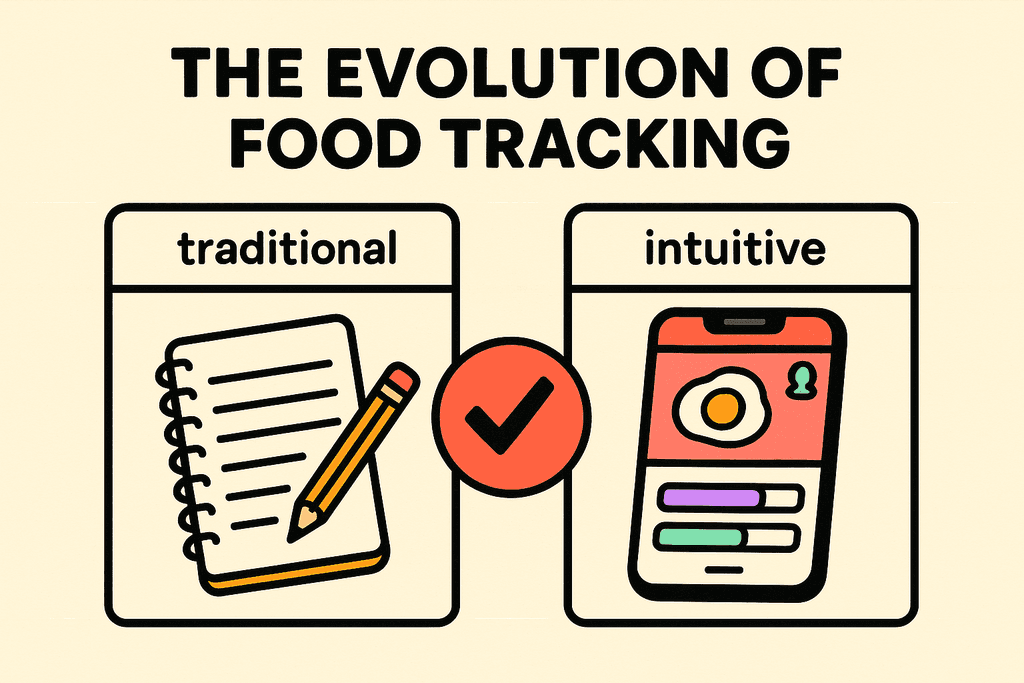
The Evolution of Food Tracking
Most people who try tracking their food quit within the first two weeks. The reason isn't lack of motivation or willpower. It's because traditional calorie tracking takes way too much time and effort. What started as simple pen-and-paper food journals has turned into a complicated mess of searching databases, weighing portions, and doing math that nobody wants to do after a long day.
How We Used to Track Food
Before apps existed, tracking what you ate meant carrying around a notebook and a calorie counting book. You'd eat something, flip through pages to find it, write down the numbers, and add everything up by hand. It was slow and boring, which is why most people gave up after a few days.
The first wave of tracking apps made things slightly easier by putting those calorie books into your phone. Apps like MyFitnessPal and MyNetDiary built huge databases so you didn't need to carry a book around anymore. But they still made you do a lot of work.
- Search through thousands of food entries to find the right one
- Adjust serving sizes and portions manually
- Log each ingredient separately for home-cooked meals
- Double-check entries because user-submitted data is often wrong
- Spend 5-10 minutes per meal just entering information
Why Traditional Apps Make People Quit
The problem with these older apps isn't that they don't work. They do track calories accurately if you put in the effort. The problem is that most people don't have 20-30 minutes per day to spend logging food. When you're hungry and just want to eat, the last thing you want to do is play detective with a food database.
Research shows that the more steps an app requires, the faster people stop using it. Traditional calorie trackers need you to open the app, search for food, scroll through results, pick the right entry, adjust the portion, confirm, and repeat for every single thing you eat. That's a lot of tapping and typing.
- Average time to log a meal in traditional apps is 3-7 minutes
- Users typically quit after 10-14 days of tracking
- The main complaint is always "takes too much time"
- People often skip logging meals when they're busy or tired
The Shift to Intuitive Health Apps
The newest generation of food tracking apps works completely differently. Instead of making you do all the work, an intuitive health app uses AI to handle the boring stuff automatically. You just tell it what you ate in plain English, like you're texting a friend, and it figures out the rest. Apps like MyFoodBuddy let you say "two eggs, toast with butter, and coffee with oat milk" and instantly get your nutrition breakdown without searching or calculating anything.
This isn't just a small improvement. It's the difference between spending 30 seconds logging a meal versus 5 minutes. When something is that much easier, people actually stick with it. The data backs this up too.
- Voice and text input reduces logging time by 85-90%
- AI-powered apps show 3-4x higher user retention rates
- Natural language processing eliminates database searching
- Automatic calculations mean no math required
The shift from complex database apps to simple intuitive health app solutions mirrors what happened in other areas of technology. We went from typing commands to clicking icons to just talking to our devices. Food tracking is finally catching up, and the people who've struggled with traditional apps are finding that consistency becomes way easier when the app does most of the work for you.
Speed Eliminates Excuses
Most people quit tracking their food within the first week. The reason isn't lack of motivation or willpower. It's because traditional calorie counting apps demand too much time. When you're standing in your kitchen after a long day, the last thing you want to do is spend five minutes searching through databases and measuring portions. That friction adds up fast, and eventually, you just stop doing it.
Here's what makes speed the secret weapon for building lasting habits. Traditional apps require you to search for each ingredient, select the right brand, adjust serving sizes, and repeat this process for every component of your meal. That's 3-5 minutes per meal, which means 15-20 minutes of your day just logging food. With voice logging in an intuitive health app like MyFoodBuddy, you simply say "two eggs, toast with butter, and coffee with oat milk" and you're done in 10-15 seconds.
- Traditional apps: 3-5 minutes per meal to search and log
- Voice logging: 10-15 seconds total
- Daily time saved: Up to 18 minutes
- Weekly time saved: Over 2 hours
When something takes seconds instead of minutes, you actually do it. You can log while you're cooking, eating, or even driving home from a restaurant. The speed creates momentum that turns tracking from a chore into a quick habit you barely think about.
Natural Language Removes Mental Load
Your brain makes thousands of decisions every day, and each one drains a little bit of your mental energy. Traditional calorie tracking apps add dozens more decisions to that pile. Should you pick "chicken breast, raw" or "chicken breast, cooked"? Is it the Tyson brand or the generic entry? What about that restaurant meal where you have no idea which database entry matches what you actually ate?
This is called decision fatigue, and it's one of the biggest reasons people abandon tracking. An intuitive health app removes this entire problem by letting you speak or type naturally. You don't need to think like a database. You just describe your meal the way you'd tell a friend about it.
The AI handles all the translation work behind the scenes. It knows that "a handful of almonds" means roughly one ounce. It understands that "coffee with oat milk" includes both items. It can even process complex meals like "chicken stir fry with broccoli, peppers, and brown rice" without you breaking down each ingredient separately.
Real example: Instead of searching for bread (127 results), then butter (89 results), then selecting serving sizes for each, you just say "toast with butter" and move on with your day.This works especially well for restaurant meals where you don't have exact measurements. You can say "burger and fries from Five Guys" and get a reasonable nutritional estimate without spending 10 minutes trying to recreate the meal from individual components.
Instant Feedback Creates Positive Loops
Human brains are wired to respond to immediate rewards. When you do something and see results right away, you're more likely to do it again. This is why video games are so addictive and why checking social media feels satisfying. The same principle applies to food tracking, but only if the app is designed right.
With MyFoodBuddy, you see your nutritional breakdown the moment you finish logging. No waiting, no extra taps, no navigating through menus. You instantly know how many calories you've eaten, how much protein you're getting, and how close you are to your daily goals. This immediate feedback keeps you engaged and motivated.
- See calories, macros, and nutrients instantly after logging
- Watch your progress bar fill up in real-time
- Get visual confirmation through color-coded calendar
- Earn achievements for tracking streaks
- Receive personalized insights from AI coach Fiona
The color-coded calendar is particularly powerful because it shows your tracking streaks visually. Green days mean you hit your goals, and watching those green squares add up creates a sense of accomplishment. You don't want to break the chain, so you keep logging even on busy days.
Fiona, the AI nutrition coach, analyzes your patterns and provides insights based on your actual eating habits. She might notice you're low on protein at breakfast or that you tend to go over your calorie goals on weekends. These personalized observations feel helpful rather than judgmental, which keeps you coming back.
Flexibility Fits Real Life
Life doesn't happen in perfect conditions. Sometimes you're driving. Sometimes you're in a quiet library. Sometimes you're at a restaurant with friends and don't want to pull out your phone for five minutes to log your meal. An intuitive health app needs to work in all these situations, not just when you're sitting at home with time to spare.
Voice logging works when you're multitasking. You can log your breakfast while you're making coffee or track your lunch while walking back to your desk. Text input handles situations where speaking out loud would be awkward. Both methods get you the same result, so you can choose based on your current situation.
The favorites feature is a game-changer for meals you eat regularly. Instead of re-logging "scrambled eggs with spinach and feta" every morning, you save it once and tap it whenever you eat it again. This works great for meal prep too. Log your prepared meals once, save them as favorites, and you're set for the week.
- Voice logging: Perfect for driving, cooking, or walking
- Text input: Ideal for meetings, libraries, or public spaces
- Favorites: One-tap logging for regular meals
- Apple Health sync: Combines food data with activity and health metrics
Restaurant meals become manageable too. You don't need exact measurements or to ask your server for nutritional information. Just describe what you ordered in plain language and the app provides reasonable estimates based on typical portions and ingredients.
Lower Barrier Means Higher Compliance
Psychologists have studied habit formation for decades, and the research is clear. Habits stick when they're easy to do and provide some kind of reward. Every extra step you add to a behavior reduces the chance someone will actually complete it. This is why people fail at traditional calorie tracking even when they're highly motivated.
Think about it this way. If tracking a meal requires opening an app, searching through databases, selecting items, adjusting portions, and repeating this for each ingredient, you've created at least 10-15 decision points. Each one is an opportunity to get frustrated and quit. An intuitive health app removes about 90% of those barriers by handling the complexity automatically.
Users consistently report tracking 6-7 days per week with voice-based apps compared to 2-3 days per week with traditional database apps. That difference matters because consistency beats perfection when it comes to results. Logging most of your meals most days gives you enough data to make informed decisions about your diet.
The math is simple: Tracking 6 days per week at 80% accuracy gives you way more useful information than tracking 2 days per week at 100% accuracy.You don't need perfect logs to see patterns in your eating habits. You need consistent logs that capture the general picture of what you're consuming. That's exactly what happens when the barrier to entry drops from minutes to seconds. If you're looking for more ways to stay consistent with your health goals, check out our guide on how to stay consistent tracking calories.
Smart Features That Learn Your Patterns
The best apps get smarter the more you use them. MyFoodBuddy's AI doesn't just calculate calories. It learns your eating patterns, recognizes your common meals, and starts to understand your portion sizes. This means logging gets even faster over time because the app anticipates what you're likely to eat.
The meal categories help organize your day automatically. When you log something at 7am, it knows that's probably breakfast. Your 12pm entry goes to lunch. This organization makes it easy to review your day and spot patterns in your eating habits.
- AI recognizes your regular meals and suggests them
- Automatic meal categorization by time of day
- Favorites library grows with your most-eaten foods
- TDEE calculator sets personalized calorie targets
- Tracks over 20 nutrients including vitamins and minerals
The TDEE calculator is particularly useful because it removes another decision point. Instead of guessing how many calories you should eat, you input your stats and goals, and the app calculates your targets automatically. It accounts for whether you want to lose weight, gain muscle, or maintain your current weight.
Tracking over 20 nutrients means you're not just counting calories. You can see if you're getting enough protein, fiber, iron, or any other nutrient you care about. This comprehensive view helps you make better food choices without obsessing over every detail. For more insights on balanced nutrition, our article on achieving balanced meals without the hassle offers practical tips.
Community and Accountability Built In
External motivation helps when internal motivation wavers. Streak tracking creates a form of accountability to yourself. When you've logged food for 15 days straight, you don't want to break that streak on day 16. It's a simple psychological trick, but it works.
Achievements celebrate your milestones without being annoying about it. Hit your protein goal five days in a row? That's an achievement. Log every meal for a week? Another achievement. These small celebrations keep the experience positive and rewarding.
Reminders help without nagging. The app can gently prompt you if you haven't logged lunch by 2pm, but it's not pushy about it. You're in control of how much guidance you want.
- Streak tracking: Visual motivation to maintain consistency
- Achievements: Celebrate milestones and progress
- Smart reminders: Helpful prompts without being annoying
- Progress charts: See long-term trends in your nutrition
- Weight tracking: Connect food choices to real results
The visual progress charts show you trends over weeks and months. You can see how your average protein intake has improved or how your calorie consistency has gotten better. This long-term view helps you understand that one bad day doesn't matter much in the context of weeks of good choices.
Weight tracking integration ties everything together. When you see your weight trending down while maintaining consistent food logs, you have proof that your efforts are working. That evidence keeps you motivated even when progress feels slow. The combination of easy logging, instant feedback, and visible results creates a system that actually supports long-term behavior change instead of just adding more work to your day.
Making Tracking Stick
The difference between people who reach their health goals and those who don't usually comes down to one thing. It's not having the perfect diet plan or knowing every nutrition fact. It's just showing up every day and tracking what you eat. When logging your meals feels like a chore that takes five minutes of searching through databases and weighing portions, most people quit within a week or two.
An intuitive health app removes all that friction. You just say what you ate, and the app does the rest. No searching, no measuring, no math.
That's why voice and text logging works so well for building habits that actually stick. Apps like MyFitnessPal require multiple taps and searches for every ingredient, which is why so many people give up. MyFoodBuddy lets you log "two eggs, toast with butter, and coffee with oat milk" in about ten seconds, which means you'll actually do it tomorrow and the day after that.
The seven-day free trial gives you enough time to see if this approach fits your life better than the old way of tracking. Most people notice the difference after just a few days of not dreading their food log.
Consistency beats perfection every time. The best tracking system is the one you'll use when you're tired, busy, or just not feeling it. If you've tried tracking before and it didn't stick, the problem probably wasn't you. Sometimes you just need a simpler tool that works with your life instead of against it.
Common Questions About Intuitive Health Apps
Voice logging and natural language input are still pretty new in the calorie tracking world, so people have questions. Most folks who've used traditional apps like MyFitnessPal or Cronometer are used to searching databases and manually entering portion sizes. The idea of just saying what you ate and having an intuitive health app figure out the rest sounds almost too easy. Here are the most common questions we hear about how this actually works in practice.
How accurate is voice logging compared to manual entry?
Voice logging with AI is just as accurate as manual entry, and sometimes even better because it removes human error from the equation. When you say "two eggs and toast with butter," the app uses USDA nutritional data to calculate values based on standard portions. The accuracy depends on how specific you are with your descriptions, just like manual logging does. If you say "a handful of almonds" versus "one ounce of almonds," you'll get different results either way.
Can I still track macros with voice input?
Yes, voice input tracks all your macros automatically without any extra steps. When you log a meal using an intuitive health app like MyFoodBuddy, the AI extracts protein, carbs, and fats from what you said and adds them to your daily totals. You can even track over 20 different nutrients including vitamins and minerals. The app does all the math in the background while you just talk or type naturally.
What if the app doesn't recognize my food?
Most intuitive health apps have databases with hundreds of thousands of foods, so recognition issues are rare. If something isn't recognized, you can usually add more detail in your description or make a quick manual adjustment. The AI gets smarter over time as it learns from your corrections. Apps like MyFoodBuddy also let you save custom meals as favorites, so once you've logged something once, it's saved for future use.
How does intuitive logging work for homemade meals?
You can log homemade meals by listing out the ingredients you used, just like you'd tell a friend what you cooked. Say something like "chicken breast, rice, broccoli with olive oil" and the app calculates nutrition for each component. Many people save their common homemade meals as favorites so they can re-log them with one tap later. This works way faster than recipe builders in apps like Cronometer that make you measure every single ingredient.
Is voice logging private and secure?
Voice data in quality health apps is processed securely and not stored as audio files. The app converts your speech to text, extracts the food information, then discards the voice data. Your food logs are stored privately in your account, and apps like MyFoodBuddy integrate with Apple Health using encrypted connections. You have the same privacy protections as any other health tracking app, just with a more convenient input method.
Ready to start tracking smarter?
Download MyFoodBuddy and start tracking your calories by just saying what you ate. No more searching databases or guessing portions.
Get started